Issue published June 22, 2026 Previous issue | Next issue

- Volume 11, Issue 12
On the cover:
Dynamic remodeling of portal vessels by Clec4g+ endothelial cells in liver growth and homeostasis
Platt et al. generated an inducible mouse model to label and trace liver sinusoidal endothelial cells, revealing that Clec4g+ liver endothelial cells contribute to portal branches over time. The cover image shows that Clec4g+ cells (green), largely located in hepatic sinusoids, contribute to portal vascular endothelium during mouse liver growth. Liver sections were immunostained for E-cadherin (cyan; portal tracts) and cyp2e1 (magenta, zone 3 hepatocytes, around central veins). Image credit Sarah Platt.
Platt et al. generated an inducible mouse model to label and trace liver sinusoidal endothelial cells, revealing that Clec4g+ liver endothelial cells contribute to portal branches over time. The cover image shows that Clec4g+ cells (green), largely located in hepatic sinusoids, contribute to portal vascular endothelium during mouse liver growth. Liver sections were immunostained for E-cadherin (cyan; portal tracts) and cyp2e1 (magenta, zone 3 hepatocytes, around central veins). Image credit Sarah Platt.
Go to section:
-
Research Letters
×
Abstract
Authors
Peter Dimitrion, Jesse Veenstra, Deangelo Ferguson, Ping Wang, Jeffrey Cruz, Tasneem F. Mohammad, Ian Loveless, Aamir Siddiqui, Iltefat H. Hamzavi, Li Zhou, Indra Adrianto, Qing-Sheng Mi
×Abstract
Authors
Sarah Platt, Norhan B.B. Mohammed, Joseph Brancale, Caroline Tippett, Kevin Seo, Sílvia Vilarinho
×Abstract
Authors
Erin M. Dickey, Harper M. Marsh, Camilla Rydberg-Millrud, Haleh Amirian, Karthik Rajkumar, Manan Patel, Andrew Adams, Anuroop Allena, Kevin Van der Jeught, Nipun Merchant, Peter J. Hosein, Anna Bianchi, David Liberg, Jashodeep Datta
×Abstract
Authors
Natalie E. Andresen, Heehwa G. Son, Joongho J. Joh, Shadmehr Demehri


-
Physician-Scientist Development
×
Abstract
Programs at the medical school level to train students as physician-scientists include NIH-supported MD-PhD (Medical Scientist Training Program, MSTP), non–NIH-supported MD-PhD (MDPhD), and limited research pathways for MD-only students. Continued exposure to a research-rich culture in residency could sustain commitment to a physician-scientist career. We compared residency matches of 10,668 MSTP, MDPhD, or MD-only students from 2021–2023 match cycles, using the NIH funding level of the matched residency program’s department in the match year as the central measure. We also measured how medical school NIH funding levels influenced student matches to top-funded residency programs. Public individual-level match data were available from 13 top-NIH-funded medical schools (top quintile, highest 20% funding) and 8 mid-NIH-funded medical schools (mid quintile, 40%–60% funding). Top-quintile medical schools housed only MSTP programs, whereas mid-quintile schools had both MSTP and MDPhD programs. Across all medical schools, MSTP students matched at a higher rate than MD-only students to residencies in top-NIH-funded departments in their discipline. Within the mid-quintile schools, MSTP and MDPhD student matches did not differ significantly. Notably, students from the top-quintile medical schools (both MD-only and MSTP) matched to higher-NIH-funded residency departments than comparably trained students from the mid-quintile schools.
Authors
Shannon Baker, S. Mehdi Nouraie, Richard A. Steinman
×Abstract
Physician-scientists represent one of the most impactful, yet underrecognized, innovations of 20th century academic medicine. Defined by a commitment to full-time careers in investigative work, physician-scientists have repeatedly demonstrated a unique ability to identify and solve problems of unmet medical need in a focused and intentional manner using their dual training in clinical medicine and the scientific method as both stethoscope and scalpel. Unfortunately, while the value of physician-scientists has never been greater, the institutional infrastructure to support them has never been explicitly defined (1), a deficiency now amplified by mounting financial pressures from both clinical revenue models and an increasingly constrained research funding landscape (2, 3). This white paper reports the output of a consortium of academic medical centers, foundations, and professional societies seeking to remedy this deficiency. This consortium specifically developed a framework to formalize the career path of physician-scientist faculty into a professionally unified and financially sustainable structure amenable to adoption across US academic medical centers and health systems. Key components of this framework included an administratively operational definition of physician-scientists, and 3 central and interconnected pillars (academic, financial, and organizational) that are rooted in this foundational definition. Herein, we detail core concepts and concrete recommendations.
Authors
Christopher S. Williams, Megan Allen, Paige Cooper-Byas, John Hawley, Louis J. Muglia, E. Dale Abel, Julie A. Bastarache, Carolyn Calfee, John M. Carethers, David N. Cornfield, Oliver Eickelberg, Emily J. Gallagher, Anna Greka, Peter J. Gruber, Anthony N. Hollenberg, Heidi H. Kong, Barbara Kazmierczak, Gary A. Koretzky, Mark Lachs, Deborah J. Lenschow, Geoffrey Pitt, Don C. Rockey, Lisa M. Satlin, Barry P. Sleckman, David A. Stoltz, Jatin M. Vyas, Thomas J. Wang, Kyu Y. Rhee


-
Research Articles
×
Abstract
Antiviral immunity profoundly impacts host metabolism, which can, in turn, modulate immune responses and influence disease pathology. The liver orchestrates systemic bile acid (BA) metabolism, a pathway disrupted in chronic liver diseases such as viral hepatitis. BAs are increasingly recognized for their immunomodulatory properties. Thus, improved understanding of the interplay between immunity and BA metabolism may reveal novel therapeutic avenues. Using lymphocytic choriomeningitis virus (LCMV) as a model, we investigated the interplay between chronic virus infection, BA metabolism, and immunity. Chronic LCMV infection increased BA levels and shifted circulating and liver BA composition toward host-derived, conjugated BAs. Hepatic BA transport and synthesis genes were broadly downregulated, in part depending on CD8+ T cells. Pharmacological inhibition of the main hepatic transporter of conjugated BAs, NTCP (Slc10a1), increased hepatic damage, while combined genetic disruption of the BA transporters Slco1a1, Slco1a4, and Slco1b2, responsible for the hepatic reuptake of unconjugated BA, reduced liver pathology and impaired antiviral CD8+ T cell responses. These findings reveal a reciprocal interplay between BA metabolism and CD8+ T cells, expanding our understanding of adaptive immunity in viral hepatitis. They also highlight how immunometabolic changes in liver disease may affect adaptive immune responses against infections.
Authors
Felix Clemens Richter, Zsofia Keszei, Csilla Viczenczova, Maximilian Baumgartner, Henrique G. Colaço, Magdalena Siller, Lisa Holnsteiner, Hatoon Baazim, Anna Hofmann, Aubrey Burrett, Anna Schönbichler, Lukas Endler, Joel Xu En Wong, Laura Antonio-Herrera, Oleksandr Petrenko, Fabian Amman, Jakob-Wendelin Genger, Claudia D. Fuchs, Hubert Scharnagl, Hanns-Ulrich Marschall, Thomas Reiberger, Karl S. Lang, Clarissa Campbell, Michael Trauner, Andreas Bergthaler
×Abstract
Cancer-induced bone pain (CIBP) is among the most common and debilitating symptoms in patients with bone metastasis. Current treatments are somewhat effective but have severe side effects. For the future development of safer CIBP treatments, in this study, we sought to investigate the mechanisms whereby the nerve-cancer interaction controls CIBP. We found that c-Kit, a receptor tyrosine kinase, was activated in the dorsal root ganglia (DRG) sensory neurons of mice with CIBP and that c-Kit’s sole ligand, stem cell factor (SCF), was enhanced in the bone marrow with bone metastasis. When DRGs were treated with SCF or conditioned medium from high SCF-expressing cancer cells, in vitro nerve sprouting was enhanced, and this effect was abolished with c-Kit inhibitors. Mice inoculated intrafemorally with cancer cells that had varying levels of SCF expression developed CIBP and enhanced peripheral nerve sprouting in an SCF-dependent manner. Downstream proteomic analysis revealed that SCF upregulated and activated fibroblast growth factor 1 (FGF1) in DRGs. When FGF1 was knocked down in DRGs, SCF-mediated nerve sprouting was prevented. Taken together, our studies demonstrate the importance of the SCF/c-Kit axis in CIBP and nerve sprouting and identify the SCF/c-Kit/FGF1 pathway as a potential therapeutic target for CIBP.
Authors
Kelly F. Contino, Jenna Ollodart, Yang Yu, Sun H. Park, Shunsuke Tsuzuki, Kara Rollins, Tyler M. Heethouse, Joshua Chu, Laiton R. Steele, Takahiro Kimura, Jingyun Lee, Cristina M. Furdui, Lance D. Miller, Fang-Chi Hsu, Yusuke Shiozawa
×Abstract
Abdominal aortic aneurysm (AAA) lacks effective pharmacological therapies. Here, we investigate transcription factor 7–like 2 (TCF7L2), a genetic locus associated with both thoracic and abdominal aortic aneurysms, to elucidate its role in AAA pathogenesis. Integrating summary data–based Mendelian randomization (SMR) with single-cell RNA sequencing of human and mouse aortae, we identify TCF7L2 as a gene enriched in vascular smooth muscle cells (VSMCs) and causally linked to AAA development. Smooth muscle cell–specific TCF7L2 knockout significantly attenuates AAA formation across 3 distinct murine models (AAA induced by angiotensin II infusion, by β-aminopropionitrile/angiotensin II coadministration, and by elastase), independent of systemic blood pressure or lipid levels. Mechanistic studies reveal that TCF7L2 directly upregulates MMP14 and downregulates TIMP3 expression in vitro and in vivo, driving MMP2-mediated extracellular matrix (ECM) degradation. Concurrently, TCF7L2 represses integrin β1 (ITGB1) expression, reducing VSMC adhesion to the ECM. Collectively, these findings identify TCF7L2 as a key driver of pathological vascular remodeling in AAA, suggesting that targeting TCF7L2 may offer a novel therapeutic strategy for limiting AAA progression.
Authors
Yongjie Deng, Yaozhong Liu, Yang Zhao, Hongyu Liu, Guizhen Zhao, Zhenguo Wang, Xu Zhang, Chao Xue, Wei Huang, Tianqing Zhu, Haocheng Lu, Yanhong Guo, Lin Chang, Ida Surakka, Y. Eugene Chen, Jifeng Zhang
×Abstract
BACKGROUND Malaria caused by Plasmodium malariae is geographically widespread and sometimes associated with prolonged infection, yet little is known about its genomic epidemiology.METHODS We performed hybrid capture and whole-genome sequencing of 77 isolates collected from Cameroon (n = 7), the Democratic Republic of the Congo (n = 16), Nigeria (n = 4), and Tanzania (n = 50) between 2015 and 2021, analyzing parasite genetic population structure and demography.RESULTS There is no evidence of geographic population structure. Nucleotide diversity was significantly lower than in colocalized P. falciparum isolates, while linkage disequilibrium was significantly higher. Genome-wide selection scans identified no erythrocyte invasion ligands or antimalarial resistance orthologs as top hits; however, targeted analyses of these loci revealed evidence of selective sweeps around 4 erythrocyte invasion ligands and 6 antimalarial resistance orthologs. Demographic inference modeling suggests that African P. malariae is recovering from a bottleneck.CONCLUSION P. malariae is genomically atypical among human Plasmodium spp. and lacks strong population structure in Africa. The low diversity has potential impacts on understanding persistent versus new infection through genomic epidemiology.FUNDING Bill & Melinda Gates Foundation (grant 002202), USAID/PMI through Jhpiego and CDC, NIH (T32AI007151, T32AI070114, R01AI107949, R01AI129812, R21 AI148579, R01AI137395, R21AI152260, R01AI132547, and K24AI134990), and the DELTAS Africa initiative (DELGEME grant 107740/Z/15/Z).
Authors
Zachary R. Popkin-Hall, Kelly Carey-Ewend, Farhang Aghakhanian, Eniyou C. Oriero, Misago D. Seth, Melchior M. Kashamuka, Billy Ngasala, Innocent M. Ali, Eric Sompwe Mukomena, Celine I. Mandara, Oksana Kharabora, Rachel Sendor, Alfred Simkin, Alfred Amambua-Ngwa, Antoinette Tshefu, Abebe A. Fola, Deus S. Ishengoma, Jeffrey A. Bailey, Jonathan B. Parr, Jessica T. Lin, Jonathan J. Juliano
×Abstract
The discovery of genes encoding the volume-regulated anion channel (VRAC) has enabled detailed exploration of its cell type–specific roles in the brain. LRRC8A (SWELL1) is the essential VRAC subunit. We observed seizure-induced, subunit-specific changes in microglial VRAC expression and investigated its function using conditional KO (cKO) of LRRC8A in microglia. SWELL1 cKO mice exhibited a male-specific increase in kainate-induced seizure severity, yet showed paradoxical neuroprotection against seizure-associated neuronal loss. Mechanistically, SWELL1 deletion led to a cell-autonomous reduction in microglial density and decreased release of VRAC-permeable neuroactive metabolites, including taurine, GABA, and glutamate in culture. Additionally, impaired phagocytic kinetics and reduced lysosomal biogenesis contributed to the observed neuroprotection. These findings reveal potentially novel roles for microglial VRAC in regulating seizure outcomes and microglia-neuron interactions.
Authors
Abhijeet S. Barath, Aastha Dheer, Laura Montier, Mekenzie M Peshoff, Emily Dale, Flavia Goche, Thanh Thanh Le Nguyen, Mastura Akter, FangFang Qi, Dimitrios Kleidonas, Lauren Harris, Sarah A. Jewanee, Rongzhuo Hua, Tejaswani Datla, Anthony D. Umpierre, Dale B. Bosco, Koichiro Haruwaka, Rajan Sah, Long-Jun Wu
×Abstract
Aortic dissection or rupture is a leading cause of mortality in vascular Ehlers-Danlos syndrome (VEDS), a disorder caused by mutations in the COL3A1 gene. Col3a1G938D/+ mice recapitulate features of VEDS, including high risk of aortic rupture. As in people with VEDS, aortic risk in this model accelerates at the onset of puberty, especially in males. We identify developmentally regulated gene programs associated with this vulnerability and that are targeted by treatments that mitigate aortic risk. Both genetic and pharmacological inhibition of the androgen receptor (AR) eliminated survival differences between sexes, while treatment with a dual AR and mineralocorticoid receptor (MR) antagonist provided near-complete and durable protection in both sexes. Pathways targeted by dual AR/MR inhibition, including those related to extracellular matrix (ECM) organization and cell-ECM interactions, largely overlapped with those also modulated by isolated MR antagonism. Selective targeting of MR signaling emerged as an effective therapeutic strategy in both sexes that avoids sexual side effects in males.
Authors
Emily E. Juzwiak, Caitlin J. Bowen, Rhiannon Edwards, Leda Restrepo, Serena Lee, Cassie A. Parks, Anthony Zeng, Maya M. Black, Oscar E. Reyes Gaido, Emily E. Bramel, Dustin T. Shigaki, Michael A. Beer, Chiara Bellini, Harry C. Dietz, Elena Gallo MacFarlane
×Development and characterization of triazole-based WDR5 inhibitors for the treatment of glioblastoma
Abstract
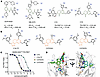
Glioblastoma (GBM) cancer stem cells (CSCs) contribute to tumor recurrence, treatment resistance, and dismal clinical outcomes. Genetic and pharmacological evidence suggests that the nuclear scaffolding protein WD-repeat containing protein 5 (WDR5) is a therapeutic vulnerability of the CSC population. However, previously reported WDR5 inhibitors display low permeability and are unable to penetrate the blood-brain barrier (BBB), limiting their utility in GBM. Herein, we report the structure-guided development of a series of triazole-based WDR5 WIN-site inhibitors designed to increase passive brain penetration. We identified triazole-based WDR5 inhibitors that are potent, passively permeable, and in some cases more brain penetrant than other scaffolds. We phenotypically assessed our WDR5 inhibitors in a panel of patient-derived CSC models and uncovered unique WDR5-regulated metabolic genes in GBM. We also evaluated their antiproliferative activity against CSCs both in vitro and in vivo. Finally, to identify potential combination opportunities, we screened a 2,100-compound chemical probe library and identified that the ATAD2 inhibitor BAY-850 synergizes with WDR5 inhibitors to enhance CSC killing. Our work diversifies the chemical matter targeting WDR5, clarifies the in vitro consequences of WIN-site inhibition in CSCs, and encourages the future development of next-generation WDR5 inhibitors with the potential to achieve in vivo efficacy in the brain.
Authors
Jesse A. Coker, Steven R. Martinez, Sang Hoon Han, Anthony R. Sloan, Amit Kumar Gupta, George Bukenya, Paul Polzer, James H. Ramos, Emma G. Rico, Annabella Rico, A. Abigail Lindsey, Tanvi Navadgi, Natalie Reitz, Todd Romigh, Jonathan Macdonald, Dhiraj Sonawane, Christopher M. Goins, Christopher G. Hubert, Nancy S. Wang, Feixiong Cheng, Joseph Alvarado, Samuel A. Sprowls, Justin D. Lathia, Shaun R. Stauffer
×Abstract
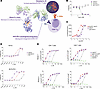
Immune checkpoint inhibitors have transformed cancer therapy, yet many patients fail to achieve durable responses due to insufficient T cell reinvigoration. Cytokines offer promise for enhancing immunotherapy, but their clinical use is limited by toxicity and a narrow therapeutic index. Immunocytokines, engineered fusion proteins combining antibody specificity with cytokine activity, aim to overcome these challenges by targeting cytokine delivery to immune cells or the tumor microenvironment. We describe SAR445877 (SAR’877), a potentially novel PD-1–targeted immunocytokine that fuses a high-affinity anti–PD-1 antibody with a detuned IL-15/IL-15Rα sushi domain complex. SAR’877 blocks PD-1/PD-L1 and PD-1/PD-L2 interactions while selectively delivering IL-15 signals to PD-1+ T cells, enhancing proliferation and activation of antigen-experienced CD8+ and CD4+ T cells and NK cells, while minimizing systemic inflammation. Mechanistically, SAR’877 activates STAT5 signaling in PD-1+ lymphocytes and restores effector function in exhausted T cells. In preclinical models, a murine surrogate of SAR’877 accelerated viral clearance and induced robust antitumor immunity by expanding cytotoxic CD8+ T cells and promoting Th1 polarization. Notably, SAR’877 outperformed anti–PD-1 plus untargeted IL-15, highlighting the therapeutic potential of targeted IL-15 delivery. These findings position SAR’877 as a promising next-generation immunotherapy with enhanced efficacy and reduced cytokine-associated toxicities.
Authors
Isaraphorn Pratumchai, Marie Bernardo, Julien Tessier, Jaroslav Zak, Kristi L. Marquardt, Joon Sang Lee, Maheeka Bimal, AHyun Choi, Anthony M. Byers, Mikielia G. Devonish, Roberto Carrio, Dan Lu, Stella Martomo, Jeegar Patel, Yu-an Zhang, Ingeborg M. Langohr, Virna Cortez-Retamozo, Dinesh S. Bangari, Angela Hadjipanayis, Xiangming Li, Valeria R. Fantin, Donald R. Shaffer, John R. Teijaro
×Abstract
Because older donor age is a major concern when considering kidneys for potential transplantation, we explored the actual effect of donor age on the features of kidneys that have been transplanted. We studied the correlations of donor age with molecular injury and rejection scores in 4,502 kidney transplant biopsies assessed by microarrays as well as function and postbiopsy survival. We used multivariable analyses to correct for the correlations of donor age with other predictive variables: recipient age, time of biopsy after transplant, and deceased versus living donors. Older donor age correlated with lower glomerular filtration rate (GFR) and increased acute and chronic injury transcripts but had no effect on rejection, which was anticorrelated with recipient age. Acute injury transcripts peaked immediately after transplant and regressed. Older donor age had little effect on acute molecular injury immediately after transplant but strongly increased molecular injury scores at later times, peaking about 1-year after transplant, indicating that older age does not increase molecular injury but increases failed repair after injury. As expected, older donor age correlated with increased chronic injury and lower GFR, evident from the earliest time after transplant, pretransplant aging. However, despite substantial age-related effects, the quantitative contribution of donor aging to molecular injury, function, and survival was very small.
Authors
Katelynn Madill-Thomsen, Martina Mackova, Jessica Chang, Enver Akalin, Tarek Alhamad, Sanjiv Anand, Miha Arnol, Rajendra Baliga, Mirosław Banasik, Christopher Blosser, Georg Böhmig, Daniel Brennan, Jonathan Bromberg, Klemens Budde, Andrzej Chamienia, Kevin V. Chow, Michał Ciszek, Declan de Freitas, Dominika Dęborska-Materkowska, Alicja Dębska-Ślizień, Arjang Djamali, Leszek Domański, Magdalena Durlik, Gunilla Einecke, Farsad Eskandary, Richard Fatica, Iman Francis, Justyna Fryc, John Gill, Jagbir Gill, Maciej Glyda, Sita Gourishankar, Marta Gryczman, Gaurav Gupta, Petra Hruba, Peter Hughes, Arksarapuk Jittirat, Zeljka Jurekovic, Layla Kamal, Mahmoud Kamel, Sam Kant, Nika Kojc, Joanna Konopa, James Lan, Roslyn Mannon, Arthur Matas, Joanna Mazurkiewicz, Marius Miglinas, Thomas Mueller, Marek Myślak, Beata Naumnik, Anita Patel, Agnieszka Perkowska-Ptasińska, Michael Picton, Grzegorz Piecha, Emillio Poggio, Silvie Rajnochova Bloudickova, Thomas Schachtner, Sung Shin, Soroush Shojai, Majid Sikosana, Janka Slatinská, Katarzyna Smykal-Jankowiak, Ashish Solanki, Zeljka Veceric Haler, Ondrej Viklicky, Ksenija Vucur Simic, Matthew R. Weir, Andrzej Wiecek, Zbigniew Włodarczyk, Ziad Zaky, Philip F. Halloran
×Abstract
Tuberculosis (TB) and HIV coinfection remains a major global health challenge, with limited understanding of how these pathogens affect local immune responses in the lungs. This study is the first to our knowledge to investigate the modulation of IL-21 during LTBI and M. tuberculosis/SIV coinfection in nonhuman primates (NHP). We show that IL-21 expression, predominantly derived from CD4+ T cells, is significantly reduced in lungs of M. tuberculosis/SIV coinfected macaques, especially in the absence of cART. Although cART and cART with 3HP partially restore IL-21–producing CD4+ T cells, levels remain below those in LTBI, indicating ongoing immune impairment. Spatial transcriptomic analysis suggests localized alterations in immune signaling, including differences in STAT1- and STAT3-associated transcriptional profiles and reduced M. tuberculosis–specific IFN-γ responses in coinfected animals. Together, our findings indicate that IL-21–producing CD4+ T cells are selectively and persistently impaired in the lungs during M. tuberculosis/SIV coinfection, despite antimicrobial and antiviral therapy. These results highlight a compartment-specific deficit in immune reconstitution and suggest that IL-21–associated pathways may warrant further investigation as potential targets for host-directed therapeutic strategies.
Authors
Vinay Shivanna, Renee D. Escalona, Colin Chuba, Shashi Prakash Singh, Ahmed A. Moustafa, J. Quincy Brown, Chenyao Xiao, Sangkyu Kim, Edward J. Dick Jr., Smriti Mehra, Mirko Paiardini, Riti Sharan
×Abstract
Donnai-Barrow syndrome (DBS) arises from loss-of-function (LoF) variants in the endocytic receptor low-density lipoprotein receptor–related protein 2 (LRP2; or megalin) and is characterized by low–molecular weight proteinuria and developmental abnormalities. Urinary proteomics of 9 patients with DBS revealed that the urinary proteome of a DBS patient with the missense variant LRP2 p.C1400R was indistinguishable from that of patients with splice site, nonsense, or frameshift mutations. A CRISPR mouse model of the variant was generated to determine the mechanism of LoF and proteinuria. The mutant LRP2 was expressed and observed to dimerize and localize to the proximal tubule apical membrane. However, both fluid-phase and receptor-mediated endocytosis was impaired in the context of a general perturbation of endocytic flux. Immunofluorescence revealed aberrant endocytic recycling with mislocalized RAB11+ and TFR1+ compartments and enlarged lysosomes. Structural modeling showed that the LRP2 assembly likely tolerates the cysteine-to-arginine substitution at the cell surface, but at endosomal pH the variant introduced steric clashes that may disrupt intramolecular interfaces and disturb receptor recycling. These findings point to the importance of LRP2 recycling for global endocytic flux and offer a blueprint for leveraging patient-specific alleles to dissect proximal tubule function.
Authors
Andrew Beenken, Tian H. Shen, Aryan Ghotra, Hediye Erdjument-Bromage, Jeong Lee, Jared S. Kushner, Rachel E. Sturley, Atlas Khan, Jeffrey R. Arace, Leora Kronenberg, Lucy D. Shen, Gabriel H. Rahmani, Patricia K. Donahoe, Thomas A. Neubert, Frances A. High, Ora A. Weisz, Jonathan Barasch
×Abstract
Extracellular matrix (ECM) disorder was believed to result from fibrosis, but it has recently been recognized that fibrotic ECM initiates a self-reinforcing circuit and contributes to the development of fibrosis. Versican, an ECM component, participates in cell-ECM interaction and ECM regeneration. In pleura, versican is primarily derived from pleural mesothelial cells (PMCs). However, the role and mechanism of versican in pleural fibrosis has remained unknown. In this study, versican and versican-mediated pleural viscoelasticity were found to be elevated in both human and murine pleural fibrotic tissues. Versican knockdown by shRNA prevented increases in viscoelasticity as well as pleural fibrosis. High levels of versican and viscoelasticity promoted mesothelial-mesenchymal transition in PMCs. Mechanistically, increased viscoelasticity induced pleural fibrosis through the CD44/USP10/Smad4 mechanotransduction pathway. In conclusion, these results revealed that excessive versican in fibrotic pleural ECM enhanced ECM viscoelasticity and consequently promoted progression of pleural fibrosis.
Authors
Zi-Heng Jia, Xin-Liang He, Xiao-Lin Cui, Qian Li, Pei-Pei Cheng, Li-Qin Zhao, Shu-Yi Ye, Shi-He Hu, Chen-Yue Lian, He-De Zhang, Li-Mei Liang, Lin-Jie Song, Fan Yu, Liang Xiong, Fei Xiang, Xiaorong Wang, Meng Wang, Xiyong Dai, Hong Ye, Wan-Li Ma
×Abstract
Lipotoxicity associated with metabolic dysfunction–associated steatotic liver disease (MASLD) causes dysregulated fatty acid (FA) and glucose metabolism, inducing cellular energy imbalance, oxidative stress (OS), and hepatocellular injury. IL-10 is altered in MASLD, including increased IL-10 transcripts in peripheral immune cells; however, its role in hepatic responses to lipotoxic stress remains unclear. We evaluated whether IL-10 treatment attenuates lipotoxic injury and MASLD-related phenotypes in vivo and in vitro to reveal MASLD treatment strategies. As MASLD models, mice fed a high-fat diet and in vitro normal human hepatocytes under palmitic acid exposure were treated with IL-10, along with confirmatory experiments in HepG2 cells. We assessed FA and glucose metabolism, OS, and apoptosis with histological changes and mechanisms related to hepatocellular viability/metabolic activity and stress-responsive survival signaling in vitro. IL-10 modulated FA synthesis and β-oxidation, reducing lipid accumulation, and IL-10 altered glucose metabolic pathways, consistent with improved glucose handling under lipotoxic stress. Furthermore, IL-10 reduced OS and cell death markers while enhancing antioxidant responses, consistent with hepatocellular protection. These data suggest that IL-10 attenuates lipotoxic injury by modulating hepatic response pathways, thereby improving MASLD-related phenotypes, and support the potential of IL-10 as a therapeutic target for MASLD.
Authors
Akira Kado, Kazuya Okushin, Takeya Tsutsumi, Toshiyuki Kishida, Kazuhiko Ikeuchi, Hiroshi Yotsuyanagi, Kyoji Moriya, Kazuhiko Koike, Mitsuhiro Fujishiro
×Abstract
High dietary salt intake elevates blood pressure and drives multiorgan damage. However, the molecular programs underlying progressive organ injury remain poorly defined. Here, we present a longitudinal multiorgan transcriptomic atlas of salt-induced hypertensive injury. We profiled kidney cortex, kidney medulla, heart, and liver across 4 stages, spanning early hypertension to advanced pathology in Dahl salt-sensitive rats. We identified dynamic and tissue-specific molecular trajectories, including a shared early proliferative response that converges on proinflammatory and fibrotic remodeling. Notably, we uncovered compartment-specific renal responses, showing that the cortex and medulla, despite their proximity, follow distinct molecular trajectories during disease progression. We further identified 79 stage- and tissue-specific transcription factors that drive gene expression dynamics in salt-induced hypertensive injury. Integration with human genome-wide association studies revealed conserved pathways in endocrine signaling, ion transport, lipid metabolism, and detoxification, establishing cross-species relevance and highlighting mechanistic targets of clinical importance. Compound-transcriptome analysis revealed stage- and organ-specific therapeutic opportunities, prioritizing kinase and epigenetic modulators as candidates to rebalance maladaptive gene programs. Overall, this study provides a resource for understanding molecular mechanisms from early salt-induced hypertension to tissue-specific injury and underscores the need for precision interventions.
Authors
Ratnakar Tiwari, Olha Kravtsova, Lashodya V. Dissanayake, Melissa Lowe, Biyang Xu, Vladislav Levchenko, Steven Didik, Ruslan Bohovyk, Daria V. Ilatovskaya, Oleg Palygin, Alexander Staruschenko
×Abstract
Chronic hyperglycemia induces microvascular complications in patients with type 2 diabetes (T2D), particularly diabetic retinopathy, nephropathy, and neuropathy. We revisited the pancreatic vasculature to reexamine such damage in 3D. Using thick pancreatic tissue slices, we analyzed volumetric intraislet capillary density (vICD) and peri-islet volumetric exocrine capillary density (vECD) as well as interface capillary counts along the islet periphery to quantify vascular integration between the islets and surrounding acinar cells. Contrary to the previous reports, vICD was not homogeneous but highly heterogeneous across the five species studied (human, monkey, pig, ferret, and mouse), especially in smaller islets. vICD became less variable with increasing islet size, converging at approximately 20%. With this foundation of islet vascularization, pancreatic tissues from non-diabetic and T2D subjects consisting of 8 age- and sex-matched pairs (age range of 35–65 years with various duration: 0–15 years) were examined. Strikingly, no significant differences in microvascular density were found; mean vICD and mean vECD were nearly equivalent between the groups. Capillary integration with respect to islet size was comparable. These findings suggest that integrated pancreatic blood flow with robust crosstalk between the endocrine and exocrine pancreas may facilitate microvascular preservation in T2D via local distribution of insulin.
Authors
Alex M. Tollefson, Frank R. Marsico, Manami Hara
×Abstract
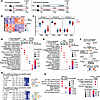
In metabolic dysfunction–associated steatohepatitis (MASH), liver sinusoidal endothelial cells (LSECs) acquire a proinflammatory phenotype termed lipotoxic endotheliopathy. We previously identified glycogen synthase kinase 3β (GSK3β) as a central signaling hub in LSECs during MASH. To elucidate the molecular mechanisms and functional outcome of lipotoxicity-induced GSK3β activation in LSECs, we utilized endothelial cell–specific Gsk3β-KO (Gsk3βΔEnd) mice fed MASH-inducing diets. Endothelial Gsk3β deletion significantly reduced markers of lipotoxic endotheliopathy, including adhesion molecules and chemokines, alongside liver injury, inflammation, and fibrosis. Immune profiling via flow cytometry and mass cytometry by time of flight (CyTOF) identified decreased hepatic infiltration of proinflammatory myeloid populations, particularly mature DCs in Gsk3βΔEnd mice. In a coculture system, GSK3β in lipotoxic LSECs promoted DCs maturation. Mechanistically, GSK3 inhibition restored lipotoxicity-induced alterations in LSEC mitochondrial morphology and respiration by regulating AMP-activated protein kinase and dynamin-related protein 1. This rescue suppressed chemokine and adhesion molecule expression, thereby limiting immune cell recruitment. Collectively, under lipotoxic stress, GSK3β amplifies mitochondrial dysfunction and inflammatory signaling in LSECs, enhancing myeloid cell homing and DC maturation. Targeting LSEC GSK3β may, therefore, represent a promising therapeutic strategy to mitigate LSEC-driven fibroinflammatory response in human MASH.
Authors
Akitoshi Sano, Qianqian Guo, Khaled Warasnhe, Chady Meroueh, Nantawat Satthawiwat, Asma Hamdi, Ghefar Hmaydoosh, Xin Dai, Usman Yaqoob, Kevin D. Pavelko, Charlene Miciano, Tatiana Kisseleva, Zeba Firdaus, Patrick P. Starlinger, David Pereyra, Enis Kostallari, Petra Hirsova, Davide Povero, Samar H. Ibrahim
×Abstract
BACKGROUND Asparaginase is essential for curing acute lymphoblastic leukemia (ALL), but its use is limited by asparaginase-associated pancreatitis (AAP), a severe and unpredictable toxicity lacking validated prospective biomarkers. We sought to define early systemic molecular features of susceptibility to AAP.METHODS We performed longitudinal lipidomic and proteomic profiling in two independent pediatric ALL cohorts (n = 161; 79 AAP cases, 82 controls) using paired blood samples collected before asparaginase exposure and at the end of induction therapy (including a single dose of asparaginase), thereby capturing pre-injury biology rather than consequences of pancreatitis. We applied differential abundance and network-based analyses and integrated lipid-cytokine associations using proteomics.RESULTS Across cohorts, we identified a reproducible lysophosphatidylcholine-centered (LPC-centered) signature characterized by attenuated induction therapy–associated LPC responses and disruption of LPC coregulation at the network level. Proteomic profiling revealed enrichment of cytokine signaling pathways, and integrative analyses demonstrated altered lipid-cytokine coupling, including a flip in association direction for LPC species and IL-18 between cases and controls. Although IL-18/LPC ratios did not differ globally, elevated postinduction IL-18/LPC ratios identified AAP risk within a protocol-defined very high-risk ALL subgroup (AUC = 0.81).CONCLUSION These findings support a systems-level model in which failure of coordinated lipid-immune responses under therapeutic stress confers vulnerability to AAP, providing a framework for validation and mitigation strategies.TRIAL REGISTRATION NCT00400946; NCT01574274; NCT03020030 (parent trials).FUNDING Servier Pharmaceuticals (IIT-95014-027-USA); SDRC (P30DK116074); Stanford SPARK; Fonds de Recherche du Québec – Santé; Fondation Charles-Bruneau; Leukemia & Lymphoma Society of Canada.
Authors
Cheng-Yu Tsai, Na Bo, Thai Hoa Tran, Maisam Abu-El-Haija, Gayathri Swaminathan, Bomi Lee, Sudhir Ghandikota, Li Wen, Yves Théorêt, Steven D. Mittelman, Elena J. Ladas, Anil G. Jegga, Lewis B. Silverman, Ying Ding, Sohail Z. Husain
×Abstract
Carriers of germline BRCA1/2 pathogenic variants (gBRCA1/2 PVs) have elevated young-onset breast cancer risk. To define the pretreatment genomic landscapes of young-onset gBRCA-associated breast cancer, we evaluated 136 treatment-naive tumors diagnosed before age 50 in the prospective POSH study and 66 noncarriers from The Cancer Genome Atlas. Using whole-exome sequencing, we analyzed somatic variation, allele-specific loss of heterozygosity (asLOH), homologous recombination deficiency (HRD), and single-base substitution (SBS) signatures. gBRCA1 and gBRCA2 breast cancers had high rates of asLOH but differed significantly in average HRD scores and median SBS composition of signatures SBS1 (aging-associated), SBS18 (ROS-associated), and SBS3 (HRD-associated). Compared with gBRCA2 tumors, gBRCA1 tumors with asLOH were significantly enriched for alterations in hallmark ROS, DNA repair, and epithelial-mesenchymal transition pathways. In ER-positive, HER2-negative tumors from gBRCA1/2 carriers compared with noncarriers, we found significant enrichment of RB1, TP53, FAT1, and MYC single-nucleotide variants, indels, and copy number variants associated with CDK4/6 inhibitor (CDK4/6i) resistance. Together, these findings demonstrate significant differences between gBRCA1- and gBRCA2-associated breast cancers, and preexisting CDK4/6i resistance mechanisms, supporting prospective trials comparing individualized therapy for gBRCA1 versus gBRCA2 carriers and comparing poly(ADP-ribose) polymerase inhibitors versus CDK4/6i for ER-positive gBRCA1/2-associated breast cancer.
Authors
Mwangala P. Akamandisa, Mingyi Xia, Wilson Cheah, Bradley Wubbenhorst, Kurt P. D’Andrea, Mengyao Fan, Jake S. Shilan, Dana Pueschl, Anupma Nayak, Hayley McKenzie, William Tapper, Ellen R. Copson, Ramsey I. Cutress, Susan M. Domchek, Diana M. Eccles, Katherine L. Nathanson
×Abstract
Tumor-infiltrating CD8 cells recognize neoantigens created by tumor-specific mutations. Nonetheless, even after checkpoint inhibitor therapy, most patients’ tumors progress. A deeper understanding of antitumor responses could facilitate development of better therapies. To enable such studies, we applied TCXpress, a high throughput platform that clones fully expressible TCRs from single cells into retroviral or lentiviral vectors without sequencing or gene synthesis, to study TCRs from CD8 cells infiltrating mouse MC38 tumors. We expressed cloned TCRs in reporter cells and interrogated TCR specificity by coculturing them with B6WT3 cells transduced with tandem minigenes encoding predicted neoantigens. We isolated TCRs reactive against epitopes from mutant Rpl18, Adpgk, Psmd2, and Zc3h7b along with self-reactive TCRs that recognized normal B6 and MC38 cells. Importantly, we successfully treated MC38-bearing mice with T cells transduced with anti-Rpl18 TCRs. These results establish a system that could be used to study many types of T cell responses and validate a therapeutic approach that could be tested in the clinic.
Authors
Alexander M. Rowe, Smriti Chaurasia, Wenzhong Wei, Laura García-Diéguez, Katherine Tempro, Johnathon G. Schiebel, Christy Smolak, Alexander Muralles, Daniel Wikenheiser, Kevin Quann, Collin Pirner, Kentin Codispot, Mark J. Shlomchik, Warren D. Shlomchik
×Abstract
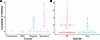
Glaucoma is associated with ocular hypertension, and lowering intraocular pressure is the primary objective of current therapies. Recent studies have established a key role for Schlemm’s canal endothelium in this pressure increase and have shown that it has a unique, lymphatic-like hybrid phenotype characterized by expression of the lymphatic transcription factor PROX1. However, the functional importance of this hybrid phenotype in the adult canal remains unclear, as long-term studies have been limited by systemic requirements for lymphatic gene expression and a lack of Schlemm’s canal–specific animal models. Here, we designed and validated a strategy using 4OH-tamoxifen-loaded nanocarriers to generate targeted, Schlemm’s canal specific Prox1 knockout mice that specifically lacked lymphatic characteristics in the canal endothelium. Within 4 weeks, intraocular pressure was significantly elevated, and ocular hypertension was maintained for at least 24 weeks. Unlike lymphatic vessels, which degenerate following Prox1 deletion, Schlemm’s canal persisted but reverted to a less functional vein-like phenotype with no change in size or morphology. Together, these findings demonstrate the utility of nanocarrier-mediated tamoxifen delivery and establish the importance of the Schlemm’s canal lymphatic-like phenotype in intraocular pressure regulation, providing targets for future glaucoma therapies and a mouse model of adult-onset ocular hypertension.
Authors
Sofia Lara Ochoa, Hoi-Lam Li, Hyeohn Kim, Zihang Yan, Natalia C. Mendonca, Pan Liu, Hyunjoo J. Lee, Michael P. Vincent, Sultan Almunif, Hao F. Zhang, Haiyan Gong, Evan A. Scott, Mark Johnson, Benjamin R. Thomson
×Abstract
BACKGROUND Enhancing NAD+ levels with nicotinamide riboside (NR) confers antiinflammatory effects in human disease, although immunoregulatory mechanisms remain poorly characterized. We previously showed that ex vivo NR supplementation of primary CD4+ T cells from psoriatic individuals dampened immune responsiveness.METHODS To validate this in vivo, we performed a randomized, placebo-controlled NR supplementation study in individuals with mild-to-moderate psoriasis. Participants received oral NR (500 mg twice daily) or matching placebo for 4 weeks, with blood samples collected at baseline and after supplementation. NR reduced Th17 immune responsiveness.RESULTS Bulk CD4+ T cell RNA-seq identified induction of the SLIT-ROBO signaling pathway. NR supplementation increased circulating SLIT2 levels and enhanced SLIT2 production in dermal fibroblasts. Pharmacologic and genetic interrogation in CD4+ T cells and fibroblasts demonstrated that SLIT2, acting through the ROBO1 receptor, inhibited Rho GTPase signaling, thereby attenuating canonical Th17 polarization and fibroblast inflammatory activation.CONCLUSION These findings indicate that NAD+ augmentation exerts anti-inflammatory effects in psoriasis through SLIT2-ROBO1-mediated crosstalk between dermal fibroblasts and circulating CD4+ T cells, leading to suppression of Th17-driven inflammation.TRIAL REGISTRATION ClinicalTrials.gov NCT04271735 (registration date – 2020-08026), NCT01143454 (registration date - 2010-07-21), NCT01778569 (registration date – 2013-01-22), and NCT00001846 (registration date – 2001-01-11).FUNDING The NHLBI Division of Intramural Research (HL005102 – MNS).
Authors
Kim Han, Rachael J. Klein, Thomas C. Recupero, Anna Chiara Russo, Rahul Sharma, Anand K. Gupta, Shahin Hassanzadeh, Rebecca D. Huffstutler, Pradeep K. Dagur, Bryan Fisk, Neelam R. Redekar, Michael N. Sack
×Abstract
BACKGROUND Chimeric antigen receptor T-cell (CAR-T) therapies have revolutionized treatment for relapsed/refractory multiple myeloma (RRMM). However, cytokine release syndrome (CRS), a common and potentially severe complication, requires inpatient monitoring, limiting access and increasing costs. Wearable devices could support outpatient CAR-T delivery, but feasibility for CRS detection versus standard care remains unproven.METHODS We conducted a prospective, single-center observational pilot study to assess the feasibility of using wearable devices for monitoring vital signs and detecting CRS. Thirty patients receiving idecabtagene vicleucel (ide-cel) or ciltacabtagene autoleucel (cilta-cel) were enrolled; 25 with sufficient monitoring data were evaluable. Sensors collected skin and axillary temperature, oxygen saturation, respiratory and heart rate, and motion. Peripheral blood cytokines were analyzed pre- and postinfusion using a multiplex proteomic platform. The primary outcome was feasibility, assessed by CRS detection sensitivity and specificity; secondary outcomes included adherence, lead time, and performance of models integrating wearable and cytokine data.RESULTS CRS occurred in 20 of 25 patients. The best-performing wearable model detected 18 or 20 CRS episodes with a sensitivity of 0.72 (mean 0.75; 95% CI 0.60–0.91) and a specificity of 0.80 (mean 0.76; 95% CI 0.68–0.84), and a median lead time of 7:00 hours before nursing recognition. Median adherence during high-risk periods was 71%. Cytokine changes paralleled temperature elevations, and IFN-γ emerged as a consistent biomarker.CONCLUSION Wearable devices are feasible for early CRS detection and may support outpatient CAR-T care. Larger outpatient studies are warranted.TRIAL REGISTRATION This study did not meet the criteria for ClinicalTrials.gov registration.
Authors
Sridevi Rajeeve, Matt Wilkes, Nicole Zahradka, Lewis Tomalin, Mujahid Quidwai, Darren Pan, Nicholas J. Calafat, Martin Cusack, Adolfo Aleman, Kseniya Serebryakova, Katerina Kappes, Hayley Jackson, Sarita Agte, Santiago Thibaud, Larysa Sanchez, Shambavi Richard, Joshua Richter, Cesar Rodriguez, Hearn Jay Cho, Ajai Chari, Sundar Jagannath, Alessandro Laganà, Adriana C. Rossi, Samir Parekh
×Abstract
Eosinophilic esophagitis (EoE) is a type 2 allergic disease characterized by esophageal inflammation and epithelial cell dysfunction. The acquired loss of the anti–serine protease of kazal type 7 (anti-SPINK7) in the squamous epithelium of the esophagus has a causal role in EoE pathogenesis. However, there is a limited understanding of the factors that regulate its expression and responsiveness to inflammatory stimuli. Herein, we have identified the transcription factor, ovo like transcriptional repressor 1 (OVOL1), as an esophageal selective gene product that regulates SPINK7 promoter activity. Overexpression of OVOL1 increased SPINK7 expression, whereas its depletion decreased SPINK7 expression, impaired epithelial barrier, and increased production of the proatopy cytokine thymic stromal lymphopoietin (TSLP). Stimulation with IL-13 abrogated the nuclear translocation of OVOL1 and promoted enhanced degradation of OVOL1 protein. This effect of IL-13 was dependent on the esophageal specific cysteine protease calpain-14 at least in part. Analysis of human esophageal biopsies demonstrated that the expression of esophageal OVOL1 correlated with SPINK7 transcript expression and was lost as a function of EoE disease activity. In summary, our study identifies key regulatory mechanisms in EoE pathogenesis, demonstrating that OVOL1 promotes SPINK7 transcription, whereas IL-13 suppresses this pathway in EoE.
Authors
Nurit P. Azouz, Andrea M. Klingler, Sierra S. Beach, Kalen Rossey, Mark Rochman, Misu Paul, Julie M. Caldwell, Michael Brusilovsky, Alexander T. Dwyer, Xiaoting Chen, Daniel Miller, Carmy Forney, Leah C. Kottyan, Matthew T. Weirauch, Marc E. Rothenberg