
Clinical Research and Public HealthInfectious diseaseMicrobiologyPublic Health
Open Access |  10.1172/jci.insight.196322
Population genomics of Plasmodium malariae from 4 African countries
Zachary R. Popkin-Hall,1,2 Kelly Carey-Ewend,3 Farhang Aghakhanian,1 Eniyou C. Oriero,4 Misago D. Seth,5 Melchior M. Kashamuka,6 Billy Ngasala,7 Innocent M. Ali,8 Eric Sompwe Mukomena,9,10 Celine I. Mandara,5 Oksana Kharabora,1 Rachel Sendor,3 Alfred Simkin,11 Alfred Amambua-Ngwa,4 Antoinette Tshefu,6 Abebe A. Fola,11 Deus S. Ishengoma,5,12,13 Jeffrey A. Bailey,11,14 Jonathan B. Parr,1,15,16 Jessica T. Lin,1,15,17 and Jonathan J. Juliano1,3,15,16
1Institute for Global Health and Infectious Diseases, University of North Carolina, Chapel Hill, North Carolina, USA.
2Department of Biology, Western Connecticut State University, Danbury, Connecticut, USA.
3Department of Epidemiology, Gillings School of Global Public Health, University of North Carolina, Chapel Hill, North Carolina, USA.
4Disease Control and Elimination Theme, Medical Research Council Unit The Gambia at London School of Hygiene & Tropical Medicine, Fajara, The Gambia.
5National Institute for Medical Research, Dar es Salaam, Tanzania.
6Kinshasa School of Public Health, Kinshasa, Democratic Republic of Congo.
7Muhimbili University of Health and Allied Sciences, Bagamoyo, Tanzania.
8Department of Biochemistry, Faculty of Science, University of Dschang, Dschang, Cameroon.
9Programme nationale de lutte contre le paludisme, Democratic Republic of Congo.
10School of Public Health, University of Lubumbashi, Lubumbashi, Democratic Republic of Congo.
11Department of Pathology and Laboratory Medicine, Warren Alpert Medical School, Brown University, Rhode Island, USA.
12Harvard T.H. Chan School of Public Health, Boston, Massachusetts, USA.
13Department of Biochemistry, Kampala International University in Tanzania, Dar es Salaam, Tanzania.
14Center for Computational Molecular Biology, Brown University, Rhode Island, USA.
15Division of Infectious Diseases,
16Curriculum of Genetics and Molecular Biology, and
17Department of Microbiology and Immunology, University of North Carolina School of Medicine, University of North Carolina, Chapel Hill, North Carolina, USA.
Address correspondence to: Jonathan Juliano, 130 Mason Farm Road, Chapel Hill, North Carolina 27514, USA. Email: jjuliano@med.unc.edu. ZRPH’s present address is: Department of Biology, Western Connecticut State University, Danbury, Connecticut, USA.
Authorship note: ZRPH and KCE are co–first authors.
Find articles by Popkin-Hall, Z. in: PubMed | Google Scholar
1Institute for Global Health and Infectious Diseases, University of North Carolina, Chapel Hill, North Carolina, USA.
2Department of Biology, Western Connecticut State University, Danbury, Connecticut, USA.
3Department of Epidemiology, Gillings School of Global Public Health, University of North Carolina, Chapel Hill, North Carolina, USA.
4Disease Control and Elimination Theme, Medical Research Council Unit The Gambia at London School of Hygiene & Tropical Medicine, Fajara, The Gambia.
5National Institute for Medical Research, Dar es Salaam, Tanzania.
6Kinshasa School of Public Health, Kinshasa, Democratic Republic of Congo.
7Muhimbili University of Health and Allied Sciences, Bagamoyo, Tanzania.
8Department of Biochemistry, Faculty of Science, University of Dschang, Dschang, Cameroon.
9Programme nationale de lutte contre le paludisme, Democratic Republic of Congo.
10School of Public Health, University of Lubumbashi, Lubumbashi, Democratic Republic of Congo.
11Department of Pathology and Laboratory Medicine, Warren Alpert Medical School, Brown University, Rhode Island, USA.
12Harvard T.H. Chan School of Public Health, Boston, Massachusetts, USA.
13Department of Biochemistry, Kampala International University in Tanzania, Dar es Salaam, Tanzania.
14Center for Computational Molecular Biology, Brown University, Rhode Island, USA.
15Division of Infectious Diseases,
16Curriculum of Genetics and Molecular Biology, and
17Department of Microbiology and Immunology, University of North Carolina School of Medicine, University of North Carolina, Chapel Hill, North Carolina, USA.
Address correspondence to: Jonathan Juliano, 130 Mason Farm Road, Chapel Hill, North Carolina 27514, USA. Email: jjuliano@med.unc.edu. ZRPH’s present address is: Department of Biology, Western Connecticut State University, Danbury, Connecticut, USA.
Authorship note: ZRPH and KCE are co–first authors.
Find articles by Carey-Ewend, K. in: PubMed | Google Scholar
1Institute for Global Health and Infectious Diseases, University of North Carolina, Chapel Hill, North Carolina, USA.
2Department of Biology, Western Connecticut State University, Danbury, Connecticut, USA.
3Department of Epidemiology, Gillings School of Global Public Health, University of North Carolina, Chapel Hill, North Carolina, USA.
4Disease Control and Elimination Theme, Medical Research Council Unit The Gambia at London School of Hygiene & Tropical Medicine, Fajara, The Gambia.
5National Institute for Medical Research, Dar es Salaam, Tanzania.
6Kinshasa School of Public Health, Kinshasa, Democratic Republic of Congo.
7Muhimbili University of Health and Allied Sciences, Bagamoyo, Tanzania.
8Department of Biochemistry, Faculty of Science, University of Dschang, Dschang, Cameroon.
9Programme nationale de lutte contre le paludisme, Democratic Republic of Congo.
10School of Public Health, University of Lubumbashi, Lubumbashi, Democratic Republic of Congo.
11Department of Pathology and Laboratory Medicine, Warren Alpert Medical School, Brown University, Rhode Island, USA.
12Harvard T.H. Chan School of Public Health, Boston, Massachusetts, USA.
13Department of Biochemistry, Kampala International University in Tanzania, Dar es Salaam, Tanzania.
14Center for Computational Molecular Biology, Brown University, Rhode Island, USA.
15Division of Infectious Diseases,
16Curriculum of Genetics and Molecular Biology, and
17Department of Microbiology and Immunology, University of North Carolina School of Medicine, University of North Carolina, Chapel Hill, North Carolina, USA.
Address correspondence to: Jonathan Juliano, 130 Mason Farm Road, Chapel Hill, North Carolina 27514, USA. Email: jjuliano@med.unc.edu. ZRPH’s present address is: Department of Biology, Western Connecticut State University, Danbury, Connecticut, USA.
Authorship note: ZRPH and KCE are co–first authors.
Find articles by Aghakhanian, F. in: PubMed | Google Scholar
1Institute for Global Health and Infectious Diseases, University of North Carolina, Chapel Hill, North Carolina, USA.
2Department of Biology, Western Connecticut State University, Danbury, Connecticut, USA.
3Department of Epidemiology, Gillings School of Global Public Health, University of North Carolina, Chapel Hill, North Carolina, USA.
4Disease Control and Elimination Theme, Medical Research Council Unit The Gambia at London School of Hygiene & Tropical Medicine, Fajara, The Gambia.
5National Institute for Medical Research, Dar es Salaam, Tanzania.
6Kinshasa School of Public Health, Kinshasa, Democratic Republic of Congo.
7Muhimbili University of Health and Allied Sciences, Bagamoyo, Tanzania.
8Department of Biochemistry, Faculty of Science, University of Dschang, Dschang, Cameroon.
9Programme nationale de lutte contre le paludisme, Democratic Republic of Congo.
10School of Public Health, University of Lubumbashi, Lubumbashi, Democratic Republic of Congo.
11Department of Pathology and Laboratory Medicine, Warren Alpert Medical School, Brown University, Rhode Island, USA.
12Harvard T.H. Chan School of Public Health, Boston, Massachusetts, USA.
13Department of Biochemistry, Kampala International University in Tanzania, Dar es Salaam, Tanzania.
14Center for Computational Molecular Biology, Brown University, Rhode Island, USA.
15Division of Infectious Diseases,
16Curriculum of Genetics and Molecular Biology, and
17Department of Microbiology and Immunology, University of North Carolina School of Medicine, University of North Carolina, Chapel Hill, North Carolina, USA.
Address correspondence to: Jonathan Juliano, 130 Mason Farm Road, Chapel Hill, North Carolina 27514, USA. Email: jjuliano@med.unc.edu. ZRPH’s present address is: Department of Biology, Western Connecticut State University, Danbury, Connecticut, USA.
Authorship note: ZRPH and KCE are co–first authors.
Find articles by Oriero, E. in: PubMed | Google Scholar
1Institute for Global Health and Infectious Diseases, University of North Carolina, Chapel Hill, North Carolina, USA.
2Department of Biology, Western Connecticut State University, Danbury, Connecticut, USA.
3Department of Epidemiology, Gillings School of Global Public Health, University of North Carolina, Chapel Hill, North Carolina, USA.
4Disease Control and Elimination Theme, Medical Research Council Unit The Gambia at London School of Hygiene & Tropical Medicine, Fajara, The Gambia.
5National Institute for Medical Research, Dar es Salaam, Tanzania.
6Kinshasa School of Public Health, Kinshasa, Democratic Republic of Congo.
7Muhimbili University of Health and Allied Sciences, Bagamoyo, Tanzania.
8Department of Biochemistry, Faculty of Science, University of Dschang, Dschang, Cameroon.
9Programme nationale de lutte contre le paludisme, Democratic Republic of Congo.
10School of Public Health, University of Lubumbashi, Lubumbashi, Democratic Republic of Congo.
11Department of Pathology and Laboratory Medicine, Warren Alpert Medical School, Brown University, Rhode Island, USA.
12Harvard T.H. Chan School of Public Health, Boston, Massachusetts, USA.
13Department of Biochemistry, Kampala International University in Tanzania, Dar es Salaam, Tanzania.
14Center for Computational Molecular Biology, Brown University, Rhode Island, USA.
15Division of Infectious Diseases,
16Curriculum of Genetics and Molecular Biology, and
17Department of Microbiology and Immunology, University of North Carolina School of Medicine, University of North Carolina, Chapel Hill, North Carolina, USA.
Address correspondence to: Jonathan Juliano, 130 Mason Farm Road, Chapel Hill, North Carolina 27514, USA. Email: jjuliano@med.unc.edu. ZRPH’s present address is: Department of Biology, Western Connecticut State University, Danbury, Connecticut, USA.
Authorship note: ZRPH and KCE are co–first authors.
Find articles by Seth, M. in: PubMed | Google Scholar
1Institute for Global Health and Infectious Diseases, University of North Carolina, Chapel Hill, North Carolina, USA.
2Department of Biology, Western Connecticut State University, Danbury, Connecticut, USA.
3Department of Epidemiology, Gillings School of Global Public Health, University of North Carolina, Chapel Hill, North Carolina, USA.
4Disease Control and Elimination Theme, Medical Research Council Unit The Gambia at London School of Hygiene & Tropical Medicine, Fajara, The Gambia.
5National Institute for Medical Research, Dar es Salaam, Tanzania.
6Kinshasa School of Public Health, Kinshasa, Democratic Republic of Congo.
7Muhimbili University of Health and Allied Sciences, Bagamoyo, Tanzania.
8Department of Biochemistry, Faculty of Science, University of Dschang, Dschang, Cameroon.
9Programme nationale de lutte contre le paludisme, Democratic Republic of Congo.
10School of Public Health, University of Lubumbashi, Lubumbashi, Democratic Republic of Congo.
11Department of Pathology and Laboratory Medicine, Warren Alpert Medical School, Brown University, Rhode Island, USA.
12Harvard T.H. Chan School of Public Health, Boston, Massachusetts, USA.
13Department of Biochemistry, Kampala International University in Tanzania, Dar es Salaam, Tanzania.
14Center for Computational Molecular Biology, Brown University, Rhode Island, USA.
15Division of Infectious Diseases,
16Curriculum of Genetics and Molecular Biology, and
17Department of Microbiology and Immunology, University of North Carolina School of Medicine, University of North Carolina, Chapel Hill, North Carolina, USA.
Address correspondence to: Jonathan Juliano, 130 Mason Farm Road, Chapel Hill, North Carolina 27514, USA. Email: jjuliano@med.unc.edu. ZRPH’s present address is: Department of Biology, Western Connecticut State University, Danbury, Connecticut, USA.
Authorship note: ZRPH and KCE are co–first authors.
Find articles by Kashamuka, M. in: PubMed | Google Scholar
1Institute for Global Health and Infectious Diseases, University of North Carolina, Chapel Hill, North Carolina, USA.
2Department of Biology, Western Connecticut State University, Danbury, Connecticut, USA.
3Department of Epidemiology, Gillings School of Global Public Health, University of North Carolina, Chapel Hill, North Carolina, USA.
4Disease Control and Elimination Theme, Medical Research Council Unit The Gambia at London School of Hygiene & Tropical Medicine, Fajara, The Gambia.
5National Institute for Medical Research, Dar es Salaam, Tanzania.
6Kinshasa School of Public Health, Kinshasa, Democratic Republic of Congo.
7Muhimbili University of Health and Allied Sciences, Bagamoyo, Tanzania.
8Department of Biochemistry, Faculty of Science, University of Dschang, Dschang, Cameroon.
9Programme nationale de lutte contre le paludisme, Democratic Republic of Congo.
10School of Public Health, University of Lubumbashi, Lubumbashi, Democratic Republic of Congo.
11Department of Pathology and Laboratory Medicine, Warren Alpert Medical School, Brown University, Rhode Island, USA.
12Harvard T.H. Chan School of Public Health, Boston, Massachusetts, USA.
13Department of Biochemistry, Kampala International University in Tanzania, Dar es Salaam, Tanzania.
14Center for Computational Molecular Biology, Brown University, Rhode Island, USA.
15Division of Infectious Diseases,
16Curriculum of Genetics and Molecular Biology, and
17Department of Microbiology and Immunology, University of North Carolina School of Medicine, University of North Carolina, Chapel Hill, North Carolina, USA.
Address correspondence to: Jonathan Juliano, 130 Mason Farm Road, Chapel Hill, North Carolina 27514, USA. Email: jjuliano@med.unc.edu. ZRPH’s present address is: Department of Biology, Western Connecticut State University, Danbury, Connecticut, USA.
Authorship note: ZRPH and KCE are co–first authors.
Find articles by Ngasala, B. in: PubMed | Google Scholar
1Institute for Global Health and Infectious Diseases, University of North Carolina, Chapel Hill, North Carolina, USA.
2Department of Biology, Western Connecticut State University, Danbury, Connecticut, USA.
3Department of Epidemiology, Gillings School of Global Public Health, University of North Carolina, Chapel Hill, North Carolina, USA.
4Disease Control and Elimination Theme, Medical Research Council Unit The Gambia at London School of Hygiene & Tropical Medicine, Fajara, The Gambia.
5National Institute for Medical Research, Dar es Salaam, Tanzania.
6Kinshasa School of Public Health, Kinshasa, Democratic Republic of Congo.
7Muhimbili University of Health and Allied Sciences, Bagamoyo, Tanzania.
8Department of Biochemistry, Faculty of Science, University of Dschang, Dschang, Cameroon.
9Programme nationale de lutte contre le paludisme, Democratic Republic of Congo.
10School of Public Health, University of Lubumbashi, Lubumbashi, Democratic Republic of Congo.
11Department of Pathology and Laboratory Medicine, Warren Alpert Medical School, Brown University, Rhode Island, USA.
12Harvard T.H. Chan School of Public Health, Boston, Massachusetts, USA.
13Department of Biochemistry, Kampala International University in Tanzania, Dar es Salaam, Tanzania.
14Center for Computational Molecular Biology, Brown University, Rhode Island, USA.
15Division of Infectious Diseases,
16Curriculum of Genetics and Molecular Biology, and
17Department of Microbiology and Immunology, University of North Carolina School of Medicine, University of North Carolina, Chapel Hill, North Carolina, USA.
Address correspondence to: Jonathan Juliano, 130 Mason Farm Road, Chapel Hill, North Carolina 27514, USA. Email: jjuliano@med.unc.edu. ZRPH’s present address is: Department of Biology, Western Connecticut State University, Danbury, Connecticut, USA.
Authorship note: ZRPH and KCE are co–first authors.
Find articles by Ali, I. in: PubMed | Google Scholar
1Institute for Global Health and Infectious Diseases, University of North Carolina, Chapel Hill, North Carolina, USA.
2Department of Biology, Western Connecticut State University, Danbury, Connecticut, USA.
3Department of Epidemiology, Gillings School of Global Public Health, University of North Carolina, Chapel Hill, North Carolina, USA.
4Disease Control and Elimination Theme, Medical Research Council Unit The Gambia at London School of Hygiene & Tropical Medicine, Fajara, The Gambia.
5National Institute for Medical Research, Dar es Salaam, Tanzania.
6Kinshasa School of Public Health, Kinshasa, Democratic Republic of Congo.
7Muhimbili University of Health and Allied Sciences, Bagamoyo, Tanzania.
8Department of Biochemistry, Faculty of Science, University of Dschang, Dschang, Cameroon.
9Programme nationale de lutte contre le paludisme, Democratic Republic of Congo.
10School of Public Health, University of Lubumbashi, Lubumbashi, Democratic Republic of Congo.
11Department of Pathology and Laboratory Medicine, Warren Alpert Medical School, Brown University, Rhode Island, USA.
12Harvard T.H. Chan School of Public Health, Boston, Massachusetts, USA.
13Department of Biochemistry, Kampala International University in Tanzania, Dar es Salaam, Tanzania.
14Center for Computational Molecular Biology, Brown University, Rhode Island, USA.
15Division of Infectious Diseases,
16Curriculum of Genetics and Molecular Biology, and
17Department of Microbiology and Immunology, University of North Carolina School of Medicine, University of North Carolina, Chapel Hill, North Carolina, USA.
Address correspondence to: Jonathan Juliano, 130 Mason Farm Road, Chapel Hill, North Carolina 27514, USA. Email: jjuliano@med.unc.edu. ZRPH’s present address is: Department of Biology, Western Connecticut State University, Danbury, Connecticut, USA.
Authorship note: ZRPH and KCE are co–first authors.
Find articles by Mukomena, E. in: PubMed | Google Scholar
1Institute for Global Health and Infectious Diseases, University of North Carolina, Chapel Hill, North Carolina, USA.
2Department of Biology, Western Connecticut State University, Danbury, Connecticut, USA.
3Department of Epidemiology, Gillings School of Global Public Health, University of North Carolina, Chapel Hill, North Carolina, USA.
4Disease Control and Elimination Theme, Medical Research Council Unit The Gambia at London School of Hygiene & Tropical Medicine, Fajara, The Gambia.
5National Institute for Medical Research, Dar es Salaam, Tanzania.
6Kinshasa School of Public Health, Kinshasa, Democratic Republic of Congo.
7Muhimbili University of Health and Allied Sciences, Bagamoyo, Tanzania.
8Department of Biochemistry, Faculty of Science, University of Dschang, Dschang, Cameroon.
9Programme nationale de lutte contre le paludisme, Democratic Republic of Congo.
10School of Public Health, University of Lubumbashi, Lubumbashi, Democratic Republic of Congo.
11Department of Pathology and Laboratory Medicine, Warren Alpert Medical School, Brown University, Rhode Island, USA.
12Harvard T.H. Chan School of Public Health, Boston, Massachusetts, USA.
13Department of Biochemistry, Kampala International University in Tanzania, Dar es Salaam, Tanzania.
14Center for Computational Molecular Biology, Brown University, Rhode Island, USA.
15Division of Infectious Diseases,
16Curriculum of Genetics and Molecular Biology, and
17Department of Microbiology and Immunology, University of North Carolina School of Medicine, University of North Carolina, Chapel Hill, North Carolina, USA.
Address correspondence to: Jonathan Juliano, 130 Mason Farm Road, Chapel Hill, North Carolina 27514, USA. Email: jjuliano@med.unc.edu. ZRPH’s present address is: Department of Biology, Western Connecticut State University, Danbury, Connecticut, USA.
Authorship note: ZRPH and KCE are co–first authors.
Find articles by Mandara, C. in: PubMed | Google Scholar
1Institute for Global Health and Infectious Diseases, University of North Carolina, Chapel Hill, North Carolina, USA.
2Department of Biology, Western Connecticut State University, Danbury, Connecticut, USA.
3Department of Epidemiology, Gillings School of Global Public Health, University of North Carolina, Chapel Hill, North Carolina, USA.
4Disease Control and Elimination Theme, Medical Research Council Unit The Gambia at London School of Hygiene & Tropical Medicine, Fajara, The Gambia.
5National Institute for Medical Research, Dar es Salaam, Tanzania.
6Kinshasa School of Public Health, Kinshasa, Democratic Republic of Congo.
7Muhimbili University of Health and Allied Sciences, Bagamoyo, Tanzania.
8Department of Biochemistry, Faculty of Science, University of Dschang, Dschang, Cameroon.
9Programme nationale de lutte contre le paludisme, Democratic Republic of Congo.
10School of Public Health, University of Lubumbashi, Lubumbashi, Democratic Republic of Congo.
11Department of Pathology and Laboratory Medicine, Warren Alpert Medical School, Brown University, Rhode Island, USA.
12Harvard T.H. Chan School of Public Health, Boston, Massachusetts, USA.
13Department of Biochemistry, Kampala International University in Tanzania, Dar es Salaam, Tanzania.
14Center for Computational Molecular Biology, Brown University, Rhode Island, USA.
15Division of Infectious Diseases,
16Curriculum of Genetics and Molecular Biology, and
17Department of Microbiology and Immunology, University of North Carolina School of Medicine, University of North Carolina, Chapel Hill, North Carolina, USA.
Address correspondence to: Jonathan Juliano, 130 Mason Farm Road, Chapel Hill, North Carolina 27514, USA. Email: jjuliano@med.unc.edu. ZRPH’s present address is: Department of Biology, Western Connecticut State University, Danbury, Connecticut, USA.
Authorship note: ZRPH and KCE are co–first authors.
Find articles by Kharabora, O. in: PubMed | Google Scholar
1Institute for Global Health and Infectious Diseases, University of North Carolina, Chapel Hill, North Carolina, USA.
2Department of Biology, Western Connecticut State University, Danbury, Connecticut, USA.
3Department of Epidemiology, Gillings School of Global Public Health, University of North Carolina, Chapel Hill, North Carolina, USA.
4Disease Control and Elimination Theme, Medical Research Council Unit The Gambia at London School of Hygiene & Tropical Medicine, Fajara, The Gambia.
5National Institute for Medical Research, Dar es Salaam, Tanzania.
6Kinshasa School of Public Health, Kinshasa, Democratic Republic of Congo.
7Muhimbili University of Health and Allied Sciences, Bagamoyo, Tanzania.
8Department of Biochemistry, Faculty of Science, University of Dschang, Dschang, Cameroon.
9Programme nationale de lutte contre le paludisme, Democratic Republic of Congo.
10School of Public Health, University of Lubumbashi, Lubumbashi, Democratic Republic of Congo.
11Department of Pathology and Laboratory Medicine, Warren Alpert Medical School, Brown University, Rhode Island, USA.
12Harvard T.H. Chan School of Public Health, Boston, Massachusetts, USA.
13Department of Biochemistry, Kampala International University in Tanzania, Dar es Salaam, Tanzania.
14Center for Computational Molecular Biology, Brown University, Rhode Island, USA.
15Division of Infectious Diseases,
16Curriculum of Genetics and Molecular Biology, and
17Department of Microbiology and Immunology, University of North Carolina School of Medicine, University of North Carolina, Chapel Hill, North Carolina, USA.
Address correspondence to: Jonathan Juliano, 130 Mason Farm Road, Chapel Hill, North Carolina 27514, USA. Email: jjuliano@med.unc.edu. ZRPH’s present address is: Department of Biology, Western Connecticut State University, Danbury, Connecticut, USA.
Authorship note: ZRPH and KCE are co–first authors.
Find articles by Sendor, R. in: PubMed | Google Scholar
1Institute for Global Health and Infectious Diseases, University of North Carolina, Chapel Hill, North Carolina, USA.
2Department of Biology, Western Connecticut State University, Danbury, Connecticut, USA.
3Department of Epidemiology, Gillings School of Global Public Health, University of North Carolina, Chapel Hill, North Carolina, USA.
4Disease Control and Elimination Theme, Medical Research Council Unit The Gambia at London School of Hygiene & Tropical Medicine, Fajara, The Gambia.
5National Institute for Medical Research, Dar es Salaam, Tanzania.
6Kinshasa School of Public Health, Kinshasa, Democratic Republic of Congo.
7Muhimbili University of Health and Allied Sciences, Bagamoyo, Tanzania.
8Department of Biochemistry, Faculty of Science, University of Dschang, Dschang, Cameroon.
9Programme nationale de lutte contre le paludisme, Democratic Republic of Congo.
10School of Public Health, University of Lubumbashi, Lubumbashi, Democratic Republic of Congo.
11Department of Pathology and Laboratory Medicine, Warren Alpert Medical School, Brown University, Rhode Island, USA.
12Harvard T.H. Chan School of Public Health, Boston, Massachusetts, USA.
13Department of Biochemistry, Kampala International University in Tanzania, Dar es Salaam, Tanzania.
14Center for Computational Molecular Biology, Brown University, Rhode Island, USA.
15Division of Infectious Diseases,
16Curriculum of Genetics and Molecular Biology, and
17Department of Microbiology and Immunology, University of North Carolina School of Medicine, University of North Carolina, Chapel Hill, North Carolina, USA.
Address correspondence to: Jonathan Juliano, 130 Mason Farm Road, Chapel Hill, North Carolina 27514, USA. Email: jjuliano@med.unc.edu. ZRPH’s present address is: Department of Biology, Western Connecticut State University, Danbury, Connecticut, USA.
Authorship note: ZRPH and KCE are co–first authors.
Find articles by Simkin, A. in: PubMed | Google Scholar
1Institute for Global Health and Infectious Diseases, University of North Carolina, Chapel Hill, North Carolina, USA.
2Department of Biology, Western Connecticut State University, Danbury, Connecticut, USA.
3Department of Epidemiology, Gillings School of Global Public Health, University of North Carolina, Chapel Hill, North Carolina, USA.
4Disease Control and Elimination Theme, Medical Research Council Unit The Gambia at London School of Hygiene & Tropical Medicine, Fajara, The Gambia.
5National Institute for Medical Research, Dar es Salaam, Tanzania.
6Kinshasa School of Public Health, Kinshasa, Democratic Republic of Congo.
7Muhimbili University of Health and Allied Sciences, Bagamoyo, Tanzania.
8Department of Biochemistry, Faculty of Science, University of Dschang, Dschang, Cameroon.
9Programme nationale de lutte contre le paludisme, Democratic Republic of Congo.
10School of Public Health, University of Lubumbashi, Lubumbashi, Democratic Republic of Congo.
11Department of Pathology and Laboratory Medicine, Warren Alpert Medical School, Brown University, Rhode Island, USA.
12Harvard T.H. Chan School of Public Health, Boston, Massachusetts, USA.
13Department of Biochemistry, Kampala International University in Tanzania, Dar es Salaam, Tanzania.
14Center for Computational Molecular Biology, Brown University, Rhode Island, USA.
15Division of Infectious Diseases,
16Curriculum of Genetics and Molecular Biology, and
17Department of Microbiology and Immunology, University of North Carolina School of Medicine, University of North Carolina, Chapel Hill, North Carolina, USA.
Address correspondence to: Jonathan Juliano, 130 Mason Farm Road, Chapel Hill, North Carolina 27514, USA. Email: jjuliano@med.unc.edu. ZRPH’s present address is: Department of Biology, Western Connecticut State University, Danbury, Connecticut, USA.
Authorship note: ZRPH and KCE are co–first authors.
Find articles by Amambua-Ngwa, A. in: PubMed | Google Scholar
1Institute for Global Health and Infectious Diseases, University of North Carolina, Chapel Hill, North Carolina, USA.
2Department of Biology, Western Connecticut State University, Danbury, Connecticut, USA.
3Department of Epidemiology, Gillings School of Global Public Health, University of North Carolina, Chapel Hill, North Carolina, USA.
4Disease Control and Elimination Theme, Medical Research Council Unit The Gambia at London School of Hygiene & Tropical Medicine, Fajara, The Gambia.
5National Institute for Medical Research, Dar es Salaam, Tanzania.
6Kinshasa School of Public Health, Kinshasa, Democratic Republic of Congo.
7Muhimbili University of Health and Allied Sciences, Bagamoyo, Tanzania.
8Department of Biochemistry, Faculty of Science, University of Dschang, Dschang, Cameroon.
9Programme nationale de lutte contre le paludisme, Democratic Republic of Congo.
10School of Public Health, University of Lubumbashi, Lubumbashi, Democratic Republic of Congo.
11Department of Pathology and Laboratory Medicine, Warren Alpert Medical School, Brown University, Rhode Island, USA.
12Harvard T.H. Chan School of Public Health, Boston, Massachusetts, USA.
13Department of Biochemistry, Kampala International University in Tanzania, Dar es Salaam, Tanzania.
14Center for Computational Molecular Biology, Brown University, Rhode Island, USA.
15Division of Infectious Diseases,
16Curriculum of Genetics and Molecular Biology, and
17Department of Microbiology and Immunology, University of North Carolina School of Medicine, University of North Carolina, Chapel Hill, North Carolina, USA.
Address correspondence to: Jonathan Juliano, 130 Mason Farm Road, Chapel Hill, North Carolina 27514, USA. Email: jjuliano@med.unc.edu. ZRPH’s present address is: Department of Biology, Western Connecticut State University, Danbury, Connecticut, USA.
Authorship note: ZRPH and KCE are co–first authors.
Find articles by Tshefu, A. in: PubMed | Google Scholar
1Institute for Global Health and Infectious Diseases, University of North Carolina, Chapel Hill, North Carolina, USA.
2Department of Biology, Western Connecticut State University, Danbury, Connecticut, USA.
3Department of Epidemiology, Gillings School of Global Public Health, University of North Carolina, Chapel Hill, North Carolina, USA.
4Disease Control and Elimination Theme, Medical Research Council Unit The Gambia at London School of Hygiene & Tropical Medicine, Fajara, The Gambia.
5National Institute for Medical Research, Dar es Salaam, Tanzania.
6Kinshasa School of Public Health, Kinshasa, Democratic Republic of Congo.
7Muhimbili University of Health and Allied Sciences, Bagamoyo, Tanzania.
8Department of Biochemistry, Faculty of Science, University of Dschang, Dschang, Cameroon.
9Programme nationale de lutte contre le paludisme, Democratic Republic of Congo.
10School of Public Health, University of Lubumbashi, Lubumbashi, Democratic Republic of Congo.
11Department of Pathology and Laboratory Medicine, Warren Alpert Medical School, Brown University, Rhode Island, USA.
12Harvard T.H. Chan School of Public Health, Boston, Massachusetts, USA.
13Department of Biochemistry, Kampala International University in Tanzania, Dar es Salaam, Tanzania.
14Center for Computational Molecular Biology, Brown University, Rhode Island, USA.
15Division of Infectious Diseases,
16Curriculum of Genetics and Molecular Biology, and
17Department of Microbiology and Immunology, University of North Carolina School of Medicine, University of North Carolina, Chapel Hill, North Carolina, USA.
Address correspondence to: Jonathan Juliano, 130 Mason Farm Road, Chapel Hill, North Carolina 27514, USA. Email: jjuliano@med.unc.edu. ZRPH’s present address is: Department of Biology, Western Connecticut State University, Danbury, Connecticut, USA.
Authorship note: ZRPH and KCE are co–first authors.
Find articles by Fola, A. in: PubMed | Google Scholar
1Institute for Global Health and Infectious Diseases, University of North Carolina, Chapel Hill, North Carolina, USA.
2Department of Biology, Western Connecticut State University, Danbury, Connecticut, USA.
3Department of Epidemiology, Gillings School of Global Public Health, University of North Carolina, Chapel Hill, North Carolina, USA.
4Disease Control and Elimination Theme, Medical Research Council Unit The Gambia at London School of Hygiene & Tropical Medicine, Fajara, The Gambia.
5National Institute for Medical Research, Dar es Salaam, Tanzania.
6Kinshasa School of Public Health, Kinshasa, Democratic Republic of Congo.
7Muhimbili University of Health and Allied Sciences, Bagamoyo, Tanzania.
8Department of Biochemistry, Faculty of Science, University of Dschang, Dschang, Cameroon.
9Programme nationale de lutte contre le paludisme, Democratic Republic of Congo.
10School of Public Health, University of Lubumbashi, Lubumbashi, Democratic Republic of Congo.
11Department of Pathology and Laboratory Medicine, Warren Alpert Medical School, Brown University, Rhode Island, USA.
12Harvard T.H. Chan School of Public Health, Boston, Massachusetts, USA.
13Department of Biochemistry, Kampala International University in Tanzania, Dar es Salaam, Tanzania.
14Center for Computational Molecular Biology, Brown University, Rhode Island, USA.
15Division of Infectious Diseases,
16Curriculum of Genetics and Molecular Biology, and
17Department of Microbiology and Immunology, University of North Carolina School of Medicine, University of North Carolina, Chapel Hill, North Carolina, USA.
Address correspondence to: Jonathan Juliano, 130 Mason Farm Road, Chapel Hill, North Carolina 27514, USA. Email: jjuliano@med.unc.edu. ZRPH’s present address is: Department of Biology, Western Connecticut State University, Danbury, Connecticut, USA.
Authorship note: ZRPH and KCE are co–first authors.
Find articles by Ishengoma, D. in: PubMed | Google Scholar
1Institute for Global Health and Infectious Diseases, University of North Carolina, Chapel Hill, North Carolina, USA.
2Department of Biology, Western Connecticut State University, Danbury, Connecticut, USA.
3Department of Epidemiology, Gillings School of Global Public Health, University of North Carolina, Chapel Hill, North Carolina, USA.
4Disease Control and Elimination Theme, Medical Research Council Unit The Gambia at London School of Hygiene & Tropical Medicine, Fajara, The Gambia.
5National Institute for Medical Research, Dar es Salaam, Tanzania.
6Kinshasa School of Public Health, Kinshasa, Democratic Republic of Congo.
7Muhimbili University of Health and Allied Sciences, Bagamoyo, Tanzania.
8Department of Biochemistry, Faculty of Science, University of Dschang, Dschang, Cameroon.
9Programme nationale de lutte contre le paludisme, Democratic Republic of Congo.
10School of Public Health, University of Lubumbashi, Lubumbashi, Democratic Republic of Congo.
11Department of Pathology and Laboratory Medicine, Warren Alpert Medical School, Brown University, Rhode Island, USA.
12Harvard T.H. Chan School of Public Health, Boston, Massachusetts, USA.
13Department of Biochemistry, Kampala International University in Tanzania, Dar es Salaam, Tanzania.
14Center for Computational Molecular Biology, Brown University, Rhode Island, USA.
15Division of Infectious Diseases,
16Curriculum of Genetics and Molecular Biology, and
17Department of Microbiology and Immunology, University of North Carolina School of Medicine, University of North Carolina, Chapel Hill, North Carolina, USA.
Address correspondence to: Jonathan Juliano, 130 Mason Farm Road, Chapel Hill, North Carolina 27514, USA. Email: jjuliano@med.unc.edu. ZRPH’s present address is: Department of Biology, Western Connecticut State University, Danbury, Connecticut, USA.
Authorship note: ZRPH and KCE are co–first authors.
Find articles by Bailey, J. in: PubMed | Google Scholar
1Institute for Global Health and Infectious Diseases, University of North Carolina, Chapel Hill, North Carolina, USA.
2Department of Biology, Western Connecticut State University, Danbury, Connecticut, USA.
3Department of Epidemiology, Gillings School of Global Public Health, University of North Carolina, Chapel Hill, North Carolina, USA.
4Disease Control and Elimination Theme, Medical Research Council Unit The Gambia at London School of Hygiene & Tropical Medicine, Fajara, The Gambia.
5National Institute for Medical Research, Dar es Salaam, Tanzania.
6Kinshasa School of Public Health, Kinshasa, Democratic Republic of Congo.
7Muhimbili University of Health and Allied Sciences, Bagamoyo, Tanzania.
8Department of Biochemistry, Faculty of Science, University of Dschang, Dschang, Cameroon.
9Programme nationale de lutte contre le paludisme, Democratic Republic of Congo.
10School of Public Health, University of Lubumbashi, Lubumbashi, Democratic Republic of Congo.
11Department of Pathology and Laboratory Medicine, Warren Alpert Medical School, Brown University, Rhode Island, USA.
12Harvard T.H. Chan School of Public Health, Boston, Massachusetts, USA.
13Department of Biochemistry, Kampala International University in Tanzania, Dar es Salaam, Tanzania.
14Center for Computational Molecular Biology, Brown University, Rhode Island, USA.
15Division of Infectious Diseases,
16Curriculum of Genetics and Molecular Biology, and
17Department of Microbiology and Immunology, University of North Carolina School of Medicine, University of North Carolina, Chapel Hill, North Carolina, USA.
Address correspondence to: Jonathan Juliano, 130 Mason Farm Road, Chapel Hill, North Carolina 27514, USA. Email: jjuliano@med.unc.edu. ZRPH’s present address is: Department of Biology, Western Connecticut State University, Danbury, Connecticut, USA.
Authorship note: ZRPH and KCE are co–first authors.
Find articles by Parr, J. in: PubMed | Google Scholar
1Institute for Global Health and Infectious Diseases, University of North Carolina, Chapel Hill, North Carolina, USA.
2Department of Biology, Western Connecticut State University, Danbury, Connecticut, USA.
3Department of Epidemiology, Gillings School of Global Public Health, University of North Carolina, Chapel Hill, North Carolina, USA.
4Disease Control and Elimination Theme, Medical Research Council Unit The Gambia at London School of Hygiene & Tropical Medicine, Fajara, The Gambia.
5National Institute for Medical Research, Dar es Salaam, Tanzania.
6Kinshasa School of Public Health, Kinshasa, Democratic Republic of Congo.
7Muhimbili University of Health and Allied Sciences, Bagamoyo, Tanzania.
8Department of Biochemistry, Faculty of Science, University of Dschang, Dschang, Cameroon.
9Programme nationale de lutte contre le paludisme, Democratic Republic of Congo.
10School of Public Health, University of Lubumbashi, Lubumbashi, Democratic Republic of Congo.
11Department of Pathology and Laboratory Medicine, Warren Alpert Medical School, Brown University, Rhode Island, USA.
12Harvard T.H. Chan School of Public Health, Boston, Massachusetts, USA.
13Department of Biochemistry, Kampala International University in Tanzania, Dar es Salaam, Tanzania.
14Center for Computational Molecular Biology, Brown University, Rhode Island, USA.
15Division of Infectious Diseases,
16Curriculum of Genetics and Molecular Biology, and
17Department of Microbiology and Immunology, University of North Carolina School of Medicine, University of North Carolina, Chapel Hill, North Carolina, USA.
Address correspondence to: Jonathan Juliano, 130 Mason Farm Road, Chapel Hill, North Carolina 27514, USA. Email: jjuliano@med.unc.edu. ZRPH’s present address is: Department of Biology, Western Connecticut State University, Danbury, Connecticut, USA.
Authorship note: ZRPH and KCE are co–first authors.
Find articles by Lin, J. in: PubMed | Google Scholar
1Institute for Global Health and Infectious Diseases, University of North Carolina, Chapel Hill, North Carolina, USA.
2Department of Biology, Western Connecticut State University, Danbury, Connecticut, USA.
3Department of Epidemiology, Gillings School of Global Public Health, University of North Carolina, Chapel Hill, North Carolina, USA.
4Disease Control and Elimination Theme, Medical Research Council Unit The Gambia at London School of Hygiene & Tropical Medicine, Fajara, The Gambia.
5National Institute for Medical Research, Dar es Salaam, Tanzania.
6Kinshasa School of Public Health, Kinshasa, Democratic Republic of Congo.
7Muhimbili University of Health and Allied Sciences, Bagamoyo, Tanzania.
8Department of Biochemistry, Faculty of Science, University of Dschang, Dschang, Cameroon.
9Programme nationale de lutte contre le paludisme, Democratic Republic of Congo.
10School of Public Health, University of Lubumbashi, Lubumbashi, Democratic Republic of Congo.
11Department of Pathology and Laboratory Medicine, Warren Alpert Medical School, Brown University, Rhode Island, USA.
12Harvard T.H. Chan School of Public Health, Boston, Massachusetts, USA.
13Department of Biochemistry, Kampala International University in Tanzania, Dar es Salaam, Tanzania.
14Center for Computational Molecular Biology, Brown University, Rhode Island, USA.
15Division of Infectious Diseases,
16Curriculum of Genetics and Molecular Biology, and
17Department of Microbiology and Immunology, University of North Carolina School of Medicine, University of North Carolina, Chapel Hill, North Carolina, USA.
Address correspondence to: Jonathan Juliano, 130 Mason Farm Road, Chapel Hill, North Carolina 27514, USA. Email: jjuliano@med.unc.edu. ZRPH’s present address is: Department of Biology, Western Connecticut State University, Danbury, Connecticut, USA.
Authorship note: ZRPH and KCE are co–first authors.
Find articles by Juliano, J. in: PubMed | Google Scholar
Published May 5, 2026 - More info
JCI Insight. 2026;11(12):e196322. https://doi.org/10.1172/jci.insight.196322.
© 2026 Popkin-Hall et al. This work is licensed under the Creative Commons Attribution 4.0 International License. To view a copy of this license, visit http://creativecommons.org/licenses/by/4.0/.
Received: June 6, 2025; Accepted: April 24, 2026

-
Results
Variable sequencing coverage of African P. malariae isolates. Of 81 genomic DNA samples that underwent hybrid capture enrichment and whole-genome sequencing, 77 yielded usable data and were used for downstream genomic analysis, and 4 samples yielded no data from the sequencer, likely due to errors in library preparation. These 77 samples included 7 samples from Cameroon, 16 from DRC, 4 from Nigeria, and 50 from Tanzania (Supplemental Figure 1; supplemental material available online with this article; https://doi.org/10.1172/jci.insight.196322DS1). Tanzanian samples spanned 14 regions across Tanzania. Enrichment was overall successful, but a lower proportion of P. malariae reads were extracted from lower-density samples (Supplemental Figure 2). In the 77 samples that were successfully enriched and sequenced, sequencing coverage was variable (Supplemental Figure 3). Fifty-two samples (67.5%) had at least 1 times the average coverage across all chromosomes, 20 samples (26.0%) had at least 5 times the average coverage across all chromosomes, and 15 samples (19.5%) had at least 10 times the coverage across all chromosomes (Supplemental Figure 3). Among the 52 samples with an average coverage of at least 1 times, 77.0% of the genome was covered at 1 times or greater on average, 39.0% of the genome was covered at 5 times or greater on average, and 25.6% of the genome was covered at 10 times or greater on average. Among the 15 samples with the highest coverage, 95.3% of the genome was covered at 1 times or greater on average, 88.9% of the genome was covered at 5 times or greater on average, and 77.9% of the genome was covered at 10 times or greater on average. Sequencing coverage was highly significantly inversely correlated with CT (a proxy for parasite density) (F = 37.52, P (1, 118 df) < 0.001), with each additional CT corresponding to a 1.86 ± 0.3 times loss in coverage. Sequencing depth for each called variant varied by sample (Supplemental Figure 4). A total of 178,179 high-quality SNPs were identified following quality and missingness filtering and repeat masking (see Methods).
P. malariae generally has a low complexity of infection. Complexity of infection (COI) was estimated using coiaf (22) and was compared with that of 662 geographically matched P. falciparum isolates from the publicly available MalariaGEN Pf7 dataset (23) (Figure 1). The majority (92.2%, n = 71) of P. malariae isolates were monoclonal (COI = 1). Among the remaining 6 polyclonal samples, all but 1 contained 2 clones, and the remaining sample was estimated to contain 3 clones. By contrast, polyclonal infections were significantly (ANOVA F = 12.5, P < 0.001, df = 1) more common in P. falciparum. Of 662 geographically matched P. falciparum isolates, only 384 (58.0%) were monoclonal, and the remaining 278 (42.0%) were polyclonal. Infection by 2 clones was the most common form of P. falciparum polyclonal infection (71.6%, n = 199), similar to P. malariae. Country of origin was significantly associated with COI (F = 2.90, P = 0.034, df = 3), but the interaction between species and country was not (F = 1.08, P = 0.340, df = 2). Tukey’s post hoc test identified no significant differences in COI by country within species.
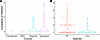 Figure 1
Complexity of infection. Complexity of infection in (A) P. malariae by country and (B) geographically matched P. falciparum and P. malariae isolates overall. Complexity of infection values are significantly lower in P. malariae than P. falciparum (ANOVA F = 12.5, P < 0.001, df = 1), but there is no significant variation by country within species.
Low nucleotide diversity. Among 3,763 candidate one-to-one orthologs between P. malariae and P. falciparum, 1,366 ortholog pairs were retained for nucleotide diversity (π) analysis following masking for coverage and repetitive regions (see Methods). The average π in P. malariae was 1.72 × 10⁻⁴, significantly lower (t = –113, P < 0.001, df = 5,340) than the average π in P. falciparum, which was 6.11 × 10⁻³ (Figure 2A). SNP count compared with median coverage across all samples is shown in Supplemental Figure 5.
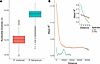 Figure 2
Nucleotide diversity (π) of orthologous genes among P. malariae and P. falciparum isolates. (A) A log-transformed box plot of π for each gene is shown for each of the 1,366 orthologs retained after masking (68 orthologs where missing data precluded π calculation for P. malariae are not shown). Boxes represent the 25th, 50th, and 75th percentiles, with outliers represented by dots. The difference in π between the species is highly significant (t = –250, P < 0.001, df = 26,002). (B) Linkage disequilibrium (LD) decay in P. falciparum and P. malariae. R2 values were calculated in PLINK for each distance. LD is higher for P. malariae compared with P. falciparum, with rapid decay of LD in P. falciparum over short distances. The LD decay difference is highly significant (t = –108, P < 0.001, df = 73,920). The inset shows LD from 2 to 10 bp, demonstrating that linkage in P. falciparum is higher than in P. malariae only at very short distances (<8 bp).
High linkage disequilibrium. Linkage disequilibrium was calculated in PLINK (24) for both P. malariae and the geographically matched P. falciparum isolates. Mean R2 values supporting linkage were plotted by distance between base pairs for both species (Figure 2B). The mean R2 was higher in P. falciparum for distances less than 5 bp (see Figure 2B inset), but it was consistently higher in P. malariae at distances of 5 bp or greater. This difference in linkage disequilibrium between the 2 species was highly significant (t = –108, P < 0.001, df = 73,920).
No evidence of strong population structure or geographic differentiation. To confirm that there was no bias introduced by our use of hybrid capture as opposed to the previous large-scale genomic study’s use of selective whole-genome amplification (21), we performed joint variant calling of both sample sets, and then generated a combined principal component analysis (PCA) (Supplemental Figure 6). Given that both sample sets clustered together, we proceeded with only our samples, since we had more information about their provenance and had precise geographic locations of collection. PCA of the 71 monoclonal P. malariae isolates showed no clear structure and no clear relationship between geography and genetic relatedness among isolates along either the first 2 principal components (Figure 3) or the subsequent 4 principal components (Supplemental Figure 7). A scree plot shows the cumulative contribution of each principal component (Supplemental Figure 8). Discriminant PCA identified 3 population clusters as the most likely possibility according to the Bayes information criterion, but these putative clusters did not correspond to geography (Supplemental Figure 9). ADMIXTURE calculated a lower cross-validation error (Supplemental Figure 10) for K = 2 (0.707) than K = 1 (0.936), but again the putative populations did not correspond to geography (Supplemental Figure 11). In addition, a genetic distance matrix identified 17 distinct clusters, but these clusters also did not correspond to geography and were not borne out in a maximum-likelihood phylogeny (Supplemental Figure 12). FST analysis also showed low differentiation between DRC and Tanzania, with a weighted average of 0.01. Identity-by-descent (IBD) inference analysis also failed to uncover any coherent geographic population structure (Supplemental Figure 13) but found overall higher pairwise IBD between P. malariae isolates (including IBD links between non-bordering countries, suggesting a population with unrestricted gene flow and lack of strong geographic structure) than in colocalized P. falciparum (Supplemental Figure 14). Finally, maximum likelihood phylogenies of the apicoplast and mitochondrion also showed no evidence of geographic stratification (Supplemental Figure 15). Thus, multiple orthogonal approaches suggest a lack of population structure based on the core genome.
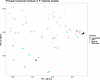 Figure 3
Principal component analysis of monoclonal P. malariae isolates. Analysis includes 71 monoclonal P. malariae isolates and 178,036 biallelic SNPs. The first 2 principal components (percentage of total variation explained) are depicted, with isolates colored by country of origin (Cameroon n = 5, DRC n = 16, Nigeria n = 5, Tanzania n = 45).
P. malariae is likely recovering from a genetic bottleneck. In the absence of compelling evidence for population structure within African P. malariae populations, we performed demographic inference modeling to identify the most likely history of this population. Of the 5 models tested (Figure 4), the “three epoch” model, indicating recovery from a bottleneck, was the best fit for African P. malariae based on the composite-likelihood Akaike information criterion (CL-AIC) (Supplemental Table 1). The parameter estimates are reported in Supplemental Table 2.
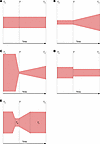 Figure 4
Schematics of demographic models tested for goodness of fit. Plots are organized horizontally, with time in generations on the x axis and width of colored shape corresponding to effective population size (Ne). TA indicates ancient population; TC indicates contemporary population. (A) Standard neutral model for one population, with no change in population size. (B) Growth model where population growth begins at time T. (C) “Bottle growth” model where an instantaneous size change is followed by exponential time growth at time T. (D) Two-epoch model where an instantaneous size change occurs at time T followed by a constant Ne. (E) Three-epoch model where an instantaneous size change occurs prior to time T, with TB corresponding to the length of the bottleneck, and bottleneck recovery begins after time T, with the time since bottleneck recovery represented by TF. Among the 5 models tested, the three-epoch model was the best fit (LL = –514, CL-AIC = –59,663).
Selection in orthologs of blood-stage vaccine target and putative antimalarial resistance genes. Genome-wide scans to detect selection identified numerous genes across the genome substantially deviating from neutral expectations. Genome-wide Tajima’s D (a statistical test for neutrality; ref. 25) scans across genes and exons identified a negative skew (average D = –1.03 and –0.99, respectively), consistent with expectations of population expansion following a bottleneck, or potentially indicating directional selection and/or sweep. However, contrary to our expectations, none of the top hits identified by genome-wide nSL (a statistic designed to identify signatures of sweep that performs similarly to integrated haplotype score [iHS] but without the need for a genetic map; ref. 26) or Tajima’s D scans were vaccine candidate orthologs or putative antimalarial resistance genes, other than the vaccine candidate ortholog P. malariae myosin A (27), which had a Tajima’s D value less than –2 when scanning across exons, consistent with directional selection (Supplemental Figures 16–18 and Supplemental Tables 3–5).
As such, we adopted a candidate gene approach to scan specific genes of interest due to their putative role in blood or liver cell invasion or antimalarial resistance. These genes included apical membrane antigen 1 (ama1), chloroquine resistance transporter (crt), circumsporozoite protein (csp), bifunctional dihydrofolate reductase-thymidylate synthase (dhfr-ts), hydroxymethyldihydropterin pyrophosphokinase-dihydropteroate synthase (pppk-dhps), Kelch13 (K13), liver surface antigen 1 (lsa1), multidrug resistance protein 1 (mdr1), multidrug resistance protein 2 (mdr2), multidrug resistance–associated protein 1 (mrp1), multidrug resistance–associated protein 2 (mrp2), merozoite surface protein 1 (msp1), ookinete surface protein P25 (P25), 6-cysteine protein P48/45 (P48/45), and thrombospondin-related anonymous protein (TRAP). For each of these genes, we performed McDonald-Kreitman tests (28) to detect evidence of directional selection, as well as all of the tests incorporated in the DH software package to identify evidence of sweep. These tests included Tajima’s D, Fay and Wu’s H (another test of neutrality; ref. 29), and DH (a combination of Tajima’s D and Fay and Wu’s H that is more robust to demographic influences; ref. 30).
A significant McDonald-Kreitman result was found for lsa1 but no other genes. lsa1 also had the second-highest direction of selection, 0.184, which was consistent with weak positive selection (Table 1). However, significant D, H, and DH values were identified for 6, 9, and 10 genes, respectively (Table 2). Significant DH P values consistent with selective sweep were calculated for the vaccine candidate orthologs ama1, lsa1, msp1, and trap. DH results suggestive of sweep were also found in the putative antimalarial resistance genes crt, dhfr-ts, pppk-dhps, mdr1, mrp1, and mrp2.


-
Methods
Sex as a biological variable. This study focused on the genetic and molecular characteristics of Plasmodium falciparum parasites rather than human host factors; therefore, sex was not considered as a biological variable in the primary analyses. Given that the outcomes relate to parasite genomics and not host physiology, sex-based differences were not applicable to the study design.
Ethics statement. Parent studies were approved by local IRBs, and informed consent was received from all participants. Samples were derived from the Transmission from Submicroscopic Malaria in Tanzania (TranSMIT) and Kinshasa Malaria Longitudinal Cohort (UNC IRB 18-1090 and 14-0489, respectively). Analysis of deidentified samples from other studies was determined to be nonhuman subjects research (UNC IRB 24-0777 and 21-3105).
Samples. DNA was isolated from 16,596 blood samples from 6 malaria studies conducted across sub-Saharan Africa using standard Chelex methods (45). Samples were either dried blood spots or whole-blood samples leuko-depleted at the time of collection by CF11 filtration (46). DNA isolates were screened by real-time PCR for amplification of the P. malariae 18S rRNA gene (Table 3), as described elsewhere (11). Positive samples were considered for sequencing based on geographic diversity and amplification of the 18S rRNA gene before 36 cycles.
Library preparation and sequencing. Selected DNA isolates were fragmented enzymatically and underwent library preparation using the Twist Library Preparation EF 2.0 kit (Twist Bioscience). Libraries then underwent parasite DNA enrichment using a custom-designed Twist hybridization capture protocol using 280,042 RNA baits specifically designed to amplify P. malariae genomic DNA across the full genome without reacting with background human DNA. This design was based on the PmUG01 genome assembly (18) downloaded from PlasmoDB (47). Enriched samples were then amplified, purified, and submitted for Illumina short-read 150 bp sequencing on the NovaSeq 6000 S4-XP system with paired-end chemistry.
Sequencing data alignment and variant calling. Unless otherwise indicated, default parameters were used for all bioinformatic tools. fastqc (v0.12.1) (https://www.bioinformatics.babraham.ac.uk/projects/fastqc/) was used to check the quality of raw sequencing reads before trimming sequencing adapters using Trim Galore (v0.6.7) (https://www.bioinformatics.babraham.ac.uk/projects/trim_galore/), which was confirmed with fastqc. Trimmed reads were then competitively aligned to the P. malariae (PmUG01 strain), P. falciparum (Pf3D7), and Homo sapiens (Hg38 strain) using BBSplit within BBMap (v38.96) (https://sourceforge.net/projects/bbmap/). Reads that best aligned to the P. falciparum and H. sapiens genomes were discarded, and the remaining reads were then aligned to the PmUG01 reference genome with bwa-mem2 (v2.2.1) (48). picard (v2.26.11) (https://broadinstitute.github.io/picard/) was then used to sort and deduplicate reads before variant calling with GATK (v4.5.0.0) (49). Coverage statistics were calculated using samtools (v1.20) (50, 51).
Variants were called across each sample following the GATK best practices pipeline (49). Variants were called using gVCF mode of the Haplotype Caller function within each chromosome of each individual sample before calling variants across all samples (52). SNPs were then filtered with GATK if they met the following thresholds: quality by depth less than 2.5, Fisher strand bias greater than 10, mapping quality greater than 50, mapping quality rank sum less than –2.5, read position rank sum less than –2.5. The resulting filtered VCF was then filtered to biallelic SNPs using bcftools (v1.2.0) (51), and SNPs with greater than 20% missingness were excluded with vcftools (v0.1.15) (53). SNPs falling within the hypervariable PIRs and SNPs within tandem repeats as identified by Tandem Repeats Finder (v4.09.1) (54) were masked in vcftools. Finally, only SNPs within the 14 chromosomes were retained for further analysis, with all SNPs on the mitochondrion, apicoplast, and extrachromosomal contigs excluded with bcftools.
Selection of matched P. falciparum samples. For comparison with sympatric Plasmodium falciparum parasites, previously identified variants called from whole-genome sequencing data from 663 P. falciparum isolates from the same countries of origin as the P. malariae isolates (218 from Cameroon, 171 from DRC, and 274 from Tanzania; Nigerian data were available, but the Cameroonian data were more geographically proximate to the Nigerian P. malariae isolates) were selected from the publicly available Pf7 dataset (23) to estimate COI (Supplemental Data 1). A subset of 76 monoclonal samples (11 Cameroonian, 16 Congolese, and 49 Tanzanian) were used for the other analyses (Supplemental Data 2).
Nucleotide diversity. The OrthoMCL (55) database implemented in PlasmoDB (47) was used to identify orthologous protein-coding genes between P. malariae and P. falciparum, and 3,763 one-to-one orthologs were analyzed to compare nucleotide diversity between the 2 species. Orthologs were masked based on the masking steps outlined above and excluded if they were found outside of the P. falciparum core genome (Supplemental Data 3). That is, included ortholog pairs had to be outside of hypervariable regions in P. malariae as well as within the P. falciparum core genome. In addition, ortholog pairs were excluded unless 60% of samples of each species had 5 times or greater coverage of the gene at least every 10 bp. Of the 3,763 candidate orthologs, 1,366 unmasked ortholog pairs were retained for final analyses. Nucleotide diversity (π) was then calculated within monoclonal samples in vcftools over each ortholog in each species, and the distribution of π by species was compared with a 2-tailed Student’s t test.
Linkage disequilibrium and COI. Linkage disequilibrium decay for each species was assessed using the r² metric with PLINK (v1.90b7.2) (24) after applying a minor allele frequency cutoff of 0.01. Pairwise linkage disequilibrium between SNPs within 100 SNPs of each other in 1 Mb windows was calculated, and the mean linkage disequilibrium was then determined across each SNP distance. Prior to calculating linkage disequilibrium decay for P. falciparum, we used a discriminant PCA analysis to identify population structure. Because a single population cluster was most supported (Supplemental Figure 19), we calculated linkage disequilibrium for all P. falciparum samples together as for P. malariae. COI was estimated for each isolate using coiaf (v0.1.2) (22) with a minor allele frequency cutoff of 0.05. Data visualizations were constructed in R (v4.2.2) (56).
Population structure. vcfdo (https://github.com/IDEELResearch/vcfdo) was used to calculate within-sample allele frequency (WSAF) among monoclonal samples, and then filtered to SNPs with WSAF equal to 0 or 1, as heterozygous calls in monoclonal haploid infections are likely to represent sequencing errors or paralogous misalignments. For population structure and demographic history, we focused on common polymorphisms in the population to limit the impact of recent changes. bcftools was used to exclude variants with population-level allele frequency less than 0.25, population-level minor allele frequency less than 0.05, and linkage disequilibrium (based on R2 > 0.25) within a 1 kb window. PCA of monoclonal isolates was performed in PLINK. Population structure among monoclonal isolates was also assessed using ADMIXTURE (v1.3.0) (57), discriminant PCA in adegenet (v2.1.10) (58, 59), genetic distance in fastreeR (https://github.com/gkanogiannis/fastreeR), maximum likelihood phylogeny in RAxML Next Generation (v1.2.2) (https://github.com/amkozlov/raxml-ng) following format conversion using vcf2phylip (v2.8) (https://github.com/edgardomortiz/vcf2phylip), and hmmIBD (60). FST was calculated in vcftools.
Incorporation of published sequence data. To validate the hybrid capture methodology and ensure it did not introduce bias, we performed a joint analysis using published P. malariae genome sequences (NCBI’s Sequence Read Archive, PRJEB75553) (21). We processed both sample sets as described above, performing joint variant calling of all samples with GATK and performing variant filtering as above. We then used PLINK to generate a PCA, incorporating built-in filtering thresholds to generate a matrix of consistently genotyped variants across as many samples as possible. Specifically, we set the following filters: geno = 0.1, maf = 0.05, mind = 0.5. These filters restricted analysis to sites with less than 10% missingness, removed minor alleles below 5% frequency, and removed samples with greater than 50% missingness across the consensus sites. This filtering step removed 605,569 SNPs and 116 samples, leaving 18,039 SNPs across 161 samples that were used to generate the PCA. Although these filtering steps removed the majority of genetic diversity and therefore the ability to detect structure, our only goal in using both sample sets was to evaluate bias. Thus, even this dramatically reduced set of SNPs was sufficient for our purposes. After confirming that both sample sets clustered together (see Results and Supplemental Figure 6), we proceeded with further analysis of our 77 successfully sequenced samples. We elected to do this because of our greater knowledge of sample provenance, specifically granular geolocation data.
Demography. Demographic history was initially inferred using donni (61) to determine rough estimates for one-population model parameters using the following models implemented in ∂a∂i (62): “bottlegrowth_1d,” “growth,” “snm_1d,” “two_epoch,” and “three_epoch.” The 95% CIs from the donni output were then used as bounds for optimization until convergence in dadi-cli (63). Because of the high linkage in P. malariae (64), model fit was compared using the CL-AIC (65, 66), calculated in a custom R script. To perform this calculation, the Godambe information matrix (64) script in dadi-cli was modified to extract the H and J matrices for the 95% CI with 0.01 step size. All converged optimizations from the best fit file for each model were then used to determine median log likelihood values and median demographic parameter estimates.
Signatures of selection. Among monoclonal isolates of each species, nSL (26) was calculated at each nonmissing SNP with a minor allele frequency of 0.04 or greater using selscan (v2.2.0) (67), and the distribution was normalized by chromosome. The SNPs with absolute values in the top 0.5% were intersected with the PmUG01 genome annotation using the ape (v5.8) (68), GenomicRanges (v1.50.2) (69), and plyranges (v1.18.0) (70) R packages. Tajima’s D was calculated in windows of 300 bp with a 10 bp step size across the entire genome with vcftools, as well as in windows of 2 kb with a 100 bp step size; the top 0.5% (absolute value) of windows were analyzed as above.
To detect signs of selection within vaccine target orthologs and antimalarial resistance gene orthologs (ama1, crt, csp, dhfr-ts, Kelch13, lsa1, mdr1, mdr2, mrp1, mrp2, msp1, p25, p48-45, pppk-dhps, trap), bcftools was used to generate fasta sequences for both coding sequences and full gene sequences for each gene within each isolate for both P. malariae and P. falciparum, and then sequences were aligned using MAFFT (v7.490) (71). The coding sequence alignments were imported into DnaSP (v6.12.03) (72), where the McDonald-Kreitman (28) test for positive selection was calculated. Because the neutrality index is subject to bias, we calculated and reported direction of selection instead (73). The full sequence alignments of P. malariae sequences with one randomly selected P. falciparum outgroup sequence were analyzed with the Readms module of DH (https://github.com/drkaizeng/publications-and-software/blob/main/dh/dh.zip; commit ID 504fdcc), which calculates Tajima’s D (25), Fay and Wu’s H (29), a P value for the DH test (30), and the E test (30) over 10,000 coalescent simulations. Tajima’s D (25) compares the proportions of rare and common variants to expectations under neutral theory: a negative Tajima’s D value reflects a high number of rare variants, which could suggest either positive selection or a population that is increasing in size (unrelated to selective forces) (30). In comparison, a positive Tajima’s D value reflects a dearth of both rare and common variants, and could suggest either balancing selection or a population that has recently shrunk (again unrelated to selective forces) (30). Unlike Tajima’s D, Fay and Wu’s H (29) incorporates outgroup data to be more robust to demographic forces. Fay and Wu’s H compares the ratios of intermediate-frequency and high-frequency variants to detect evidence of sweep (30). Although it is robust to population expansion, it is sensitive to decreases in population size (30). The DH test combines Tajima’s D and Fay and Wu’s H into a single statistic that is unique in its sensitivity to selective sweeps and insensitivity to demographic forces, whereas Tajima’s D and Fay and Wu’s H are both prone to demographic bias (30). DH has high detection power for prefixation positive selection and the early stages of balancing selection but is not sensitive to changes in population size (30). The E test (30) compares high-frequency variants with low-frequency variants to effectively detect postfixation positive selection, population growth, and background selection, while being insensitive to prefixation positive selection, the early stages of balancing selection, and population decline (30). We used it here to identify genes that may show signs of recovery from a selective sweep, as we have done elsewhere (74).
Statistics. We used an α value of 0.05 to determine significance. Correction for multiple comparisons and inclusion/exclusion of samples is described above. Statistical tests with a P value less than 0.05 were therefore considered to be significant.
Study approval. As part of the parent studies from which samples were derived, written informed consent, assent, and/or parental consent were obtained from all participants. IRB approvals were obtained for parent studies as follows: Cameroon Baptist Convention Health Services Institutional Review Board (CBCHS-IRB2019-40); The Gambia Government/Medical Research Council Unit The Gambia at the London School of Hygiene & Tropical Medicine Joint Ethics Committee (REF SCC1626); DRC, the University of North Carolina at Chapel Hill (IRB 14-0489) and the Kinshasa School of Public Health (ESP/CE/015/014); and Nigeria, the Cross River State Health Research Ethics Committee (REC CRSMOH/RP/REC/2017/809). For the Molecular Surveillance of Malaria in Tanzania (MSMT) samples, the study protocol was submitted to the Tanzanian Medical Research Coordinating Committee of the National Institute for Medical Research for review and ethical approval, which was granted. The protocol was also submitted for review and approval by the ethics committee of WHO in Geneva, Switzerland, which was also granted. All research participants were asked and provided individual consent (or assent for children aged 7–17 years of age) for their participation in the survey and biobanking for future research. For children under the legal age of adulthood in Tanzania (<18 years), consent was obtained from a parent or guardian. An informed consent form was developed in English and translated in Kiswahili and used to obtain consent both verbally and in writing from all participants. All participants agreed and signed the consent or assent form or provided a thumbprint in conjunction with the signature of an independent witness in case the study participant was illiterate. All experiments were performed in accordance with relevant guidelines and regulations in accordance with the Declaration of Helsinki. For the Group Antenatal Care samples, the study protocol was approved by the National Health Research Ethics Sub-Committee (NatHREC) of the Ministry of Health, Community Development, Gender, Elderly and Children (Dar es Salaam, Tanzania) and the CDC (Atlanta, Georgia, USA) IRB.
Data availability. Parasite sequence data are available through the NCBI’s Sequence Read Archive (BioProject PRJNA1157442). Supporting data values are available as a supplemental Supporting Data Values file.
Code used for analysis is available from GitHub (https://github.com/IDEELResearch/PmPopGen; commit ID 7c1e654).


