
Research ArticleCardiologyCell biologyVascular biology
Open Access |  10.1172/jci.insight.195681
TCF7L2 promotes abdominal aortic aneurysm through smooth muscle cell–mediated extracellular matrix remodeling
Yongjie Deng,1,2,3 Yaozhong Liu,1 Yang Zhao,1 Hongyu Liu,1,2 Guizhen Zhao,1,4 Zhenguo Wang,1 Xu Zhang,1 Chao Xue,1,5 Wei Huang,1 Tianqing Zhu,1 Haocheng Lu,1,6 Yanhong Guo,1 Lin Chang,1 Ida Surakka,1 Y. Eugene Chen,1 and Jifeng Zhang1
1Department of Internal Medicine, Frankel Cardiovascular Center, University of Michigan Medical Center, Ann Arbor, Michigan, USA.
2Department of Cardiovascular Medicine, The Second Xiangya Hospital of Central South University, Changsha, China.
3Department of Cardiology, Shanghai Sixth People’s Hospital Affiliated to Shanghai Jiao Tong University School of Medicine, Shanghai, China.
4Department of Pharmacological and Pharmaceutical Sciences, University of Houston College of Pharmacy, Houston, Texas, USA.
5Department of Internal Medicine, Rochester General Hospital, Rochester, New York, USA.
6Department of Pharmacology, School of Medicine, Southern University of Science and Technology, Shenzhen, China.
Address correspondence to: Jifeng Zhang, Department of Internal Medicine, University of Michigan Medical Center, NCRC Building 26, Room 357S, 2800 Plymouth Road, Ann Arbor, Michigan 48109, USA. Email: jifengz@umich.edu. Or to: Y. Eugene Chen, Department of Internal Medicine, University of Michigan Medical Center, NCRC Building 26, Room 361S, 2800 Plymouth Road, Ann Arbor, Michigan 48109, USA. Email: echenum@umich.edu. Or to: Ida Surraka, Department of Internal Medicine, University of Michigan Medical Center, NCRC Building 26, Room 356S, 2800 Plymouth Road, Ann Arbor, Michigan 48109, USA. Email: isurakka@med.umich.edu.
Find articles by Deng, Y. in: PubMed | Google Scholar
1Department of Internal Medicine, Frankel Cardiovascular Center, University of Michigan Medical Center, Ann Arbor, Michigan, USA.
2Department of Cardiovascular Medicine, The Second Xiangya Hospital of Central South University, Changsha, China.
3Department of Cardiology, Shanghai Sixth People’s Hospital Affiliated to Shanghai Jiao Tong University School of Medicine, Shanghai, China.
4Department of Pharmacological and Pharmaceutical Sciences, University of Houston College of Pharmacy, Houston, Texas, USA.
5Department of Internal Medicine, Rochester General Hospital, Rochester, New York, USA.
6Department of Pharmacology, School of Medicine, Southern University of Science and Technology, Shenzhen, China.
Address correspondence to: Jifeng Zhang, Department of Internal Medicine, University of Michigan Medical Center, NCRC Building 26, Room 357S, 2800 Plymouth Road, Ann Arbor, Michigan 48109, USA. Email: jifengz@umich.edu. Or to: Y. Eugene Chen, Department of Internal Medicine, University of Michigan Medical Center, NCRC Building 26, Room 361S, 2800 Plymouth Road, Ann Arbor, Michigan 48109, USA. Email: echenum@umich.edu. Or to: Ida Surraka, Department of Internal Medicine, University of Michigan Medical Center, NCRC Building 26, Room 356S, 2800 Plymouth Road, Ann Arbor, Michigan 48109, USA. Email: isurakka@med.umich.edu.
Find articles by Liu, Y. in: PubMed | Google Scholar
1Department of Internal Medicine, Frankel Cardiovascular Center, University of Michigan Medical Center, Ann Arbor, Michigan, USA.
2Department of Cardiovascular Medicine, The Second Xiangya Hospital of Central South University, Changsha, China.
3Department of Cardiology, Shanghai Sixth People’s Hospital Affiliated to Shanghai Jiao Tong University School of Medicine, Shanghai, China.
4Department of Pharmacological and Pharmaceutical Sciences, University of Houston College of Pharmacy, Houston, Texas, USA.
5Department of Internal Medicine, Rochester General Hospital, Rochester, New York, USA.
6Department of Pharmacology, School of Medicine, Southern University of Science and Technology, Shenzhen, China.
Address correspondence to: Jifeng Zhang, Department of Internal Medicine, University of Michigan Medical Center, NCRC Building 26, Room 357S, 2800 Plymouth Road, Ann Arbor, Michigan 48109, USA. Email: jifengz@umich.edu. Or to: Y. Eugene Chen, Department of Internal Medicine, University of Michigan Medical Center, NCRC Building 26, Room 361S, 2800 Plymouth Road, Ann Arbor, Michigan 48109, USA. Email: echenum@umich.edu. Or to: Ida Surraka, Department of Internal Medicine, University of Michigan Medical Center, NCRC Building 26, Room 356S, 2800 Plymouth Road, Ann Arbor, Michigan 48109, USA. Email: isurakka@med.umich.edu.
Find articles by
Zhao, Y.
in:
PubMed
|
Google Scholar
|

1Department of Internal Medicine, Frankel Cardiovascular Center, University of Michigan Medical Center, Ann Arbor, Michigan, USA.
2Department of Cardiovascular Medicine, The Second Xiangya Hospital of Central South University, Changsha, China.
3Department of Cardiology, Shanghai Sixth People’s Hospital Affiliated to Shanghai Jiao Tong University School of Medicine, Shanghai, China.
4Department of Pharmacological and Pharmaceutical Sciences, University of Houston College of Pharmacy, Houston, Texas, USA.
5Department of Internal Medicine, Rochester General Hospital, Rochester, New York, USA.
6Department of Pharmacology, School of Medicine, Southern University of Science and Technology, Shenzhen, China.
Address correspondence to: Jifeng Zhang, Department of Internal Medicine, University of Michigan Medical Center, NCRC Building 26, Room 357S, 2800 Plymouth Road, Ann Arbor, Michigan 48109, USA. Email: jifengz@umich.edu. Or to: Y. Eugene Chen, Department of Internal Medicine, University of Michigan Medical Center, NCRC Building 26, Room 361S, 2800 Plymouth Road, Ann Arbor, Michigan 48109, USA. Email: echenum@umich.edu. Or to: Ida Surraka, Department of Internal Medicine, University of Michigan Medical Center, NCRC Building 26, Room 356S, 2800 Plymouth Road, Ann Arbor, Michigan 48109, USA. Email: isurakka@med.umich.edu.
Find articles by Liu, H. in: PubMed | Google Scholar
1Department of Internal Medicine, Frankel Cardiovascular Center, University of Michigan Medical Center, Ann Arbor, Michigan, USA.
2Department of Cardiovascular Medicine, The Second Xiangya Hospital of Central South University, Changsha, China.
3Department of Cardiology, Shanghai Sixth People’s Hospital Affiliated to Shanghai Jiao Tong University School of Medicine, Shanghai, China.
4Department of Pharmacological and Pharmaceutical Sciences, University of Houston College of Pharmacy, Houston, Texas, USA.
5Department of Internal Medicine, Rochester General Hospital, Rochester, New York, USA.
6Department of Pharmacology, School of Medicine, Southern University of Science and Technology, Shenzhen, China.
Address correspondence to: Jifeng Zhang, Department of Internal Medicine, University of Michigan Medical Center, NCRC Building 26, Room 357S, 2800 Plymouth Road, Ann Arbor, Michigan 48109, USA. Email: jifengz@umich.edu. Or to: Y. Eugene Chen, Department of Internal Medicine, University of Michigan Medical Center, NCRC Building 26, Room 361S, 2800 Plymouth Road, Ann Arbor, Michigan 48109, USA. Email: echenum@umich.edu. Or to: Ida Surraka, Department of Internal Medicine, University of Michigan Medical Center, NCRC Building 26, Room 356S, 2800 Plymouth Road, Ann Arbor, Michigan 48109, USA. Email: isurakka@med.umich.edu.
Find articles by
Zhao, G.
in:
PubMed
|
Google Scholar
|
1Department of Internal Medicine, Frankel Cardiovascular Center, University of Michigan Medical Center, Ann Arbor, Michigan, USA.
2Department of Cardiovascular Medicine, The Second Xiangya Hospital of Central South University, Changsha, China.
3Department of Cardiology, Shanghai Sixth People’s Hospital Affiliated to Shanghai Jiao Tong University School of Medicine, Shanghai, China.
4Department of Pharmacological and Pharmaceutical Sciences, University of Houston College of Pharmacy, Houston, Texas, USA.
5Department of Internal Medicine, Rochester General Hospital, Rochester, New York, USA.
6Department of Pharmacology, School of Medicine, Southern University of Science and Technology, Shenzhen, China.
Address correspondence to: Jifeng Zhang, Department of Internal Medicine, University of Michigan Medical Center, NCRC Building 26, Room 357S, 2800 Plymouth Road, Ann Arbor, Michigan 48109, USA. Email: jifengz@umich.edu. Or to: Y. Eugene Chen, Department of Internal Medicine, University of Michigan Medical Center, NCRC Building 26, Room 361S, 2800 Plymouth Road, Ann Arbor, Michigan 48109, USA. Email: echenum@umich.edu. Or to: Ida Surraka, Department of Internal Medicine, University of Michigan Medical Center, NCRC Building 26, Room 356S, 2800 Plymouth Road, Ann Arbor, Michigan 48109, USA. Email: isurakka@med.umich.edu.
Find articles by
Wang, Z.
in:
PubMed
|
Google Scholar
|
1Department of Internal Medicine, Frankel Cardiovascular Center, University of Michigan Medical Center, Ann Arbor, Michigan, USA.
2Department of Cardiovascular Medicine, The Second Xiangya Hospital of Central South University, Changsha, China.
3Department of Cardiology, Shanghai Sixth People’s Hospital Affiliated to Shanghai Jiao Tong University School of Medicine, Shanghai, China.
4Department of Pharmacological and Pharmaceutical Sciences, University of Houston College of Pharmacy, Houston, Texas, USA.
5Department of Internal Medicine, Rochester General Hospital, Rochester, New York, USA.
6Department of Pharmacology, School of Medicine, Southern University of Science and Technology, Shenzhen, China.
Address correspondence to: Jifeng Zhang, Department of Internal Medicine, University of Michigan Medical Center, NCRC Building 26, Room 357S, 2800 Plymouth Road, Ann Arbor, Michigan 48109, USA. Email: jifengz@umich.edu. Or to: Y. Eugene Chen, Department of Internal Medicine, University of Michigan Medical Center, NCRC Building 26, Room 361S, 2800 Plymouth Road, Ann Arbor, Michigan 48109, USA. Email: echenum@umich.edu. Or to: Ida Surraka, Department of Internal Medicine, University of Michigan Medical Center, NCRC Building 26, Room 356S, 2800 Plymouth Road, Ann Arbor, Michigan 48109, USA. Email: isurakka@med.umich.edu.
Find articles by Zhang, X. in: PubMed | Google Scholar
1Department of Internal Medicine, Frankel Cardiovascular Center, University of Michigan Medical Center, Ann Arbor, Michigan, USA.
2Department of Cardiovascular Medicine, The Second Xiangya Hospital of Central South University, Changsha, China.
3Department of Cardiology, Shanghai Sixth People’s Hospital Affiliated to Shanghai Jiao Tong University School of Medicine, Shanghai, China.
4Department of Pharmacological and Pharmaceutical Sciences, University of Houston College of Pharmacy, Houston, Texas, USA.
5Department of Internal Medicine, Rochester General Hospital, Rochester, New York, USA.
6Department of Pharmacology, School of Medicine, Southern University of Science and Technology, Shenzhen, China.
Address correspondence to: Jifeng Zhang, Department of Internal Medicine, University of Michigan Medical Center, NCRC Building 26, Room 357S, 2800 Plymouth Road, Ann Arbor, Michigan 48109, USA. Email: jifengz@umich.edu. Or to: Y. Eugene Chen, Department of Internal Medicine, University of Michigan Medical Center, NCRC Building 26, Room 361S, 2800 Plymouth Road, Ann Arbor, Michigan 48109, USA. Email: echenum@umich.edu. Or to: Ida Surraka, Department of Internal Medicine, University of Michigan Medical Center, NCRC Building 26, Room 356S, 2800 Plymouth Road, Ann Arbor, Michigan 48109, USA. Email: isurakka@med.umich.edu.
Find articles by Xue, C. in: PubMed | Google Scholar
1Department of Internal Medicine, Frankel Cardiovascular Center, University of Michigan Medical Center, Ann Arbor, Michigan, USA.
2Department of Cardiovascular Medicine, The Second Xiangya Hospital of Central South University, Changsha, China.
3Department of Cardiology, Shanghai Sixth People’s Hospital Affiliated to Shanghai Jiao Tong University School of Medicine, Shanghai, China.
4Department of Pharmacological and Pharmaceutical Sciences, University of Houston College of Pharmacy, Houston, Texas, USA.
5Department of Internal Medicine, Rochester General Hospital, Rochester, New York, USA.
6Department of Pharmacology, School of Medicine, Southern University of Science and Technology, Shenzhen, China.
Address correspondence to: Jifeng Zhang, Department of Internal Medicine, University of Michigan Medical Center, NCRC Building 26, Room 357S, 2800 Plymouth Road, Ann Arbor, Michigan 48109, USA. Email: jifengz@umich.edu. Or to: Y. Eugene Chen, Department of Internal Medicine, University of Michigan Medical Center, NCRC Building 26, Room 361S, 2800 Plymouth Road, Ann Arbor, Michigan 48109, USA. Email: echenum@umich.edu. Or to: Ida Surraka, Department of Internal Medicine, University of Michigan Medical Center, NCRC Building 26, Room 356S, 2800 Plymouth Road, Ann Arbor, Michigan 48109, USA. Email: isurakka@med.umich.edu.
Find articles by Huang, W. in: PubMed | Google Scholar
1Department of Internal Medicine, Frankel Cardiovascular Center, University of Michigan Medical Center, Ann Arbor, Michigan, USA.
2Department of Cardiovascular Medicine, The Second Xiangya Hospital of Central South University, Changsha, China.
3Department of Cardiology, Shanghai Sixth People’s Hospital Affiliated to Shanghai Jiao Tong University School of Medicine, Shanghai, China.
4Department of Pharmacological and Pharmaceutical Sciences, University of Houston College of Pharmacy, Houston, Texas, USA.
5Department of Internal Medicine, Rochester General Hospital, Rochester, New York, USA.
6Department of Pharmacology, School of Medicine, Southern University of Science and Technology, Shenzhen, China.
Address correspondence to: Jifeng Zhang, Department of Internal Medicine, University of Michigan Medical Center, NCRC Building 26, Room 357S, 2800 Plymouth Road, Ann Arbor, Michigan 48109, USA. Email: jifengz@umich.edu. Or to: Y. Eugene Chen, Department of Internal Medicine, University of Michigan Medical Center, NCRC Building 26, Room 361S, 2800 Plymouth Road, Ann Arbor, Michigan 48109, USA. Email: echenum@umich.edu. Or to: Ida Surraka, Department of Internal Medicine, University of Michigan Medical Center, NCRC Building 26, Room 356S, 2800 Plymouth Road, Ann Arbor, Michigan 48109, USA. Email: isurakka@med.umich.edu.
Find articles by Zhu, T. in: PubMed | Google Scholar
1Department of Internal Medicine, Frankel Cardiovascular Center, University of Michigan Medical Center, Ann Arbor, Michigan, USA.
2Department of Cardiovascular Medicine, The Second Xiangya Hospital of Central South University, Changsha, China.
3Department of Cardiology, Shanghai Sixth People’s Hospital Affiliated to Shanghai Jiao Tong University School of Medicine, Shanghai, China.
4Department of Pharmacological and Pharmaceutical Sciences, University of Houston College of Pharmacy, Houston, Texas, USA.
5Department of Internal Medicine, Rochester General Hospital, Rochester, New York, USA.
6Department of Pharmacology, School of Medicine, Southern University of Science and Technology, Shenzhen, China.
Address correspondence to: Jifeng Zhang, Department of Internal Medicine, University of Michigan Medical Center, NCRC Building 26, Room 357S, 2800 Plymouth Road, Ann Arbor, Michigan 48109, USA. Email: jifengz@umich.edu. Or to: Y. Eugene Chen, Department of Internal Medicine, University of Michigan Medical Center, NCRC Building 26, Room 361S, 2800 Plymouth Road, Ann Arbor, Michigan 48109, USA. Email: echenum@umich.edu. Or to: Ida Surraka, Department of Internal Medicine, University of Michigan Medical Center, NCRC Building 26, Room 356S, 2800 Plymouth Road, Ann Arbor, Michigan 48109, USA. Email: isurakka@med.umich.edu.
Find articles by
Lu, H.
in:
PubMed
|
Google Scholar
|
1Department of Internal Medicine, Frankel Cardiovascular Center, University of Michigan Medical Center, Ann Arbor, Michigan, USA.
2Department of Cardiovascular Medicine, The Second Xiangya Hospital of Central South University, Changsha, China.
3Department of Cardiology, Shanghai Sixth People’s Hospital Affiliated to Shanghai Jiao Tong University School of Medicine, Shanghai, China.
4Department of Pharmacological and Pharmaceutical Sciences, University of Houston College of Pharmacy, Houston, Texas, USA.
5Department of Internal Medicine, Rochester General Hospital, Rochester, New York, USA.
6Department of Pharmacology, School of Medicine, Southern University of Science and Technology, Shenzhen, China.
Address correspondence to: Jifeng Zhang, Department of Internal Medicine, University of Michigan Medical Center, NCRC Building 26, Room 357S, 2800 Plymouth Road, Ann Arbor, Michigan 48109, USA. Email: jifengz@umich.edu. Or to: Y. Eugene Chen, Department of Internal Medicine, University of Michigan Medical Center, NCRC Building 26, Room 361S, 2800 Plymouth Road, Ann Arbor, Michigan 48109, USA. Email: echenum@umich.edu. Or to: Ida Surraka, Department of Internal Medicine, University of Michigan Medical Center, NCRC Building 26, Room 356S, 2800 Plymouth Road, Ann Arbor, Michigan 48109, USA. Email: isurakka@med.umich.edu.
Find articles by
Guo, Y.
in:
PubMed
|
Google Scholar
|
1Department of Internal Medicine, Frankel Cardiovascular Center, University of Michigan Medical Center, Ann Arbor, Michigan, USA.
2Department of Cardiovascular Medicine, The Second Xiangya Hospital of Central South University, Changsha, China.
3Department of Cardiology, Shanghai Sixth People’s Hospital Affiliated to Shanghai Jiao Tong University School of Medicine, Shanghai, China.
4Department of Pharmacological and Pharmaceutical Sciences, University of Houston College of Pharmacy, Houston, Texas, USA.
5Department of Internal Medicine, Rochester General Hospital, Rochester, New York, USA.
6Department of Pharmacology, School of Medicine, Southern University of Science and Technology, Shenzhen, China.
Address correspondence to: Jifeng Zhang, Department of Internal Medicine, University of Michigan Medical Center, NCRC Building 26, Room 357S, 2800 Plymouth Road, Ann Arbor, Michigan 48109, USA. Email: jifengz@umich.edu. Or to: Y. Eugene Chen, Department of Internal Medicine, University of Michigan Medical Center, NCRC Building 26, Room 361S, 2800 Plymouth Road, Ann Arbor, Michigan 48109, USA. Email: echenum@umich.edu. Or to: Ida Surraka, Department of Internal Medicine, University of Michigan Medical Center, NCRC Building 26, Room 356S, 2800 Plymouth Road, Ann Arbor, Michigan 48109, USA. Email: isurakka@med.umich.edu.
Find articles by Chang, L. in: PubMed | Google Scholar
1Department of Internal Medicine, Frankel Cardiovascular Center, University of Michigan Medical Center, Ann Arbor, Michigan, USA.
2Department of Cardiovascular Medicine, The Second Xiangya Hospital of Central South University, Changsha, China.
3Department of Cardiology, Shanghai Sixth People’s Hospital Affiliated to Shanghai Jiao Tong University School of Medicine, Shanghai, China.
4Department of Pharmacological and Pharmaceutical Sciences, University of Houston College of Pharmacy, Houston, Texas, USA.
5Department of Internal Medicine, Rochester General Hospital, Rochester, New York, USA.
6Department of Pharmacology, School of Medicine, Southern University of Science and Technology, Shenzhen, China.
Address correspondence to: Jifeng Zhang, Department of Internal Medicine, University of Michigan Medical Center, NCRC Building 26, Room 357S, 2800 Plymouth Road, Ann Arbor, Michigan 48109, USA. Email: jifengz@umich.edu. Or to: Y. Eugene Chen, Department of Internal Medicine, University of Michigan Medical Center, NCRC Building 26, Room 361S, 2800 Plymouth Road, Ann Arbor, Michigan 48109, USA. Email: echenum@umich.edu. Or to: Ida Surraka, Department of Internal Medicine, University of Michigan Medical Center, NCRC Building 26, Room 356S, 2800 Plymouth Road, Ann Arbor, Michigan 48109, USA. Email: isurakka@med.umich.edu.
Find articles by Surakka, I. in: PubMed | Google Scholar
1Department of Internal Medicine, Frankel Cardiovascular Center, University of Michigan Medical Center, Ann Arbor, Michigan, USA.
2Department of Cardiovascular Medicine, The Second Xiangya Hospital of Central South University, Changsha, China.
3Department of Cardiology, Shanghai Sixth People’s Hospital Affiliated to Shanghai Jiao Tong University School of Medicine, Shanghai, China.
4Department of Pharmacological and Pharmaceutical Sciences, University of Houston College of Pharmacy, Houston, Texas, USA.
5Department of Internal Medicine, Rochester General Hospital, Rochester, New York, USA.
6Department of Pharmacology, School of Medicine, Southern University of Science and Technology, Shenzhen, China.
Address correspondence to: Jifeng Zhang, Department of Internal Medicine, University of Michigan Medical Center, NCRC Building 26, Room 357S, 2800 Plymouth Road, Ann Arbor, Michigan 48109, USA. Email: jifengz@umich.edu. Or to: Y. Eugene Chen, Department of Internal Medicine, University of Michigan Medical Center, NCRC Building 26, Room 361S, 2800 Plymouth Road, Ann Arbor, Michigan 48109, USA. Email: echenum@umich.edu. Or to: Ida Surraka, Department of Internal Medicine, University of Michigan Medical Center, NCRC Building 26, Room 356S, 2800 Plymouth Road, Ann Arbor, Michigan 48109, USA. Email: isurakka@med.umich.edu.
Find articles by
Chen, Y.
in:
PubMed
|
Google Scholar
|
1Department of Internal Medicine, Frankel Cardiovascular Center, University of Michigan Medical Center, Ann Arbor, Michigan, USA.
2Department of Cardiovascular Medicine, The Second Xiangya Hospital of Central South University, Changsha, China.
3Department of Cardiology, Shanghai Sixth People’s Hospital Affiliated to Shanghai Jiao Tong University School of Medicine, Shanghai, China.
4Department of Pharmacological and Pharmaceutical Sciences, University of Houston College of Pharmacy, Houston, Texas, USA.
5Department of Internal Medicine, Rochester General Hospital, Rochester, New York, USA.
6Department of Pharmacology, School of Medicine, Southern University of Science and Technology, Shenzhen, China.
Address correspondence to: Jifeng Zhang, Department of Internal Medicine, University of Michigan Medical Center, NCRC Building 26, Room 357S, 2800 Plymouth Road, Ann Arbor, Michigan 48109, USA. Email: jifengz@umich.edu. Or to: Y. Eugene Chen, Department of Internal Medicine, University of Michigan Medical Center, NCRC Building 26, Room 361S, 2800 Plymouth Road, Ann Arbor, Michigan 48109, USA. Email: echenum@umich.edu. Or to: Ida Surraka, Department of Internal Medicine, University of Michigan Medical Center, NCRC Building 26, Room 356S, 2800 Plymouth Road, Ann Arbor, Michigan 48109, USA. Email: isurakka@med.umich.edu.
Find articles by
Zhang, J.
in:
PubMed
|
Google Scholar
|
Published April 30, 2026 - More info
JCI Insight. 2026;11(12):e195681. https://doi.org/10.1172/jci.insight.195681.
© 2026 Deng et al. This work is licensed under the Creative Commons Attribution 4.0 International License. To view a copy of this license, visit http://creativecommons.org/licenses/by/4.0/.
Received: May 15, 2025; Accepted: April 28, 2026


-
Results
Causal link between TCF7L2 expression and elevated risk of AAA. To investigate whether TCF7L2 expression in the aorta contributes causally to AAA risk, we performed SMR analysis by integrating AAA GWAS data (11) and aortic expression quantitative trait loci (eQTL) information (GTEx v8). The AAA risk variants within the TCF7L2 locus on chromosome 10 strongly colocalized with the cis-eQTL of aortic TCF7L2 expression (Figure 1A). Notably, the sentinel variant rs6585200 emerged as both a significant AAA-associated single-nucleotide polymorphism and a leading cis-eQTL for TCF7L2, suggesting that this variant may influence AAA risk by modulating TCF7L2 expression.
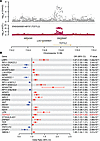 Figure 1
SMR identifies TCF7L2 as a putative causal gene for AAA susceptibility. (A) Locus plot displaying the colocalization of GWAS and eQTL signals at the TCF7L2 locus on chromosome 10. The top panel shows –log10(P) values for single-nucleotide polymorphisms (SNPs) from the AAA GWAS meta-analysis (n = 39,221 cases and 1,086,107 controls), and the bottom panel shows the –log10(P) values for SNPs associated with TCF7L2 expression in the human aorta (GTEx v8). Genomic position is indicated on the x axis (hg19). (B) Forest plot of the top 30 genes prioritized by SMR analysis based on their inferred causal association with AAA. Genes are ranked by increasing PSMR and filtered by HEIDI test (PHEIDI > 0.05). Odds ratios (ORs) and 95% confidence intervals (CIs) are shown. Red boxes indicate genes whose higher expression is associated with increased AAA risk (OR > 1); blue boxes indicate protective associations (OR < 1).
Consistent with this hypothesis, the SMR analysis revealed that a 1-standard-deviation increase in aortic TCF7L2 expression was associated with a 13% elevated risk of AAA (OR = 1.13, 95% CI: 1.07–1.20, P < 1 × 10⁻⁵), and this relationship remained significant after Benjamini-Hochberg false discovery rate (FDR) correction (q = 0.0025). Further evaluation using the heterogeneity in dependent instruments (HEIDI) test showed no evidence of heterogeneity (PHEIDI = 0.38), ruling out potential confounding by linkage disequilibrium with neighboring loci (Figure 1B). These findings support a causal contribution of aortic TCF7L2 expression to AAA risk rather than a secondary correlation.
TCF7L2 exhibits high arterial expression and is predominantly enriched in VSMCs. To determine the tissue- and cell-specific expression of TCF7L2, particularly within the vasculature, we analyzed bulk RNA sequencing (RNA-seq) data from the Genotype-Tissue Expression (GTEx) project. TCF7L2 exhibited broad expression across human tissues, with notably higher levels in the aorta and other arterial tissues (Supplemental Figure 1A; supplemental material available online with this article; https://doi.org/10.1172/jci.insight.195681DS1), suggesting a potential role in vascular biology. Complementary analysis of our human abdominal aortic RNA-seq dataset, derived from non-aneurysmal donor aortae (16), further revealed that TCF7L2 and TCF7L1 were the predominantly expressed members of the TCF/LEF transcription factor family, whereas TCF7 and LEF1 showed lower abundance (Supplemental Figure 1B).
We next examined the primary cellular distribution of TCF7L2 within the aorta using single-cell RNA-seq datasets from both non-aneurysmal human (Gene Expression Omnibus [GEO] GSE155468) and non-aneurysmal mouse (GSE152583) aortic tissues. In the human dataset, uniform manifold approximation and projection (UMAP) clustering identified major aortic cell populations, including VSMCs, fibroblasts, endothelial cells, macrophages, and immune cells. TCF7L2 expression was predominantly enriched in the VSMC cluster, exhibiting a pattern consistent with canonical VSMC markers such as MYH11, ACTA2, and TAGLN (Supplemental Figure 1, C and D). A similar VSMC-enriched expression pattern was observed in the mouse dataset, indicating conservation across species (Supplemental Figure 1, E and F).
Collectively, these findings demonstrate that TCF7L2 is preferentially expressed in VSMCs within the aortic wall, establishing a baseline expression pattern that supports its potential involvement in AAA pathogenesis through modulation of VSMC biology.
Smooth muscle–specific TCF7L2 deficiency attenuates angiotensin II–induced AAA formation. To directly examine the role of VSMC-derived TCF7L2 in AAA development, we generated mice with smooth muscle cell–specific Tcf7l2 knockout (Tcf7l2SMKO) by crossing Tcf7l2fl/fl mice with Myh11-CreERT2 transgenic mice (Supplemental Figure 2A). PCR-based genotyping confirmed successful Cre-mediated recombination, yielding Tcf7l2SMKO mice (Supplemental Figure 2B). Following tamoxifen administration (75 mg/kg/d for 5 consecutive days), efficient Tcf7l2 deletion in the aortic tissues of Tcf7l2SMKO mice was validated by Western blot 2 weeks after the first dose (Supplemental Figure 2C).
To induce AAA, 12-week-old Tcf7l2SMKO and Tcf7l2fl/fl mice, both on an Apoe–/– background, were infused with angiotensin II (Ang II; 1,000 ng/kg/min) for 28 days (Figure 2A). Compared with controls, Tcf7l2SMKO Apoe–/– mice showed markedly reduced suprarenal abdominal aortic dilation and decreased AAA incidence (Figure 2, B–D). Histological analyses using hematoxylin and eosin (H&E) and Verhoeff–van Gieson (VVG) staining further revealed attenuated luminal dilation, thrombus formation, and elastin degradation in Tcf7l2SMKO Apoe–/– mice (Figure 2, E and F). No significant differences in systolic blood pressure, body weight, blood cholesterol, and triglyceride levels were observed between genotypes, ruling out systemic factors as confounders (Supplemental Figure 3, A–C). These findings indicate that VSMC-specific deletion of TCF7L2 protects against Ang II–induced AAA formation.
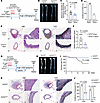 Figure 2
VSMC-TCF7L2 deficiency attenuates Ang II and BAPN/Ang II–induced AAA in mice. (A–F) In the angiotensin II–induced (Ang II–induced) AAA model, 12-week-old male Tcf7l2fl/fl Apoe–/– (n = 8) and Tcf7l2SMKO Apoe–/– (n = 7) mice were infused with Ang II (1,000 ng/kg/min) for 4 weeks. (A) Schematic of Ang II–induced AAA model. (B) Representative morphology of aortae at the endpoint. (C) Maximum diameter of the suprarenal abdominal aortae. (D) Incidence of AAA formation. (E) Representative images of H&E and VVG staining of suprarenal abdominal aortae; red arrows indicate elastin degradation. Scale bars: 200 μm; 20 μm (higher-magnification images). (F) Grade of elastin degradation. (G–K) In the BAPN/Ang II–induced AAA model, 16-week-old male Tcf7l2fl/fl (n = 13) and Tcf7l2SMKO (n = 14) mice were infused with both Ang II (1,000 ng/kg/min, 4 weeks) and BAPN (150 mg/kg/d, the first 2 weeks). (G) Schematic of BAPN/Ang II–induced AAA model. (H) Representative morphology of aortae at the endpoint. (I) Survival curve. (J) Incidence of AAA formation. (K) Representative H&E and VVG staining of suprarenal abdominal aortae; red arrows indicate elastin degradation. Scale bars: 200 μm; 20 μm (higher-magnification images). Data are presented as mean ± SEM. P values were calculated using Mann-Whitney U test (C and F), Mantel-Cox method (I), and χ2 test (J).
Smooth muscle cell–specific TCF7L2 deficiency reduces AAA formation and rupture in the β-aminopropionitrile/Ang II–induced AAA model. We further validated the role of TCF7L2 in AAA pathology using a more severe murine AAA model combining the lysyl oxidase inhibitor β-aminopropionitrile (BAPN; 150 mg/kg/d for the first 2 weeks, which disrupts collagen cross-linking) with Ang II infusion (1,000 ng/kg/min for 4 weeks) (Figure 2G), known to enhance aneurysm formation and rupture risk in wild-type mice. However, Tcf7l2SMKO mice were significantly resistant to BAPN/Ang II–induced AAA formation and rupture-related mortality (Figure 2, H–J). Histological assessment using H&E and VVG staining confirmed decreased elastin fragmentation and preserved vascular wall structure in Tcf7l2SMKO mice (Figure 2K). Consistent with previous results, no significant differences in systolic blood pressure or body weight were observed between the groups (Supplemental Figure 3, D and E). These results further support that smooth muscle cell–specific TCF7L2 promotes AAA progression.
Smooth muscle–specific TCF7L2 deficiency alleviates elastase-induced AAA formation. To further validate our findings from the Ang II–driven models, we used an elastase-induced AAA model (Supplemental Figure 4A), which directly triggers localized aneurysm formation by enzymatically degrading the elastin-rich medial layer. Consistent with the Ang II results, Tcf7l2SMKO mice displayed significantly reduced maximal aortic diameters and decreased elastin degradation compared with Tcf7l2fl/fl controls (Supplemental Figure 4, B–E). Systolic blood pressure and body weight were unchanged between genotypes (Supplemental Figure 3, F and G), supporting a direct, cell-autonomous role of VSMC-specific TCF7L2 in AAA progression.
Collectively, results from 3 independent AAA models consistently demonstrate that VSMC-specific TCF7L2 is a key driver of aneurysm progression, highlighting its potential as a therapeutic target to attenuate pathological vascular remodeling in AAA.
TCF7L2 regulates gene networks governing ECM turnover and VSMC-ECM adhesion. To define the transcriptional programs regulated by TCF7L2 in VSMCs, we performed RNA-seq and chromatin immunoprecipitation sequencing (ChIP-seq) analyses in human aortic smooth muscle cells (HASMCs) following siRNA-mediated TCF7L2 knockdown. qPCR confirmed efficient silencing of TCF7L2, with mRNA levels reduced by more than 80% (Figure 3A). Principal component analysis revealed distinct transcriptomic separation between control and knockdown groups, indicating widespread transcriptomic alterations upon TCF7L2 reduction (Figure 3B). Differential gene expression analysis identified 3,004 TCF7L2-responsive genes (|fold change| > 1.5, adjusted P value < 0.05), including 1,493 upregulated and 1,511 downregulated genes (Figure 3C).
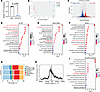 Figure 3
Transcriptomic and epigenetic profiling reveals TCF7L2 as a regulator of ECM turnover and VSMC-ECM adhesion. (A–F) HASMCs were transfected with 20 nM siTCF7L2 or siControl for 48 hours, followed by serum starvation in Opti-MEM for 24 hours before RNA isolation for qPCR (A) and RNA-seq (B–F). (B) Principal component analysis (PCA). (C) Volcano plot showing differentially expressed genes (DEGs); red and blue dots represent significantly upregulated and downregulated genes, respectively. Padj, adjusted P value. (D–F) Pathway enrichment analysis of DEGs. (D) Gene Ontology biological processes (GO_BP). (E) Reactome pathways. (F) KEGG pathways. (G–I) For ChIP-seq analysis, HASMCs at about 80% confluence were serum-starved for 24 hours before chromatin isolation. (G) Genomic distribution of TCF7L2 ChIP-seq peaks. (H) Average TCF7L2 ChIP-seq signal distribution around TSS. (I) GO enrichment analysis of TCF7L2-bound genes. Data are presented as mean ± SEM. P values were calculated using Student’s t test (A).
Functional enrichment analyses was used to interpret the biological implications of these transcriptional changes. Gene Ontology (GO) terms were strongly enriched for ECM organization and cell adhesion (Figure 3D). Reactome (Figure 3E) and KEGG (Figure 3F) pathway analyses further emphasized ECM remodeling, integrin-mediated interactions, and focal adhesion as major pathways regulated by TCF7L2.
To investigate direct transcriptional targets, we performed TCF7L2 ChIP-seq in HASMCs. Genomic distribution analysis revealed that TCF7L2 binding sites were predominantly enriched near transcription start sites (TSSs), consistent with promoter-proximal transcriptional regulation (Figure 3, G and H). GO analysis of genes harboring TCF7L2 binding peaks showed enrichment in Wnt signaling and ECM organization (Figure 3I).
Taken together, these RNA-seq and ChIP-seq data demonstrate that TCF7L2 regulates a coordinated transcriptional network that governs ECM remodeling and VSMC-ECM adhesion, which are crucial processes in pathological vascular remodeling during AAA development.
TCF7L2 upregulates MMP14 in VSMCs. To investigate how TCF7L2 contributes to ECM remodeling in AAA, we first examined ECM-related transcriptional changes in the RNA-seq dataset. TCF7L2 knockdown led to marked downregulation of ECM-degrading enzymes, including MMP14 (also known as MT1-MMP), ADAMTS2, and ADAMTS12, while genes involved in ECM structural integrity and cellular adhesion, such as FBN1, ITGB1, and HAS2, were upregulated (Supplemental Figure 5A). Because matrix metalloproteinases (MMPs) are key mediators of ECM degradation, we further evaluated expression patterns across the MMP family. Among all MMPs, MMP2 and MMP14 were most abundantly expressed in HASMCs, with MMP14 showing the strongest reduction after TCF7L2 knockdown (Supplemental Figure 5B).
Given the established role of MMP14 in ECM degradation and its critical function in activating MMP2 (17), we next assessed whether its expression changes during AAA progression. In the PCSK9/Ang II mouse model, abdominal aortic Mmp14 expression increased significantly by day 7 and remained elevated through day 28 (Figure 4A). Analysis of an independent published RNA-seq dataset (18) revealed that Mmp14 expression correlated with aneurysm severity, increasing stepwise from ectasia (maximal diameter < 1.2 mm) to dilation (≥1.2 mm without dissection) to dissection (intramural hemorrhage) stages at day 14 after Ang II infusion (Figure 4B). These findings suggest that MMP14 is progressively induced during AAA progression.
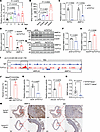 Figure 4
TCF7L2 upregulates MMP14 expression in VSMCs and AAA lesions. (A) qPCR analysis of Mmp14 mRNA levels in abdominal aortae from PCSK9/Ang II–induced AAA mice at days 0, 3, 7, 14, and 28. (B) RNA-seq analysis of Mmp14 expression in abdominal aortae from PCSK9/Ang II–induced AAA mice at day 14, stratified into saline control, ectasia (maximal diameter < 1.2 mm), dilation (≥1.2 mm without dissection), and dissection (presence of intramural hemorrhage). (C–H) HASMCs were transfected with 20 nM siTCF7L2 and siControl (C, E, and F) or 20 MOI AdTCF7L2 and AdGFP (D, G, and H) for 48 hours, followed by serum starvation in Opti-MEM for 24 hours. mRNA levels of TCF7L2 and MMP14 (C and D) and protein abundance of TCF7L2 and MMP14 (E–H) were determined from 3 independent experiments. (I) Normalized ChIP-seq reads of TCF7L2 in the genomic region upstream of the MMP14 gene are shown in the IGV image. (J) ChIP-qPCR quantification of TCF7L2 binding at the predicted motif upstream of MMP14. (K and L) Dual-luciferase reporter assays in HASMCs pretreated with 20 nM siTCF7L2 and siControl (K) or 20 MOI AdTCF7L2 and AdGFP (L) for 24 hours, followed by transfection of a minimal CMV luciferase reporter containing the TCF7L2 ChIP-seq–identified upstream regulatory fragment of MMP14. Luciferase activity was measured 24 hours after reporter transfection. (M) Representative images of immunohistochemical staining of MMP14 of suprarenal abdominal aortae in the Ang II–induced AAA model. Scale bars: 200 μm; 20 μm (higher-magnification images). (N) Quantification of MMP14 staining intensity. P values were calculated using 1-way ANOVA followed by Tukey’s post hoc analysis for A and B or Student’s t test for C–N.
In vitro validation in HASMCs demonstrated that TCF7L2 knockdown significantly reduced both MMP14 mRNA and protein levels, whereas TCF7L2 overexpression led to elevated MMP14 expression (Figure 4, C–H). To elucidate whether TCF7L2 directly regulates MMP14 transcription, we analyzed our TCF7L2 ChIP-seq dataset generated from HASMCs, identifying a prominent TCF7L2 binding peak located approximately 7 kb upstream of the MMP14 TSS, which we validated by ChIP-qPCR (Figure 4, I and J). To confirm the functional activity of this regulatory element, we cloned the binding peak region into a luciferase reporter (Supplemental Figure 9) and measured reporter activity after modulating TCF7L2. TCF7L2 knockdown reduced, whereas TCF7L2 overexpression increased, enhancer-driven luciferase activity (Figure 4, K and L), supporting a direct activating role of TCF7L2 at this MMP14 regulatory element. Although this peak overlaps the promoter region of the neighboring gene MRPL52, modulation of TCF7L2 did not alter MRPL52 expression (Supplemental Figure 8, A and B), indicating that TCF7L2 binding at this site selectively regulates MMP14.
Finally, immunohistochemistry of aortic tissues from Ang II–induced AAA mice showed that MMP14 protein levels were substantially reduced in Tcf7l2SMKO Apoe–/– mice compared with controls (Figure 4, M and N), confirming TCF7L2-dependent regulation of MMP14 in vivo. Together, these results identify MMP14 as a direct transcriptional target of TCF7L2 and support a model in which TCF7L2 promotes ECM degradation in AAA at least in part by upregulating MMP14 expression in VSMCs.
TCF7L2 represses TIMP3 and promotes proteolytic activity. To assess how TCF7L2 influences pericellular proteolysis, we first measured total MMP activity in conditioned media. Overexpression of MMP14 increased MMP activity, whereas TCF7L2 knockdown markedly reduced it. Notably, reduced MMP activity persisted even when MMP14 was overexpressed (Figure 5A), indicating that TCF7L2 acts through additional downstream targets beyond MMP14 alone.
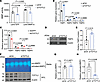 Figure 5
TCF7L2 promotes MMP activity by upregulating MMP14 and repressing TIMP3. (A) For MMP activity assays, HASMCs were first transfected with 20 nM siTCF7L2 or siControl for 48 hours, then infected with either Lenti-GFP or Lenti-MMP14 for 24 hours, and subsequently serum-starved in Opti-MEM for 48 hours. Conditioned media were collected, and total MMP activity was assessed using a fluorometric assay. (B–E) HASMCs were transfected with 20 nM siTCF7L2 and siControl or 20 MOI AdTCF7L2 and AdGFP for 48 hours, followed by serum starvation in Opti-MEM for 24 hours, and mRNA levels of TCF7L2 and TIMPs (B and C) and protein abundance of TIMP3 (D and E) were determined from 3 independent experiments. (F–H) HASMCs were transfected with 20 nM siTCF7L2 and siControl, followed by serum starvation in Opti-MEM for 24 hours; gelatin zymography was performed to assess the levels of pro-MMP2 and activated MMP2 in the conditioned media; and Western blot was used to evaluate TCF7L2 knockdown efficiency in whole-cell lysates. Data are presented as mean ± SEM. P values were calculated using 2-way ANOVA followed by Holm-Šidák post hoc analysis for A–C or Student’s t test for E, G, and H.
Given that pericellular MMP activity is also governed by endogenous inhibitors, we next examined the expression of tissue inhibitors of metalloproteinases (TIMPs). Among the 4 TIMP family members, TIMP1, TIMP2, and TIMP3 were predominantly expressed in HASMCs. TCF7L2 knockdown markedly increased TIMP1 and TIMP3 mRNA levels, whereas TCF7L2 overexpression suppressed TIMP1, TIMP2, and TIMP3 (Figure 5, B and C). TIMP1 is primarily soluble, whereas TIMP3 is ECM bound and inhibits pericellular MMPs, particularly MMP2 and MMP9 (19). Consistent with its transcriptional upregulation, TIMP3 protein abundance was also significantly increased following TCF7L2 knockdown (Figure 5, D and E).
To validate this finding in vivo, we analyzed aortic tissues from Tcf7l2SMKO and floxed control mice subjected to Ang II–induced AAA. Consistent with our in vitro data, Timp3 mRNA expression was significantly increased, whereas Mmp9 mRNA expression was decreased (Supplemental Figure 6, A–F). Immunohistochemical staining further confirmed elevated TIMP3 protein abundance in the vascular wall of Tcf7l2SMKO mice (Supplemental Figure 6G), supporting the in vivo relevance of TCF7L2-mediated regulation of proteolytic activity and ECM remodeling.
Because MMP14 activates pro-MMP2 and TIMP3 inhibits MMP2 activity, we next evaluated MMP2 activation. Gelatin zymography revealed that TCF7L2 knockdown markedly decreased active MMP2 levels in HASMC culture medium (Figure 5, F–H), which was further supported by reduced MMP2 and MMP9 activities in abdominal aorta aneurysmal tissue extracts from Tcf7l2SMKO mice compared with the control group (Supplemental Figure 7).
In summary, these findings indicate that TCF7L2 promotes ECM degradation by enhancing MMP activity through coordinated upregulation of MMP14 and repression of TIMP3, thereby sustaining proteolytic remodeling in AAA.
TCF7L2 downregulates ITGB1 to weaken VSMC-ECM adhesion. Pathway enrichment analysis of our RNA-seq data identified cell adhesion as another major biological process regulated by TCF7L2 in HASMCs. Given this, we first evaluated VSMC adhesion to collagen I–coated substrates. TCF7L2 knockdown significantly increased VSMC adhesion (Figure 6, A and B), whereas adenoviral TCF7L2 overexpression markedly reduced adhesion (Figure 6, C and D), indicating that TCF7L2 negatively regulates VSMC-ECM adhesion.
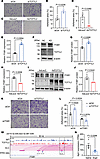 Figure 6
TCF7L2 represses ITGB1 to disrupt VSMC-ECM adhesion. (A–D) HASMCs were transfected with 20 nM siTCF7L2 or siControl (A and B) or infected with 20 MOI AdTCF7L2 or AdGFP (C and D) for 48 hours, followed by serum starvation in Opti-MEM for 24 hours. Cells were then plated onto collagen I–coated wells and allowed to adhere at 37°C for 90 minutes. Adherent cells were visualized by crystal violet staining (A and C) and quantified (B and D). The original magnification of the images was 4×. (E–J) Under the same transfection or infection conditions as above, mRNA levels (E and H) and protein abundance (F, G, I, and J) of ITGB1 were determined from 3 independent experiments. (K and L) HASMCs were cotransfected with 20 nM siTCF7L2 or siControl and either 20 nM siITGB1 or control siRNA for 48 hours, followed by adhesion assay as in A–D. The original magnification of the images was 4×. (M) IGV browser view of ChIP-seq signal tracks showing TCF7L2 and IgG binding at the human ITGB1 locus, with aligned Hi-C (ENCSR797MWY) and ATAC-seq (ENCFF719YRB) profiles. (N) Bulk RNA-seq analysis of Itgb1 expression in abdominal aortae from PCSK9/Ang II–induced AAA mice versus saline controls at day 14. Data are presented as mean ± SEM. P values were calculated using Student’s t test for B, D, E, G, H, J and N, and 2-way ANOVA followed by Holm-Šidák post hoc analysis for L.
Among adhesion-related genes, integrin β1 (ITGB1), a key mediator of VSMC-ECM interactions, was strongly upregulated upon TCF7L2 knockdown. This increase was confirmed at both mRNA and protein levels (Figure 6, E–G). Conversely, adenovirus-mediated overexpression of TCF7L2 significantly suppressed ITGB1 expression (Figure 6, H–J).
To determine whether ITGB1 mediates TCF7L2-dependent regulation of VSMC-ECM adhesion, we next performed ITGB1 knockdown. Silencing ITGB1 reduced VSMC adhesion and abrogated the adhesion increase caused by TCF7L2 knockdown (Figure 6, K and L), indicating that ITGB1 is required for TCF7L2-dependent regulation of adhesion.
To investigate the regulatory mechanism, ChIP-seq analysis revealed a prominent TCF7L2-binding peak upstream of the ITGB1 locus that overlapped with regions of accessible chromatin detected by ATAC-seq. Hi-C interaction maps further suggested looping between this distal regulatory element and the ITGB1 promoter (Figure 6M), supporting direct transcriptional repression of ITGB1 by TCF7L2.
Finally, we examined Itgb1 expression in abdominal aortae from the PCSK9/Ang II–induced AAA mouse model. Compared with saline-treated controls, abdominal aortae from Ang II–treated mice exhibited significantly reduced Itgb1 expression (Figure 6N), consistent with the repressive effect of TCF7L2 observed in vitro and indicative of impaired VSMC-ECM adhesion during AAA development.
Taken together, these data establish ITGB1 as a direct downstream effector of TCF7L2 and demonstrate that TCF7L2-dependent repression of ITGB1 compromises VSMC-ECM adhesion, thereby promoting AAA progression.


