
Inflammation
Abstract
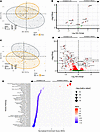
Bone marrow-derived circulating monocytes continuously replenish intestinal macrophages, which become dysregulated in inflammatory bowel disease (IBD) and contribute to disease pathology. The origins of this dysregulation remain poorly understood. Here, we investigate the reprogramming of circulating monocytes in IBD prior to tissue recruitment using single-cell transcriptomic, epigenomic and functional approaches. We characterise blood monocyte heterogeneity in newly diagnosed, treatment-naïve IBD patients and healthy controls and show that monocytes in Crohn’s disease (CD) display a distinct transcriptional profile and altered distributions across inferred developmental trajectories; less pronounced changes are observed in ulcerative colitis (UC). We link CD-associated transcriptional changes to alterations in chromatin accessibility and identify NFB, EGR, KLF and AP-1 family transcription factors as putative regulators of an inflammatory gene program in blood monocytes from CD patients. We uncover a potential role for IFN- in priming blood monocytes for inflammatory function in CD by limiting their capacity to be regulated by IL-10. Finally, we show that the transcriptional and functional alterations in monocytes from CD patients are maintained in monocyte-derived cells from the intestine. Together these data suggest that intestinal macrophage dysfunction in CD is, at least in part, pre-established by systemic signals prior to tissue recruitment.
Authors
Eve Hornsby, Radha Gadhok, Inva Hoti, Eva Wozniak, James R. Boot, Emma Connick, Paul A Stevens, Holly Creed, Amy Lewis, Andrew Silver, James O Lindsay, Andrew J. Stagg
Abstract
The NF-κB signaling pathway coordinates inflammation, cell survival, and proliferation, while restraining excessive cell death to maintain immune homeostasis. Truncating mutations in RELA, encoding the NF-κB subunit p65, have been linked to autoinflammation and autoimmunity, but the underlying mechanisms remain incompletely defined. We investigated six patients from five unrelated families carrying previously unreported heterozygous truncating RELA variants. Despite reduced p65 expression, patients exhibited a broad spectrum of inflammatory manifestations alongside elevated baseline and stimulus-induced pro-inflammatory cytokines. Functional analyses in patient-derived cells and mutant RELA knock-in models showed that upstream NF-κB signaling was intact, but induction of inhibitory regulators such as IκBα and A20 was impaired. This defective feedback control shifted immune homeostasis toward amplified inflammatory responses that depended on the residual activity of the remaining functional RELA allele. Single-cell transcriptomics revealed distinct cell type-specific consequences: monocytes displayed constitutive type I interferon and NF-κB activation, B cells retained partial compensatory signaling, whereas T and NK cells exhibited transcriptional signatures of cell death pathways. Patient fibroblasts and mutant RELA knock-in cells further confirmed enhanced TNF-induced inflammatory gene expression and hypersensitivity to apoptosis and necroptosis. These findings establish RELA haploinsufficiency as a cause of systemic immune dysregulation, and link defective NF-κB feedback control to unchecked inflammation and inflammatory cell death.
Authors
Nadja Lucas, Sophia Weidler, Antonia A. Eicher, Baerbel Keller, Özlem Satirer, Adam Desrochers, Timothy J.S. Ramnarine, Mohammad Mokhtari, Sophie Elstner, Timmy Strauss, Simon W. Mages, Arek Kendirli, Oana Cristina Buzoianu, Tobias B. Haack, Lina Igel, Tim Niehues, Sandra von Hardenberg, Maria Fasshauer, Rami Abou Jamra, Hagen Ott, Ulrike Hüffmeier, Catharina Schütz, Marisa Bijwaard, Susan Wagner, Paulina Switala, Sarah Koss, Jurek Schultz, Stefanie Kretschmer, Jasmin Kümmerle-Deschner, Christine Wolf, Johanna Klughammer, Min Ae Lee-Kirsch

Abstract
Neovascular age-related macular degeneration (nAMD) is a major cause of blindness and is characterized by pathologic angiogenesis, specifically choroidal neovascularization (CNV). Mononuclear phagocytes (MPs), including infiltrating systemic monocyte-derived macrophages and retinal microglia, play critical roles in promoting CNV. The cGAS/STING pathway is increasingly implicated in multiple neuronal and systemic diseases and recently in ocular neovascularization. Given its roles across multiple cell types and the absence of MP-targeted therapies, we investigated the MP-specific role of cGAS/STING and a strategy for its selective targeting. In the laser-induced CNV mouse model, cGAS/STING was predominantly expressed in MPs. To enable selective targeting, we used a hydroxyl dendrimer (HD) previously shown to target MPs. HD conjugated to Cy3 selectively localized to MPs in laser CNV. HD conjugated to the STING inhibitor SN-011 (HD-SN-011) effectively inhibited cGAS/STING activation in cultured MPs. In the laser-CNV model, HD-SN-011 significantly reduced CNV leakage and lesion size, both important clinical endpoints in nAMD. RiboTag profiling confirmed selective suppression of cGAS/STING signaling and inflammatory gene expression in MPs. Together, our results implicate the specific importance of MP cGAS/STING signaling in CNV and provide proof of concept for specific modulation of STING in MPs as a therapy for nAMD.
Authors
Le Shi, Durgadas Cherukaraveedu, Cho, Kaoru Ri, Lingli Zhou, Yingxue Cao, Narendra Kale, Xu, Wathsala Liyanage, Rangaramanujam M. Kannan, Elia J. Duh
Abstract
Neonatal sepsis is a predominant cause of neonatal mortality and long-term morbidity which severely effects preterm and low birth weight newborns. Antibiotic resistance and long-term developmental issues associated with neonatal sepsis necessitates finding new and improved treatment options. Interleukin-27 (IL-27) has diverse influences on the immune response, is elevated during the neonatal period compared to adulthood, and continues to rise further during infection. Elevated levels of IL-27 early in life predispose the host to impaired control of the pathogen burden and increased mortality. This study explored the therapeutic potential of IL-27p28 antibody administration to improve treatment outcomes during murine neonatal sepsis. Sepsis was induced by subcutaneous inoculation of K1-encapsulated Escherichia coli and the neonatal pups were rescued with IL-27p28 monoclonal antibody. Pups that received prophylactic antibody prior to the infection demonstrated superior bacterial clearance and significant weight gain compared to controls during infection. The combination of subclinical dose of gentamicin and IL-27p28 antibody administered 2h post-infection, significantly improved bacterial clearance, glucose homeostasis, with reduced serum levels of IL-6 and TNF-α, vital organ damage and significantly improved the survival rate of infected pups compared to gentamicin alone. These findings suggest that IL-27p28 antagonization represents a promising therapeutic tool for treatment of neonatal sepsis.
Authors
Madhavi Annamanedi, Jessica M. Povroznik, Samantha Arevalo-Marcano, Cory M. Robinson
Abstract
Serious non-AIDS events (SNAEs), including non-AIDS malignancies, cardiovascular disease, and hepatic complications, remain major causes of mortality in treated HIV infection. These outcomes are driven by persistent immune activation, systemic inflammation, and metabolic dysfunction despite effective viral suppression with antiretroviral therapy (ART). To investigate mechanisms underlying SNAE pathogenesis, we performed a cross-site multi-omic analysis integrating plasma proteins, plasma metabolites, and mucosal microbiomes in 82 ART-treated people with HIV (PWH) and 10 people without HIV from the United States and Mexico. Geography was the dominant source of variation, particularly across lipid classes. However, individuals at high risk for SNAEs, defined by low CD4+ T cell counts and low CD4/CD8 ratios, shared a consistent signature of systemic inflammation, mitochondrial dysfunction, and microbial dysbiosis, including elevated plasma IL-6 and ω-oxidation products (adipic and suberic acids) and depletion of short-chain fatty acid–producing commensals in the gut mucosa, including Akkermansia muciniphila, Bacteroides uniformis, and Ruminococcus. A. muciniphila abundance correlated with lower IL-6 levels, fewer HIV RNA-producing cells in lymph nodes, and higher CD4/CD8 ratios. These findings identify a shared inflammatory and metabolic phenotype in PWH and implicate A. muciniphila as a potential microbiome-based target to mitigate immune activation and SNAE risk in treated HIV.
Authors
Christopher M. Basting, Jodi Anderson, Kevin Escandón, Garritt Wieking, Candace Guerrero, Jarrett Reichel, Ross T. Cromarty, Erik Swanson, Ty Schroeder, Elaina Creagan, Maura Barrett, Fernanda Torres-Ruiz, Maribel Soto-Nava, Lady Carvajal-Ruiz, Karla Krystel Ordaz-Candelario, Olivia Briceño, Nicholas Funderburg, Melanie Graham, Peter Hunt, Santiago Avila-Rios, Gonzalo Salgado Montes de Oca, Timothy W. Schacker, Nichole R. Klatt
Abstract
The pericardium plays an important homeostatic function for the neighbouring heart providing both lubricating and structural support. In vivo models have further identified a protective role for the pericardium in modulating cardiac remodelling following myocardial infarction possibly through the actions of tissue-resident pericardial macrophages. Using patient derived pericardial samples, we establish that human pericardial immune cells directly inhibit cardiac fibroblast fibrotic activity and this action is dampened following myocardial infarction. Performing single-cell RNA sequencing of patient pericardial fluid cells, we identify two pericardial macrophage subsets that are uniquely altered in response to myocardial infarction, which contributes to a shift in their effector molecule expression profiles. We confirm that fibronectin-expressing human pericardial macrophages are the primary driver of the pericardial anti-fibrotic actions through the release of cystatin C. Finally, we establish cystatin C as a macrophage-derived cardioprotective effector molecule in an in vivo model of myocardial infarction. Collectively, we uncover a new molecular mechanism of the local immune environment that regulates cardiac remodelling post myocardial infarction.
Authors
Ali Fatehi Hassanabad, Sarthak Sinha, Arzina Jaffer, Darrell Belke, Nicole L. Rosin, Elodie Labit, Daniel Young, Friederike I. Schoettler, Keerthana Chockalingam, Benjamin Haeyul Lee, Jameson A. Dundas, Emilie de Chantal, Carmina A. Isidoro, Alexander Tam, Hanjoo B. Shim, Anna N. Zarzycki, Afshin Derakhshani, Elisabeth Gorgiogianni, Jeannine D. Turnbull, Antoine Dufour, Shalina S. Ousman, Jeff A. Biernaskie, Paul W.M. Fedak, Justin F. Deniset
Abstract
Authors
Sarah W. Robison, Jindong Li, Kristopher R. Genschmer, Liliana Viera, Jeremy B. Foote, Landon Wilson, W. Edward Swords, J. Edwin Blalock, Amit Gaggar, Xin Xu
Abstract
Chronic Graft-Versus-Host disease (cGVHD) remains a major cause of morbidity and mortality after allogeneic hematopoietic transplantation. CGVHD pathophysiology involves cooperation between Tfollicular helper cells (TFH) and germinal center B-cells (GCB), allo- and auto-antibody depositions in cGVHD tissues, and fibrosis. We evaluated human CD19-directed chimeric antigen receptor (CAR19) T-cell therapy in a clinically relevant murine cGVHD model with bronchiolitis obliterans syndrome (BOS). Although CD8 CAR19 T-cells effectively reduced peripheral B-cell and GCB frequencies, pulmonary function was unimproved. In contrast, a single CAR19 CD4 regulatory T-cells (Treg) infusion mitigated ongoing pulmonary disease and modulated germinal centers (GC) associated with reduced TFH frequencies compared to control Tregs but without measurable B-cell depletion. Compared to EGFR Treg infusion, mice receiving CAR19 Tregs exhibited enhanced suppression of B-cell activation, preserved splenic architecture, and provided greater opportunities for interaction with CD19+ B-cells at the B-cell follicle boundary zones. Taken together with the absence of detectable B-cell cytolysis, these findings are most consistent with GC suppression rather than B-cell depletion as the dominant mechanism. Overall, our findings suggest that CAR19 Tregs represent a promising and safe cGVHD/BOS therapeutic strategy, offering immunosuppressive benefits and improved disease outcomes that may be more limited with CD8 CAR19 T-cell treatment.
Authors
Sujeong Jin, Michael C. Zaiken, Cameron McDonald-Hyman, Christina R. Hartigan, Sara Bolivar-Wagers, Jemma H. Larson, Yiyun Peng, Sophia Hani, Megan Riddle, Asim Saha, Angela Panoskaltsis-Mortari, Eun Ko, Yujie Zhao, Rocio Amaro Marquez, Pooja Shree Marri Baskar, Cindy R. Eide, William J. Murphy, Keli L. Hippen, Geoffrey R. Hill, Jakub Tolar, Peter T. Sage, Christopher A. Pennell, Leslie S. Kean, Bruce R. Blazar
Abstract
Plasma membrane repair is critical for tissue integrity, especially for elongated contractile muscle cells. Genetically-mediated defects in plasma membrane resealing produce persistent leak, leading to a disordered extracellular matrix. Loss of the membrane repair protein dysferlin slows sarcolemmal resealing and promotes excess leak. Annexin A6 is also implicated in sarcolemmal repair, forming repair caps at the site of membrane disruption. On its own, deletion of the gene for annexin A6, Anxa6, had little effect on muscle health. In contrast, combined loss of dysferlin and annexin A6 (DysfA6) generated muscle fibers with profoundly defective membrane leak. Strikingly, Anxa6 deletion in the context of loss of dystrophin (mdxA6) did not exacerbate muscle defects. The persistent membrane leak in DysfA6 muscle resulted in marked macrophage infiltration with disordered macrophage polarization. Injured muscle fibers were targets of macrophage efferocytosis. Loss of Anxa6 was associated with increased expression of annexins A1 and A2, both of which were heavily deposited into the extracellular matrix. In vitro, macrophages exposed to annexins A1 and A2 increased Csf1 expression, consistent with a model where excess leak results in annexins A1 and A2 in the extracellular matrix, where this protein composition influences macrophage proliferation and efferocytosis.
Authors
GaHyun Lee, Alexander J. Fitt, Ashlee M. Long, Lauren A. Vaught, Dorothy DeBiasse, Alexander R. Keeble, Jason M. Kwon, Patrick G.T. Page, Marie-Therese Daher, Michele Hadhazy, Alexander B. Willis, David Ceja Galindo, Maxwell C. McCabe, Connor Lantz, Kirk C. Hansen, Rachelle H. Crosbie, Edward B. Thorp, Alexis R. Demonbreun, Elizabeth M. McNally
Abstract
Vaccine development for tuberculosis is a global priority. Our studies using Collaborative Cross (CC) mice show that genetic diversity influences the efficacy of BCG, the most widely used TB vaccine. BCG vaccination of CC042 mice reduced their lung bacillary burden and increased their survival following low-dose aerosol Mycobacterium tuberculosis infection (MTBI), despite impaired T cell trafficking due to a defective Itgal gene. BCG vaccination conferred early bacillary control which appeared to be independent of B cell or T cell recall responses following MTBI. In contrast, long term survival of BCG-vaccinated CC042 mice after MTBI required T cells. Thus, CC042 mice reveal two phases of immunity induced by BCG: an early phase mediated by innate immunity or innate-like T cells and a later phase mediated by conventional memory CD4 and/or CD8 T cells. Although measurement of vaccine-induced protection 30 days after MTBI is a standard measure of vaccine efficacy in the TB model, this time point might be independent of memory T cells in CC042 mice. Our results suggest that vaccine-elicited innate/innate-like responses could have a larger role in protection than previously considered. The concordance between lung CFU, pathology, and survival make CC042 mice useful for mechanistic studies on vaccine-induced immunity.
Authors
Abiola F. Ogunsola, Rocky Lai, Kelly Cavallo, Anthony V. Tran, Gillian L. Beamer, Samuel M. Behar
No posts were found with this tag.


