
Abstract
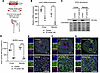
Right ventricular pressure overload (RVPO) is a critical pathophysiological feature of numerous pediatric cardiovascular diseases. Transverse tubules (T-tubules) form the foundation for efficient excitation-contraction coupling in mature cardiomyocytes. We hypothesized that RVPO impairs T-tubule maturation through the regulatory protein BIN1 (Bridging Integrator 1). In right ventricular samples from children with tetralogy of Fallot, characterized by RVPO, and in a neonatal rat RVPO model induced by pulmonary artery banding (PAB), T-tubule maturation was disrupted. RNA sequencing revealed significant downregulation of T-tubule–associated genes, with Bin1 among the most suppressed. Bin1 overexpression restored T-tubule maturation in PAB rats. Assay for Transposase-Accessible Chromatin with sequencing (ATAC-seq) showed reduced chromatin accessibility at Bin1 loci; motif analysis identified Mef2d (myocyte enhancer factor 2D) as the top enriched transcription factor. Mef2d knockdown rescued Bin1 expression and T-tubule maturation, and mutation of the Mef2d binding sites within the Bin1 promoter abolished the inhibitory effect of Mef2d on Bin1 promoter activity. This study delineates a phenomenon and a mechanism of cardiomyocyte maturation under pathological stress. The findings not only advance our understanding of this most pivotal event in postnatal cardiac development but also unveil a potential therapeutic direction for pediatric cardiovascular diseases associated with RVPO.
Authors
Yuqing Hu, Yiting Xue, Xudong Chen, Linghui Kong, Debao Li, Zheng Wang, Sixie Zheng, Siqi She, Hao Li, Sijuan Sun, Hao Chen, Lijun Chen, Peisen Ruan, Kai Wang, Lincai Ye
Abstract
ACE2 is a membrane-bound monocarboxypeptidase strongly expressed in the renal proximal tubule (PT) with high affinity to degrade the vasopressor angiotensin II (AngII). We employed a mouse model of PT-specific ACE2 deletion (PT ACE2–KO) to demonstrate that the renal PT is a critical site for ACE2 regulation of blood pressure (BP) via modulation of the intrarenal renin-angiotensin system (RAS). While deletion of ACE2 from the PT had a minimal effect on baseline physiology, PT ACE2–KO mice were more susceptible to AngII hypertension than control mice. At day 5 of AngII infusion, the enhanced BP response was associated with cardiac hypertrophy, increased renal AngII levels, failure to suppress epithelial sodium channel (ENaC) γ cleavage, and increased sodium pump activity in PT ACE2–KO mice. Control mice instead increased renal ACE2 expression to reduce renal AngII accumulation and suppress intrarenal RAS activation, which offered protection from hypertension and complications. Transcriptional analysis corroborated changes in intrarenal RAS components and revealed alterations in distinct physiological pathways during AngII hypertension in PT ACE2–KO mice. Our studies provide evidence for alterations in ENaC regulation to contribute to the development of AngII hypertension and support PT-derived ACE2 as an integral member of the intrarenal RAS.
Authors
Jacqueline M. Emathinger, Zhidan Xiang, Jonathan W. Nelson, Matthew W. Hagen, Nakyung Kim, David I. Ortiz-Melo, Natalie Mattocks, Jorge F. Giani, Dexter L. Lee, Hannah Hartman-Houstman, Donna L. Ralph, Alicia A. McDonough, Brianna Chen, Stan G. Louie, Thomas M. Coffman, Susan B. Gurley

Abstract
Small molecules that modulate myofibril ATPase activity via the myosin regulatory light chain (RLC) display a broad spectrum of activity in their ability to enhance relaxation and slow contraction. EDG-7500 exhibits features consistent with a ‘diastolic-selective’ cardiac sarcomere modulator (d-CSM), and its ability to treat HCM was explored in engineered human tissue (EHT), human HCM cardiac strips, and an R403Q mutation swine model. In fibers, EDG-7500 preferentially inhibited myofibril ATPase activity and force at diastolic calcium levels, retained length-dependent force activation, accelerated relaxation, and exhibited a shallow, self-limiting inhibitory-exposure response to LV fractional shortening. Compared to CMIs, EDG-7500 moved myosin heads towards the thin filament and accelerated relaxation without decreasing force in mutated EHTs (R403Q). In human HCM cardiac strips, EDG-7500 did not alter myosin SRX state, but decreased Ca2+-sensitivity of force independent of mutation. In R403Q swine, chronic EDG-7500 normalized LV filling pressure and prevented pathological cardiac remodeling while preserving normal systolic function and cardiac reserve. EDG-7500 differentiates itself from CMIs by uniquely targeting both phases of the cardiac cycle, improving ventricular relaxation while preserving systolic function. This suggests optimal diastolic efficacy can be reached without balancing systolic impairment.
Authors
Craig A. Emter, Marcus Henze, Mike DuVall, Sarah Lehman, Lindsey Lee, Ben Barthel, Natalie A. Hawryluk, Molly Madden, Yangsong Wu, Amy Perry, Martin Beyer, Eric Wei, Cassady Rupert, Steve Roof, Angela Peter, Emily DiNatale, Sara Cantrell, Jessica Tolley, Stephen Schlachter, Jolanda van der Velden, Michelle Michels, Christine Seidman, Weikang Ma, Leslie Leinwand, Stuart Campbell, Julien Ochala, David Bluemke, Darla Tharp, Jonathan Seidman, Carlos L. del Rio, Marc Semigran, Marc Evanchik, Kevin Koch, Alan Russell
Abstract
The adult mammalian heart has a limited ability to regenerate lost myocardium following myocardial infarction (MI), largely due to the poor proliferative capacity of cardiomyocytes (CMs). Dual-specificity tyrosine phosphorylation-regulated kinase 1A (DYRK1A) is a known regulator of cell quiescence, though the mechanisms underlying its function remain unclear. Previous studies have shown that pharmacological inhibition of DYRK1A using harmine induces CM cell cycle re-entry after ischemia/reperfusion (I/R) MI. Here, we developed a computational network model of DYRK1A-mediated regulation of the cell cycle, which predicts how DYRK1A inhibition promotes CM re-entry. To validate these predictions, we tested selective DYRK1A inhibitors and observed robust induction of cell cycle activity in neonatal rat cardiomyocytes (NRCMs). Integrating our network model with bulk RNA-sequencing data from DYRK1A inhibitor-treated NRCMs, we identified E2F1 as a key transcriptional driver of cell cycle gene expression. Finally, we demonstrate that both pharmacological and post-developmental inhibition of DYRK1A enhances heart function and increases CM cycling following I/R MI. Our findings suggest that functional recovery induced by small molecule inhibitor of DYRK1A is mediated by the induction of cycling CMs.
Authors
Bryce C. Murillo, Alexander Young, Kaitlyn L. Wintruba, Alexander J. Eichert, Klara Siejda, Dennon Hoernig, Leigh A. Bradley, Bryana N. Harris, Catherine Zhao, MIchelle Wu, Emmanuel Deau, Mattias F. Lindberg, Laurent Meijer, Jeffrey J. Saucerman, Matthew J. Wolf
Abstract
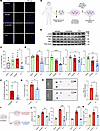
DNA damage and the cGAS/STING innate immunity pathway have been associated with fibrosis in systemic sclerosis (SSc), but a cause-and-effect role has not been established. Here we report the effects of TY1, a noncoding RNA drug of the exomer class that suppresses DNA damage and thereby inhibits cGAS/STING, in human SSc cells and in 2 preclinical models of SSc. Macrophages from patients with SSc exhibited high levels of phosphorylated DNA damage, cGAS, 2’3’-cGAMP, STING, and IFNs, all of which decreased after exposure to TY1. In mice that had been injected s.c. with bleomycin to model SSc, exercise tolerance, cardiac function, lung hydroxyproline, and skin thickness reverted to normal levels after oral administration of TY1. Similar therapeutic benefits were evident in the genetic tsk-1 mouse model of SSc. TY1 attenuated fibrosis and/or fibrotic gene expression in both mouse models of SSc and in human SSc skin fibroblasts. Our findings support the hypothesis that cGAS/STING, activated by DNA damage, is a key driver of fibrosis in SSc.
Authors
Xaviar M. Jones, Salwa Soussi, Alessandra Ciullo, Kara Tsi, Weixin Liu, Liang Li, Mario Fournier, Thassio Mesquita, Alberto M. Marchevsky, Nunzio Bottini, Francesco Boin, Ahmed G.E. Ibrahim, Eduardo Marbán

Abstract
Haploinsufficiency of TBX1, which occurs in 22q11.2 deletion syndrome (22q11.2DS), leads to a heterogeneous spectrum of clinical manifestations, including craniofacial anomalies, immunodeficiency, and congenital heart defects. The variability in syndromic presentation between patients may be partially explained by variants in chromatin regulatory genes that act to further modify TBX1 function. To investigate this relationship, we selected KMT2D as a candidate gene because of its role in the etiology of Kabuki syndrome, which shares overlapping features with 22q11.2DS. We demonstrate that conditional inactivation of Kmt2d in the Tbx1 lineage in Tbx1-heterozygous mice leads to fully penetrant perinatal lethality and increased incidence of craniofacial dysmorphism, thymus and parathyroid gland hypoplasia, and aortic arch anomalies. At early stages, mutant embryos were found to have defects of the caudal pharyngeal apparatus, including abnormal patterning of the third pouch endoderm, hypoplastic fourth arches, and defective fourth arch arteries. Finally, analysis of single-cell RNA sequencing revealed dysregulation, and largely downregulation, of genes involved in basic cellular functions, suggesting that Tbx1 and Kmt2d developmentally converge upon essential biological processes. Overall, these results indicate that reduced dosage of Kmt2d perturbs the developmental landscape of the Tbx1 heterozygote, eliciting phenotypes that are shared between 22q11.2DS and Kabuki syndrome.
Authors
Daniella Miller, Kevyn Jackson, Timothy C. Cox, Bernice E. Morrow

Abstract
Atrial fibrillation (AF) contributes to cardiovascular morbidity and mortality. Ubiquitin-specific peptidase 10 (USP10) plays a crucial role in numerous cellular processes; however, its particular role in AF remains largely unexplored. In the present study, USP10 expression was assessed in human atrial samples and angiotensin II–treated (Ang II–treated) mouse atrial tissues. An Ang II–induced AF mouse model was employed to investigate the effects of USP10 on atrial remodeling and AF susceptibility. Calcium imaging and patch clamp techniques were used to evaluate USP10’s influence on calcium handling and triggered activity. Additionally, RNA sequencing, coimmunoprecipitation, and ubiquitination assays were performed to explore the regulatory interactions between USP10 and NADH:ubiquinone oxidoreductase subunit S1 (NDUFS1). Our findings demonstrate that USP10 is downregulated in atrial tissues from mouse models and patients with AF. USP10 overexpression counteracts Ang II–induced atrial remodeling and reduces AF susceptibility. Furthermore, USP10 contributes to the restoration of mitochondrial function in AF. Mechanistically, USP10 deubiquitinates NDUFS1 at lysine 621, stabilizing NDUFS1 protein levels and mitigating Ang II–induced mitochondrial dysfunction. This study uncovers a critical mechanistic link between USP10 and NDUFS1. Our findings suggest that upregulating USP10 or targeting NDUFS1 degradation could provide an alternative therapeutic strategy to mitigate AF progression and associated cardiovascular risk.
Authors
Wanrong Fu, Xiao-Xu Tian, Jianghua Zhou, Yu-Xu Huang, Huan Li, Zhenya Wang, Tong-You Wade Wei, Li Li, Guo-Jun Zhao

Abstract
A single-nucleotide missense polymorphism (rs1800449, R158Q) in the propeptide domain of lysyl oxidase (LOX-PP) is associated with increased risk of coronary artery disease (CAD) independent of changes in plasma lipid levels. Although the enzymatic function of LOX has an essential role for the cross-linking of extracellular matrix proteins in connective tissues, whether and how LOX-PP R158Q contributes to the development of atherosclerosis has not been clearly established. Here, hypercholesterolemia was induced in mice that were WT or homozygous for the LOX-PP R158Q polymorphism by adeno-associated virus-8–mediated overexpression of Pcsk9 followed by high-fat diet feeding for 16 weeks. We found that the R158Q polymorphism promoted atherosclerosis and induced proliferation of macrophages and vascular smooth muscle cells without altering LOX enzymatic activity. Using single-cell RNA sequencing, we found the transcriptional program of atherosclerotic plaques from mice harboring R158Q was strongly enriched for proliferation- and calcification-related genes in a regionally distinct manner. Together, these results establish an enzymatically independent proatherogenic role for the LOX-PP and suggest its potential as a novel therapeutic target.
Authors
In-Hyuk Jung, Junedh M. Amrute, Sofia E. Luna, Ryan E. Wagoner, Arturo Alisio, Paul C. Lee, Kendall H. Burks, Joohee Oh, Hannah C. Plunkett Paletta, Chul Joo Kang, Nathan O. Stitziel
Abstract
The pericardium plays an important homeostatic function for the neighbouring heart providing both lubricating and structural support. In vivo models have further identified a protective role for the pericardium in modulating cardiac remodelling following myocardial infarction possibly through the actions of tissue-resident pericardial macrophages. Using patient derived pericardial samples, we establish that human pericardial immune cells directly inhibit cardiac fibroblast fibrotic activity and this action is dampened following myocardial infarction. Performing single-cell RNA sequencing of patient pericardial fluid cells, we identify two pericardial macrophage subsets that are uniquely altered in response to myocardial infarction, which contributes to a shift in their effector molecule expression profiles. We confirm that fibronectin-expressing human pericardial macrophages are the primary driver of the pericardial anti-fibrotic actions through the release of cystatin C. Finally, we establish cystatin C as a macrophage-derived cardioprotective effector molecule in an in vivo model of myocardial infarction. Collectively, we uncover a new molecular mechanism of the local immune environment that regulates cardiac remodelling post myocardial infarction.
Authors
Ali Fatehi Hassanabad, Sarthak Sinha, Arzina Jaffer, Darrell Belke, Nicole L. Rosin, Elodie Labit, Daniel Young, Friederike I. Schoettler, Keerthana Chockalingam, Benjamin Haeyul Lee, Jameson A. Dundas, Emilie de Chantal, Carmina A. Isidoro, Alexander Tam, Hanjoo B. Shim, Anna N. Zarzycki, Afshin Derakhshani, Elisabeth Gorgiogianni, Jeannine D. Turnbull, Antoine Dufour, Shalina S. Ousman, Jeff A. Biernaskie, Paul W.M. Fedak, Justin F. Deniset
Abstract
Pulmonary Arterial Hypertension (PAH) is a rare vascular disorder characterized by elevated pressure in pulmonary arteries, eventually leading to right ventricular failure. Approximately 50% of pediatric disease and 20% of adult disease can be linked to a genetic mutation, with nearly 70% of these cases involving mutations in the bone morphogenetic protein receptor type 2 (BMPR2) locus. Investigations using rodent models have made substantial advances in our understanding of BMPR2 signaling; however, limited data exist regarding the onset and course of PAH, and etiologies for phenotypic expression in these patients remain unknown. In this work, we describe the development of an ovine model of heritable PAH. Because homozygous disruption of BMPR2 is embryonic lethal, we developed heterozygous BMPR2 sheep by using a PAM-disrupting synonymous single stranded oligodeoxyribonucleotide alongside a single guide RNA and Cas9 mediated gene editing strategy. The resulting BMPR2(+/-) lambs demonstrated cardiac and pulmonary vascular pathology that are consistent with BMPR2 mutation-driven PAH observed in humans. Given the genetic and physiological similarities of BMPR2(+/-) sheep to humans with heritable PAH, this large animal model will serve as a vital platform for mechanistic molecular studies and will provide a much-needed pre-clinical model for extensive treatment evaluations.
Authors
Sanjeev A. Datar, Nicholas Werry, Austin R. Brown, Devon S. Fitzpatrick, Oluwafemi Falade, Josephine F. Trott, Rachel Hutchings, Elena K. Amin, Jessica M. Morgan, Hythem Nawaytou, Gail H. Deutsch, Eric G. Johnson, Omar A. Gonzales Viera, Thomas F. Bishop, Tara Urbano Beach, Bret R. McNabb, Eric D. Austin, Jeffrey R. Fineman, Alison L. Van Eenennaam
No posts were found with this tag.


