
Hepatology
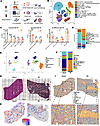
Abstract
BACKGROUND. Hepatocellular carcinoma (HCC) exhibits molecular heterogeneity that challenges histopathologic classification and biomarker discovery. We assessed whether spatially resolved N-glycan imaging with machine learning could classify tumor regions and infer glutamine synthetase (GS) status. METHODS. In this retrospective study, MALDI mass spectrometry imaging of N-glycans was performed on formalin-fixed, paraffin-embedded sections from two independent cohorts (discovery, n = 88; validation, n = 60) with pathologist annotation. An XGBoost classifier was trained on 90 discriminative N-glycan features using patient-grouped cross-validation. Performance was assessed by AUC for pixel- and biopsy-level discrimination of tumor from adjacent non-tumor tissue, and for GS status classification. RESULTS. Pixel-level AUCs were 0.95 (cross-validation) and 0.89 (external validation); biopsy-level AUCs were 1.0 and 0.97, correctly identifying 97% of tumor-containing biopsies. Probability maps recapitulated pathologist-defined boundaries; UMAP embeddings captured inter- and intratumoral heterogeneity. Discriminative species (m/z 2393.846, 1905.634, 1743.579, 1809.639) reflected complex, fucosylated, branched remodeling. N-glycans bearing six GlcNAc residues were enriched in GS+ (n = 45) versus GS− (n = 17) tumors (P = 0.001) and discriminated GS status (AUC = 0.75), consistent with GLUL and MGAT5 upregulation in TCGA-LIHC. CONCLUSION. MALDI N-glycan imaging with machine learning enables spatially resolved, objective classification of HCC and links glycan phenotypes to tumor-associated metabolic programs. TRIAL REGISTRATION. Not applicable; retrospective analysis of archival, de-identified tissue. FUNDING. NIH/NCI R01CA285370, 1R01CA289381, R33CA267226, R01CA282022, R21CA263464, R21CA286287, R01CA253460, S10OD030212, R01CA251155, R01CA250227, U01CA271887, P50CA295495, P30CA138313, P20GM130457, P30DK123704, P30DK120531,R24DK139775; NIH/NIA R01AG078702; Smart State Endowment, State of South Carolina; LeDucq Foundation.
Authors
Muhammed F. Bayram, Jade K. Macdonald, Andrew DelaCourt, Peggi M. Angel, Richard R. Drake, Aatur Singhi, David Geller, Satdarshan P. Monga, Amit Singal, Anand Mehta
Abstract
Surgical stress, such as liver ischemia/reperfusion (I/R) injury characterized by robust neutrophil infiltration and immune activation, induces sterile inflammation that reshapes tissue immunity and contributes to organ dysfunction, yet the intercellular circuits that spatially orchestrate these responses within the hepatic immune microenvironment remain incompletely defined. Here, we integrate single-cell RNA sequencing, spatial transcriptomics, high-dimensional spectral flow cytometry, and metabolomics to resolve the hepatic immune landscape following I/R at cellular and spatial resolution. While confirming extensive immune remodeling, we identify a dominant neutrophil–Kupffer cell communication axis mediated by neutrophil-derived thrombospondin-1 (TSP-1), which selectively engages CD36 on Kupffer cells. This interaction drives coordinated immune-metabolic reprogramming in Kupffer cells, characterized by suppression of oxidative phosphorylation, enhanced glycolysis, and remodeling of sphingolipid metabolism, including accumulation of hexosylceramides. Spatial analyses reveal preferential neutrophil–Kupffer cell colocalization within necrotic niches, and cross-species integration with human liver transplant datasets demonstrates conserved upregulation of the TSP-1/CD36 axis following reperfusion. Pharmacologic inhibition of TSP-1 attenuates liver injury and inflammatory responses in vivo. Together, these findings define a spatially organized, neutrophil-driven immune-metabolic circuit that governs functional reprogramming of Kupffer cells during surgical stress and identify the TSP-1/CD36 pathway as a conserved and targetable mediator of sterile liver injury.
Authors
Hongji Zhang, Xingping Huang, Preethi Jayakumar, Yunwei Zhang, Ti Yang, Xiaorong Guo, Grace Wu, Amrendra Kumar, Vijaya Bharti, Amblessed Onuma, Chengli Shen, Dequan Lou, Patricia S. Latham, James M. Crawford, Kong Chen, Anna E. Vilgelm, Lopa Mishra, Allan Tsung, Meihong Deng, Hai Huang
Abstract
Vascular plasticity is a crucial biological asset enabling our bodies to rapidly adapt to infections and acute inflammation. However, repeated insults during chronic disease can result in these vascular adaptations becoming irreversible, thereby driving disease progression and fibrosis. This study aimed to understand if phenotypic changes in endothelial cell (EC) identity could be indicative of progressive fibrosis and thereby offer diagnostic and therapeutic opportunities for patients with metabolic dysfunction-associated steatotic liver disease (MASLD). We integrated high-resolution imaging, proteomic and transcriptomic analysis which collectively highlighted a central role for endothelial-to-mesenchymal transition (EndMT)-induced EC plasticity in the derivation of ‘fibrosis-associated’ EC (FAEC). We demonstrated that: 1) full spectrum flow cytometry can provide new opportunities to categorize and phenotype EC subpopulations, 2) two distinct EndMT-derived FAEC subpopulations expanded during fibrogenesis; THY1.2+ICAM1+ and TAGLN+MCAM+ EC that displayed unique immunomodulatory and metabolic phenotypes, 3) TAGLN+ FAEC are a conserved, pro-fibrotic cell type that arose at early stages of MASLD, and 4) increased hepatic expression of TAGLN was significantly associated with detrimental patient outcomes at all stages of liver disease. This study paves the way for the development of FAEC-specific diagnostic and therapeutic approaches to tackle progressive fibrotic disease.
Authors
Christina Gkantsinikoudi, Joshua P. Dignam, Raju Kumar, Elliot Jokl, Meenakshi Rana, Wenhao Li, Maryna Samus, Stephanie Landi, Varinder S. Athwal, Timothy J. Kendall, Antal Rot, Jonathan A. Fallowfield, Karen Piper Hanley, William Alazawi, Neil P. Dufton

Abstract
Alcohol-associated liver disease (ALD) is a growing global health concern, with alcohol-associated hepatitis (AH) leading to the highest morbidity and mortality. Available therapies are limited and often inadequate. Platelets contribute in a variety of ways to liver disease pathogenesis, but their role in AH remains largely unexplored. In this study, we addressed the hypothesis that platelets contribute to pathological inflammation in AH. Using patient samples and a multiomics approach, we found that platelets undergo proinflammatory transcriptomic and proteomic changes in AH, with 2 alarmins, S100A8 and S100A9, being among the top upregulated genes/proteins. Additionally, the abundance of platelet-derived microparticles containing S100A8 and S100A9 in AH patient plasma was increased and correlated with disease severity (assessed by model for end-stage liver disease sodium [MELD-Na]) and endotheliopathy (assessed by ICAM1, CXCL8, and vWF). We mechanistically linked S100A9 with endotheliopathy via crosstalk between primary human liver sinusoidal endothelial cells and primary human monocytes. We also demonstrated that IL-6 upregulates S100A9 in megakaryocytic cells in a JAK/STAT-dependent manner, modeling changes occurring in the bone marrow in patients with AH. Our studies establish proinflammatory platelets as important contributors to AH pathology. Moreover, antiplatelet agents — or, more specifically, S100A9 targeted drugs — are potential therapeutic strategies in AH.
Authors
Fallyn Kirlin, Nima Fattahi, Rolando Garcia-Milian, Florine Collin, Weiwei Wang, Yohan Kim, Fabrice Lucien, Zhaoli Sun, TuKiet T. Lam, John Hwa, Yasuko Iwakiri, Matthew J. McConnell
Abstract
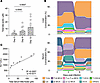
Antiviral immunity profoundly impacts host metabolism, which can, in turn, modulate immune responses and influence disease pathology. The liver orchestrates systemic bile acid (BA) metabolism, a pathway disrupted in chronic liver diseases such as viral hepatitis. BAs are increasingly recognized for their immunomodulatory properties. Thus, improved understanding of the interplay between immunity and BA metabolism may reveal novel therapeutic avenues. Using lymphocytic choriomeningitis virus (LCMV) as a model, we investigated the interplay between chronic virus infection, BA metabolism, and immunity. Chronic LCMV infection increased BA levels and shifted circulating and liver BA composition toward host-derived, conjugated BAs. Hepatic BA transport and synthesis genes were broadly downregulated, in part depending on CD8+ T cells. Pharmacological inhibition of the main hepatic transporter of conjugated BAs, NTCP (Slc10a1), increased hepatic damage, while combined genetic disruption of the BA transporters Slco1a1, Slco1a4, and Slco1b2, responsible for the hepatic reuptake of unconjugated BA, reduced liver pathology and impaired antiviral CD8+ T cell responses. These findings reveal a reciprocal interplay between BA metabolism and CD8+ T cells, expanding our understanding of adaptive immunity in viral hepatitis. They also highlight how immunometabolic changes in liver disease may affect adaptive immune responses against infections.
Authors
Felix Clemens Richter, Zsofia Keszei, Csilla Viczenczova, Maximilian Baumgartner, Henrique G. Colaço, Magdalena Siller, Lisa Holnsteiner, Hatoon Baazim, Anna Hofmann, Aubrey Burrett, Anna Schönbichler, Lukas Endler, Joel Xu En Wong, Laura Antonio-Herrera, Oleksandr Petrenko, Fabian Amman, Jakob-Wendelin Genger, Claudia D. Fuchs, Hubert Scharnagl, Hanns-Ulrich Marschall, Thomas Reiberger, Karl S. Lang, Clarissa Campbell, Michael Trauner, Andreas Bergthaler
Abstract
Aging drives systemic metabolic dysfunction (SMD) and increases the risk of chronic illnesses such as metabolic dysfunction–associated steatotic liver disease (MASLD) and chronic kidney disease (CKD). However, mechanisms that connect aging to multi-organ deterioration are poorly understood. In this study, we identify hepatocyte Hedgehog signaling as a central regulator of ferroptosis. Using mice with hepatocyte-specific deletion of Smoothened (Smo), a key Hedgehog pathway component, we show that loss of hepatocyte Hedgehog signaling induces ferroptotic stress, lipid peroxidation, and cellular senescence. These changes were sufficient to cause spontaneous MASLD and to trigger secondary kidney injury. Smo deletion also disrupted systemic iron balance, increased hepatocyte production of the angiotensinogen, and reduced liver perfusion. Similar responses (iron dysregulation, vascular dysfunction, and reduced Hedgehog signaling) were observed in patients with MASLD and advanced fibrosis. Inhibition of ferroptosis with ferrostatin-1 reversed hepatocyte senescence, restored hepatic blood flow, and improved both liver and kidney injury in Smo-deficient mice. Overall, these findings show that hepatocyte Hedgehog signaling preserves liver homeostasis by restraining ferroptotic stress and coordinating iron-dependent vasoactive pathways. The results reveal an unrecognized aging-related communication axis between liver and kidney and identify the Hedgehog–ferroptosis pathway as a promising therapeutic target for age-associated metabolic diseases.
Authors
Ji Hye Jun, Rajesh K. Dutta, Soon-Woo Cho, Rui Yao, Seh Hoon Oh, Zhi Li, Kuo Du, David S. Umbaugh, Nanchao Wang, Yirui Xu, Jingting Li, Lingyan Shi, Jen-Tsan Chi, Junjie Yao, Anna Mae Diehl
Abstract
Authors
Sarah Platt, Norhan B.B. Mohammed, Joseph Brancale, Caroline S.C. Tippett, Kevin Seo, Silvia Vilarinho
Abstract
In metabolic dysfunction-associated steatohepatitis (MASH), liver sinusoidal endothelial cells (LSECs) acquire a proinflammatory phenotype termed lipotoxic endotheliopathy. We previously identified glycogen synthase kinase 3β (GSK3β) as a central signaling hub in LSECs during MASH. To elucidate the molecular mechanisms and functional outcome of lipotoxicity-induced GSK3β activation in LSECs, we utilized endothelial cell-specific Gsk3β knockout (Gsk3β△End) mice fed MASH-inducing diets. Endothelial Gsk3β deletion significantly reduced markers of lipotoxic endotheliopathy, including adhesion molecules and chemokines, alongside liver injury, inflammation, and fibrosis. Immune profiling via flow cytometry and mass cytometry by time of flight (CyTOF) identified decreased hepatic infiltration of proinflammatory myeloid populations, particularly mature dendritic cells (DCs) in Gsk3β△End mice. In a co-culture system, GSK3β in lipotoxic LSECs promoted DCs maturation. Mechanistically, GSK3 inhibition restored lipotoxicity-induced alterations in LSEC mitochondrial morphology and respiration by regulating AMP-activated protein kinase and dynamin-related protein 1. This rescue suppressed chemokines and adhesion molecules expression, thereby limiting immune cell recruitment. Collectively, under lipotoxic stress, GSK3β amplifies mitochondrial dysfunction and inflammatory signaling in LSECs, enhancing myeloid cell homing and DC maturation. Targeting LSEC GSK3β may therefore represent a promising therapeutic strategy to mitigate LSEC driven fibro inflammatory response in human MASH.
Authors
Akitoshi Sano, Qianqian Guo, Khaled Warasnhe, Chady Meroueh, Nantawat Satthawiwat, Asma Hamdi, Ghefar Hmaydoosh, Xin Dai, Usman Yaqoob, Kevin D. Pavelko, Charlene Miciano, Tatiana Kisseleva, Zeba Firdaus, Patrick P. Starlinger, David Pereyra, Enis Kostallari, Petra Hirsova, Davide Povero, Samar H. Ibrahim
Abstract
Lipotoxicity associated with metabolic dysfunction-associated steatotic liver disease (MASLD) causes dysregulated fatty acid (FA) and glucose metabolism, inducing cellular energy imbalance, oxidative stress (OS), and hepatocellular injury. Interleukin (IL)-10 is altered in MASLD, including increased IL-10 transcripts in peripheral immune cells; however, its role in hepatic responses to lipotoxic stress remains unclear. We evaluated whether IL-10 treatment attenuates lipotoxic injury and MASLD-related phenotypes in vivo and in vitro to reveal MASLD treatment strategies. As MASLD models, in vivo high-fat diet mice and in vitro normal human hepatocytes under palmitic acid exposure, with confirmatory experiments in HepG2 cells, were used and treated with IL-10. We assessed FA and glucose metabolism, OS, and apoptosis with histological changes and mechanisms related to hepatocellular viability/metabolic activity and stress-responsive survival signaling in vitro. IL-10 modulated FA synthesis and β-oxidation, reducing lipid accumulation, and altered glucose metabolic pathways, consistent with improved glucose handling under lipotoxic stress. Furthermore, IL-10 reduced OS and cell death markers while enhancing antioxidant responses, consistent with hepatocellular protection. These data suggest that IL-10 attenuates lipotoxic injury by modulating hepatic response pathways, thereby improving MASLD-related phenotypes, and supports the potential of IL-10 as a therapeutic target for MASLD.
Authors
Akira Kado, Kazuya Okushin, Takeya Tsutsumi, Toshiyuki Kishida, Kazuhiko Ikeuchi, Hiroshi Yotsuyanagi, Kyoji Moriya, Kazuhiko Koike, Mitsuhiro Fujishiro

Abstract
Liver macrophages are central in maintaining hepatic homeostasis and mediating immune responses during liver injury, including fibrosis. Macrophages may have proinflammatory or antiinflammatory properties, but which properties influence fibrosis remains unclear. To explore the role of macrophages in liver fibrosis, we performed single-cell RNA-seq in a mouse model of liver injury and found that macrophage diversity was increased. Marco was among the most significantly upregulated genes, and a population of Marcohi macrophages increased with injury and spatially segregated to nonfibrotic areas. The macrophage receptor with collagenous structure (MARCO) protein is a scavenger receptor expressed by specific subsets of macrophages, and its role in liver fibrosis is unclear. In vitro induction of Marco in bone marrow–derived macrophages decreased proinflammatory gene expression, increased antiinflammatory and antifibrotic gene expression, and enhanced phagocytosis, indicating a restorative phenotype. Adoptive transfer of MARCO+ macrophages in a mouse model of liver fibrosis reduced the expression of extracellular matrix–associated (ECM-associated) genes in hepatic stellate cells (HSCs) and reduced collagen deposition, which did not occur with the transfer of MARCO– macrophages. Therefore, MARCO+ macrophages have a tissue restorative role in the liver and attenuate fibrogenesis through interaction with HSCs, thereby providing a potential therapeutic pathway for liver fibrosis.
Authors
Sofia Jerez, Shawna A. Cooper, Usman Yaqoob, Maleeha F. Kalaiger, Abid A. Anwar, Mandy Wong, Bushra Arif, Luke C. Doskey, Maria Hernandez-Tejero, William A. Sherman, Ruben De Boeck, Ying Li, Moira B. Hilscher, Enis Kostallari, Nidhi Jalan-Sakrikar, Sheng Cao, Vijay H. Shah
No posts were found with this tag.


