
Development
Abstract
Although 95% of serotonin in the human body is produced in the gastrointestinal tract, most prior research work has focused on the brain. Despite its abundance in the gut, serotonin’s role in early intestinal development remains poorly understood. Here we show that serotonin is detected in both the small intestine and large intestine as early as 14 to 15 weeks gestational age. Using single-cell transcriptomics with histological validation, we generated a spatiotemporal atlas of serotonin and serotonin-related genes in the human gut from first trimester to late adulthood. The serotonin synthesis gene, TPH1, was exclusively expressed in enteroendocrine cells at all time points analyzed, with the highest expression in the second trimester. The serotonin reuptake gene, SLC6A4, was largely restricted to mature absorptive enterocytes and increased postnatally. Serotonin receptors also displayed distinct cellular and developmental expression patterns. HTR1E was confined to the first trimester during highly proliferative stage. HTR4 was enriched for in crypt regions, suggesting a role in proliferation for serotonin. Finally, HTR3E was associated with tuft cells throughout development. Together, these findings reveal the dynamic, cell-type-specific regulation of serotonin in the developing human gut, suggesting its importance in early intestinal development, and provide a framework to study its roles in intestinal development and diseases.
Authors
Long Phan, Lauren Smith, Kristin M. Milano, Weihong Gu, Madison S. Strine, Harvey J. Kliman, Liza Konnikova
Abstract
Premature infants often require supplemental oxygen therapy, a major risk factor for bronchopulmonary dysplasia and subsequent neurodevelopmental impairment. To determine how neonatal hyperoxia affects prefrontal cortex (PFC) development, we exposed neonatal mice to 85% oxygen (O₂) from postnatal day (P)1–P14 and performed integrated single-nucleus transcriptomic and chromatin accessibility profiling with in vivo and in vitro validation. Hyperoxia induced sex-dependent cellular remodeling, reducing L4/5 intratelencephalic projecting glutamatergic neurons in females and mature oligodendrocytes in males. Across both sexes, hyperoxia suppressed oligodendrocyte maturation, with decreased expression of the myelination genes proteolipid protein 1 (Plp1) and myelin basic protein (Mbp), altered chromatin accessibility, and increased oligodendrocyte transcription factor 2 (OLIG2) protein expression. Regulatory responses were sex specific, with tumor protein p53 (TP53)-regulated metabolic disruption and lysine demethylase 3A (Kdm3a) induction in females, and Netrin-1 signaling in males. Hyperoxia impaired oligodendrocyte progenitor cell (OPC) proliferation and differentiation. These abnormalities were recapitulated in postmortem PFC tissue from infants with BPD and human induced pluripotent stem cell (iPSC)-derived OPCs. These findings show that neonatal hyperoxia disrupts PFC development through sex-dependent effects on neuronal and oligodendrocyte lineages while converging on impaired myelination, highlighting oligodendrocyte dysfunction as a clinically relevant consequence of neonatal oxygen exposure.
Authors
Xingrao Ke, Wei Yu, Carl F. Schreck, Joseph M. Varberg, Melissa A. Gener, Daniel A. Louiselle, Sheng Xia, Sherry M. Mabry, Heather L. Menden, Venkatesh Sampath, Robert H. Lane, Kaela M. Varberg
Abstract
ADAMTS9 mutations cause the ciliopathies nephronophthisis and Joubert syndrome. Here we demonstrated that deletion of ADAMTS9 in the proximal nephron led to polycystic kidney development in mice. In males, Adamts9 deletion caused kidneys to become highly cystic while remaining small without undergoing enlargement. In contrast, female mice developed cystic kidneys at a slower rate. ADAMTS9 deletion disrupted ciliogenesis through the loss of cleavage of the ciliary transition zone (TZ) protein TMEM67, which led to loss of the MKS/B9 module – a key component of the ciliary gate. Functional analysis of all eight ciliopathy patient variants of ADAMTS9 identified to date showed TMEM67 C-terminus failed to localize to the TZ, thus disrupting a key regulatory mechanism in patient renal ciliogenesis. Modeling ADAMTS9-mediated TMEM67 cleavage utilizing TMEM67-cleavage deficient mice revealed loss of TZ formation, but not elevated canonical Wnt signaling as the underlying mechanism driving cystogenesis. Adamts9 deletion led to comparatively intense interstitial collagen deposition, which likely restricted kidney enlargement and resulted in the characteristically small kidney phenotype seen in nephronophthisis. By comparative analysis of four interconnected polycystic kidney models, in addition to Pkd1 and Pkd2 deleted kidneys, we identified differential collagen homeostasis as a principle factor determining cystic kidney size and type.
Authors
Sydney Fischer, Karyn L. Robert, Manu Ahmed, Griffin I. Kane, Matthew A. Kavanaugh, Wei Wang, Pamela V. Tran, Prabhani U. Atukorale, Sumeda Nandadasa
Abstract
Right ventricular pressure overload (RVPO) is a critical pathophysiological feature of numerous pediatric cardiovascular diseases. Transverse tubules (T-tubules) form the foundation for efficient excitation-contraction coupling in mature cardiomyocytes. We hypothesized that RVPO impairs T-tubule maturation through the regulatory protein BIN1 (Bridging Integrator 1). In right ventricular samples from children with tetralogy of Fallot, characterized by RVPO, and in a neonatal rat RVPO model induced by pulmonary artery banding (PAB), T-tubule maturation was disrupted. RNA sequencing revealed significant downregulation of T-tubule–associated genes, with Bin1 among the most suppressed. Bin1 overexpression restored T-tubule maturation in PAB rats. Assay for Transposase-Accessible Chromatin with sequencing (ATAC-seq) showed reduced chromatin accessibility at Bin1 loci; motif analysis identified Mef2d (myocyte enhancer factor 2D) as the top enriched transcription factor. Mef2d knockdown rescued Bin1 expression and T-tubule maturation, and mutation of the Mef2d binding sites within the Bin1 promoter abolished the inhibitory effect of Mef2d on Bin1 promoter activity. This study delineates a phenomenon and a mechanism of cardiomyocyte maturation under pathological stress. The findings not only advance our understanding of this most pivotal event in postnatal cardiac development but also unveil a potential therapeutic direction for pediatric cardiovascular diseases associated with RVPO.
Authors
Yuqing Hu, Yiting Xue, Xudong Chen, Linghui Kong, Debao Li, Zheng Wang, Sixie Zheng, Siqi She, Hao Li, Sijuan Sun, Hao Chen, Lijun Chen, Peisen Ruan, Kai Wang, Lincai Ye
Abstract
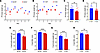
Prader-Willi syndrome (PWS) is a complex genetic disorder resulting from the deficiency of several maternally imprinted genes, including SNORD116, in the 15q11-q13 region. Loss of Snord116 in mice recapitulates some of the most salient clinical features of PWS, including growth hormone (GH) deficiency and hypogonadism. This study explored the impact of Snord116 deficiency on early postnatal pituitary development and growth in Snord116-KO mice. Snord116 was found to be expressed in both the anterior and posterior pituitary. Pituitary transcriptomes of Snord116-KO and WT mice at 2 developmental stages, P0 and 4 weeks of age, were interrogated and related to ex vivo analyses of GH secretion in the pituitaries of 5-week-old mice. Significant differences in pituitary transcriptomes were detected between Snord116-KO and WT mice at 4 weeks of age but not at P0. The differentially expressed genes and affected molecular pathways play important roles in regulating embryonic and postnatal pituitary development. Our results suggested that PWS GH deficiency was mainly due to pituitary hypoplasia and decreased GH production but not to reduced GH secretory function per se, implicating Snord116 in the specific molecular/cellular pathways that account for impaired postnatal pituitary development and GH deficiency in PWS.
Authors
Gabriel F. Batzli, Kaiying Guo, Fahrünisa Meryem Betül Erol, Charles A. LeDuc, Lisa C. Burnett, Rudolph L. Leibel, Yiying Zhang

Abstract
Haploinsufficiency of TBX1, which occurs in 22q11.2 deletion syndrome (22q11.2DS), leads to a heterogeneous spectrum of clinical manifestations, including craniofacial anomalies, immunodeficiency, and congenital heart defects. The variability in syndromic presentation between patients may be partially explained by variants in chromatin regulatory genes that act to further modify TBX1 function. To investigate this relationship, we selected KMT2D as a candidate gene because of its role in the etiology of Kabuki syndrome, which shares overlapping features with 22q11.2DS. We demonstrate that conditional inactivation of Kmt2d in the Tbx1 lineage in Tbx1-heterozygous mice leads to fully penetrant perinatal lethality and increased incidence of craniofacial dysmorphism, thymus and parathyroid gland hypoplasia, and aortic arch anomalies. At early stages, mutant embryos were found to have defects of the caudal pharyngeal apparatus, including abnormal patterning of the third pouch endoderm, hypoplastic fourth arches, and defective fourth arch arteries. Finally, analysis of single-cell RNA sequencing revealed dysregulation, and largely downregulation, of genes involved in basic cellular functions, suggesting that Tbx1 and Kmt2d developmentally converge upon essential biological processes. Overall, these results indicate that reduced dosage of Kmt2d perturbs the developmental landscape of the Tbx1 heterozygote, eliciting phenotypes that are shared between 22q11.2DS and Kabuki syndrome.
Authors
Daniella Miller, Kevyn Jackson, Timothy C. Cox, Bernice E. Morrow
Abstract
Renin cells are essential for survival and serve as key regulators of blood pressure and fluid-electrolyte homeostasis. Their function and identity are dependent on signals from their local microenvironment afforded by neighboring cells and nerves. Whether and how renin cells contribute to the development and maintenance of this microenvironment remains unclear. Because renin cells are rare -0.01 % of kidney cells- conventional histological approaches cannot capture their interaction with nerve fibers and surrounding cells within the nephron and its vasculature. Using high-resolution 3D imaging, cell-specific multicolor reporter mice, single-cell RNA-Seq, and conditional gene deletions, we mapped how renin cells assemble within arterioles and communicate with axon fibers to organize the growth and orientation of the kidney arterioles during development and disease. This co-inductive process is mediated by Ngf produced by renin cell precursors and is necessary for renin cell survival and innervation. Interestingly, renin enzymatic insufficiency elevates Ngf and drives arteriolar hypertrophy with aberrant axon sprouting and hyperinnervation. These findings indicate that renin cells regulate kidney neurovascular development revealing them as active organizers of their local neuroregulatory microenvironment in health and disease.
Authors
Manako Yamaguchi, Georgina Gyarmati, Liam McLaughlin, Hiroki Yamaguchi, Jason P. Smith, Lucas Ferreira de Almeida, Daisuke Matsuoka, Alexandre G. Martini, Sara M. Wilmsen, Sijie Hao, Kazuki Tainaka, Silvia Medrano, Sanjay Jain, Janos Peti-Peterdi, Maria Luisa S. Sequeira-Lopez, R. Ariel Gomez
Abstract
Airway structural remodeling and hyperresponsiveness (AHR), hallmarks of asthma, are influenced by genetic variations and adverse exposures. While intrauterine perturbations in lung development have been linked to adult pulmonary disease, the developmental origins of these abnormalities remain poorly understood. Here, we provide evidence of genetic background playing a key role in this process. Using A/J and C57BL/6J mice known for their distinct susceptibility to AHR, we show that A/J embryos selectively develop an aberrant airway smooth muscle (SM) program and AHR in adulthood when exposed transiently to a vitamin A/retinoic acid (RA)-disrupted intrauterine environment in vivo by maternal BMS493 administration. Single-nuclei multiomics identified a mesenchymal cell population overactivating TGFβ targets in response to BMS selectively in A/J lungs. These cells, localized to sites of airway SM initiation and pSMAD2-3, exhibited robust BMS-mediated upregulation of SMAD2-3 targets, including regulators of SM program Pdgfra and Tnc. Functional analyses in vivo and cultured lungs showed aberrant SM formation in areas of overactive TGFβ of BMS-exposed lungs. These abnormalities were prevented by inhibiting TGFβ signaling in utero in RA-deficient embryos. These findings underscore how distinct genetic backgrounds respond to intrauterine perturbations that program airway structure and function, with potential lasting consequences in postnatal pulmonary function.
Authors
Takehiro Otoshi, Benjamin D. Kotton, Ayyappa K.S. Kameshwar, Yoshinori Seki, Zachary Cardell, Xiangyi Ke, Yuta Matsuno, Pooja Rajaram, Youn-Kyung Kim, Sarah M. Sharpton, Loredana Quadro, Wellington V. Cardoso, Masako Suzuki
Abstract
The distal nephron segments play a critical role in maintaining electrolyte balance, yet the mechanisms that preserve epithelial identity and segmental organization within this region remain poorly defined. Yes-associated protein (YAP), a key effector of Hippo signaling, is essential for kidney development, but its function in distal nephron epithelia is unknown. Using a genetic gain-of-function approach to activate YAP selectively in distal nephron segments, we found that sustained YAP activity profoundly disrupts epithelial organization and nephron patterning. Lineage tracing revealed that both distal convoluted tubule and connecting tubule cells originate from Slc12a3-expressing cells, and YAP activation in these segments led to increased proliferation, displacement of lineage-labeled cells beyond expected segment boundaries, and loss of segment-specific gene expression. These changes were accompanied by defects in apicobasal polarity and junctional integrity, consistent with epithelial plasticity. Unexpectedly, YAP activation in distal nephron segments also suppressed proximal tubule gene expression, indicating non-cell-autonomous effects on nephron differentiation. Together, these findings identify YAP as a critical regulator of epithelial identity in the distal nephron segments and reveal a previously unrecognized role for Hippo signaling in coordinating intersegmental organization during kidney development.
Authors
Zeinab Dehghani-Ghobadi, Eunah Chung, Mohammed Sayed, Christopher Ahn, Hyojin Alex Choi, Annissa Aamoum, Benjamin R. Thomson, Yueh-Chiang Hu, Hee-Woong Lim, Joo-Seop Park
Abstract
Several genes guide inner ear development, and mutations in these genes can cause malformations that result in congenital hearing loss. However, the contribution of noncoding regulatory elements remains largely unclear. This study investigates the function of distal enhancer elements in the transcriptional regulation of GDF6, a gene implicated in cochlear development. Using mouse models with targeted deletions, human inner ear organoids, and CRISPR interference (CRISPRi), we identified a downstream regulatory interval harboring a developmental enhancer required to maintain GDF6 expression during otic epithelial maturation and cochlear morphogenesis. Deletion of this regulatory region or targeting of CRISPRi-based repressors to these regions resulted in decreased GDF6 expression, failure of otic-epithelium development, and prevention of hair cell-like differentiation, reflecting cochlear aplasia observed in patients with corresponding genomic deletions. These findings highlight the contribution of long-range regulatory elements to auditory development and illustrate how their disruption contributes to human deafness.
Authors
Mohammad Faraz Zafeer, Clemer Abad, Havva Ortabozkoyun, Memoona Ramzan, Guney Bademci, Maria C. Robayo, Duygu Duman, Rolen M. Quadros, Shengru Guo, Juan I. Young, Anthony J. Griswold, Channabasavaiah B. Gurumurthy, Derek M. Dykxhoorn, Katherina Walz, Mustafa Tekin
No posts were found with this tag.


