
Cell biology
Abstract
Hypercapnia, elevated carbon dioxide (CO2), is common in advanced chronic obstructive pulmonary disease (COPD) and predicts poor clinical outcomes. Traditionally considered a consequence of disease severity, hypercapnia may drive disease progression by promoting airway dysfunction. Here, we show that hypercapnia acts as an active stressor, driving airway smooth muscle (ASM) constriction through a stromal interaction molecule 1 (STIM1)-dependent pathway. Hypercapnia rapidly activates ERK, triggering sarcoplasmic reticulum calcium (Ca2+) release via phosphorylation of the inositol 1,4,5-trisphosphate receptor. ERK also induces nuclear translocation of the transcription factor c-Fos, enhancing STIM1 transcription. These responses were observed under both supraphysiological (~120 mmHg) and clinically relevant (50-60 mmHg) hypercapnia. Increased STIM1 abundance sustains store-operated Ca2+ entry (SOCE), amplifying ASM signaling. In mice, hypercapnia increased ASM and airway contractility in a STIM1-dependent manner. Human genetic analyses revealed noncoding STIM1 variants associated with reduced lung expression that were enriched in COPD patients. These variants correlated with lower airway resistance under normocapnia; however, this benefit was lost during hypercapnia, indicating a potential gene–environment interaction. Together, our findings position STIM1 as a key mechanistic node linking hypercapnia to Ca2+ dysregulation and airway obstruction, defining a CO2–ERK–STIM1–SOCE axis with translational relevance to chronic lung disease.
Authors
Masahiko Shigemura, Vitalii Kryvenko, Jennifer A. Pacheco, Megan J. Puckelwartz, Milos Aleksic, Natalia D. Magnani, Emma E. Thompson, Francisco Javier Martin-Romero, Eoin P. Cummins, Werner Seeger, Andreas Bräuninger, Lynn C. Welch, G.R. Scott Budinger, Emilia Lecuona, Laura A. Dada, Ankit Bharat, István Vadász, Murali Prakriya, Jacob I. Sznajder
Abstract
Charcot-Marie-Tooth Disease (CMT) is a group of inherited progressive conditions affecting distal motor and sensory neurons, leading to muscle weakness, pain and loss of sensation in limbs. CMT type 2A (CMT2A) is the most common form of axonal CMT and is associated with a more severe clinical manifestation. However, there are no treatments currently available. To investigate disease mechanisms and facilitate treatment discovery, we developed an in vitro model for CMT2A by introducing the patient-specific MFN2R94Q/+ variant into human embryonic stem cells (hESCs). Isogenic variant and wild-type hESCs differentiated to spinal motor neurons with similar efficiency and gave rise to functional motor neurons in vitro. However, MFN2R94Q/+ spinal motor neurons displayed impaired mitochondrial trafficking, resulting in altered distribution of mitochondria in axons. Unbiased quantitative proteomic profiling of the endogenous MFN2 interactome revealed dose-dependent remodelling by the R94Q variant across 412 proteins, highlighting candidate mechanisms in disease pathology. Importantly, we showed that mitochondrial trafficking defects could be alleviated by treatment with an HDAC6 inhibitor. Chemical inhibition of HDAC6 also rescued the motor phenotype in a zebrafish CMT2A model. Taken together, our study reveals a variant-specific insight into CMT2A disease mechanisms and confirms HDAC6 as a promising target for further therapeutic development.
Authors
Lydia H. Jestice, Larissa Butler, Rebecca A. Lea, Kathryn I. Adamson, Jonas Van Lent, Stuart L. Johnson, Hollie Weedon, Eldriena D’Silva, Gabriele Gelezauskaite, Bob Asselbergh, Eloise Brown, Owen Laing, Christopher J. Price, Dylan Stavish, Anestis Tsakiridis, Mark O. Collins, Vincent Timmerman, Kurt J. De Vos, Alison E. Twelvetrees, Andrew J. Grierson, Ivana Barbaric
Abstract
The estrogen receptor is hypothesized to directly influence HIV-transcription and latency but is also critical for immune signaling. However, the mechanisms of action of the estrogen receptor (ER) in immune cells in the context of HIV are limited, and relevant to HIV cure strategies, the influence of latency reversal agents (LRAs) on the ER pathway are unknown. We evaluated a) the impact of estrogen (E2) on the nuclear translocation of estrogen receptor α (ERα) in CD4+ T cells, b) the ability of Fulvestrant, a selective estrogen receptor degrader (SERD), and ARV-471, a novel, potent, PROteolysis TArgeting Chimera (PROTAC) selective ERα degrader to modulate ER and c) the impact of different classes of LRAs on ER signaling. In contrast to what has been demonstrated in oncology, E2 does not induce ERα nuclear translocation in CD4+ T cells. Similarly, neither Fulvestrant nor ARV-471 induced degradation of ERα in CD4+ T cells. LRAs significantly downregulated ERα gene and protein expression in both PBMCs and CD4+ T cells. Collectively, our results suggest that estrogen influences on HIV transcription are not likely a consequence of canonical nuclear ERα mechanisms. The consequences of LRA downregulation of ER, a protein important for immune signaling, warrants further investigation.
Authors
Cristina Ceriani, Priya Khetan, Anthony Abeyta-Lopez, Kena J. Lemu, Prachi Meher, Brigitte Allard, Katherine S. James, Anne-Marie W. Turner, David M. Margolis, Nancie M. Archin
Abstract
Spinal cord injury (SCI) leads to severe neurological and functional impairments, yet reliable biomarkers for assessing injury severity and predicting recovery remain limited. Cerebrospinal fluid (CSF) is in direct contact with the central nervous system and provides a valuable source for detecting molecular changes after SCI. Although exosomal microRNAs and proteins are increasingly recognized as mediators of intercellular communication, the role of human CSF exosomes in SCI has not been systematically investigated. To identify exosome-based biomarkers and potential therapeutic targets, we analyzed CSF and serum exosomes from patients with acute SCI using RNA sequencing and proteomic profiling. Weighted Gene Co-expression Network Analysis (WGCNA) identified six gene modules significantly associated with injury severity and neurological recovery at three months. Proteomic analysis revealed a five-protein panel that distinguished complete from incomplete SCI and a four-protein panel that predicted neurological improvement. Additionally, fifteen CSF-specific and nine serum-specific exosomal miRNAs were identified independent of injury severity. Among ten tested miRNAs associated with neurological recovery, seven regulated astrocyte proliferation, and six promoted neurite extension and synapse formation. Overall, this study provides a comprehensive characterization of CSF exosomal miRNAs and proteins in human SCI and identifies molecular signatures associated with injury severity and recovery.
Authors
Dallas L. Sheinberg, Haichao Wei, Joseph S. Withrow, Farshad Homayouni Moghadam, Chia-Chen Lu, Jyotirmoy Rakshit, Jennifer Zaragoza, John R. Williams, Wen Li, Jacques J. Morcos, Jia Qian Wu
Abstract
Circulating fatty acids (FA) are constitutively taken up by basolateral kidney proximal tubule transporters and are the preferred metabolic substrate. In many chronic kidney diseases, the damaged glomerular filtration barrier permits passage of albumin-bound FA, which are reabsorbed by apical FA transport protein-2 (FATP2). Bilateral FA uptake leads to lipotoxicity and progressive renal function decline, but the relative apical versus basolateral contribution and intracellular mechanisms are not established. Apical or bilateral (but not basolateral) palmitate incubation with human proximal tubule cells stimulated endoplasmic reticulum (ER) stress gene expression, ER stress pathway activation, and ER fragmentation. Apical or bilateral palmitate was associated with reduced lipid droplets, and decreased expression of ER-localized lipid droplet biogenesis transcripts. Inhibition of lipid droplet formation also precipitated ER stress, suggesting diminished sequestration of FA metabolites as the cause. Indeed, C16:0 ceramide was increased in bilateral palmitate-treated cells, and in kidneys from mice that phenocopy progressive diabetic kidney disease. Ceramide synthesis inhibition abrogated ER stress, and transfection with C16:0 ceramide decreased ER membrane fluidity and caused ER stress. We conclude that aberrant filtration and uptake of FA by apical FATP2 exceeded the capacity for lipid droplet incorporation, and led to cytotoxicity from ceramide-induced ER lipid bilayer stress.
Authors
Zhiyu Liu, Robert J. Gaivin, Shenaz Khan, Vincent Li, Amal Chaba, Fraser J. Moss, Usman Sabir, Takhar Kasumov, Tingwei Mu, Jeffrey R. Schelling
Abstract
B cells contribute to the pathogenesis of food allergies as they induce allergen-specific antibody production. Clinically-used allergen-specific immunotherapies have shown to induce regulatory B cell (Bregs) subsets as well as target and reduce allergy-driving B cell functions. This report aims to elucidate the contribution of regulatory B cells to an allergen-encapsulating nanoparticle (aeNP) immunotherapy in a murine model of food allergy. In this model, B cells directly associated with aeNPs. CD20+ B cell depletion after aeNP treatment increased the number of mice with severe allergic reactions during oral food challenges and reduced the expansion of regulatory immune cells including CD103+ dendritic cells (DCs) and CCR9+ gut-homing regulatory T cells, indicating that B cells are a component of aeNP immunomodulation. B cell communication in the gastrointestinal tract of aeNP-treated mice identified CD23 signaling as a potential inducer of regulatory CD103+ DC functions and disrupter of allergy-driving B cell-T cell communication. These tolerogenic signaling patterns were also identified in IL-10+ B cells, which have been known to impart regulatory immune effects in both murine and human disease. Ultimately, B cells are a component of the complex immunomodulation leading to aeNP efficacy at reducing allergic reactivity.
Authors
Laila M. Rad, Michael N. Saunders, Laura A. Williams, Katarzyna W. Janczak, Chris L. Dorsett, Kate V. Griffin, Elizabeth J. Bealer, Jeffrey A. Ma, Sayre A. Tillery, Jyotirmoy Roy, Stephen D. Miller, Jessica J. O'Konek, Lonnie D. Shea
Abstract
YAP/TAZ signaling is required for initiation of lung alveolar repair, yet previous studies in idiopathic pulmonary fibrosis (IPF) predicted increased YAP/TAZ signaling in alveolar epithelial cells (AECs). We investigated whether persistent YAP/TAZ AEC signaling contributes to failed epithelial repair and persistent fibrotic remodeling. In IPF lungs, we identified increased YAP+/TAZ+ AECs and increased transcriptional target expression. Pharmacological YAP/TAZ activation in human AEC organoids and in murine AT2 cell organoids generated with genetic YAP/TAZ activation (YTactive) (via deletion of Hippo-kinases Stk3/4), resulted in phenotype shifts into aberrant transitional and airway-like states. Bleomycin injury of YTactive mice resulted in persistent fibrotic remodeling at 28- and 56-days post-bleomycin injury. Gene promoter activity associated with transitional cell markers (Krt19, Hopx, and Runx2) was increased in YTactive AT2 cells. Immunofluorescent staining showed a loss of AT2 associated Cebpa and increased Krt19 in YTactive lineage traced AT2 cells 28 days post-injury. Inhibition of YAP/TAZ using Verteporfin resulted in improved lung repair in YTactive mouse lungs, including restored Cebpa and decreased Krt19+ transitional cells. These findings demonstrate sustained YAP/TAZ activation drives abnormal alveolar repair and persistent fibrotic remodeling. Blocking aberrant persistent YAP/TAZ activity promotes adaptive repair and has potential as a therapeutic strategy for pulmonary fibrosis.
Authors
Isabella P. Gaona, A. Scott McCall, Natalie M. Geis, Arlo C. Colvard, Gianluca T. DiGiovanni, Taylor P. Sherrill, Ujjal K. Singha, David S. Nichols, Ana P. Serezani, Holly E. David, Jean-Philippe Cartailler, Shristi Shrestha, Sergey S. Gutor, Timothy S. Blackwell, Jonathan A. Kropski, Jason J. Gokey
Abstract
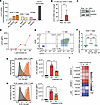
Human CD4+ T cells utilize nutrients, including lipids, to support their activation and polarization. Considering the pivotal role of lipoproteins in lipid transport, we reasoned that lipoprotein uptake and processing could effect CD4+ T cell function. Here, we demonstrate that activation of human CD4+ T cells induced expression of LDL receptor (LDLR) to facilitate LDLR-mediated endocytosis of LDL. Degradation of surface LDLR on CD4+ T cells with PCSK9 hampered activation and proliferation of the cells. Lipoprotein deprivation or blocking of lysosomal cholesterol egress impaired activation of mechanistic target of rapamycin complex 1 (mTORC1), affecting CD4+ T cell activation and proliferation. Furthermore, lipoprotein deprivation of cultured primary CD4+ T cells lead to reduced expression of c-MAF and FOXP3, key transcription factors for IL-10, accompanied by reduced IL-10 secretion. The pivotal role of LDLR-mediated lipoprotein uptake for mTORC1 activity, c-MAF and FOXP3 expression, and IL-10 secretion was confirmed using LDLR-dysfunctional CD4+ T cells from patients with homozygous familial hypercholesterolemia. Our study offers valuable insights into the lipoprotein metabolism of human CD4+ T cells and their reliance on the LDLR pathway for activation and polarization, a feature that may be leveraged to modulate CD4+ T cell function.
Authors
Angela Markovska, Niels S. van Heusden, Dagmar Duijzer, Alejandra Bodelón, Greta Rogani, Enric Mocholi, Edwin C.A. Stigter, Can Gulersonmez, Sander Kooijman, Leonie Van der Zee, Monique T. Mulder, Jeanine E. Roeters van Lennep, Patrick C.N. Rensen, Jorg van Loosdregt, Sebastiaan J. Vastert, Noam Zelcer, Marianne Boes, Henk S. Schipper
Abstract
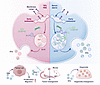
Tumor cells are constantly confronted with nutrient deprivation; however, the effect of serum starvation on the remodeling of endosomal compartments and extracellular vesicles (EVs) in tumor cells remains unclear. Here, we found that serum starvation pronouncedly promotes multivesicular body (MVB) biogenesis, EV formation, and cargo selection. Specifically, by generating a constitutively active Rab5Q79L mutant to induce the enlargement of MVB, we revealed for the first time to our knowledge that ANXA3 is sorted into intraluminal vesicles (ILVs) of MVB. Mechanistically, we confirmed that serum starvation regulates the endosomal sorting complex required for transport–associated (ESCRT-associated) protein ALG-2 interacting protein X (ALIX), which recruits ESCRT-III to MVB and binds to annexin A3 (ANXA3) to mediate its sorting into ILVs of MVB. Our study highlights that serum starvation promotes an ALIX-dependent ESCRT-III recruitment pathway, which loads protumor ANXA3 cargo to exert a profound effect on tumor progression.
Authors
Xueqiang Peng, Jiaxing Liu, Guolong Zeng, Yafei Xiao, Zhixiong Hao, Guangpeng He, Hongyuan Jin, Yu Gao, Shilei Tang, Shibo Wei, Yan Li, Yifan Yu, Liang Yang, Hangyu Li
Abstract
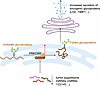
Non-small cell lung cancer (NSCLC) remains a leading cause of cancer-related mortality worldwide, yet its molecular drivers are not fully defined. Emerging evidence highlights the importance of tumor-stroma interactions mediated by secreted glycoproteins. However, the mechanisms by which cancer cells regulate the secretion of these protumorigenic proteins remain largely unknown. Endoplasmic reticulum–resident (ER-resident) N-glycan–processing enzymes regulate proper protein folding, a prerequisite for glycoproteins to exit the ER and undergo secretion. By evaluating their prognostic significance in lung tumors and conducting functional screening in lung cancer cells, we identify α-glucosidase II (α-Glc II) as a key regulator of NSCLC progression. α-Glc II promotes tumor growth and dissemination in a glucosidase activity–dependent manner in orthotopic mouse lung tumor model. Genetic disruption of α-Glc II induced ER stress and reduced cell proliferation and motility. Mechanistically, α-Glc II–mediated N-glycan modification regulated the ER-to-Golgi trafficking and secretion of specific oncogenic glycoproteins, including lysyl hydroxylase 2 (LH2), Tissue Inhibitor of Metalloproteinase 1 (TIMP1), and TGF-β, which are known to be associated with extracellular matrix remodeling. These findings uncover a role for ER glycosylation machinery in shaping the NSCLC secretome and highlight α-Glc II as a potential therapeutic target.
Authors
Shike Wang, Na Ding, Angelo Chen, Derrick Cardin, Yuting Xu, Kate Grimley, William K. Russell, Jun Xu, Jonathan M. Kurie, Guan-Yu Xiao, Xiaochao Tan
No posts were found with this tag.


