
Research ArticleEndocrinologyMuscle biology
Open Access |  10.1172/jci.insight.210523
Feeding-induced muscle mTORC1 signaling regulates postprandial protein synthesis and endurance but not muscle size
Samuel C. Lapp,1,2 Krystle C. Kalafut,1,2 Madi Y. Cissé,1,2 Khaled Tighanimine,1,2 Dean M. Rosenthal,1,2 Will Doxsey,1 Sheng Hui,1 Karen E. Inouye,1 Claire E. Morrow,1,2 Yann Cormerais,1,2 and Brendan D. Manning1,2
1Department of Molecular Metabolism, Harvard T.H. Chan School of Public Health, Boston, Massachusetts, USA.
2Department of Cell Biology, Harvard Medical School, Boston, Massachusetts, USA.
Address correspondence to: Brendan D. Manning, 665 Huntington Ave., Building 2. Rm. 117, Boston, Massachusetts, 02115, USA. Phone: 617.432.5615; Email: bmanning@hsph.harvard.edu. Or to: Yann Cormerais, 665 Huntington Ave., Building 2, Rm. 129/131, Massachusetts, 02115, USA. Phone: 617.432.5615; Email: ycormerais@hsph.harvard.edu.
Find articles by Lapp, S. in: PubMed | Google Scholar
1Department of Molecular Metabolism, Harvard T.H. Chan School of Public Health, Boston, Massachusetts, USA.
2Department of Cell Biology, Harvard Medical School, Boston, Massachusetts, USA.
Address correspondence to: Brendan D. Manning, 665 Huntington Ave., Building 2. Rm. 117, Boston, Massachusetts, 02115, USA. Phone: 617.432.5615; Email: bmanning@hsph.harvard.edu. Or to: Yann Cormerais, 665 Huntington Ave., Building 2, Rm. 129/131, Massachusetts, 02115, USA. Phone: 617.432.5615; Email: ycormerais@hsph.harvard.edu.
Find articles by Kalafut, K. in: PubMed | Google Scholar
1Department of Molecular Metabolism, Harvard T.H. Chan School of Public Health, Boston, Massachusetts, USA.
2Department of Cell Biology, Harvard Medical School, Boston, Massachusetts, USA.
Address correspondence to: Brendan D. Manning, 665 Huntington Ave., Building 2. Rm. 117, Boston, Massachusetts, 02115, USA. Phone: 617.432.5615; Email: bmanning@hsph.harvard.edu. Or to: Yann Cormerais, 665 Huntington Ave., Building 2, Rm. 129/131, Massachusetts, 02115, USA. Phone: 617.432.5615; Email: ycormerais@hsph.harvard.edu.
Find articles by Cissé, M. in: PubMed | Google Scholar
1Department of Molecular Metabolism, Harvard T.H. Chan School of Public Health, Boston, Massachusetts, USA.
2Department of Cell Biology, Harvard Medical School, Boston, Massachusetts, USA.
Address correspondence to: Brendan D. Manning, 665 Huntington Ave., Building 2. Rm. 117, Boston, Massachusetts, 02115, USA. Phone: 617.432.5615; Email: bmanning@hsph.harvard.edu. Or to: Yann Cormerais, 665 Huntington Ave., Building 2, Rm. 129/131, Massachusetts, 02115, USA. Phone: 617.432.5615; Email: ycormerais@hsph.harvard.edu.
Find articles by Tighanimine, K. in: PubMed | Google Scholar
1Department of Molecular Metabolism, Harvard T.H. Chan School of Public Health, Boston, Massachusetts, USA.
2Department of Cell Biology, Harvard Medical School, Boston, Massachusetts, USA.
Address correspondence to: Brendan D. Manning, 665 Huntington Ave., Building 2. Rm. 117, Boston, Massachusetts, 02115, USA. Phone: 617.432.5615; Email: bmanning@hsph.harvard.edu. Or to: Yann Cormerais, 665 Huntington Ave., Building 2, Rm. 129/131, Massachusetts, 02115, USA. Phone: 617.432.5615; Email: ycormerais@hsph.harvard.edu.
Find articles by Rosenthal, D. in: PubMed | Google Scholar
1Department of Molecular Metabolism, Harvard T.H. Chan School of Public Health, Boston, Massachusetts, USA.
2Department of Cell Biology, Harvard Medical School, Boston, Massachusetts, USA.
Address correspondence to: Brendan D. Manning, 665 Huntington Ave., Building 2. Rm. 117, Boston, Massachusetts, 02115, USA. Phone: 617.432.5615; Email: bmanning@hsph.harvard.edu. Or to: Yann Cormerais, 665 Huntington Ave., Building 2, Rm. 129/131, Massachusetts, 02115, USA. Phone: 617.432.5615; Email: ycormerais@hsph.harvard.edu.
Find articles by Doxsey, W. in: PubMed | Google Scholar
1Department of Molecular Metabolism, Harvard T.H. Chan School of Public Health, Boston, Massachusetts, USA.
2Department of Cell Biology, Harvard Medical School, Boston, Massachusetts, USA.
Address correspondence to: Brendan D. Manning, 665 Huntington Ave., Building 2. Rm. 117, Boston, Massachusetts, 02115, USA. Phone: 617.432.5615; Email: bmanning@hsph.harvard.edu. Or to: Yann Cormerais, 665 Huntington Ave., Building 2, Rm. 129/131, Massachusetts, 02115, USA. Phone: 617.432.5615; Email: ycormerais@hsph.harvard.edu.
Find articles by Hui, S. in: PubMed | Google Scholar
1Department of Molecular Metabolism, Harvard T.H. Chan School of Public Health, Boston, Massachusetts, USA.
2Department of Cell Biology, Harvard Medical School, Boston, Massachusetts, USA.
Address correspondence to: Brendan D. Manning, 665 Huntington Ave., Building 2. Rm. 117, Boston, Massachusetts, 02115, USA. Phone: 617.432.5615; Email: bmanning@hsph.harvard.edu. Or to: Yann Cormerais, 665 Huntington Ave., Building 2, Rm. 129/131, Massachusetts, 02115, USA. Phone: 617.432.5615; Email: ycormerais@hsph.harvard.edu.
Find articles by
Inouye, K.
in:
PubMed
|
Google Scholar
|

1Department of Molecular Metabolism, Harvard T.H. Chan School of Public Health, Boston, Massachusetts, USA.
2Department of Cell Biology, Harvard Medical School, Boston, Massachusetts, USA.
Address correspondence to: Brendan D. Manning, 665 Huntington Ave., Building 2. Rm. 117, Boston, Massachusetts, 02115, USA. Phone: 617.432.5615; Email: bmanning@hsph.harvard.edu. Or to: Yann Cormerais, 665 Huntington Ave., Building 2, Rm. 129/131, Massachusetts, 02115, USA. Phone: 617.432.5615; Email: ycormerais@hsph.harvard.edu.
Find articles by Morrow, C. in: PubMed | Google Scholar
1Department of Molecular Metabolism, Harvard T.H. Chan School of Public Health, Boston, Massachusetts, USA.
2Department of Cell Biology, Harvard Medical School, Boston, Massachusetts, USA.
Address correspondence to: Brendan D. Manning, 665 Huntington Ave., Building 2. Rm. 117, Boston, Massachusetts, 02115, USA. Phone: 617.432.5615; Email: bmanning@hsph.harvard.edu. Or to: Yann Cormerais, 665 Huntington Ave., Building 2, Rm. 129/131, Massachusetts, 02115, USA. Phone: 617.432.5615; Email: ycormerais@hsph.harvard.edu.
Find articles by Cormerais, Y. in: PubMed | Google Scholar
1Department of Molecular Metabolism, Harvard T.H. Chan School of Public Health, Boston, Massachusetts, USA.
2Department of Cell Biology, Harvard Medical School, Boston, Massachusetts, USA.
Address correspondence to: Brendan D. Manning, 665 Huntington Ave., Building 2. Rm. 117, Boston, Massachusetts, 02115, USA. Phone: 617.432.5615; Email: bmanning@hsph.harvard.edu. Or to: Yann Cormerais, 665 Huntington Ave., Building 2, Rm. 129/131, Massachusetts, 02115, USA. Phone: 617.432.5615; Email: ycormerais@hsph.harvard.edu.
Find articles by Manning, B. in: PubMed | Google Scholar
Published September 10, 2026 - More info
JCI Insight. 2026;11(20):e210523. https://doi.org/10.1172/jci.insight.210523.
© 2026 Lapp et al. This work is licensed under the Creative Commons Attribution 4.0 International License. To view a copy of this license, visit http://creativecommons.org/licenses/by/4.0/.
Received: June 30, 2026; Accepted: September 2, 2026


-
Results
Feeding induces postprandial protein synthesis in skeletal muscle through activation of AKT and mTORC1. There are multiple possible routes to muscle mTORC1 activation from feeding and contraction (Figure 1A). Studying cell signaling in mammalian tissues is challenging, especially in metabolic tissues such as skeletal muscle, where induction of the AKT-mTOR pathway and many other pathways is highly sensitive to the naturally differential timing of food intake. After piloting different conditions, including ad libitum feeding and daytime fast followed by night-time feed, we settled on an overnight fast followed by a 2-hour refeed as the best way to synchronize feeding behavior in mice to get more uniform, feeding-specific induction of the pathways of interest in skeletal muscle. Therefore, we use this paradigm throughout this study and recognize the caveats that accompany it. To assess how feeding stimulates mTORC1 signaling and protein synthesis in skeletal muscle, mice were fasted overnight and refed for 2 hours with or without an AKT inhibitor. Refeeding induced the activating phosphorylation of AKT and, with a trend toward significance, the AKT-mediated inhibitory phosphorylation of TSC2 in the quadriceps muscle (Figure 1, B and C, and Supplemental Figure 1A; supplemental material available online with this article; https://doi.org/10.1172/jci.insight.210523DS1). This induction was associated with stimulation of mTORC1 signaling, as scored by phosphorylation of ribosomal protein S6 kinase 1 (S6K1) at T389, ribosomal protein S6 (S6) at S240/244, and eukaryotic translation initiation factor 4E binding protein 1 (4E-BP1) (via electrophoretic shift) (Figure 1, B and D, and Supplemental Figure 1B). Pretreatment of mice with an AKT inhibitor reduced feeding-induced muscle TSC2 phosphorylation and mTORC1 signaling to that of the fasted state (Figure 1, B–D, and Supplemental Figure 1, A and B). Similarly, pretreatment with either an AKT inhibitor or the mTORC1 inhibitor rapamycin reduced both mTORC1 signaling and rates of postprandial protein synthesis to that of the fasted state (Figure 1, E and F), as determined by puromycin incorporation over the final 30 minutes of refeeding (34). Together, these data demonstrate that acute refeeding induces mTORC1 signaling and protein synthesis in a manner that is dependent on AKT.
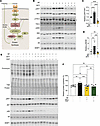 Figure 1
Feeding induces postprandial protein synthesis through activation of AKT and mTORC1. (A) Model of the multiple inputs to mTORC1 activation in skeletal muscle and select downstream targets. (B–E) Representative immunoblots (n = 2) and quantification of protein extracts from quadriceps muscle of 4-month-old male C57BL6/J mice after a 16-hour overnight fast with or without a 2-hour refeeding (RF) (n = 8–10) with or without MK2206 (180mg/kg bodyweight [AKTi]) pretreatment 30 minutes prior to RF; samples from the same blot and exposure. (C and D) Quantification of immunoblot data from (B and E), with relative phospho/total protein graphed as mean ± SEM. (E and F) Representative immunoblots (n = 2) and quantification of protein extracts from quadriceps muscle of 4-month-old male C57BL6/J mice after a 16-hour overnight fast with or without 2-hour RF (n = 5–10) with or without AKTi as above or with or without rapamycin (1 mg/kg bodyweight [RAP]) pretreatment 30 minutes prior to RF. Puromycin injected (40 nmol/g bodyweight) 30 minutes prior to sacrifice. (F) Quantification of immunoblot data from (B and E), with relative phospho/total protein graphed as mean ± SEM. (C, D, and F) Ordinary 2-way ANOVA with Tukey’s multiple comparison; **P < 0.01, ***P < 0.001, and ****P < 0.0001. †nonspecific band.
AKT-mediated phosphorylation of TSC2 is required for feeding-induced activation of mTORC1. AKT activates mTORC1, at least in part, through TSC2 phosphorylation in vitro and likely also in skeletal muscle (Figure 1A) (27, 35, 36). To assess the physiological importance of this regulation more clearly, a genetic mouse model was generated that lacks the ability of AKT to phosphorylate TSC2 specifically in adult skeletal muscle. Two lines of knock-in/knock-out mice were generated using the striated muscle-specific HSA (actin alpha 1 [ACTA1])-Cre promoter (Figure 2A) (37). In brief, mice with floxed endogenous mouse Tsc2 (mTsc2) (38) were crossed with mice featuring either a human TSC2 (hTSC2)-WT or a hTSC2-5A phosphomutant under control of a lox-stop-lox cassette at the Rosa26 (R26) locus, described previously (36). R26-hTSC2WT/WT Tsc2fl/fl and R26-hTSC25A/5A Tsc2fl/fl were crossed with HSA-Cre+/– mice to conditionally knock out endogenous mTsc2 while complementing the loss with either hTSC2-WT or hTSC2-5A transgene expression specifically in HSA-expressing differentiated muscle, resulting in SkM-TSC2-WT and SkM-TSC2-5A mice (37). As confirmation of proper Cre-dependent recombination at these 2 loci, transcripts of the hTSC2 transgenes are detected only in the skeletal muscle of Cre+ SkM-TSC2-WT and -5A mice (Figure 2B). Reciprocally, endogenous mTsc2 transcripts were greatly decreased in Cre-expressing skeletal muscle relative to floxed controls. In contrast, both Cre+ and Cre– mice express similar levels of mTsc2 transcripts in control tissues, including the cardiac muscle and liver (Figure 2B). Given the documented expression of HSA-Cre in striated muscles (37), which include both skeletal and cardiac muscle, relative recombination was also assessed by measuring TSC2 phosphorylation at one of the sites mutated in the SkM-TSC2-5A mice, T1462, in the gastrocnemius and heart (Figure 2, C–E). SkM-TSC2-5A mice completely lack phosphorylation of TSC2 at T1462 in skeletal muscle but maintain comparable phosphorylation in the heart, confirming that expression of endogenous WT TSC2 is unchanged in the heart and that this model is skeletal muscle specific.
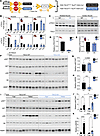 Figure 2
AKT-mediated phosphorylation of TSC2 is required for feeding-induced activation of mTORC1. (A) Schematic of conditional mouse model using the Rosa26 (R26)-lox-STOP-lox-hTSC2-WT or -5A transgene knock-ins and the Tsc2fl/fl conditional allele with HSA-Cre for generation of SkM-TSC2-WT and -5A mice. (B) Ad libitum-fed 4-month-old female R26-lox-STOP-lox-hTSC2-WT or -5A; Tsc2fl/fl with or without HSA-Cre expression, as indicated. Transcript levels of the human (h)TSC2 transgene (top) and endogenous mouse (m)Tsc2 (bottom) in tibialis anterior muscle, cardiac muscle, and liver (left to right), graphed relative to WT Cre+ of the same tissue displayed (n = 1–2/group). (C–E) Immunoblots and quantifications of protein extracts from gastrocnemius and cardiac muscles of 2-month-old female SkM-TSC2-WT and -5A mice RF for 2 hours after a 16-hour overnight fast (n = 3/group). (D and E) Quantification of immunoblot data from C, with relative phospho/total protein graphed as mean ± SEM. (F–H) Immunoblots and quantification of protein extracts from gastrocnemius of 4-month-old male SkM-TSC2-WT and -5A mice fed ad libitum (n = 7–11). (G and H) Quantification of immunoblot data from F, with relative phospho/total protein graphed as mean ± SEM. (I–K) Immunoblots and quantification of protein extracts from gastrocnemius of 3-month-old male SkM-TSC2-WT and -5A mice following a 12-hour daytime fast with or without 2-hour RF, as indicated (n = 5/group). (J and K) Quantification of immunoblot data from I, with relative phospho/total protein graphed as mean ± SEM. (G and H) Mann-Whitney, (J and K) 2-way ANOVA; *P < 0.05, **P < 0.01, ***P < 0.001, and ****P < 0.0001. †nonspecific band. Created in BioRender. Lapp, S. (2026) https://BioRender.com/sun06xm
When fed ad libitum, SkM-TSC2-5A mice trended toward higher levels of skeletal muscle AKT activation compared with SkM-TSC2-WT mice (Figure 2, F and G, and Supplemental Figure 2, A and B). Despite this, muscles from both male and female SkM-TSC2-5A mice showed a decrease in mTORC1 signaling (Figure 2, F and H, and Supplemental Figure 2, A and C). While there was no difference between male SkM-TSC2-WT and -5A mice in skeletal muscle AKT, S6, or 4E-BP1 phosphorylation following a 12-hour daytime fast, SkM-TSC2-5A mice had significantly elevated phosphorylation of AKT and abrogation of postprandial S6 and 4E-BP1 phosphorylation following 2 hours of refeeding (Figure 2, I–K). The increased AKT activation in SkM-TSC2-5A muscles likely reflects loss of the well-documented mTORC1-mediated feedback inhibition of AKT signaling (39–41).
Given that feeding increases nutrient availability, metabolomic analyses was performed on skeletal muscle following the same fasting and refeeding paradigm to determine whether major changes in skeletal muscle metabolites might underlie the dampened mTORC1 signaling in SkM-TSC2-5A muscle. Feeding induced an increase in some, but not all, amino acids present in the skeletal muscle, and SkM-TSC2-5A mice had similar or elevated levels of muscle amino acids compared with SkM-TSC2-WT mice (Supplemental Figure 2D). Both glycolytic and TCA cycle intermediates, as well as free fatty acid species, were also similar in the muscles of SkM-TSC2-WT and -5A mice under both fasting and feeding conditions (Supplemental Figure 2, E and F). Together, these data demonstrate that skeletal muscle–intrinsic AKT-mediated phosphorylation of TSC2 is necessary for postprandial mTORC1 activation without gross changes in intramuscular nutrients or metabolites that might indirectly influence mTORC1 signaling.
AKT-mediated phosphorylation of TSC2 is required for postprandial protein synthesis in skeletal muscle. Given that feeding activates postprandial protein synthesis in skeletal muscle in an AKT- and mTORC1-dependent manner (Figure 1), we next determined whether AKT-mediated phosphorylation of TSC2 is required for postprandial protein synthesis. Mice were fasted overnight and refed for 2 hours, with protein synthesis measured by puromycin incorporation over the final 30 minutes (34). Male SkM-TSC2-WT mice aged 2 and 8 months displayed a respective ~54% and ~25% increase in postprandial muscle protein synthesis, which was completely abolished in SkM-TSC2-5A mice (Figure 3, A and B, and Supplemental Figure 3, A and B). Similarly, female 2-month-old SkM-TSC2-WT mice demonstrated a ~64% increase in postprandial muscle protein synthesis that was abrogated in their -5A counterparts (Figure 3, C and D). Female 8-month-old SkM-TSC2-5A mice showed a reduction in muscle protein synthesis relative to SkM-TSC2-WT mice under both fasted and refed conditions, but feeding failed to induce a significant increase in muscle protein synthesis in either genotype (Supplemental Figure 3, C and D). The greater induction of postprandial protein synthesis in the muscles of 2-month-old mice may be indicative of the rapid growth occurring at this age (4, 11). At 6 months of age, there was no difference between male SkM-TSC2-WT and -5A mice in respiratory exchange ratio (RER) with ad libitum refeeding following the same fasting paradigm as above, suggesting that there are likely similar feeding habits and nutrient absorption between genotypes (Supplemental Figure 3E). These data demonstrate that AKT-mediated phosphorylation of TSC2 to activate mTORC1 is required for the induction of postprandial protein synthesis in skeletal muscle.
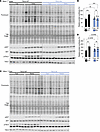 Figure 3
AKT-mediated phosphorylation of TSC2 is required for postprandial protein synthesis in skeletal muscle. (A and B) Immunoblots and quantification of protein extracts from quadriceps of 2-month-old male SkM-TSC2-WT and -5A mice after a 16-hour overnight fast with or without 2-hour RF (n = 5–6/group). Puromycin injected (40 nmol/g bodyweight) 30 minutes prior to sacrifice. (B) Quantification of immunoblot data from A, with relative puromycin labeled protein/total protein graphed as mean ± SEM. (C and D) Representative immunoblots and quantification of protein extracts from gastrocnemius of 2-month-old female SkM-TSC2-WT and -5A mice after a 16-hour overnight fast with or without 2-hour RF (n = 5–7/group). Puromycin injected (40 nmol/g bodyweight) 30 minutes prior to sacrifice. (D) Quantification of immunoblot data from C, with relative puromycin labeled protein/total protein graphed as mean ± SEM. (B and D) 2-way ANOVA. **P < 0.01, ***P < 0.001. †nonspecific band.
AKT-mediated phosphorylation of TSC2 has substrate specific effects downstream of skeletal muscle mTORC1 signaling. mTORC1 has downstream substrates that fall into 1 of 4 categories: RHEB-dependent, rapamycin sensitive (e.g., S6K1); RHEB-dependent, partially rapamycin sensitive (e.g., 4E-BP1); RHEB-dependent, rapamycin resistant (e.g., unc-51 like autophagy activating kinase 1 [ULK1]); and RHEB-independent, rapamycin resistant (e.g., transcription factor EB [TFEB]) (42, 43). Therefore, it is critical to understand how specific inputs to mTORC1, like feeding, can selectively affect downstream substrates. Given that AKT-mediated phosphorylation of TSC2 should only affect the RHEB-dependent targets of mTORC1, the effects of feeding on the phosphorylation of S6K1, 4E-BP1, ULK1, and TFEB — representative of these 4 categories — were determined in the skeletal muscle of fasted and refed SkM-TSC2-WT and -5A mice. As seen above, the feeding-induced phosphorylation of skeletal muscle S6K1 and 4E-BP1 were abrogated in both male and female SkM-TSC2-5A mice (Figure 4, A, B, and E, and Supplemental Figure 4A). The feeding-induced mTORC1-mediated phosphorylation of skeletal muscle ULK1 at S757 was also significantly decreased in SkM-TSC2-5A mice (Figure 4, A, C, and F, and Supplemental Figure 4A). In contrast, the mTORC1-mediated phosphorylation of the TFEB transcription factor, which is dependent on amino acid signaling through the Rag proteins and independent of TSC-RHEB signaling (44), was not impaired in SkM-TSC2-5A muscle but was actually elevated, especially in male mice (Figure 4, A, D, and G, and Supplemental Figure 4A). This difference in TFEB phosphorylation is consistent with increased TSC2 activity yielding a decrease in RHEB-dependent mTORC1 signaling in SkM-TSC2-5A muscles, as the RHEB-mediated activation of mTORC1 has been found to hinder the ability of mTORC1 to regulate TFEB (45–47). These data suggest that AKT-mediated phosphorylation of TSC2 in skeletal muscle is required specifically for postprandial RHEB-mTORC1 signaling to downstream substrates but not regulation of RHEB-independent substrates of mTORC1, like TFEB.
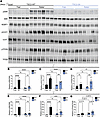 Figure 4
AKT-mediated phosphorylation of TSC2 has substrate specific effects downstream of skeletal muscle mTORC1 signaling. (A–D) Immunoblots and quantification of protein extracts from quadriceps of male 2-month-old mice after a 16-hour overnight fast with or without 2-hour RF (n = 5–6/group). (B–D) Quantification of immunoblot data from A, with relative phospho/total protein graphed as mean ± SEM. (E–G) Quantification of immunoblots in Supplemental Figure 4A of protein extracts from gastrocnemius of female 2-month-old mice after a 16-hour overnight fast with or without 2-hour RF (n = 5–7/group), with relative phospho/total protein graphed as mean ± SEM. (B–G) 2-way ANOVA. **P < 0.01, ***P < 0.001, and ****P < 0.0001.
Loss of postprandial mTORC1 activation and protein synthesis does not decrease muscle mass. Unexpectedly (36), the loss of postprandial muscle mTORC1 activation and protein synthesis in SkM-TSC2-5A mice did not reduce bodyweight, lean mass, muscle weight, or myofiber size (Figure 5 and Supplemental Figure 5). Male SkM-TSC2-5A mice exhibited a modest increase in bodyweight over time compared with their WT counterparts, while female mice did not show genotype-specific differences (Figure 5, A and B, and Supplemental Figure 5, A and B). This trend was also observed in measurements of lean mass over time (Figure 5, C and D, and Supplemental Figure 5, C and D), while neither sex showed a genotype specific effect on fat mass (Supplemental Figure 5, E and F). Neither male nor female SkM-TSC2-5A mice showed differences in skeletal or cardiac muscle weights compared with their WT counterparts at either 4 months (Figure 5, E and F) or 8 months (Supplemental Figure 5, G and H). In the plantaris muscle (Figure 5G), there was no difference measured in the average myofiber size (Figure 5H), nor was there a difference in the specific size distributions of Type IIB (Figure 5I), Type IIX (Figure 5J), or Type IIA (Figure 5K) myofibers. Analysis of a uniform area of red gastrocnemius (Figure 5G) also showed no difference in average myofiber size (Figure 5L), nor any gross differences in Type IIB (Figure 5M), Type IIX (Figure 5N), or Type IIA (Figure 5O) fiber size distributions. Individual mouse values are shown in Supplemental Figure 5, I–N. Only a slight shift toward larger IIB fibers in the SkM-TSC2-5A gastrocnemius was detected (Figure 5M). Type I fibers were not detected in the plantaris and showed no difference in size distribution within the gastrocnemius (Supplemental Figure 5, O and P). These data indicate that feeding-induced activation of mTORC1 and stimulation of protein synthesis in skeletal muscle following an overnight fast, both of which are defective in the SkM-TSC2-5A mice, does not influence muscle mass or myofiber size.
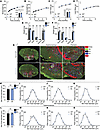 Figure 5
Loss of postprandial mTORC1 activation and protein synthesis does not decrease muscle size. (A and B) Bodyweight over 8 months graphed as mean ± SEM in male (n = 11–19) (A) and female mice (n = 7–13) (B). (C and D) Lean mass over 6 months graphed as mean ± SEM in male (n = 11–18) (C) and female mice (n = 7–13) (D). (E and F) Muscle weights for quadriceps (Quad), gastrocnemius + plantaris (Gast), tibialis anterior (TA), soleus, and heart in 4-month-old male (n = 7–11) (E) and female (n = 5–7) (F) mice. (G) Representative immunofluorescence images of male 4-month-old gastrocnemius and plantaris muscles as indicated. WGA (red), Type IIB (green), Type IIX (unstained), Type IIA (blue), and Type I (red). Insets are representative, with whole plantaris and a uniform area of red gastrocnemius (area analyzed: 2 × 10⁶ ± 4.3 × 103 μm2) selected for subsequent analyses. Scale bar: 1,000 μm (left); 500 μm (right). (H–O) Myofiber minimum Feret diameter for (H–K) plantaris: (H) All fibers, (I) Type IIB, (J) Type IIX, and (K) Type IIA (L–O) gastrocnemius: (L) All fibers, (M) Type IIB, (N) Type IIX (O) Type IIA. All data expressed as mean ± SEM. (A, B, and D) Mixed effects analysis; (C, I–K, and M–O) 2-way ANOVA; (E and F) Multiple Mann-Whitney U with Holm-Šídák correction; (H and L) Mann-Whitney; *P < 0.05.
AKT-mediated phosphorylation of TSC2 does not affect skeletal muscle expression of atrophy-related genes or RNA content. Alterations in muscle mass can come from changes in the relative balance of protein synthesis and degradation (2). Atrophy-related genes encode proteins that induce muscle protein degradation and whose transcripts are elevated during muscle atrophy (48–51). The most relevant of these are the ubiquitin ligases F-box only protein 3 (Fbxo32, also known as Atrogin-1) and tripartite motif containing 63 (Trim63, also known as MuRF1), as well as growth arrest and DNA damage-inducible 45 (Gadd45a) (50, 52–54). However, no significant differences in transcript levels of any of these genes were detected between SkM-TSC2-WT and -5A muscles under fasting or ad libitum–fed conditions (Figure 6, A and B). These data suggest that a decrease in muscle protein degradation, at least due to differential expression of these common atrophy-related genes, is unlikely to explain the maintenance of muscle mass in the SkM-TSC2-5A mice.
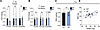 Figure 6
AKT-mediated phosphorylation of TSC2 does not affect skeletal muscle expression of atrophy-related genes or RNA content. (A and B) Transcript levels of atrophy-related genes (Trim63, Fbxo32, and Gadd45a) in male mice graphed as mean ± SEM relative to the respective -WT in tibialis anterior muscle of male 2-month-old 16-hour fasted mice (n = 4,5) and quadriceps of ad libitum fed male 4-month-old mice (n = 6–11). (C and D) RNA content of tibialis anterior muscle from male 2-month-old mice pooled from fasted (n = 4[WT], 5[5A]) and RF (n = 6/group) graphed as (C) mean ± SEM (n = 10-11) concentration and (D) RNA content as a function of tissue weight (slope-intercept formula [Y=mX+b], coefficient of determination: WT: Y=0.60*X–0.366, R2 = 0.42; and 5A: Y = 0.69X–4.294, R2 = 0.60). (A and B) Multiple Mann-Whitney U tests with Holm-Šídák correction; (C) Mann-Whitney U test; (D) For comparison between slopes, a 2 tailed t test was performed.
Overall protein synthetic capacity and cellular growth are dictated by ribosomal content, which can be regulated by mTORC1 (55). Muscle mass scales has a positive, linear relationship with ribosomal content, which is considered reflective of total RNA content (4, 56, 57). Similar concentrations of RNA were measured in SkM-TSC2-WT and -5A skeletal muscle (Figure 6C), and both maintained the same linear relationship between RNA content and muscle tissue weight (Figure 6D; P = 0.7888). This suggests that loss of feeding-induced muscle mTORC1 signaling does not affect ribosomal content in skeletal muscle, implying that both genotypes have similar protein synthetic capacity in their muscles.
AKT-mediated phosphorylation of TSC2 is dispensable for contraction-mediated mTORC1 activation in skeletal muscle. While skeletal muscle growth requires mTORC1 activation, the relative contribution of upstream signals, including feeding and contraction, to growth-promoting mTORC1 signaling are less well understood. Since the SkM-TSC2-5A mice are defective in feeding-induced mTORC1 activation without effects on muscle mass, contraction-induced mTORC1 signaling was assayed in these mice. Thus, maximal intensity contractions (MIC) were elicited through direct electrical stimulation of the sciatic nerve (Figure 7A), as previously described (58). At 3 hours after contraction, when skeletal muscle mTORC1 signaling has been shown to peak in response to MIC (30), there was no difference in AKT activation, as previously described (59), or its phosphorylation of TSC2 between the contracted (MIC) and uncontracted contralateral (Cntrl) TA muscle from the same mouse in both males and females (Figure 7, B, C, and E, and Supplemental Figure 6, A and B). However, contraction potently activated mTORC1 in both sexes relative to the uncontracted contralateral muscle from the same animal (Figure 7, B, D, and F–J, and Supplemental Figure 6, A and B). Importantly, and in contrast to feeding, the phosphorylation of S6K1, S6, and 4E-BP1 in skeletal muscle following contraction was induced in SkM-TSC2-5A mice with no significant differences from their WT counterparts. These data suggest that contraction does not activate muscle mTORC1 through AKT-mediated phosphorylation of TSC2 and that the sustained ability of contraction to stimulate mTORC1 may be an alternative signal that contributes to the development and maintenance of normal muscle mass in SkM-TSC2-5A mice.
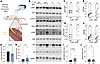 Figure 7
AKT-mediated phosphorylation of TSC2 is dispensable for contraction-mediated mTORC1 activation in skeletal muscle. (A) Schematic of direct sciatic nerve stimulation for maximal intensity contraction (MIC) protocol. (B–D) Representative immunoblots (n = 3) and quantification of protein extracts from tibialis anterior of 3-month-old male mice (n = 5[WT], 7[5A]) 3 hours following MIC treatment. Each “WT” or “5A” represents one animal with “–” indicating unstimulated contralateral muscle and “+” indicating the stimulated muscle. (C and D) Quantification of immunoblot data from B and Supplemental Figure 6A, with relative phospho/total protein graphed as change between unstimulated and stimulated muscles from the same mouse. (E and F) Quantification of immunoblot data from Supplemental Figure 6B, with relative phospho/total protein graphed as change between unstimulated and stimulated muscles from the same mouse from n = 1 (E) and n = 2 independent experiments (F). (G and H) Quantification of fold induction of phospho/total protein from B and Supplemental Figure 6A graphed as mean ± SEM. (I and J) Quantification of fold induction of phospho/total protein from (Supplemental Figure 6B) graphed as mean ± SEM. (C–F) 2-way ANOVA; (G–J) Mann-Whitney U test. **P < 0.01. †nonspecific band. Created in BioRender. Lapp, S. (2026) https://BioRender.com/kafewsi
Loss of AKT-mediated phosphorylation of TSC2 enhances maximal endurance capacity without altering contractile function. In assays of muscle function, a slight increase in grip strength was detected in male, but not female, SkM-TSC2-5A mice (Figure 8A and Supplemental Figure 7A), prompting further analyses of muscular strength in male mice. Male mice underwent electrical stimulation of the tibial nerve to assess functional outcomes in the plantarflexors. There were no differences across stimulation intensities in maximal isometric torque produced in male SkM-TSC2-WT and -5A mice (Figure 8B and Supplemental Figure 7B), suggesting that there are no gross differences in skeletal muscle strength between genotypes. Inducible deletion of either mTOR or RAPTOR in skeletal muscle results in impaired contractility and delayed muscle relaxation after contraction (60, 61). However, no differences in the rates of muscle contraction and relaxation were detected between male SkM-TSC2-WT and -5A mice (Figure 8, C and D, and Supplemental Figure 7, C and D). In an inverted screen test, SkM-TSC2-5A mice exhibited similar relationships between hang time and bodyweight as their SkM-TSC2-WT counterparts (Figure 8E: P = 0.6434), but the SkM-TSC2-5A mice displayed an overall decrease in total hang time (Figure 8F). This prompted further investigation into fatigue resistance in SkM-TSC2-5A mice. In response to multiple, submaximal stimulations reported as the decline of force production as a percentage of maximum initial force, there were no significant differences in fatigue resistance between male SkM-TSC2-WT and -5A mice when assessed as the decline in force production over repeated submaximal stimulations (Figure 8, G–I, and Supplemental Figure 7E). Therefore, consistent with the lack of differences in muscle mass, the overall strength and contractile function of the muscle in SkM-TSC2-WT and -5A mice are similar.
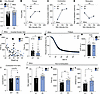 Figure 8
Loss of AKT-mediated phosphorylation of TSC2 enhances maximal endurance capacity without altering contractile function. (A) Four-limb grip strength of male 3-month-old mice represented as mean ± SEM (n = 28–40) (B–D) Electrical stimulation of tibial nerve in vivo for functional assessment of plantarflexors in 3-month-old male mice at indicated stimulation intensities represented as mean ± SEM (n = 10/group): (B) isometric torque, (C) rate of contraction, and (D) rate of relaxation. (E and F) Inverted screen test of male 3-month-old mice (n = 28–37). (E) hang time as a function of bodyweight; (slope-intercept formula [Y=mX+b], coefficient of determination: WT: Y = –80.86*X + 2534, R2 = 0.1; and 5A: Y = –58.18*X + 1811, R2 = 0.2) and (F) mean ± SEM. (G–I) Male 3-month-old mice treated with repeated submaximal 50 Hz stimulations to measure fatigue resistance represented as (G) a percentage of initial torque at each stimulation, (H) area under the curve (AUC), and (I) number of contractions to reach 50% of initial torque represented each as mean ± SEM. (J–L) Male 5-month-old mice run to exhaustion assessed via graded exercise stress testing assay represented as mean ± SEM (n = 19–23): (J) maximal speed reached, (K) time to exhaustion, and (L) total distance run. For data compiled from independent experiments, individual experimental cohorts are identified by use of the same symbols. (A, F, and H–L) Mann-Whitney U test, (B–D) 2-way ANOVA, (E) Slope t test. *P < 0.05, **P < 0.01.
We next assessed endurance capacity via run-to-exhaustion experiments as previously described (62). Mice ran at a consistent incline with periodic increases in treadmill speed until exhaustion. Interestingly, male SkM-TSC2-5A mice showed improved endurance capacity, as demonstrated by increased maximum speed, total run time, and cumulative distance run (Figure 8, J–L). However, this phenotype was not observed in female SkM-TSC2-5A mice (Supplemental Figure 7, F–H). Thus, parameters that might underlie this unexpected phenotype were measured in muscles from male mice.
Improved endurance capacity in SkM-TSC2-5A mice is not associated with changes in skeletal muscle glycogen content. During maximal exercise, skeletal muscle energy production becomes disproportionally dependent on glycogen (63), suggesting that increased glycogen content may explain differences in endurance capacity between SkM-TSC2-WT and -5A mice. In metabolic cage measurements, SkM-TSC2-5A mice exhibited a slightly higher, but not statistically significant, RER — particularly when having access to wheel running, perhaps indicative of higher carbohydrate utilization (Figure 9A). This prompted us to investigate alterations in glycogen and glucose metabolism. SkM-TSC2-5A mice have enhanced feeding-induced AKT activation in their skeletal muscle compared with SkM-TSC2-WT mice (Figure 2, G and J and Figure 9, B and C). GSK3β is a direct target inhibited by AKT that has been implicated in regulating glycogen content through its inhibition of glycogen synthase (35). Indeed, the AKT-mediated inhibitory phosphorylation of GSK3β was elevated during refeeding in SkM-TSC2-5A muscles compared with WT (Figure 9, B and D), which could theoretically result in increased glycogen synthesis in these muscles. However, SkM-TSC2-WT and -5A mice did not exhibit significant differences in glycogen content or GSK3β phosphorylation in muscles from ad libitum fed (Figure 9E and Supplemental Figure 8, A–C) or fasted (Figure 9, B, D, and F) mice. Thus, an increase in muscle glycogen content is unlikely to explain improvements in endurance capacity in SkM-TSC2-5A mice.
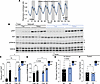 Figure 9
Improved endurance capacity in SkM-TSC2-5A mice is not associated with changes in skeletal muscle glycogen content. (A) Respiratory exchange ratio of male 6-month-old mice housed in metabolic cages with free wheel access (0–72 hours) or without free wheel access (73–144 hours) as indicated (n = 4/group). (B–D) Immunoblots and quantification of protein extracts from gastrocnemius of male 2-month-old SkM-TSC2-WT and -5A mice after a 16-hour overnight fast with or without 2-hour RF (n = 5–6/group). (C and D) Quantification of immunoblot data from B, with relative phospho/total protein graphed as mean ± SEM. (E and F) Glycogen content normalized to skeletal muscle weight extracted from quadriceps of male 4-month-old SkM-TSC2-WT and -5A ad libitum fed mice (n = 6–11) and quadriceps of male 2-month-old SkM-TSC2-WT and -5A 12-hour fasted mice (n = 5/group) as mean ± SEM. (C and D) 2-way ANOVA; (E and F) Mann-Whitney. *P < 0.05, **P < 0.01, ***P < 0.001, and ****P < 0.0001.
A primary function of insulin-stimulated AKT signaling in skeletal muscle is to promote glucose uptake and clearance from the blood (1). Therefore, we investigated glucose clearance and insulin sensitivity in SkM-TSC2-WT and -5A mice. There were no differences in either ad libitum or fasted blood glucose levels between male SkM-TSC2-WT and -5A mice (Supplemental Figure 8, D and E). Glucose tolerance tests (GTT) in both male and female mice also showed no differences between genotypes in glucose clearance (Supplemental Figure 8, F–I). Likewise, there were no differences in insulin sensitivity in insulin-tolerance tests (ITT) between genotypes in either male or female cohorts (Supplemental Figure 8, J–M). Together, we observe no overt differences in glucose metabolism dependent on AKT-mediated phosphorylation of TSC2 in skeletal muscle.
SkM-TSC2-5A muscle display a moderate increase in mitochondrial content without changes in muscle fiber type. Beyond glycogen content, skeletal muscle fiber type and mitochondrial content can alter endurance capacity (64–66). Skeletal muscle fiber types exist on a gradient between oxidative (I and IIA) and glycolytic (IIX and IIB), where a shift toward more oxidative fibers is associated with improved endurance capacity (65). Complete ablation of skeletal muscle mTORC1 signaling has been found to result in a shift toward type I and IIA fiber types (13, 61); therefore, fiber type identity was compared between muscles of SkM-TSC2-WT and -5A mice. Skeletal muscle gene expression for markers of oxidative (Tnni1, Myh1, Myh2) and glycolytic (Tnni2, Myh4) fiber types did not significantly differ between SkM-TSC2-WT and -5A mice (Figure 10, A and B). Furthermore, direct assessment of fiber type proportions showed no differences in the plantaris or red gastrocnemius (Figure 5G and Figure 10, C and D). These data indicate that fiber type composition is not significantly different between SkM-TSC2-WT and -5A mice and is, thus, unlikely to explain the alterations in endurance capacity observed.
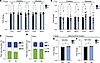 Figure 10
SkM-TSC2-5A muscle displays a moderate increase in mitochondrial content without changes in muscle fiber type. (A and B) Skeletal muscle fiber type composition as assessed by gene expression of oxidative (Tnni1, Myh1, Myh2) and glycolytic (Tnni2, Myh4) genes in (A) male 4-month-old SkM-TSC2-WT and -5A mice quadriceps (n = 6–11) displayed as mean ± SEM relative to WT and (B) male 3-month-old SkM-TSC2-WT and -5A quadriceps following 16 hours fasting (n = 5/group) expressed as mean ± SEM relative to -WT. (C and D) Quantification of fiber type proportions in male 4-month-old SkM-TSC2-WT and -5A muscles stained via immunofluorescence in (Figure 5G) for (C) the plantaris (n = 5–9) and (D) gastrocnemius muscles (n = 6–10) displayed as mean ± SEM. (E and F) Mitochondrial DNA copy number normalized to nuclear DNA copy number (HK2) in male 4-month-old SkM-TSC2-WT and -5A mouse quadriceps (n = 6–11) with either (E) 16S or (F) ND1 as mitochondrial DNA markers. Data displayed as mean ± SEM relative to WT. (A–C) Multiple Mann-Whitney with Holm-Šídák correction (E and F) Mann-Whitney U test. *P < 0.05, **P < 0.01.
While oxidative fiber types are associated with higher mitochondrial content, fiber type identity and mitochondrial content can be uncoupled (65). Therefore, we quantified mitochondrial content by comparing nuclear DNA (nDNA) content to mitochondrial DNA (mtDNA), as previously described (67). Using 2 distinct markers of mtDNA, a modest but significant 3%–4% increase in mtDNA/nDNA ratio was measured in SkM-TSC2-5A compared with WT muscle (Figure 10, E and F). While not a direct measurement of mitochondrial function, it is plausible that this modest increase in mitochondrial content could underlie, at least in part, the improved endurance capacity of SkM-TSC2-5A mice.


