
Abstract
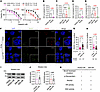
Acquired resistance to poly(ADP-ribose) polymerase inhibitors (PARPi) limits their therapeutic benefits in patients with high-grade serous ovarian cancer (HGSC). Identifying therapeutic vulnerabilities that function across distinct forms of acquired PARPi resistance is an urgent need. In BRCA2-deficient PARPi-naive cells, targeting RAD52 can be synthetic lethal with a PARPi, making RAD52 an attractive therapeutic target. However, this approach has not been tested in HGSC models of acquired PARPi resistance. Here, we assessed the effects of RAD52 loss in 2 distinct Brca2-deficient mouse models of HGSC with acquired PARPi resistance. RAD52 loss suppressed homologous recombination and single-strand annealing DNA repair activity in both models. Genetic depletion and pharmacologic inhibition of RAD52 restored PARPi sensitivity both in vitro and in vivo. Furthermore, RAD52 expression was elevated in a newly derived human model of BRCA2-deficient HGSC with acquired PARPi resistance. In this cell line, RAD52 inhibition synergized with a PARPi. Finally, elevated RAD52 expression was associated with poor survival in patients with HGSC. Collectively, these findings establish RAD52 as a clinically relevant therapeutic vulnerability in multiple models of HGSC with acquired PARPi resistance.
Authors
Yukihide Ota, Maia L. Elizagaray, Vijayalaxmi Gupta, Bisiayo E. Fashemi, Moreniola Akande, Preedia Babu, Prasanth Kumar Thuthika, Elena Lomonosova, Joshua Brill, Lulu Sun, Brooke Sanders, Lindsay M. Kuroki, Carolyn K. McCourt, Andrea R. Hagemann, Ian S. Hagemann, Premal H. Thaker, David G. Mutch, Matthew A. Powell, Krzysztof Hyrc, Priyanka Verma, John Krais, Benjamin G. Bitler, Mary M. Mullen, Dineo Khabele
This file is in Adobe Acrobat (PDF) format. If you have not installed and configured the Adobe Acrobat Reader on your system.
Having trouble reading a PDF?
PDFs are designed to be printed out and read, but if you prefer to read them online, you may find it easier if you increase the view size to 125%.
Having trouble saving a PDF?
Many versions of the free Acrobat Reader do not allow Save. You must instead save the PDF from the JCI Online page you downloaded it from. PC users: Right-click on the Download link and choose the option that says something like "Save Link As...". Mac users should hold the mouse button down on the link to get these same options.
Having trouble printing a PDF?
- Try printing one page at a time or to a newer printer.
- Try saving the file to disk before printing rather than opening it "on the fly." This requires that you configure your browser to "Save" rather than "Launch Application" for the file type "application/pdf", and can usually be done in the "Helper Applications" options.
- Make sure you are using the latest version of Adobe's Acrobat Reader.


