
Research ArticleImmunologyInflammation
Open Access |  10.1172/jci.insight.201057
Low-density neutrophil heterogeneity and spleen tyrosine kinase as therapeutic targets in sepsis
Heather L. Teague,1,2 Lauren Knabe,1,2 Raquel S. Da Cruz,1,2 Xianglan Yao,1,2 Kiana C. Allen,1,2 Trenton Williams,1,2 Cumhur Y. Demirkale,2 Merte Woldehanna,3 Ernest Evans,3 Amir Hobson,3 Jared D. Wilkinson,3 Steven D. Nathan,3 Christopher S. King,3 and Jeffrey R. Strich1,2
1Critical Care Medicine and Pulmonary Branch, National Heart Lung and Blood Institute, NIH, Bethesda, Maryland, USA.
2Critical Care Medicine Department, Clinical Center, NIH, Bethesda, Maryland, USA.
3Advanced Lung Disease and Lung Transplant Program, Inova Fairfax Hospital, Falls Church, Virginia, USA.
Address correspondence to: Jeffrey R. Strich, Critical Care Medicine and Pulmonary Branch, National Heart Lung and Blood Institute, NIH, 10 Center Drive B10, 2C145, Bethesda, Maryland, 20892, USA. Phone: 301.496.9320; Email: jeffrey.strich@nih.gov.
Find articles by
Teague, H.
in:
PubMed
|
Google Scholar
|

1Critical Care Medicine and Pulmonary Branch, National Heart Lung and Blood Institute, NIH, Bethesda, Maryland, USA.
2Critical Care Medicine Department, Clinical Center, NIH, Bethesda, Maryland, USA.
3Advanced Lung Disease and Lung Transplant Program, Inova Fairfax Hospital, Falls Church, Virginia, USA.
Address correspondence to: Jeffrey R. Strich, Critical Care Medicine and Pulmonary Branch, National Heart Lung and Blood Institute, NIH, 10 Center Drive B10, 2C145, Bethesda, Maryland, 20892, USA. Phone: 301.496.9320; Email: jeffrey.strich@nih.gov.
Find articles by Knabe, L. in: PubMed | Google Scholar
1Critical Care Medicine and Pulmonary Branch, National Heart Lung and Blood Institute, NIH, Bethesda, Maryland, USA.
2Critical Care Medicine Department, Clinical Center, NIH, Bethesda, Maryland, USA.
3Advanced Lung Disease and Lung Transplant Program, Inova Fairfax Hospital, Falls Church, Virginia, USA.
Address correspondence to: Jeffrey R. Strich, Critical Care Medicine and Pulmonary Branch, National Heart Lung and Blood Institute, NIH, 10 Center Drive B10, 2C145, Bethesda, Maryland, 20892, USA. Phone: 301.496.9320; Email: jeffrey.strich@nih.gov.
Find articles by S. Da Cruz, R. in: PubMed | Google Scholar
1Critical Care Medicine and Pulmonary Branch, National Heart Lung and Blood Institute, NIH, Bethesda, Maryland, USA.
2Critical Care Medicine Department, Clinical Center, NIH, Bethesda, Maryland, USA.
3Advanced Lung Disease and Lung Transplant Program, Inova Fairfax Hospital, Falls Church, Virginia, USA.
Address correspondence to: Jeffrey R. Strich, Critical Care Medicine and Pulmonary Branch, National Heart Lung and Blood Institute, NIH, 10 Center Drive B10, 2C145, Bethesda, Maryland, 20892, USA. Phone: 301.496.9320; Email: jeffrey.strich@nih.gov.
Find articles by Yao, X. in: PubMed | Google Scholar
1Critical Care Medicine and Pulmonary Branch, National Heart Lung and Blood Institute, NIH, Bethesda, Maryland, USA.
2Critical Care Medicine Department, Clinical Center, NIH, Bethesda, Maryland, USA.
3Advanced Lung Disease and Lung Transplant Program, Inova Fairfax Hospital, Falls Church, Virginia, USA.
Address correspondence to: Jeffrey R. Strich, Critical Care Medicine and Pulmonary Branch, National Heart Lung and Blood Institute, NIH, 10 Center Drive B10, 2C145, Bethesda, Maryland, 20892, USA. Phone: 301.496.9320; Email: jeffrey.strich@nih.gov.
Find articles by Allen, K. in: PubMed | Google Scholar
1Critical Care Medicine and Pulmonary Branch, National Heart Lung and Blood Institute, NIH, Bethesda, Maryland, USA.
2Critical Care Medicine Department, Clinical Center, NIH, Bethesda, Maryland, USA.
3Advanced Lung Disease and Lung Transplant Program, Inova Fairfax Hospital, Falls Church, Virginia, USA.
Address correspondence to: Jeffrey R. Strich, Critical Care Medicine and Pulmonary Branch, National Heart Lung and Blood Institute, NIH, 10 Center Drive B10, 2C145, Bethesda, Maryland, 20892, USA. Phone: 301.496.9320; Email: jeffrey.strich@nih.gov.
Find articles by Williams, T. in: PubMed | Google Scholar
1Critical Care Medicine and Pulmonary Branch, National Heart Lung and Blood Institute, NIH, Bethesda, Maryland, USA.
2Critical Care Medicine Department, Clinical Center, NIH, Bethesda, Maryland, USA.
3Advanced Lung Disease and Lung Transplant Program, Inova Fairfax Hospital, Falls Church, Virginia, USA.
Address correspondence to: Jeffrey R. Strich, Critical Care Medicine and Pulmonary Branch, National Heart Lung and Blood Institute, NIH, 10 Center Drive B10, 2C145, Bethesda, Maryland, 20892, USA. Phone: 301.496.9320; Email: jeffrey.strich@nih.gov.
Find articles by Demirkale, C. in: PubMed | Google Scholar
1Critical Care Medicine and Pulmonary Branch, National Heart Lung and Blood Institute, NIH, Bethesda, Maryland, USA.
2Critical Care Medicine Department, Clinical Center, NIH, Bethesda, Maryland, USA.
3Advanced Lung Disease and Lung Transplant Program, Inova Fairfax Hospital, Falls Church, Virginia, USA.
Address correspondence to: Jeffrey R. Strich, Critical Care Medicine and Pulmonary Branch, National Heart Lung and Blood Institute, NIH, 10 Center Drive B10, 2C145, Bethesda, Maryland, 20892, USA. Phone: 301.496.9320; Email: jeffrey.strich@nih.gov.
Find articles by Woldehanna, M. in: PubMed | Google Scholar
1Critical Care Medicine and Pulmonary Branch, National Heart Lung and Blood Institute, NIH, Bethesda, Maryland, USA.
2Critical Care Medicine Department, Clinical Center, NIH, Bethesda, Maryland, USA.
3Advanced Lung Disease and Lung Transplant Program, Inova Fairfax Hospital, Falls Church, Virginia, USA.
Address correspondence to: Jeffrey R. Strich, Critical Care Medicine and Pulmonary Branch, National Heart Lung and Blood Institute, NIH, 10 Center Drive B10, 2C145, Bethesda, Maryland, 20892, USA. Phone: 301.496.9320; Email: jeffrey.strich@nih.gov.
Find articles by Evans, E. in: PubMed | Google Scholar
1Critical Care Medicine and Pulmonary Branch, National Heart Lung and Blood Institute, NIH, Bethesda, Maryland, USA.
2Critical Care Medicine Department, Clinical Center, NIH, Bethesda, Maryland, USA.
3Advanced Lung Disease and Lung Transplant Program, Inova Fairfax Hospital, Falls Church, Virginia, USA.
Address correspondence to: Jeffrey R. Strich, Critical Care Medicine and Pulmonary Branch, National Heart Lung and Blood Institute, NIH, 10 Center Drive B10, 2C145, Bethesda, Maryland, 20892, USA. Phone: 301.496.9320; Email: jeffrey.strich@nih.gov.
Find articles by Hobson, A. in: PubMed | Google Scholar
1Critical Care Medicine and Pulmonary Branch, National Heart Lung and Blood Institute, NIH, Bethesda, Maryland, USA.
2Critical Care Medicine Department, Clinical Center, NIH, Bethesda, Maryland, USA.
3Advanced Lung Disease and Lung Transplant Program, Inova Fairfax Hospital, Falls Church, Virginia, USA.
Address correspondence to: Jeffrey R. Strich, Critical Care Medicine and Pulmonary Branch, National Heart Lung and Blood Institute, NIH, 10 Center Drive B10, 2C145, Bethesda, Maryland, 20892, USA. Phone: 301.496.9320; Email: jeffrey.strich@nih.gov.
Find articles by Wilkinson, J. in: PubMed | Google Scholar
1Critical Care Medicine and Pulmonary Branch, National Heart Lung and Blood Institute, NIH, Bethesda, Maryland, USA.
2Critical Care Medicine Department, Clinical Center, NIH, Bethesda, Maryland, USA.
3Advanced Lung Disease and Lung Transplant Program, Inova Fairfax Hospital, Falls Church, Virginia, USA.
Address correspondence to: Jeffrey R. Strich, Critical Care Medicine and Pulmonary Branch, National Heart Lung and Blood Institute, NIH, 10 Center Drive B10, 2C145, Bethesda, Maryland, 20892, USA. Phone: 301.496.9320; Email: jeffrey.strich@nih.gov.
Find articles by
Nathan, S.
in:
PubMed
|
Google Scholar
|
1Critical Care Medicine and Pulmonary Branch, National Heart Lung and Blood Institute, NIH, Bethesda, Maryland, USA.
2Critical Care Medicine Department, Clinical Center, NIH, Bethesda, Maryland, USA.
3Advanced Lung Disease and Lung Transplant Program, Inova Fairfax Hospital, Falls Church, Virginia, USA.
Address correspondence to: Jeffrey R. Strich, Critical Care Medicine and Pulmonary Branch, National Heart Lung and Blood Institute, NIH, 10 Center Drive B10, 2C145, Bethesda, Maryland, 20892, USA. Phone: 301.496.9320; Email: jeffrey.strich@nih.gov.
Find articles by King, C. in: PubMed | Google Scholar
1Critical Care Medicine and Pulmonary Branch, National Heart Lung and Blood Institute, NIH, Bethesda, Maryland, USA.
2Critical Care Medicine Department, Clinical Center, NIH, Bethesda, Maryland, USA.
3Advanced Lung Disease and Lung Transplant Program, Inova Fairfax Hospital, Falls Church, Virginia, USA.
Address correspondence to: Jeffrey R. Strich, Critical Care Medicine and Pulmonary Branch, National Heart Lung and Blood Institute, NIH, 10 Center Drive B10, 2C145, Bethesda, Maryland, 20892, USA. Phone: 301.496.9320; Email: jeffrey.strich@nih.gov.
Find articles by Strich, J. in: PubMed | Google Scholar
Published April 21, 2026 - More info
JCI Insight. 2026;11(11):e201057. https://doi.org/10.1172/jci.insight.201057.
© 2026 Teague et al. This work is licensed under the Creative Commons Attribution 4.0 International License. To view a copy of this license, visit http://creativecommons.org/licenses/by/4.0/.
Received: October 24, 2025; Accepted: April 6, 2026

-
Results
Patient characteristics. We performed flow cytometry on matched whole blood and PBMC fractions to capture LDNs from 18 healthy donors (HDs) and 35 patients with sepsis (Figure 1A). The mean age, sex, and race distributions were similar between HDs and patients with sepsis (Table 1). Among the patients with sepsis, intra-abdominal (29%) and pneumonia (23%) were the most common sites of infection. There was an equal distribution of polymicrobial (17%), Gram-negative (17%) and Gram-positive (17%) infections, while 8.6% were viral, 2.9% were fungal, and 37% were culture negative. A majority of the patients had septic shock (57%). At the time of blood draw, 71% were in the intensive care unit, 49% were on vasopressors, 23% were on mechanical ventilation, 60% had an acute kidney injury, and the mean SOFA score was 4.4. In-hospital mortality was 9% and the average length of stay was 9.6 days.
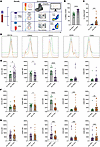 Figure 1
Characterization of WBNs and LDNs in patients with sepsis. (A) Schematic representation of methods and datasets to analyze WBNs and LDNs in healthy donors and patients with sepsis. (B) Bar graphs comparing the proportion of WBNs and (C) LDNs in healthy donors and patients with sepsis. (D) Histogram demonstrating the relative expression, MFI, of features between healthy donor WBNs (green) and sepsis WBNs (purple) and LDNs (orange). (E) Bar graphs comparing the relative expression of features between healthy donors and sepsis WBNs. (F) Bar graphs comparing the relative expression of features between healthy donor WBNs and sepsis LDNs. (G) Bar graphs comparing the relative expression of features between sepsis WBNs and LDNs. Data are represented as means ± SEM. Significance was determined using a Mann-Whitney test, a paired t test, or a Wilcoxon test and set at P < 0.05*, P < 0.01**, P < 0.001***, P < 0.0001****. PBMCs, peripheral blood mononuclear cells; WBNs, whole blood neutrophils; HD, healthy donor; Sep, sepsis; MFI, mean fluorescence intensity; LDNs, low-density neutrophils; SEM, standard error of the mean.
Patients with sepsis have increased WBNs and LDNs compared with HDs. High-dimensional flow cytometry analysis of whole blood demonstrated patients with sepsis had a higher proportion of CD15+ WBNs compared with HDs (P < 0.0001) (Figure 1B and Supplemental Figure 1A; supplemental material available online with this article; https://doi.org/10.1172/jci.insight.201057DS1). Likewise, patients with sepsis had a higher proportion of LDNs (17.2% vs. 3.0%) (P < 0.001) (Figure 1C and Supplemental Figure 1B). Comparing WBNs from patients with sepsis with HDs using traditional gating strategies identified that patients had lower CD10 (P < 0.0001; a marker of immature neutrophils), increased CD11b (P < 0.05), and lower expression of CD62L (P < 0.05) consistent with an activated phenotype, while there were no statistical differences in other features tested (Figure 1, D and E, and Supplemental Figure 2, A and B). Similarly, comparing HD WBNs with sepsis LDNs, sepsis LDNs had lower CD10 (P < 0.0001) and higher CD33 (P < 0.001) (markers consistent with immature neutrophils) and higher CD63 (P < 0.01) and lower CD62L (P < 0.05) (markers of degranulation and activation) (Figure 1, D and F, and Supplemental Figure 2, A and C). Despite the low frequency of LDNs in HDs, we next compared HD LDNs with sepsis LDNs and found that sepsis LDNs have lower CD10 (P < 0.0001) and higher CD33 (P < 0.05) (Supplemental Figure 3). Last, sepsis LDNs had lower CD10 (P < 0.001) and higher CD33 (P < 0.001), CD63 (P < 0.001), and CD15 (P < 0.0001) compared with sepsis WBNs (Figure 1, D and G, and Supplemental Figure 2, A and D).
We next sought to determine differences in these neutrophil subsets at the population level and therefore performed dimensional reduction with clustering by flow cytometry-specific self-organizing map (FlowSOM) of CD15+ WBNs from 18 HDs and WBNs and LDNs from 23 patients with sepsis, which identified 10 metaclusters (MC) (Figure 2, A and B, and Supplemental Table 1). MC08 and MC04 were the predominant populations in the HDs, representing 49.9% and 46.0% of the HD WBNs, respectively (Supplemental Figure 4 and Supplemental Table 2). MC05 (logFC 5.03, FDR < 0.01), MC09 (logFC 4.69, FDR < 0.01), MC01 (logFC 3.89, FDR < 0.01), MC03 (logFC 6.52, FDR < 0.01), and MC02 (logFC 3.84, FDR < 0.01) were all significantly elevated in sepsis WBNs compared with HD WBNs (Figure 2C, Supplemental Figure 4, and Supplemental Table 3). MC05 demonstrated decreased CD10 (P < 0.01), CD16 (P < 0.01), MPO (P < 0.001), and HLA-DR (P < 0.0001) compared with MC04, along with increased MPO (P < 0.0001) and decreased CD10 (P < 0.0001), CD16 (P < 0.0001), CD62L (P < 0.05), CD15 (P < 0.01), and HLA-DR (P < 0.001) compared with MC08 (Figure 2, B and D). Similarly, MC09 expressed decreased CD10 (P < 0.001), CD16 (P < 0.001), and HLA-DR (P < 0.0001) compared with MC04 and MC08 and decreased MPO (P < 0.0001) compared with MC04 (Supplemental Figure 5).
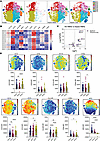 Figure 2
Characterization of sepsis and healthy donor neutrophils. (A) optSNE plot of flow cytometry data overlaid with FlowSOM MCs from all pooled samples, healthy donor WBNs, and sepsis WBNs and LDNs. (B) Heatmap representing the relative expression of each extracellular and intracellular feature between MCs. (C) Volcano plot comparing the logFC versus log10(FDR) between healthy donor WBNs and sepsis WBNs. Purple dots represent MCs that are statistically different between healthy donor and sepsis WBNs. (D) optSNE plots and bar graphs comparing the relative expression of each feature for MC04, MC05, and MC08. Data are represented as means ± SEM. Significance was determined using a 1-way ANOVA with a Tukey’s multiple comparisons test or a Kruskal-Wallis with a Dunn’s multiple-comparison test and set at P < 0.05*, P < 0.01**, P < 0.0001****. optSNE, optimized t-distributed stochastic neighbor embedding; FlowSOM, flow cytometry-specific self-organizing map; MC, metacluster; logFC, log fold-change; FDR, false discovery rate; WBNs, whole blood neutrophils; HD, healthy donor; LDNs, low-density neutrophils; SEM, standard error of the mean.
A similar distribution of MCs were increased in sepsis LDNs compared with HD WBNs, including MC09 (logFC 4.66, FDR < 0.01), MC05 (logFC 4.44, FDR < 0.01), MC01 (logFC 5.98, FDR < 0.01), MC02 (logFC 6.43, FDR < 0.01), MC03 (logFC 7.21, FDR < 0.01), MC10 (logFC 5.53, FDR < 0.01), and MC06 (logFC 2.71, FDR < 0.01) (Figure 3A, Supplemental Figure 4, and Supplemental Table 4). While the predominant MCs in sepsis WBNs and sepsis LDNs were similar (MC05 and MC09), MC01 (logFC 2.08, FDR < 0.01), MC02 (logFC 3.09, FDR < 0.01), and MC10 (logFC 3.44, FDR < 0.01) were significantly higher in LDNs compared with sepsis WBNs and appeared to be predominantly composed of LDNs (Figure 3, B and C; Supplemental Figure 4; and Supplemental Table 5). Compared with the HD populations (MC04 and MC08), MC01 had decreased CD10 (P < 0.0001), CD16 (P < 0.0001), CD62L (P < 0.001), and HLA-DR (P < 0.0001) and increased CD33 (P < 0.0001) and CD63 (P < 0.001) (Figure 3D). Similarly, MC02 demonstrated decreased CD10 (P < 0.0001), CD11b (P < 0.0001), CD62L (P < 0.0001), CD16 (P < 0.0001), and HLA-DR (P < 0.0001) compared with MC04 and MC08, while MC02 and MC04 had higher MPO than MC08 (P < 0.0001) (Supplemental Figure 6).
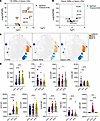 Figure 3
Characterization of sepsis LDNs versus healthy donor and sepsis WBNs. (A) Volcano plot comparing the logFC versus log10(FDR) comparing healthy donor WBNs and sepsis LDNs. Orange dots represent MCs that are statistically different between healthy donor WBNs and sepsis LDNs. (B) Volcano plot comparing the logFC versus log10(FDR) comparing sepsis WBNs and LDNs. Blue dots represent MCs that are statistically different between sepsis WBNs and LDNs. (C) optSNE plot representing MC01, MC02, and MC10 across pooled samples and sepsis WBNs and LDNs. (D) Bar graphs comparing relative expression of individual features across MC01, MC04, and MC08. Data are represented as means ± SEM. Significance was determined using a 1-way ANOVA with a Tukey’s multiple comparisons test or a Kruskal-Wallis with a Dunn’s multiple comparison test and set at P < 0.05*, P < 0.01**, P < 0.001***, P < 0.0001****. logFC, log fold-change; FDR, false discovery rate; optSNE, optimized t-distributed stochastic neighbor embedding; MC, metacluster; WBNs, whole blood neutrophils; HD, healthy donor; Sep, sepsis; LDNs, low-density neutrophils; SEM, standard error of the mean.
We next compared the predominant sepsis WBN MCs (MC05 and MC09) with the LDN-specific clusters (MC01 and MC02) (Supplemental Figure 7). Compared with MC05 and MC09, MC01 had increased CD33 (P < 0.001) and CD63 (P < 0.01) and decreased MPO (P < 0.0001), CD62L (P < 0.01), and CD16 (P < 0.0001) (Supplemental Figure 7A), while MC02 had decreased CD10 (P < 0.0001), CD62L (P < 0.0001), CD16 (P < 0.0001), CD11b (P < 0.0001), HLA-DR (P < 0.01), and increased MPO (P < 0.0001) (Supplemental Figure 7B). In totality, these population-level differences suggest that sepsis neutrophils, both WBNs and LDNs, have an immature (lower CD10 and higher CD33) and activated phenotype with high levels of degranulation markers, compared with the healthy populations, while LDNs are more immature and activated than WBNs.
LDNs consist of phenotypically heterogenous populations of neutrophils. To further characterize LDNs, we utilized dimensional reduction with clustering by FlowSOM to assess heterogeneity within sepsis LDNs and identified 4 MCs (Figure 4, A and B). LDN-MC03 accounted for the highest percentage of neutrophils at 52.3% followed by LDN-MC01 (17.7%), LDN-MC04 (17.5%), and LDN-MC02 (12.4%) (Figure 4B). A distinguishing feature between the LDN-MCs was the differential expression of MPO, which was high in LDN-MC01 and LDN-MC02 and low in LDN-MC03 and LDN-MC04, indicative of one population of LDNs that may have degranulated and another that retained its granules (Figure 4, C–E). We therefore compared the average MFI of LDN-MC01 and LDN-MC02 combined and LDN-MC03 and LDN-MC04 for each intracellular and extracellular feature to determine differential expression across the low-MPO LDN (LDN-MC03 and LDN-MC04) and high-MPO LDN (LDN-MC01 and LDN-MC02) populations (Figure 4, F and G). The high-MPO populations had a significantly higher average MPO MFI (P < 0.001) (Figure 4G). Furthermore, the MPO-low population had higher CD10 compared with the MPO-high populations, suggesting the MPO-low populations are mature neutrophils, while the MPO-high populations are more immature (Figure 4G). Comparing the additional features, we found that the MPO-low population had higher CD11b (P < 0.001), CD62L (P < 0.001), CD16 (P < 0.001), and HLA-DR (P < 0.001) (Figure 4G, Supplemental Figure 8). Interestingly, we found that the immature MPO-high populations trended to have a positive correlation with SOFA score, and a similar negative correlation was identified in the mature MPO-low population (P = 0.07, P = 0.08) (Figure 4H).
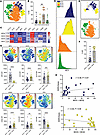 Figure 4
Characterization of LDNs. (A) optSNE plot of flow cytometry data overlaid with FlowSOM MCs for sepsis LDNs. (B) Abundance plot demonstrating the percentage of each MC. (C) Heatmap representing the relative expression of each extracellular and intracellular feature between MCs. (D) Histograms representing the relative expression of MPO across each MC. (E) optSNE plot of flow cytometry data overlaid with FlowSOM split by LDN-MC01 and LDN-MC02 combined and LDN-MC03 and LDN-MC04 combined. (F) Abundance plot demonstrating the percentage of MC01 and MC02 combined compared with MC03 and MC04 combined. (G) optSNE and bar graphs representing the expression of features in LDN-MC01 and LDN-MC02 compared with LDN-MC03 and LDN-MC04. (H) Correlation of LDN-MC01 and LDN-MC02 summed and LDN-MC03 and LDN-MC04 summed with SOFA score. Data are represented as means ± SEM. Significance was determined using a Friedman test, a paired t test, or a Wilcoxon test and set at P < 0.01**, P < 0.001***, P < 0.0001****. optSNE, optimized t-distributed stochastic neighbor embedding; MC, metacluster; MPO, myeloperoxidase; SEM, standard error of the mean.
SYK expression is increased in WBNs and LDNs of patients with sepsis. We next sought to determine if SYK expression is increased in WBNs and LDNs of patients with sepsis. Comparing patient with HD WBNs, we found that patients with sepsis had a higher percentage of SYK+ WBNs (30.6% vs. 11.7%, P < 0.001) and total SYK expression (P < 0.01) (Figure 5, A and B). Similarly, comparing HD LDNs with sepsis LDNs, patients with sepsis had a higher percentage of SYK+ LDNs (6.6% vs. 0.6%, P < 0.001), and total SYK expression was higher in sepsis LDNs compared with both HD WBNs (P < 0.05) and HD LDNs (P < 0.05) (Figure 5, C and D, and Supplemental Figure 3). While there was no difference in total SYK expression between sepsis WBNs and LDNs (Figure 5E), there was higher SYK expression in sepsis SYK+ LDNs versus sepsis SYK+ WBNs (P < 0.0001) (Figure 5F). While SYK expression in WBNs did not have a correlation with any other features, SYK expression in LDNs had a positive correlation with CD33 (r = 0.42; P < 0.01), CD63 (r = 0.44; P < 0.01), and MPO (r = 0.62; P < 0.01) and negatively correlated with CD15 (r = –0.41; P < 0.01) (Figure 5, G and H). At the population level, when comparing with MC04, a population of neutrophils primarily made of HDs, the LDN populations of MC03 (P < 0.0001), MC02 (P < 0.05), and MC10 (P < 0.0001), along with the sepsis WBN and LDN population MC06 (P < 0.001), expressed statistically higher SYK (Figure 5I). Similarly, when comparing with MC08, the other predominate HD population, MC02 (P < 0.0001), MC03 (P < 0.0001), MC04 (P < 0.0001), MC05 (P < 0.0001), MC06 (P < 0.0001), and MC07 (P < 0.01) all expressed higher levels of SYK (Figure 5J).
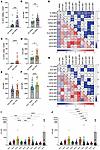 Figure 5
Characterization of SYK expression in WBNs and LDNs. (A) Bar graph presenting the percentage of SYK+ WBNs as a proportion of CD45 and (B) total SYK expression in WBNs across healthy donors and sepsis patients. (C) Bar graph presenting the percentage of SYK+ LDNs as proportion of CD45 and (D) total SYK expression in LDNs across healthy donor and sepsis patients. (E) Bar graph representing the SYK expression in WBNs versus LDNs and (F) SYK expression in SYK+ WBNs versus SYK+ LDNs in sepsis patients. (G) Heatmap representing the correlation matrix of each feature among WBNs and (H) LDNs. (I) Bar graphs comparing relative expression of SYK across all 10 metaclusters compared with MC04 (J) compared with MC08, the predominate healthy donor populations. Data are represented as means ± SEM. Significance was determined using a Mann-Whitney test, a paired t test, a Wilcoxon test, or a Kruskal-Wallis test with Dunn’s multiple comparisons test and set at P < 0.05*, P < 0.01**, P < 0.001***, P < 0.0001****. SYK, spleen tyrosine kinase; WBNs, whole blood neutrophils; HD, healthy donor; Sep, sepsis; MFI, mean fluorescence intensity; LDNs, low-density neutrophils; MC, metacluster; SEM, standard error of the mean.
SYK+ WBNs and LDNs are more immature and activated than SYK– WBNs and LDNs in patients with sepsis. We next compared expression of each feature across SYK+ and SYK– neutrophil populations among the patients with sepsis. Comparing SYK+ WBNs with SYK– WBNs, we found that SYK+ WBNs expressed a higher percentage of CD15 (P < 0.05), CD33 (P < 0.001), CD62L (P < 0.0001), and MPO (P < 0.0001) and lower CD16 (P < 0.001) (Figure 6A). Among the LDNs, SYK+ LDNs expressed a higher percentage of CD33 (P < 0.001), CD62L (P < 0.0001), MPO (P < 0.0001), and CD63 (P < 0.001) and lower CD16 (P < 0.0001) (Figure 6B). When comparing SYK+ WBNs and SYK+ LDNs, we observed that SYK+ LDNs expressed a higher percentage of CD15 (P < 0.05), CD33 (P < 0.001), MPO (P < 0.05), and CD63 (P < 0.001) and lower CD10 (P < 0.01) and CD16 (P < 0.001) (Figure 6C). We further assessed the total expression (MFI) of each of these features across SYK+ WBNs to SYK– WBNs, SYK+ LDNs to SYK– LDNs, and SYK+ WBNs to SYK+ LDNs and found that differential expression produced similar results when comparing percentages (Figure 6, A–C), except for higher CD15 in SYK+ WBNs versus SYK– WBNs, which did not reach statistical significance (Supplemental Figure 9, A–C).
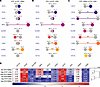 Figure 6
Characterization of SYK+ and SYK– neutrophil subsets from patients with sepsis. (A) Dumbbell plot comparing the percentage of expression of each extracellular and intracellular feature across SYK– WBNs (gray) and SYK+ WBNs (color), (B) SYK– LDNs (gray) and SYK+ LDNs (color), and (C) SYK+ WBNs (gray) and SYK+ LDNs (color). The size of the circle represents the magnitude of the percentage of each extracellular and intracellular feature, and the distance between the circles represents the percentage difference between each feature for the neutrophil subsets being compared. (D) Heatmap representing the relative expression of each extracellular and intracellular feature between healthy donor SYK+ WBNs, healthy donor SYK– WBNs, sepsis SYK+ WBNs, sepsis SYK– WBNs, sepsis SYK+ LDNs, and sepsis SYK– LDNs. Data are represented as means ± SEM. Significance was determined using a paired t test or a Wilcoxon test and set at P < 0.05*, P < 0.01**, P < 0.001***, P < 0.0001****. SYK, spleen tyrosine kinase; HD, healthy donor; Sep, sepsis; WBNs, whole blood neutrophils; LDNs, low-density neutrophils; SEM, standard error of the mean.
Last, we compared SYK+ and SYK– neutrophils at the population level across HD WBNs and sepsis WBNs and LDNs (Figure 6D). The 3 SYK-positive populations clustered most closely together with a second nodal clustering of SYK+ sepsis WBNs and LDNs (Figure 6D). The feature that appeared to discriminate most strongly between SYK+ and SYK– populations was MPO, which was elevated in all the SYK+ populations. Comparing SYK+ WBNs and SYK+ LDNs revealed that SYK+ LDNs have increased CD33 and CD62L and decreased CD10 and CD16 (Figure 6D). Additionally, in the dimensional reduction analysis of pure LDNs, the immature populations with higher MPO expression (LDN-MC01 and LDN-MC02) expressed higher SYK (P < 0.0001) than the mature populations, providing further evidence that SYK is associated with MPO expression and may be involved in neutrophil maturation (Figure 4G).
LDNs and SYK expression correlate with soluble biomarkers. The proportion of WBNs had a positive correlation with the concentration of soluble elastase-2 (r = 0.53, P < 0.01), lactoferrin (r = 0.48, P < 0.01), S100A8/MRP8 (r = 0.44, P < 0.01), IL-10 (r = 0.44, P < 0.01), TNF-RII (r = 0.69, P < 0.0001), and SAA (r = 0.38, P < 0.05) (Figure 7A and Supplemental Table 6). Similarly, the proportion of LDNs correlated with elastase-2 (r = 0.56, P < 0.001), S100A8/MRP8 (r = 0.39, P < 0.05), IL-1RA (r = 0.45, P < 0.01), IL-1β (r = 0.54, P < 0.001), IL-8 (r = 0.53, P < 0.01), IL-10 (r = 0.37, P < 0.05), TNF-RII (r = 0.46, P < 0.01), and G-CSF (r = 0.35, P < 0.05) (Figure 7A and Supplemental Table 6). We next looked at correlations of each biomarker with SYK+ WBNs and SYK+ LDNs. While we did not observe any correlations with SYK+ WBNs, we found positive correlations between SYK+ LDNs and elastase-2 (r = 0.50, P < 0.01), S100A8/MRP8 (r = 0.40, P < 0.05), IL-8 (r = 0.42, P < 0.01), IL-10 (r = 0.34, P < 0.05), TNF-RII (r = 0.46, P < 0.01), and IL-18 (r = 0.43, P < 0.01) (Figure 7A and Supplemental Table 6).
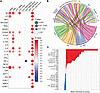 Figure 7
Correlations of WBNs, LDNs, SYK+ WBNs, and SYK+ LDNs with soluble biomarkers and clinical outcomes. (A) Bubble plot demonstrating the correlations of WBNs, LDNs, SYK+ WBNs, and SYK+ LDNs with soluble biomarkers. The color of the circle represents the strength of the correlations (r value), and size represents the statistical significance (P value). (B) Circos plot visualizing the correlation of the lower outer ring flow cytometry data quantifying WBNs, LDNs, SYK+ WBNs, and SYK+ LDNs with upper outer ring clinical outcomes and laboratory values. The ribbon width represents the strength of the association between 2 variables, with those that are statistically significant outlined in black. (C) Feature importance plot of clinical data, neutrophil populations, and biomarkers that distinguish patients on mechanical ventilation. The x axis is the mean accuracy of each variable in predicting mechanical ventilation. Red indicates a positive association and blue a negative association. Associations for Circos plot were performed with Spearman’s correlations for continuous variables and point-biserial for dichotomous outcomes. SYK, spleen tyrosine kinase; WBNs, whole blood neutrophils; LDNs, low-density neutrophils; MFI, mean fluorescence intensity; ICU, intensive care unit; SOFA, sequential organ failure assessment; LOS, length of stay; WBC, white blood cell; PLT, platelet count; SCr, serum creatinine; NE, elastase-2; LTF, lactoferrin; SAA, serum amyloid A.
We next wanted to determine if each of these biomarkers had a stronger correlation in those patients who expressed high levels of SYK compared with lower levels. We found that when we dichotomized WBNs, LDNs, and their respective SYK expression into those with high SYK (above the median) and low SYK (below the median), there were very few biomarkers associated with higher levels of WBNs, LDNs, and SYK+ WBNs (Figure 7A and Supplemental Table 7). However, among the SYK+ LDNs in the above-median group there were significant positive correlations with 19/24 biomarkers, including the neutrophil markers elastase-2, lactoferrin, MPO, neutrophil gelatinase-associated lipocalin (NGAL), resistin, and S100A8; the inflammatory markers IL-1β, IL-1 receptor antagonist (IL-1RA), IL-6, IL-8, IL-10, IL-18, TNF-α, TNF receptor 1 (TNF-RI), C-reactive protein (CRP), and monocyte chemoattractant protein-1 (MCP-1); and the endothelial makers intercellular adhesion molecule 1 (ICAM-1), matrix metalloproteinase 9 (MMP9), and vascular cell adhesion molecule 1 (VCAM-1) (Figure 7A and Supplemental Table 7).
LDNs and SYK expression correlate with disease severity and white blood cell count. We next hypothesized that neutrophil counts and SYK expression would associate with disease severity. We did not find any correlations between WBNs and disease severity; however, the percentage of LDNs associated with the need for mechanical ventilation (rpb = 0.37, P < 0.05), length of stay (r = 0.36, P < 0.05), and white blood cell (WBC) count (r = 0.35, P < 0.05) (Figure 7B). When evaluating SYK+ populations we observed that the percentage of SYK+ WBNs had an association with the need for mechanical ventilation (r = 0.33, P = 0.05), while SYK+ LDNs had an association with mechanical ventilation (rpb = 0.36, P < 0.05), vasopressors (rpb = 0.40, P < 0.05), SOFA score (r = 0.35, P < 0.05), and WBC (r = 0.57, P < 0.001) (Figure 7B).
Given these associations we then sought to determine if any demographic variables, soluble biomarkers, or neutrophil populations could predict disease severity. To evaluate this, we performed a random forest model to identify the features of greatest importance between patients who were on mechanical ventilation and those who were not. The features that most strongly predicted need for mechanical ventilation were the percentages of SYK+ LDNs and total LDNs (Figure 7C). Confirming the importance of SYK in predicting the need for mechanical ventilation, the population of WBNs that had the strongest prediction was SYK+ WBNs. Additionally, CD11b MFI was found to be an important feature on LDNs, and SYK+ LDNs and WBNs and SYK+ WBNs.
Because SYK levels and LDN proportions are not readily available at the bedside, we next wanted to determine if LDNs and SYK expression associate with any clinical or laboratory variable easily identifiable at the bedside. To do this, we stratified patients into those above and below the median for the proportion of LDNs and SYK+ LDNs and compared clinical variables of each group. We found that many clinical variables of disease severity were higher in the above-median group for LDNs and SYK+ LDNs. Specifically, for LDNs the above-median group had a higher number of patients with septic shock (P < 0.01), on mechanical ventilation (P < 0.05), while the WBC (P < 0.05) and length of stay (P < 0.05) were also higher in the above-median group (Supplemental Table 8). Similarly, when comparing the above-median and below-median groups for SYK+ LDNs, there were a higher percentage of patients on mechanical ventilation (P < 0.05), higher WBC (P < 0.01), and longer length of stay (P < 0.05) in the above-median group (Supplemental Table 9).
Responsiveness of normal-density neutrophils (NDNs) and LDNs and SYK+ and SYK– subsets following lipopolysaccharide (LPS) stimulation. We next sought to characterize phenotypic changes in purified NDNs and LDNs’ features following LPS stimulation (Figure 8A). LPS stimulation led to statistically significant changes in all the evaluated features except for CD16 and SYK in NDNs and SYK in the LDN subsets (Figure 8, B and C). To determine if NDNs or LDNs are more responsive to LPS stimulation, we next compared the fold-change from baseline following stimulation across the 2 groups and found that LPS stimulation resulted in a statistically significant increase in CD11b (P < 0.001) and CD15 (P < 0.05) in NDNs compared with LDNs, suggesting that NDNs may have more reserve activation ability (Figure 8D). We similarly evaluated the responsiveness of the SYK+ and SYK– subsets for both NDNs and LDNs and found that like the overall populations, there were statistically significant changes in most of the evaluated features (Figure 9, A–D). To assess if SYK+ or SYK– NDNs and LDNs are more responsive to LPS, we again compared the fold-change from baseline following stimulation in these neutrophil subsets. We found that following stimulation SYK+ NDNs had statistically significant increases in CD11b (P < 0.05), CD16 (P < 0.0001), HLA-DR (P < 0.001), and CD33 (P < 0.05) compared with SYK– NDNs (Supplemental Figure 10A), while SYK+ LDNs had higher CD16 (P < 0.01) and CD33 (P < 0.05) compared with SYK– LDNs (Supplemental Figure 10B). Comparing SYK+ NDNs and SYK+ LDNs we found that LPS stimulation resulted in an increase in CD11b (P < 0.001) and CD10 (P < 0.05) in SYK+ NDNs compared with SYK+ LDNs (Supplemental Figure 10C). In totality, these data suggest that both NDNs and LDNs from patients with sepsis can be stimulated by LPS and that NDNs and SYK+ neutrophil subsets may be slightly more responsive than their LDN and SYK– counterparts.
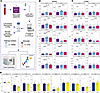 Figure 8
Functional assessment of NDNs and LDNs following LPS stimulation and SYK inhibition. (A) Schematic representation of methods for stimulation of NDNs and LDNs from patients with sepsis (N = 16). (B) Bar graphs representing the MFI of each individual feature comparing nonstimulated (purple), LPS-stimulated (blue), and LPS stimulation following R406-treated (pink) NDNs. (C) Bar graphs representing the MFI of each individual feature comparing nonstimulated (purple), LPS-stimulated (blue), and LPS stimulation following R406-treated (pink) LDNs. (D) Bar graphs representing the fold-change in feature expression following LPS stimulation comparing NDNs (dark blue) and LDNs (yellow). Data are represented as means ± SEM. Significance was determined using a Conover’s post hoc test for Friedman’s test with a Bonferroni correction or a Wilcoxon test and set at P < 0.05*, P < 0.01**, P < 0.001***, P < 0.0001****. NDNs, normal-density neutrophils; LDNs, low-density neutrophils; LPS, lipopolysaccharide; NS, nonstimulated; MFI, mean fluorescence intensity; FC, fold-change; SEM, standard error of the mean.
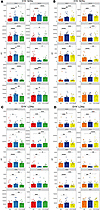 Figure 9
Functional assessment of SYK+ and SYK– NDNs and SYK+ and SYK– LDNs following LPS stimulation and SYK inhibition. (A) Bar graphs representing the MFI of each individual feature comparing nonstimulated (red), LPS-stimulated (blue), and LPS stimulation following R406-treated (green) SYK+ NDNs. (B) Bar graphs representing the MFI of each individual feature comparing nonstimulated (orange), LPS-stimulated (dark blue), and LPS stimulation following R406-treated (yellow) SYK– NDNs. (C) Bar graphs representing the MFI of each individual feature comparing nonstimulated (red), LPS-stimulated (blue), and LPS stimulation following R406-treated (green) SYK+ LDNs. (D) Bar graphs representing the MFI of each individual feature comparing nonstimulated (orange), LPS-stimulated (dark blue), and LPS stimulation following R406-treated (yellow) SYK– LDNs. Data are represented as means ± SEM. Significance was determined using a Conover’s post hoc test for Friedman’s test with a Bonferroni correction and set at P < 0.05*, P < 0.01**, P < 0.001***, P < 0.001***. NDNs, normal-density neutrophils; LDNs, low-density neutrophils; LPS, lipopolysaccharide; NS, nonstimulated; MFI, mean fluorescence intensity; SEM, standard error of the mean.
R406 alters phenotypes of neutrophils from patients with sepsis following LPS stimulation. After seeing differences in the responsiveness of NDNs and LDNs to LPS stimulation, we wanted to determine the impact of SYK inhibition with R406 on each feature. R406 was able to inhibit the relative changes in 8/10 features in LPS-stimulated NDNs, including CD10 (P < 0.01), CD11b (P < 0.0001), CD15 (P < 0.0001), CD16 (P < 0.001), CD33 (P < 0.0001), CD62L (P < 0.05), CD63 (P < 0.0001), and MPO (P < 0.05) (Figure 8B). Among the LDNs R406 was able to inhibit the relative changes in 7/10 evaluated features, including CD11b (P < 0.001), CD15 (P < 0.001), CD16 (P < 0.0001), CD33 (P < 0.001), CD62L (P < 0.05), CD63 (P < 0.01), and MPO (P < 0.05) (Figure 8C). Overall similar results were observed when evaluating the subsets of SYK+ and SYK– NDNs and SYK+ and SYK– LDNs (Figure 9, A–D).
Impact of LPS stimulation and SYK inhibition on degranulation of sepsis neutrophils. Degranulation is another important neutrophil function associated with poor outcomes in sepsis; therefore, we measured soluble MPO in cell supernatants following LPS stimulation. We found that LPS stimulation resulted in minimal increases in the amount of soluble MPO from NDNs, but there was a statistically significant increase in the amount of MPO from LDNs (P < 0.05) (Figure 10, A and B). While we did not see decreases in the release of MPO from NDNs with R406 SYK inhibition, we did observe a decrease in MPO in LDNs’ (P < 0.05) supernatants (Figure 10, A and B). Last, we compared the responsiveness of NDNs and LDNs and found no difference in the amount of MPO release between these subsets (Figure 10C).
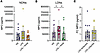 Figure 10
Functional assessment of degranulation among NDNs and LDNs and the impact of SYK inhibition. (A) Bar graph representing MPO levels among nonstimulated, LPS-stimulated, and LPS stimulation following R406-treated NDNs. (B) Bar graph representing MPO levels among nonstimulated, LPS-stimulated, and LPS stimulation following R406-treated LDNs. (C) Bar graph representing the fold-change in MPO release following LPS stimulation comparing NDNs and LDNs. Significance was determined using a Friedman’s test with a Dunn’s multiple comparisons test and set at *P < 0.05. NDNs, normal-density neutrophils; LDNs, low-density neutrophils; LPS, lipopolysaccharide; NS, nonstimulated; MPO, myeloperoxidase; SEM, standard error of the mean.


