
Clinical Research and Public HealthClinical ResearchMetabolism
Open Access |  10.1172/jci.insight.200149
Phase III trial of sodium dichloroacetate for pyruvate dehydrogenase complex deficiency in children
Peter W. Stacpoole,1 Jose E. Abdenur,2 Jirair K. Bedoyan,3 Lorenzo Botto,4 Gregory M. Enns,5 Marni J. Falk,6,7 Rebecca Ganetzky,6,7 Cheryl Garganta,8 Kevin Glinton,9 Andrea Gropman,10 Sharon Hamm,11 Eugenia Henry,12 Nicola Longo,13 Richard Neiberger,8 Russell P. Saneto,14,15 Fernando Scaglia,9,16,17 Sub H. Subramony,18 Jerry Vockley,3 and Richard E. Wagner19
1Department of Medicine and Department of Biochemistry and Molecular Biology, University of Florida College of Medicine, Gainesville, Florida, USA.
2Children’s Hospital of Orange County, Orange, California, USA.
3Department of Pediatrics, University of Pittsburgh School of Medicine, and UPMC Children’s Hospital of Pittsburgh, Pittsburgh, Pennsylvania, USA.
4Department of Pediatrics, University of Utah School of Medicine, Salt Lake City, Utah, USA.
5Department of Pediatrics, Stanford University School of Medicine, Stanford, California, USA.
6Mitochondrial Medicine Frontier Program, Children’s Hospital of Philadelphia, Philadelphia, Pennsylvania, USA.
7Division of Human Genetics, Department of Pediatrics, and University of Pennsylvania Perelman School of Medicine, Philadelphia, Pennsylvania, USA.
8Department of Pediatrics, University of Florida College of Medicine, Gainesville, Florida, USA.
9Department of Molecular and Human Genetics, Baylor College of Medicine and Texas Children’s Hospital, Houston, Texas, USA.
10Department of Genomic and Translational Neuroscience, St. Jude Children’s Research Hospital, Memphis, Tennessee, USA.
11Saol Therapeutics, Roswell, Georgia, USA.
12Firma Clinical Research, Elk Grove Village, Illinois, USA.
13Division of Clinical Genetics/Human Genetics, UCLA, Los Angeles, California, USA.
14Norcliffe Foundation Center for Integrative Brain Research, Seattle Children’s Hospital, Seattle, Washington, USA.
15Division of Pediatric Neurology, Department of Neurology, University of Washington, Seattle, Washington, USA.
16Joint BCM-CUHK Center of Medical Genetics, Prince of Wales Hospital, ShaTin, Hong Kong.
17Baylor Genetics, Houston, Texas, USA.
18Department of Neurology, University of Florida College of Medicine, Gainesville, Florida, USA.
19Medosome Biotec, LLC, Alachua, Florida, USA.
Address correspondence to: Peter W. Stacpoole, 1600 SW Archer Rd., MSB238A, Gainesville, Florida, 32610, USA. Phone: 352.273.9599; Email: pws@ufl.edu.
Find articles by Stacpoole, P. in: PubMed | Google Scholar
1Department of Medicine and Department of Biochemistry and Molecular Biology, University of Florida College of Medicine, Gainesville, Florida, USA.
2Children’s Hospital of Orange County, Orange, California, USA.
3Department of Pediatrics, University of Pittsburgh School of Medicine, and UPMC Children’s Hospital of Pittsburgh, Pittsburgh, Pennsylvania, USA.
4Department of Pediatrics, University of Utah School of Medicine, Salt Lake City, Utah, USA.
5Department of Pediatrics, Stanford University School of Medicine, Stanford, California, USA.
6Mitochondrial Medicine Frontier Program, Children’s Hospital of Philadelphia, Philadelphia, Pennsylvania, USA.
7Division of Human Genetics, Department of Pediatrics, and University of Pennsylvania Perelman School of Medicine, Philadelphia, Pennsylvania, USA.
8Department of Pediatrics, University of Florida College of Medicine, Gainesville, Florida, USA.
9Department of Molecular and Human Genetics, Baylor College of Medicine and Texas Children’s Hospital, Houston, Texas, USA.
10Department of Genomic and Translational Neuroscience, St. Jude Children’s Research Hospital, Memphis, Tennessee, USA.
11Saol Therapeutics, Roswell, Georgia, USA.
12Firma Clinical Research, Elk Grove Village, Illinois, USA.
13Division of Clinical Genetics/Human Genetics, UCLA, Los Angeles, California, USA.
14Norcliffe Foundation Center for Integrative Brain Research, Seattle Children’s Hospital, Seattle, Washington, USA.
15Division of Pediatric Neurology, Department of Neurology, University of Washington, Seattle, Washington, USA.
16Joint BCM-CUHK Center of Medical Genetics, Prince of Wales Hospital, ShaTin, Hong Kong.
17Baylor Genetics, Houston, Texas, USA.
18Department of Neurology, University of Florida College of Medicine, Gainesville, Florida, USA.
19Medosome Biotec, LLC, Alachua, Florida, USA.
Address correspondence to: Peter W. Stacpoole, 1600 SW Archer Rd., MSB238A, Gainesville, Florida, 32610, USA. Phone: 352.273.9599; Email: pws@ufl.edu.
Find articles by Abdenur, J. in: PubMed | Google Scholar
1Department of Medicine and Department of Biochemistry and Molecular Biology, University of Florida College of Medicine, Gainesville, Florida, USA.
2Children’s Hospital of Orange County, Orange, California, USA.
3Department of Pediatrics, University of Pittsburgh School of Medicine, and UPMC Children’s Hospital of Pittsburgh, Pittsburgh, Pennsylvania, USA.
4Department of Pediatrics, University of Utah School of Medicine, Salt Lake City, Utah, USA.
5Department of Pediatrics, Stanford University School of Medicine, Stanford, California, USA.
6Mitochondrial Medicine Frontier Program, Children’s Hospital of Philadelphia, Philadelphia, Pennsylvania, USA.
7Division of Human Genetics, Department of Pediatrics, and University of Pennsylvania Perelman School of Medicine, Philadelphia, Pennsylvania, USA.
8Department of Pediatrics, University of Florida College of Medicine, Gainesville, Florida, USA.
9Department of Molecular and Human Genetics, Baylor College of Medicine and Texas Children’s Hospital, Houston, Texas, USA.
10Department of Genomic and Translational Neuroscience, St. Jude Children’s Research Hospital, Memphis, Tennessee, USA.
11Saol Therapeutics, Roswell, Georgia, USA.
12Firma Clinical Research, Elk Grove Village, Illinois, USA.
13Division of Clinical Genetics/Human Genetics, UCLA, Los Angeles, California, USA.
14Norcliffe Foundation Center for Integrative Brain Research, Seattle Children’s Hospital, Seattle, Washington, USA.
15Division of Pediatric Neurology, Department of Neurology, University of Washington, Seattle, Washington, USA.
16Joint BCM-CUHK Center of Medical Genetics, Prince of Wales Hospital, ShaTin, Hong Kong.
17Baylor Genetics, Houston, Texas, USA.
18Department of Neurology, University of Florida College of Medicine, Gainesville, Florida, USA.
19Medosome Biotec, LLC, Alachua, Florida, USA.
Address correspondence to: Peter W. Stacpoole, 1600 SW Archer Rd., MSB238A, Gainesville, Florida, 32610, USA. Phone: 352.273.9599; Email: pws@ufl.edu.
Find articles by Bedoyan, J. in: PubMed | Google Scholar
1Department of Medicine and Department of Biochemistry and Molecular Biology, University of Florida College of Medicine, Gainesville, Florida, USA.
2Children’s Hospital of Orange County, Orange, California, USA.
3Department of Pediatrics, University of Pittsburgh School of Medicine, and UPMC Children’s Hospital of Pittsburgh, Pittsburgh, Pennsylvania, USA.
4Department of Pediatrics, University of Utah School of Medicine, Salt Lake City, Utah, USA.
5Department of Pediatrics, Stanford University School of Medicine, Stanford, California, USA.
6Mitochondrial Medicine Frontier Program, Children’s Hospital of Philadelphia, Philadelphia, Pennsylvania, USA.
7Division of Human Genetics, Department of Pediatrics, and University of Pennsylvania Perelman School of Medicine, Philadelphia, Pennsylvania, USA.
8Department of Pediatrics, University of Florida College of Medicine, Gainesville, Florida, USA.
9Department of Molecular and Human Genetics, Baylor College of Medicine and Texas Children’s Hospital, Houston, Texas, USA.
10Department of Genomic and Translational Neuroscience, St. Jude Children’s Research Hospital, Memphis, Tennessee, USA.
11Saol Therapeutics, Roswell, Georgia, USA.
12Firma Clinical Research, Elk Grove Village, Illinois, USA.
13Division of Clinical Genetics/Human Genetics, UCLA, Los Angeles, California, USA.
14Norcliffe Foundation Center for Integrative Brain Research, Seattle Children’s Hospital, Seattle, Washington, USA.
15Division of Pediatric Neurology, Department of Neurology, University of Washington, Seattle, Washington, USA.
16Joint BCM-CUHK Center of Medical Genetics, Prince of Wales Hospital, ShaTin, Hong Kong.
17Baylor Genetics, Houston, Texas, USA.
18Department of Neurology, University of Florida College of Medicine, Gainesville, Florida, USA.
19Medosome Biotec, LLC, Alachua, Florida, USA.
Address correspondence to: Peter W. Stacpoole, 1600 SW Archer Rd., MSB238A, Gainesville, Florida, 32610, USA. Phone: 352.273.9599; Email: pws@ufl.edu.
Find articles by Botto, L. in: PubMed | Google Scholar
1Department of Medicine and Department of Biochemistry and Molecular Biology, University of Florida College of Medicine, Gainesville, Florida, USA.
2Children’s Hospital of Orange County, Orange, California, USA.
3Department of Pediatrics, University of Pittsburgh School of Medicine, and UPMC Children’s Hospital of Pittsburgh, Pittsburgh, Pennsylvania, USA.
4Department of Pediatrics, University of Utah School of Medicine, Salt Lake City, Utah, USA.
5Department of Pediatrics, Stanford University School of Medicine, Stanford, California, USA.
6Mitochondrial Medicine Frontier Program, Children’s Hospital of Philadelphia, Philadelphia, Pennsylvania, USA.
7Division of Human Genetics, Department of Pediatrics, and University of Pennsylvania Perelman School of Medicine, Philadelphia, Pennsylvania, USA.
8Department of Pediatrics, University of Florida College of Medicine, Gainesville, Florida, USA.
9Department of Molecular and Human Genetics, Baylor College of Medicine and Texas Children’s Hospital, Houston, Texas, USA.
10Department of Genomic and Translational Neuroscience, St. Jude Children’s Research Hospital, Memphis, Tennessee, USA.
11Saol Therapeutics, Roswell, Georgia, USA.
12Firma Clinical Research, Elk Grove Village, Illinois, USA.
13Division of Clinical Genetics/Human Genetics, UCLA, Los Angeles, California, USA.
14Norcliffe Foundation Center for Integrative Brain Research, Seattle Children’s Hospital, Seattle, Washington, USA.
15Division of Pediatric Neurology, Department of Neurology, University of Washington, Seattle, Washington, USA.
16Joint BCM-CUHK Center of Medical Genetics, Prince of Wales Hospital, ShaTin, Hong Kong.
17Baylor Genetics, Houston, Texas, USA.
18Department of Neurology, University of Florida College of Medicine, Gainesville, Florida, USA.
19Medosome Biotec, LLC, Alachua, Florida, USA.
Address correspondence to: Peter W. Stacpoole, 1600 SW Archer Rd., MSB238A, Gainesville, Florida, 32610, USA. Phone: 352.273.9599; Email: pws@ufl.edu.
Find articles by Enns, G. in: PubMed | Google Scholar
1Department of Medicine and Department of Biochemistry and Molecular Biology, University of Florida College of Medicine, Gainesville, Florida, USA.
2Children’s Hospital of Orange County, Orange, California, USA.
3Department of Pediatrics, University of Pittsburgh School of Medicine, and UPMC Children’s Hospital of Pittsburgh, Pittsburgh, Pennsylvania, USA.
4Department of Pediatrics, University of Utah School of Medicine, Salt Lake City, Utah, USA.
5Department of Pediatrics, Stanford University School of Medicine, Stanford, California, USA.
6Mitochondrial Medicine Frontier Program, Children’s Hospital of Philadelphia, Philadelphia, Pennsylvania, USA.
7Division of Human Genetics, Department of Pediatrics, and University of Pennsylvania Perelman School of Medicine, Philadelphia, Pennsylvania, USA.
8Department of Pediatrics, University of Florida College of Medicine, Gainesville, Florida, USA.
9Department of Molecular and Human Genetics, Baylor College of Medicine and Texas Children’s Hospital, Houston, Texas, USA.
10Department of Genomic and Translational Neuroscience, St. Jude Children’s Research Hospital, Memphis, Tennessee, USA.
11Saol Therapeutics, Roswell, Georgia, USA.
12Firma Clinical Research, Elk Grove Village, Illinois, USA.
13Division of Clinical Genetics/Human Genetics, UCLA, Los Angeles, California, USA.
14Norcliffe Foundation Center for Integrative Brain Research, Seattle Children’s Hospital, Seattle, Washington, USA.
15Division of Pediatric Neurology, Department of Neurology, University of Washington, Seattle, Washington, USA.
16Joint BCM-CUHK Center of Medical Genetics, Prince of Wales Hospital, ShaTin, Hong Kong.
17Baylor Genetics, Houston, Texas, USA.
18Department of Neurology, University of Florida College of Medicine, Gainesville, Florida, USA.
19Medosome Biotec, LLC, Alachua, Florida, USA.
Address correspondence to: Peter W. Stacpoole, 1600 SW Archer Rd., MSB238A, Gainesville, Florida, 32610, USA. Phone: 352.273.9599; Email: pws@ufl.edu.
Find articles by Falk, M. in: PubMed | Google Scholar
1Department of Medicine and Department of Biochemistry and Molecular Biology, University of Florida College of Medicine, Gainesville, Florida, USA.
2Children’s Hospital of Orange County, Orange, California, USA.
3Department of Pediatrics, University of Pittsburgh School of Medicine, and UPMC Children’s Hospital of Pittsburgh, Pittsburgh, Pennsylvania, USA.
4Department of Pediatrics, University of Utah School of Medicine, Salt Lake City, Utah, USA.
5Department of Pediatrics, Stanford University School of Medicine, Stanford, California, USA.
6Mitochondrial Medicine Frontier Program, Children’s Hospital of Philadelphia, Philadelphia, Pennsylvania, USA.
7Division of Human Genetics, Department of Pediatrics, and University of Pennsylvania Perelman School of Medicine, Philadelphia, Pennsylvania, USA.
8Department of Pediatrics, University of Florida College of Medicine, Gainesville, Florida, USA.
9Department of Molecular and Human Genetics, Baylor College of Medicine and Texas Children’s Hospital, Houston, Texas, USA.
10Department of Genomic and Translational Neuroscience, St. Jude Children’s Research Hospital, Memphis, Tennessee, USA.
11Saol Therapeutics, Roswell, Georgia, USA.
12Firma Clinical Research, Elk Grove Village, Illinois, USA.
13Division of Clinical Genetics/Human Genetics, UCLA, Los Angeles, California, USA.
14Norcliffe Foundation Center for Integrative Brain Research, Seattle Children’s Hospital, Seattle, Washington, USA.
15Division of Pediatric Neurology, Department of Neurology, University of Washington, Seattle, Washington, USA.
16Joint BCM-CUHK Center of Medical Genetics, Prince of Wales Hospital, ShaTin, Hong Kong.
17Baylor Genetics, Houston, Texas, USA.
18Department of Neurology, University of Florida College of Medicine, Gainesville, Florida, USA.
19Medosome Biotec, LLC, Alachua, Florida, USA.
Address correspondence to: Peter W. Stacpoole, 1600 SW Archer Rd., MSB238A, Gainesville, Florida, 32610, USA. Phone: 352.273.9599; Email: pws@ufl.edu.
Find articles by Ganetzky, R. in: PubMed | Google Scholar
1Department of Medicine and Department of Biochemistry and Molecular Biology, University of Florida College of Medicine, Gainesville, Florida, USA.
2Children’s Hospital of Orange County, Orange, California, USA.
3Department of Pediatrics, University of Pittsburgh School of Medicine, and UPMC Children’s Hospital of Pittsburgh, Pittsburgh, Pennsylvania, USA.
4Department of Pediatrics, University of Utah School of Medicine, Salt Lake City, Utah, USA.
5Department of Pediatrics, Stanford University School of Medicine, Stanford, California, USA.
6Mitochondrial Medicine Frontier Program, Children’s Hospital of Philadelphia, Philadelphia, Pennsylvania, USA.
7Division of Human Genetics, Department of Pediatrics, and University of Pennsylvania Perelman School of Medicine, Philadelphia, Pennsylvania, USA.
8Department of Pediatrics, University of Florida College of Medicine, Gainesville, Florida, USA.
9Department of Molecular and Human Genetics, Baylor College of Medicine and Texas Children’s Hospital, Houston, Texas, USA.
10Department of Genomic and Translational Neuroscience, St. Jude Children’s Research Hospital, Memphis, Tennessee, USA.
11Saol Therapeutics, Roswell, Georgia, USA.
12Firma Clinical Research, Elk Grove Village, Illinois, USA.
13Division of Clinical Genetics/Human Genetics, UCLA, Los Angeles, California, USA.
14Norcliffe Foundation Center for Integrative Brain Research, Seattle Children’s Hospital, Seattle, Washington, USA.
15Division of Pediatric Neurology, Department of Neurology, University of Washington, Seattle, Washington, USA.
16Joint BCM-CUHK Center of Medical Genetics, Prince of Wales Hospital, ShaTin, Hong Kong.
17Baylor Genetics, Houston, Texas, USA.
18Department of Neurology, University of Florida College of Medicine, Gainesville, Florida, USA.
19Medosome Biotec, LLC, Alachua, Florida, USA.
Address correspondence to: Peter W. Stacpoole, 1600 SW Archer Rd., MSB238A, Gainesville, Florida, 32610, USA. Phone: 352.273.9599; Email: pws@ufl.edu.
Find articles by Garganta, C. in: PubMed | Google Scholar
1Department of Medicine and Department of Biochemistry and Molecular Biology, University of Florida College of Medicine, Gainesville, Florida, USA.
2Children’s Hospital of Orange County, Orange, California, USA.
3Department of Pediatrics, University of Pittsburgh School of Medicine, and UPMC Children’s Hospital of Pittsburgh, Pittsburgh, Pennsylvania, USA.
4Department of Pediatrics, University of Utah School of Medicine, Salt Lake City, Utah, USA.
5Department of Pediatrics, Stanford University School of Medicine, Stanford, California, USA.
6Mitochondrial Medicine Frontier Program, Children’s Hospital of Philadelphia, Philadelphia, Pennsylvania, USA.
7Division of Human Genetics, Department of Pediatrics, and University of Pennsylvania Perelman School of Medicine, Philadelphia, Pennsylvania, USA.
8Department of Pediatrics, University of Florida College of Medicine, Gainesville, Florida, USA.
9Department of Molecular and Human Genetics, Baylor College of Medicine and Texas Children’s Hospital, Houston, Texas, USA.
10Department of Genomic and Translational Neuroscience, St. Jude Children’s Research Hospital, Memphis, Tennessee, USA.
11Saol Therapeutics, Roswell, Georgia, USA.
12Firma Clinical Research, Elk Grove Village, Illinois, USA.
13Division of Clinical Genetics/Human Genetics, UCLA, Los Angeles, California, USA.
14Norcliffe Foundation Center for Integrative Brain Research, Seattle Children’s Hospital, Seattle, Washington, USA.
15Division of Pediatric Neurology, Department of Neurology, University of Washington, Seattle, Washington, USA.
16Joint BCM-CUHK Center of Medical Genetics, Prince of Wales Hospital, ShaTin, Hong Kong.
17Baylor Genetics, Houston, Texas, USA.
18Department of Neurology, University of Florida College of Medicine, Gainesville, Florida, USA.
19Medosome Biotec, LLC, Alachua, Florida, USA.
Address correspondence to: Peter W. Stacpoole, 1600 SW Archer Rd., MSB238A, Gainesville, Florida, 32610, USA. Phone: 352.273.9599; Email: pws@ufl.edu.
Find articles by Glinton, K. in: PubMed | Google Scholar
1Department of Medicine and Department of Biochemistry and Molecular Biology, University of Florida College of Medicine, Gainesville, Florida, USA.
2Children’s Hospital of Orange County, Orange, California, USA.
3Department of Pediatrics, University of Pittsburgh School of Medicine, and UPMC Children’s Hospital of Pittsburgh, Pittsburgh, Pennsylvania, USA.
4Department of Pediatrics, University of Utah School of Medicine, Salt Lake City, Utah, USA.
5Department of Pediatrics, Stanford University School of Medicine, Stanford, California, USA.
6Mitochondrial Medicine Frontier Program, Children’s Hospital of Philadelphia, Philadelphia, Pennsylvania, USA.
7Division of Human Genetics, Department of Pediatrics, and University of Pennsylvania Perelman School of Medicine, Philadelphia, Pennsylvania, USA.
8Department of Pediatrics, University of Florida College of Medicine, Gainesville, Florida, USA.
9Department of Molecular and Human Genetics, Baylor College of Medicine and Texas Children’s Hospital, Houston, Texas, USA.
10Department of Genomic and Translational Neuroscience, St. Jude Children’s Research Hospital, Memphis, Tennessee, USA.
11Saol Therapeutics, Roswell, Georgia, USA.
12Firma Clinical Research, Elk Grove Village, Illinois, USA.
13Division of Clinical Genetics/Human Genetics, UCLA, Los Angeles, California, USA.
14Norcliffe Foundation Center for Integrative Brain Research, Seattle Children’s Hospital, Seattle, Washington, USA.
15Division of Pediatric Neurology, Department of Neurology, University of Washington, Seattle, Washington, USA.
16Joint BCM-CUHK Center of Medical Genetics, Prince of Wales Hospital, ShaTin, Hong Kong.
17Baylor Genetics, Houston, Texas, USA.
18Department of Neurology, University of Florida College of Medicine, Gainesville, Florida, USA.
19Medosome Biotec, LLC, Alachua, Florida, USA.
Address correspondence to: Peter W. Stacpoole, 1600 SW Archer Rd., MSB238A, Gainesville, Florida, 32610, USA. Phone: 352.273.9599; Email: pws@ufl.edu.
Find articles by Gropman, A. in: PubMed | Google Scholar
1Department of Medicine and Department of Biochemistry and Molecular Biology, University of Florida College of Medicine, Gainesville, Florida, USA.
2Children’s Hospital of Orange County, Orange, California, USA.
3Department of Pediatrics, University of Pittsburgh School of Medicine, and UPMC Children’s Hospital of Pittsburgh, Pittsburgh, Pennsylvania, USA.
4Department of Pediatrics, University of Utah School of Medicine, Salt Lake City, Utah, USA.
5Department of Pediatrics, Stanford University School of Medicine, Stanford, California, USA.
6Mitochondrial Medicine Frontier Program, Children’s Hospital of Philadelphia, Philadelphia, Pennsylvania, USA.
7Division of Human Genetics, Department of Pediatrics, and University of Pennsylvania Perelman School of Medicine, Philadelphia, Pennsylvania, USA.
8Department of Pediatrics, University of Florida College of Medicine, Gainesville, Florida, USA.
9Department of Molecular and Human Genetics, Baylor College of Medicine and Texas Children’s Hospital, Houston, Texas, USA.
10Department of Genomic and Translational Neuroscience, St. Jude Children’s Research Hospital, Memphis, Tennessee, USA.
11Saol Therapeutics, Roswell, Georgia, USA.
12Firma Clinical Research, Elk Grove Village, Illinois, USA.
13Division of Clinical Genetics/Human Genetics, UCLA, Los Angeles, California, USA.
14Norcliffe Foundation Center for Integrative Brain Research, Seattle Children’s Hospital, Seattle, Washington, USA.
15Division of Pediatric Neurology, Department of Neurology, University of Washington, Seattle, Washington, USA.
16Joint BCM-CUHK Center of Medical Genetics, Prince of Wales Hospital, ShaTin, Hong Kong.
17Baylor Genetics, Houston, Texas, USA.
18Department of Neurology, University of Florida College of Medicine, Gainesville, Florida, USA.
19Medosome Biotec, LLC, Alachua, Florida, USA.
Address correspondence to: Peter W. Stacpoole, 1600 SW Archer Rd., MSB238A, Gainesville, Florida, 32610, USA. Phone: 352.273.9599; Email: pws@ufl.edu.
Find articles by Hamm, S. in: PubMed | Google Scholar
1Department of Medicine and Department of Biochemistry and Molecular Biology, University of Florida College of Medicine, Gainesville, Florida, USA.
2Children’s Hospital of Orange County, Orange, California, USA.
3Department of Pediatrics, University of Pittsburgh School of Medicine, and UPMC Children’s Hospital of Pittsburgh, Pittsburgh, Pennsylvania, USA.
4Department of Pediatrics, University of Utah School of Medicine, Salt Lake City, Utah, USA.
5Department of Pediatrics, Stanford University School of Medicine, Stanford, California, USA.
6Mitochondrial Medicine Frontier Program, Children’s Hospital of Philadelphia, Philadelphia, Pennsylvania, USA.
7Division of Human Genetics, Department of Pediatrics, and University of Pennsylvania Perelman School of Medicine, Philadelphia, Pennsylvania, USA.
8Department of Pediatrics, University of Florida College of Medicine, Gainesville, Florida, USA.
9Department of Molecular and Human Genetics, Baylor College of Medicine and Texas Children’s Hospital, Houston, Texas, USA.
10Department of Genomic and Translational Neuroscience, St. Jude Children’s Research Hospital, Memphis, Tennessee, USA.
11Saol Therapeutics, Roswell, Georgia, USA.
12Firma Clinical Research, Elk Grove Village, Illinois, USA.
13Division of Clinical Genetics/Human Genetics, UCLA, Los Angeles, California, USA.
14Norcliffe Foundation Center for Integrative Brain Research, Seattle Children’s Hospital, Seattle, Washington, USA.
15Division of Pediatric Neurology, Department of Neurology, University of Washington, Seattle, Washington, USA.
16Joint BCM-CUHK Center of Medical Genetics, Prince of Wales Hospital, ShaTin, Hong Kong.
17Baylor Genetics, Houston, Texas, USA.
18Department of Neurology, University of Florida College of Medicine, Gainesville, Florida, USA.
19Medosome Biotec, LLC, Alachua, Florida, USA.
Address correspondence to: Peter W. Stacpoole, 1600 SW Archer Rd., MSB238A, Gainesville, Florida, 32610, USA. Phone: 352.273.9599; Email: pws@ufl.edu.
Find articles by Henry, E. in: PubMed | Google Scholar
1Department of Medicine and Department of Biochemistry and Molecular Biology, University of Florida College of Medicine, Gainesville, Florida, USA.
2Children’s Hospital of Orange County, Orange, California, USA.
3Department of Pediatrics, University of Pittsburgh School of Medicine, and UPMC Children’s Hospital of Pittsburgh, Pittsburgh, Pennsylvania, USA.
4Department of Pediatrics, University of Utah School of Medicine, Salt Lake City, Utah, USA.
5Department of Pediatrics, Stanford University School of Medicine, Stanford, California, USA.
6Mitochondrial Medicine Frontier Program, Children’s Hospital of Philadelphia, Philadelphia, Pennsylvania, USA.
7Division of Human Genetics, Department of Pediatrics, and University of Pennsylvania Perelman School of Medicine, Philadelphia, Pennsylvania, USA.
8Department of Pediatrics, University of Florida College of Medicine, Gainesville, Florida, USA.
9Department of Molecular and Human Genetics, Baylor College of Medicine and Texas Children’s Hospital, Houston, Texas, USA.
10Department of Genomic and Translational Neuroscience, St. Jude Children’s Research Hospital, Memphis, Tennessee, USA.
11Saol Therapeutics, Roswell, Georgia, USA.
12Firma Clinical Research, Elk Grove Village, Illinois, USA.
13Division of Clinical Genetics/Human Genetics, UCLA, Los Angeles, California, USA.
14Norcliffe Foundation Center for Integrative Brain Research, Seattle Children’s Hospital, Seattle, Washington, USA.
15Division of Pediatric Neurology, Department of Neurology, University of Washington, Seattle, Washington, USA.
16Joint BCM-CUHK Center of Medical Genetics, Prince of Wales Hospital, ShaTin, Hong Kong.
17Baylor Genetics, Houston, Texas, USA.
18Department of Neurology, University of Florida College of Medicine, Gainesville, Florida, USA.
19Medosome Biotec, LLC, Alachua, Florida, USA.
Address correspondence to: Peter W. Stacpoole, 1600 SW Archer Rd., MSB238A, Gainesville, Florida, 32610, USA. Phone: 352.273.9599; Email: pws@ufl.edu.
Find articles by Longo, N. in: PubMed | Google Scholar
1Department of Medicine and Department of Biochemistry and Molecular Biology, University of Florida College of Medicine, Gainesville, Florida, USA.
2Children’s Hospital of Orange County, Orange, California, USA.
3Department of Pediatrics, University of Pittsburgh School of Medicine, and UPMC Children’s Hospital of Pittsburgh, Pittsburgh, Pennsylvania, USA.
4Department of Pediatrics, University of Utah School of Medicine, Salt Lake City, Utah, USA.
5Department of Pediatrics, Stanford University School of Medicine, Stanford, California, USA.
6Mitochondrial Medicine Frontier Program, Children’s Hospital of Philadelphia, Philadelphia, Pennsylvania, USA.
7Division of Human Genetics, Department of Pediatrics, and University of Pennsylvania Perelman School of Medicine, Philadelphia, Pennsylvania, USA.
8Department of Pediatrics, University of Florida College of Medicine, Gainesville, Florida, USA.
9Department of Molecular and Human Genetics, Baylor College of Medicine and Texas Children’s Hospital, Houston, Texas, USA.
10Department of Genomic and Translational Neuroscience, St. Jude Children’s Research Hospital, Memphis, Tennessee, USA.
11Saol Therapeutics, Roswell, Georgia, USA.
12Firma Clinical Research, Elk Grove Village, Illinois, USA.
13Division of Clinical Genetics/Human Genetics, UCLA, Los Angeles, California, USA.
14Norcliffe Foundation Center for Integrative Brain Research, Seattle Children’s Hospital, Seattle, Washington, USA.
15Division of Pediatric Neurology, Department of Neurology, University of Washington, Seattle, Washington, USA.
16Joint BCM-CUHK Center of Medical Genetics, Prince of Wales Hospital, ShaTin, Hong Kong.
17Baylor Genetics, Houston, Texas, USA.
18Department of Neurology, University of Florida College of Medicine, Gainesville, Florida, USA.
19Medosome Biotec, LLC, Alachua, Florida, USA.
Address correspondence to: Peter W. Stacpoole, 1600 SW Archer Rd., MSB238A, Gainesville, Florida, 32610, USA. Phone: 352.273.9599; Email: pws@ufl.edu.
Find articles by Neiberger, R. in: PubMed | Google Scholar
1Department of Medicine and Department of Biochemistry and Molecular Biology, University of Florida College of Medicine, Gainesville, Florida, USA.
2Children’s Hospital of Orange County, Orange, California, USA.
3Department of Pediatrics, University of Pittsburgh School of Medicine, and UPMC Children’s Hospital of Pittsburgh, Pittsburgh, Pennsylvania, USA.
4Department of Pediatrics, University of Utah School of Medicine, Salt Lake City, Utah, USA.
5Department of Pediatrics, Stanford University School of Medicine, Stanford, California, USA.
6Mitochondrial Medicine Frontier Program, Children’s Hospital of Philadelphia, Philadelphia, Pennsylvania, USA.
7Division of Human Genetics, Department of Pediatrics, and University of Pennsylvania Perelman School of Medicine, Philadelphia, Pennsylvania, USA.
8Department of Pediatrics, University of Florida College of Medicine, Gainesville, Florida, USA.
9Department of Molecular and Human Genetics, Baylor College of Medicine and Texas Children’s Hospital, Houston, Texas, USA.
10Department of Genomic and Translational Neuroscience, St. Jude Children’s Research Hospital, Memphis, Tennessee, USA.
11Saol Therapeutics, Roswell, Georgia, USA.
12Firma Clinical Research, Elk Grove Village, Illinois, USA.
13Division of Clinical Genetics/Human Genetics, UCLA, Los Angeles, California, USA.
14Norcliffe Foundation Center for Integrative Brain Research, Seattle Children’s Hospital, Seattle, Washington, USA.
15Division of Pediatric Neurology, Department of Neurology, University of Washington, Seattle, Washington, USA.
16Joint BCM-CUHK Center of Medical Genetics, Prince of Wales Hospital, ShaTin, Hong Kong.
17Baylor Genetics, Houston, Texas, USA.
18Department of Neurology, University of Florida College of Medicine, Gainesville, Florida, USA.
19Medosome Biotec, LLC, Alachua, Florida, USA.
Address correspondence to: Peter W. Stacpoole, 1600 SW Archer Rd., MSB238A, Gainesville, Florida, 32610, USA. Phone: 352.273.9599; Email: pws@ufl.edu.
Find articles by Saneto, R. in: PubMed | Google Scholar
1Department of Medicine and Department of Biochemistry and Molecular Biology, University of Florida College of Medicine, Gainesville, Florida, USA.
2Children’s Hospital of Orange County, Orange, California, USA.
3Department of Pediatrics, University of Pittsburgh School of Medicine, and UPMC Children’s Hospital of Pittsburgh, Pittsburgh, Pennsylvania, USA.
4Department of Pediatrics, University of Utah School of Medicine, Salt Lake City, Utah, USA.
5Department of Pediatrics, Stanford University School of Medicine, Stanford, California, USA.
6Mitochondrial Medicine Frontier Program, Children’s Hospital of Philadelphia, Philadelphia, Pennsylvania, USA.
7Division of Human Genetics, Department of Pediatrics, and University of Pennsylvania Perelman School of Medicine, Philadelphia, Pennsylvania, USA.
8Department of Pediatrics, University of Florida College of Medicine, Gainesville, Florida, USA.
9Department of Molecular and Human Genetics, Baylor College of Medicine and Texas Children’s Hospital, Houston, Texas, USA.
10Department of Genomic and Translational Neuroscience, St. Jude Children’s Research Hospital, Memphis, Tennessee, USA.
11Saol Therapeutics, Roswell, Georgia, USA.
12Firma Clinical Research, Elk Grove Village, Illinois, USA.
13Division of Clinical Genetics/Human Genetics, UCLA, Los Angeles, California, USA.
14Norcliffe Foundation Center for Integrative Brain Research, Seattle Children’s Hospital, Seattle, Washington, USA.
15Division of Pediatric Neurology, Department of Neurology, University of Washington, Seattle, Washington, USA.
16Joint BCM-CUHK Center of Medical Genetics, Prince of Wales Hospital, ShaTin, Hong Kong.
17Baylor Genetics, Houston, Texas, USA.
18Department of Neurology, University of Florida College of Medicine, Gainesville, Florida, USA.
19Medosome Biotec, LLC, Alachua, Florida, USA.
Address correspondence to: Peter W. Stacpoole, 1600 SW Archer Rd., MSB238A, Gainesville, Florida, 32610, USA. Phone: 352.273.9599; Email: pws@ufl.edu.
Find articles by Scaglia, F. in: PubMed | Google Scholar
1Department of Medicine and Department of Biochemistry and Molecular Biology, University of Florida College of Medicine, Gainesville, Florida, USA.
2Children’s Hospital of Orange County, Orange, California, USA.
3Department of Pediatrics, University of Pittsburgh School of Medicine, and UPMC Children’s Hospital of Pittsburgh, Pittsburgh, Pennsylvania, USA.
4Department of Pediatrics, University of Utah School of Medicine, Salt Lake City, Utah, USA.
5Department of Pediatrics, Stanford University School of Medicine, Stanford, California, USA.
6Mitochondrial Medicine Frontier Program, Children’s Hospital of Philadelphia, Philadelphia, Pennsylvania, USA.
7Division of Human Genetics, Department of Pediatrics, and University of Pennsylvania Perelman School of Medicine, Philadelphia, Pennsylvania, USA.
8Department of Pediatrics, University of Florida College of Medicine, Gainesville, Florida, USA.
9Department of Molecular and Human Genetics, Baylor College of Medicine and Texas Children’s Hospital, Houston, Texas, USA.
10Department of Genomic and Translational Neuroscience, St. Jude Children’s Research Hospital, Memphis, Tennessee, USA.
11Saol Therapeutics, Roswell, Georgia, USA.
12Firma Clinical Research, Elk Grove Village, Illinois, USA.
13Division of Clinical Genetics/Human Genetics, UCLA, Los Angeles, California, USA.
14Norcliffe Foundation Center for Integrative Brain Research, Seattle Children’s Hospital, Seattle, Washington, USA.
15Division of Pediatric Neurology, Department of Neurology, University of Washington, Seattle, Washington, USA.
16Joint BCM-CUHK Center of Medical Genetics, Prince of Wales Hospital, ShaTin, Hong Kong.
17Baylor Genetics, Houston, Texas, USA.
18Department of Neurology, University of Florida College of Medicine, Gainesville, Florida, USA.
19Medosome Biotec, LLC, Alachua, Florida, USA.
Address correspondence to: Peter W. Stacpoole, 1600 SW Archer Rd., MSB238A, Gainesville, Florida, 32610, USA. Phone: 352.273.9599; Email: pws@ufl.edu.
Find articles by Subramony, S. in: PubMed | Google Scholar
1Department of Medicine and Department of Biochemistry and Molecular Biology, University of Florida College of Medicine, Gainesville, Florida, USA.
2Children’s Hospital of Orange County, Orange, California, USA.
3Department of Pediatrics, University of Pittsburgh School of Medicine, and UPMC Children’s Hospital of Pittsburgh, Pittsburgh, Pennsylvania, USA.
4Department of Pediatrics, University of Utah School of Medicine, Salt Lake City, Utah, USA.
5Department of Pediatrics, Stanford University School of Medicine, Stanford, California, USA.
6Mitochondrial Medicine Frontier Program, Children’s Hospital of Philadelphia, Philadelphia, Pennsylvania, USA.
7Division of Human Genetics, Department of Pediatrics, and University of Pennsylvania Perelman School of Medicine, Philadelphia, Pennsylvania, USA.
8Department of Pediatrics, University of Florida College of Medicine, Gainesville, Florida, USA.
9Department of Molecular and Human Genetics, Baylor College of Medicine and Texas Children’s Hospital, Houston, Texas, USA.
10Department of Genomic and Translational Neuroscience, St. Jude Children’s Research Hospital, Memphis, Tennessee, USA.
11Saol Therapeutics, Roswell, Georgia, USA.
12Firma Clinical Research, Elk Grove Village, Illinois, USA.
13Division of Clinical Genetics/Human Genetics, UCLA, Los Angeles, California, USA.
14Norcliffe Foundation Center for Integrative Brain Research, Seattle Children’s Hospital, Seattle, Washington, USA.
15Division of Pediatric Neurology, Department of Neurology, University of Washington, Seattle, Washington, USA.
16Joint BCM-CUHK Center of Medical Genetics, Prince of Wales Hospital, ShaTin, Hong Kong.
17Baylor Genetics, Houston, Texas, USA.
18Department of Neurology, University of Florida College of Medicine, Gainesville, Florida, USA.
19Medosome Biotec, LLC, Alachua, Florida, USA.
Address correspondence to: Peter W. Stacpoole, 1600 SW Archer Rd., MSB238A, Gainesville, Florida, 32610, USA. Phone: 352.273.9599; Email: pws@ufl.edu.
Find articles by
Vockley, J.
in:
PubMed
|
Google Scholar
|

1Department of Medicine and Department of Biochemistry and Molecular Biology, University of Florida College of Medicine, Gainesville, Florida, USA.
2Children’s Hospital of Orange County, Orange, California, USA.
3Department of Pediatrics, University of Pittsburgh School of Medicine, and UPMC Children’s Hospital of Pittsburgh, Pittsburgh, Pennsylvania, USA.
4Department of Pediatrics, University of Utah School of Medicine, Salt Lake City, Utah, USA.
5Department of Pediatrics, Stanford University School of Medicine, Stanford, California, USA.
6Mitochondrial Medicine Frontier Program, Children’s Hospital of Philadelphia, Philadelphia, Pennsylvania, USA.
7Division of Human Genetics, Department of Pediatrics, and University of Pennsylvania Perelman School of Medicine, Philadelphia, Pennsylvania, USA.
8Department of Pediatrics, University of Florida College of Medicine, Gainesville, Florida, USA.
9Department of Molecular and Human Genetics, Baylor College of Medicine and Texas Children’s Hospital, Houston, Texas, USA.
10Department of Genomic and Translational Neuroscience, St. Jude Children’s Research Hospital, Memphis, Tennessee, USA.
11Saol Therapeutics, Roswell, Georgia, USA.
12Firma Clinical Research, Elk Grove Village, Illinois, USA.
13Division of Clinical Genetics/Human Genetics, UCLA, Los Angeles, California, USA.
14Norcliffe Foundation Center for Integrative Brain Research, Seattle Children’s Hospital, Seattle, Washington, USA.
15Division of Pediatric Neurology, Department of Neurology, University of Washington, Seattle, Washington, USA.
16Joint BCM-CUHK Center of Medical Genetics, Prince of Wales Hospital, ShaTin, Hong Kong.
17Baylor Genetics, Houston, Texas, USA.
18Department of Neurology, University of Florida College of Medicine, Gainesville, Florida, USA.
19Medosome Biotec, LLC, Alachua, Florida, USA.
Address correspondence to: Peter W. Stacpoole, 1600 SW Archer Rd., MSB238A, Gainesville, Florida, 32610, USA. Phone: 352.273.9599; Email: pws@ufl.edu.
Find articles by Wagner, R. in: PubMed | Google Scholar
Published September 22, 2026 - More info
JCI Insight. 2026;11(18):e200149. https://doi.org/10.1172/jci.insight.200149.
© 2026 Stacpoole et al. This work is licensed under the Creative Commons Attribution 4.0 International License. To view a copy of this license, visit http://creativecommons.org/licenses/by/4.0/.
Received: September 18, 2025; Accepted: July 31, 2026

-
Results
Participant characteristics. Thirty-seven participants were screened, of whom 3 (8.1%) failed screening (1 declined to participate and the families of 2 participants did not meet compliance requirements) and 34 were randomly allocated to treatment (Figure 1). All 34 participants completed the double-blind portion of the study and were included in the analysis, and 32 participants continued treatment in the open-label portion. Baseline characteristics were well-balanced between the 2 sequences (Table 1).
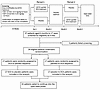 Figure 1
Trial design and participant disposition. The overall design of the trial, in which participants with PDCD were randomly allocated to 1 of 2 treatment sequences with GSTZ1 haplotype–guided dosing. Each participant received each treatment for 4 months. During the screening period, the diagnosis of PDCD due to known pathological variants was confirmed by molecular testing. All participants underwent GSTZ1 haplotype analysis for dose stratification. Parents/caregivers completed daily ObsRO surveys to demonstrate greater than 80% compliance for each parent/caregiver with the requirement for daily survey completion during the trial. DCA was supplied as a 50 mg/mL solution for oral administration. Dosages were stratified according to GSTZ1 haplotype: fast metabolizers (EGT carriers) received 12.5 mg/kg/12 hours and slow metabolizers (EGT noncarriers) received 6.25 mg/kg/12 hours. The dose could be altered to accommodate weight changes during the study. After the second treatment period, participants could enter an open-label phase, during which all participants received DCA with adjustments for weight changes. Parents/caregivers were given the option to complete the ObsRO survey daily for the first 30 days of the open-label phase and were requested to complete the survey on each of the 7 days before each open-label clinic visit.
As of the July 17, 2024, data cutoff, all 32 participants who entered the open-label phase of the study had completed at least 1 open-label visit (≥6 months). Twenty-nine participants remained on open-label treatment. The maximum exposure to DCA in the open-label phase was 1,111 days. The minimum duration of exposure was 227 days.
Efficacy. The parent-driven observer-reported outcomes (ObsRO) daily survey (25) originally contained 11 domains; the outcome measure agreed to with the FDA was adapted for this trial to include the 5 ObsRO domains related to motor function (weakness, incoordination, hypotonia/low muscle tone, rigidity/hypertonia, and involuntary movements) (ObsROmotor) graded on a Likert scale from 0 (mild or absent) to 4 (extremely severe), with the overall score ranging from 0 to 20. ObsROmotor least squares mean (LSM) changes from baseline were –0.49 and –0.79 for DCA and the placebo, respectively (LSM difference, 0.29; 95% CI, –0.60 to 1.19; P = 0.512).
An exploratory analysis recommended by the FDA found a floor effect (i.e., a lower limit), below which participants had a limited ability to improve, biasing the group toward worsening. A nonstatistically significant trend toward improvement was observed among participants who could both improve or decline, as defined by a baseline ObsROmotor score of at least 8 (n = 15, –1.12; P = 0.066). To assess the effect of longer durations of therapy, baseline ObsROmotor scores were compared with the most recent ObsROmotor score observation as of the open-label extension phase data cutoff date (July 17, 2024) (Table 2). Longer-term treatment (double blind plus open label) resulted in a significant treatment effect (P = 0.002).
Plasma lactate levels were evaluated as a secondary endpoint. DCA was associated with an average reduction in plasma lactate of –0.48 (0.82) mmol/L relative to the placebo (P = 0.006). The lactate-lowering effect of the drug was sustained throughout the double-blind and open-label periods (Figure 2). During the double-blind portion of the study, lactate levels of more than 2.0 mmol/L (the upper limit of normal) were observed in 11/34 (32%) and 18/34 (53%) of participants receiving DCA or the placebo, respectively. Of the 30 participants with available lactate data, 23 (77%) participants remained within the normal range of less than 2.0 mmol/L during the open-label period, suggesting a durable lactate-lowering benefit associated with long-term therapy.
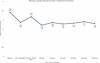 Figure 2
Average plasma lactate values at baseline, end of the placebo and DCA double-blind periods, and during open-label extension. Plasma lactate values are shown (mmol/L).
Five of the 34 randomized participants had seizures during the baseline period. The average (SD) within-individual difference for total seizure episodes, including those with no seizures, was 10.5 (66.7; P = 0.364). Several participants experienced a reduction in seizures during the trial. One had complete resolution of seizures while receiving DCA, 2 had clinically meaningful reductions in the average number of seizures, 1 remained stable while receiving DCA, and 1 did not have seizures after the baseline period. Neither electromyography nor nerve conduction velocity measurements were performed on any participant.
There was no statistically significant difference between groups for the average (SD) total number of hospitalizations/emergency department visits (–0.1 [1.14]) or vomiting episodes (4.3 [42.1]).
Safety. No patient was metabolically decompensated at entry into the trial. Twenty-five (73.5%) participants reported 76 adverse events during treatment with DCA, and 27 (79.4%) participants reported 73 adverse events during treatment with the placebo (Table 3), including constipation, diarrhea, fatigue, and muscular weakness in the DCA group and cyclic vomiting syndrome, flatulence, and salivary hypersecretion in the placebo group.
During the double-blind portion of the study, there were no events of peripheral neuropathy. During the open-label extension, 1 event of mild neuropathy that was possibly related to therapy occurred after 18 months of treatment in a participant aged 17.5 years. One participant discontinued DCA treatment for personal family reasons after completing the double-blind portion of the study and died of pneumonia caused by SARS-CoV-2 infection 3 months later.
Seventy percent (24 of 34) of participants reported being on a ketogenic diet at baseline. The ketogenic diet ratio (proportion of fat to carbohydrate plus protein calories) mostly ranged from 2.5:1 to 4.1:1 based on individual patient food diaries. The overall change in plasma ketone β-OHB levels was evaluated as part of the research laboratory analysis for monitoring ketosis status, which was undertaken for all participants, regardless of ketogenic diet adherence. Among participants in the intent-to-treat population, individuals receiving DCA had an average (SD) change of β-OHB from baseline of 0.23 (1.40) mmol/L [2.39 mg/dl] vs. –0.20 (0.80) mmol/L [2.08 mg/dl] for participants receiving the placebo. The overall treatment effect average β-OHB difference of 0.44 (0.26) was not statistically significant (P = 0.098). In the 24 participants who were adherent to a ketogenic diet (included β-OHB values for baseline and end-of-treatment periods and a baseline β-OHB > 0.3 mmol/L), the average baseline β-OHB was 2.7 mmol/L. After treatment with DCA in the double-blind portion of the study, the average β-OHB level increased nonsignificantly to 3.0 mmol/L, whereas a decrease to 2.3 mmol/L was observed after treatment with the placebo (average difference DCA vs. placebo 0.6 mmol/L). Elevations in β-OHB stabilized in most participants and did not appear to continue to rise on longer-term DCA exposure (>12 months). No events of ketoacidosis were reported.
Survival. Of the 34 DCA-treated participants in the trial, 33 (97%) were eligible for this analysis; 1 participant was excluded for having a non-PDHA1 pathogenic variant. After exclusion of those who had previously received DCA (n = 6) and those whose last known age was less than or equal to the minimum age at DCA initiation in the DCA treatment cohort (n = 13), 34 participants were identified from the natural history cohort from DeBrosse et al. (26). Comparisons of the pathological variants between the DCA-treatment participants in this study and the untreated natural history cohort were similar (Table 4). The degree of mutational concordance between the 2 patient cohorts — this study and the natural history cohort — were also similar (Table 5). Using sex and age at PDCD onset, plus assigning a matched index date, 28 DCA-treated participants were 1:1 matched to untreated participants. The average age (SD) at the index date was 5.1 (± 5.1) years, and 71.4% were female.
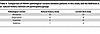 Table 4
Comparison of PDHA1 pathological variants between patients in this study and the DeBrosse et al. natural history controls (34 participants/group)
When comparing survival of DCA-treated participants with the untreated natural history cohort, differences in age at PDCD onset after imputation remained between the DCA-treated and untreated groups (average age, 0.4 vs. 1.9 years). Furthermore, differences were seen in the implementation of a ketogenic diet (64.3% vs. 71.4%, standardized difference [SDiff] = 0.15), as well as in the use of vitamins and supplements as background therapies: thiamine was taken by 64.3% and 75.0% (SDiff = 0.24) and l-carnitine by 32.1% and 53.6% (SDiff = 0.44) in the DCA-treated and untreated groups, respectively (Table 6). Levetiracetam, the most commonly used antiseizure medication, was administered to 17.9% of participants in the treatment group, whereas phenobarbital and topiramate were the most frequently used antiseizure medications in the untreated group (21.4% each; Table 6). Hypotonia (96.4% vs. 78.6%; SDiff = 0.56) and developmental delay/intellectual disability (78.6% vs. 89.3%; SDiff = 0.30) were the most common signs and symptoms of PDCD in the treated and untreated groups (Table 6). Seizures were reported for 32.1% of the DCA-treated and 53.6% of the untreated participants (SDiff = 0.44) (Table 6). Across 39.9 person-years in the untreated natural history cohort, 4 deaths occurred, for an incidence rate (95% CI) of 10.02 (2.73–25.65) deaths per 100 person-years. In the DCA treatment group, 59.3 person-years of follow-up were included, and no deaths of participants remaining on DCA had occurred as of July 24, 2024. The resulting incidence rate (95% CI) was 0.00 (0.00–5.05) deaths per 100 person-years (P = 0.027) (Figure 3). As reported, 1 patient in our cohort had PDCD due to a homologous pathological variant affecting PDHX and was therefore excluded from the survival analysis. However, the participant with the PDHX variant was included in all of the other phase III clinical trial analyses.
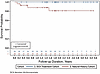 Figure 3
Overall survival in the sex- and age-matched groups with number of participants at risk. Overall survival was assessed using Kaplan-Meier curves and a log-rank test.
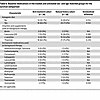 Table 6
Baseline medications in the treated and untreated sex- and age-matched groups for the survival comparison


