
Research ArticleCell biologyPulmonology
Open Access |  10.1172/jci.insight.199660
Pulmonary fibroblast subsets demonstrate differentially enriched signaling pathways during fibrosis resolution and repair
Daniel G. Foster,1 Nomin Javkhlan,2 Bart P. Black,2 Brian E. Vestal,3 David W.H. Riches,2,4,5,6 and Elizabeth F. Redente1,2,4
1Department of Pharmaceutical Sciences, University of Colorado School of Pharmacy, Aurora, Colorado, USA.
2Department of Pediatrics, and
3Center for Genes, Environment and Health, National Jewish Health, Denver, Colorado, USA.
4Division of Pulmonary, Allergy and Critical Care Medicine, Department of Medicine, and
5Department of Immunology and Microbiology, University of Colorado Anschutz Medical Campus, Aurora, Colorado, USA.
6Department of Research, Veterans Affairs Eastern Colorado Health Care System, Aurora, Colorado, USA.
Address correspondence to: Elizabeth F. Redente, National Jewish Health, 1400 Jackson St., A547, Denver, Colorado, 80206, USA. Phone: 303.398.1548; Email: RedenteE@njhealth.org. DGF’s present address is: Aetia Scientific Collaborative LLC, Boulder, Colorado, USA.
Find articles by
Foster, D.
in:
PubMed
|
Google Scholar
|

1Department of Pharmaceutical Sciences, University of Colorado School of Pharmacy, Aurora, Colorado, USA.
2Department of Pediatrics, and
3Center for Genes, Environment and Health, National Jewish Health, Denver, Colorado, USA.
4Division of Pulmonary, Allergy and Critical Care Medicine, Department of Medicine, and
5Department of Immunology and Microbiology, University of Colorado Anschutz Medical Campus, Aurora, Colorado, USA.
6Department of Research, Veterans Affairs Eastern Colorado Health Care System, Aurora, Colorado, USA.
Address correspondence to: Elizabeth F. Redente, National Jewish Health, 1400 Jackson St., A547, Denver, Colorado, 80206, USA. Phone: 303.398.1548; Email: RedenteE@njhealth.org. DGF’s present address is: Aetia Scientific Collaborative LLC, Boulder, Colorado, USA.
Find articles by Javkhlan, N. in: PubMed | Google Scholar
1Department of Pharmaceutical Sciences, University of Colorado School of Pharmacy, Aurora, Colorado, USA.
2Department of Pediatrics, and
3Center for Genes, Environment and Health, National Jewish Health, Denver, Colorado, USA.
4Division of Pulmonary, Allergy and Critical Care Medicine, Department of Medicine, and
5Department of Immunology and Microbiology, University of Colorado Anschutz Medical Campus, Aurora, Colorado, USA.
6Department of Research, Veterans Affairs Eastern Colorado Health Care System, Aurora, Colorado, USA.
Address correspondence to: Elizabeth F. Redente, National Jewish Health, 1400 Jackson St., A547, Denver, Colorado, 80206, USA. Phone: 303.398.1548; Email: RedenteE@njhealth.org. DGF’s present address is: Aetia Scientific Collaborative LLC, Boulder, Colorado, USA.
Find articles by Black, B. in: PubMed | Google Scholar
1Department of Pharmaceutical Sciences, University of Colorado School of Pharmacy, Aurora, Colorado, USA.
2Department of Pediatrics, and
3Center for Genes, Environment and Health, National Jewish Health, Denver, Colorado, USA.
4Division of Pulmonary, Allergy and Critical Care Medicine, Department of Medicine, and
5Department of Immunology and Microbiology, University of Colorado Anschutz Medical Campus, Aurora, Colorado, USA.
6Department of Research, Veterans Affairs Eastern Colorado Health Care System, Aurora, Colorado, USA.
Address correspondence to: Elizabeth F. Redente, National Jewish Health, 1400 Jackson St., A547, Denver, Colorado, 80206, USA. Phone: 303.398.1548; Email: RedenteE@njhealth.org. DGF’s present address is: Aetia Scientific Collaborative LLC, Boulder, Colorado, USA.
Find articles by Vestal, B. in: PubMed | Google Scholar
1Department of Pharmaceutical Sciences, University of Colorado School of Pharmacy, Aurora, Colorado, USA.
2Department of Pediatrics, and
3Center for Genes, Environment and Health, National Jewish Health, Denver, Colorado, USA.
4Division of Pulmonary, Allergy and Critical Care Medicine, Department of Medicine, and
5Department of Immunology and Microbiology, University of Colorado Anschutz Medical Campus, Aurora, Colorado, USA.
6Department of Research, Veterans Affairs Eastern Colorado Health Care System, Aurora, Colorado, USA.
Address correspondence to: Elizabeth F. Redente, National Jewish Health, 1400 Jackson St., A547, Denver, Colorado, 80206, USA. Phone: 303.398.1548; Email: RedenteE@njhealth.org. DGF’s present address is: Aetia Scientific Collaborative LLC, Boulder, Colorado, USA.
Find articles by
Riches, D.
in:
PubMed
|
Google Scholar
|
1Department of Pharmaceutical Sciences, University of Colorado School of Pharmacy, Aurora, Colorado, USA.
2Department of Pediatrics, and
3Center for Genes, Environment and Health, National Jewish Health, Denver, Colorado, USA.
4Division of Pulmonary, Allergy and Critical Care Medicine, Department of Medicine, and
5Department of Immunology and Microbiology, University of Colorado Anschutz Medical Campus, Aurora, Colorado, USA.
6Department of Research, Veterans Affairs Eastern Colorado Health Care System, Aurora, Colorado, USA.
Address correspondence to: Elizabeth F. Redente, National Jewish Health, 1400 Jackson St., A547, Denver, Colorado, 80206, USA. Phone: 303.398.1548; Email: RedenteE@njhealth.org. DGF’s present address is: Aetia Scientific Collaborative LLC, Boulder, Colorado, USA.
Find articles by
Redente, E.
in:
PubMed
|
Google Scholar
|
Published May 5, 2026 - More info
JCI Insight. 2026;11(13):e199660. https://doi.org/10.1172/jci.insight.199660.
© 2026 Foster et al. This work is licensed under the Creative Commons Attribution 4.0 International License. To view a copy of this license, visit http://creativecommons.org/licenses/by/4.0/.


-
Results
Col1a1+, Plin2+, and Acta2+ pulmonary fibroblast subsets expand during bleomycin-induced fibrosis and contract during resolution. In order to define the transcriptional landscape of fibroblast subsets during homeostasis, fibrosis and resolution, we labeled Col1a1+, Plin2+, and Acta2+ fibroblast subsets with TdTomato (TdTm+) at time 0 for controls, or beginning 4 days after single-dose bleomycin injury during the fibroproliferative phase to capture fibroblast subsets that are actively expressing these subset markers during fibrosis development, to account for their phenotypic plasticity during this time (Figure 1A). At peak fibrosis 3 weeks after bleomycin injury, there was a significant increase in total lung collagen content by hydroxyproline assay and increased numbers of TdTm+ fibroblasts (lineage negative: CD45–, EpCAM–, CD31–) by flow cytometry in all subsets (Figure 1, B and C). By 8 weeks, spontaneous resolution occurred, as demonstrated by near-normal histology and a return of hydroxyproline collagen levels and TdTm+ fibroblast numbers to naive levels in all subsets (Figure 1, B and C) (16). Fluorescence imaging of TdTm+ cells in naive lung sections showed Col1a1+ matrix–producing fibroblasts within the alveolar interstitium; Plin2+ alveolar fibroblasts located within the parenchyma adjacent to proSPC+ alveolar type 2 (AT2) cells, which also express Plin2; and Acta2+ cells surrounding the vasculature and large airways (Figure 1D). At peak fibrosis, all 3 TdTm+ subsets were present within fibrotic areas, but after resolution, their localization was similar to that of the naive lung (Figure 1D).
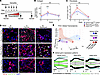 Figure 1
Characterization of fibroblast subsets during fibrosis and spontaneous resolution. (A) Schematic of in vivo tamoxifen treatment and harvest times after bleomycin. (B) Total lung collagen levels quantified by hydroxyproline in the lungs over time after bleomycin, n = 5 mice/group. (C) Flow cytometry quantification of TdTm+ fibroblasts in each subset over time, n = mice/group. (D) Representative 20× fluorescence images from fixed frozen lung of naive, 3-week and 8-week lungs. TdTomato (red); pro-SPC+ AT2 cells (green); nuclei (DAPI, blue). (E) Principal-Component Analysis (PCA) plots of bulk RNA-seq subsets over time. (Col1a1+, blue; Plin2+, purple; Acta2+, red; naive, open circles; 3 weeks, bright circles; 8 weeks, dark circles). (F) Sankey plots categorizing differentially expressed genes (DEGs) across time into fibrosis-associated (black), resolution-associated (green), and remodeling-associated (teal) trajectories. Data are shown as mean ± SEM. **P < 0.01, ***P < 0.001, 3-week bleomycin compared with 0 and 8 weeks by 2-way ANOVA between all 3 subset samples.
PCA plots of bulk RNA-seq from isolated TdTm+ fibroblasts indicate significant global transcriptional changes in all 3 populations at all timepoints (Figure 1E and Supplemental Figure 2). In naive lungs, Col1a1+, Plin2+, and Acta2+ subsets showed large differences in their transcriptomes, as would be expected for distinct fibroblast subsets. The Col1a1+ subset had 5,271 differentially expressed genes (DEGs), the Plin2+ subset had 892 DEGs, and the Acta2+ subset had 1,729 DEGs. Gene set enrichment analysis (GSEA) was performed on these gene sets, and uniquely enriched biological processes were identified using the Gene Ontology (GO) database resulting in 517, 131, and 106 significantly enriched Gene Ontology:Biological Process (GO:BP) terms in Col1a1+, Plin2+, and Acta2+ fibroblast subsets, respectively. In the Col1a1+ subset, enriched pathways were associated with Wnt signaling and regulation of ECM and TGF-β receptor signaling. This suggests that, at baseline, these cells may play a central role in processes associated in collagen fibril organization, cellular response to growth factors, and regulation of epithelial cell populations through managing their migration and proliferation (Supplemental Figure 3A). Plin2+ fibroblasts were enriched for genes associated with lipid regulation and metabolic control, along with autophagy and organelle communication and terms associated with regulation of alveolar niche cell growth and tissue architecture (Supplemental Figure 3B). At baseline, the Acta2+ subset was mostly composed of smooth muscle cells, and its transcriptomic signature was differentially enriched for pathways associated with immune cell regulation, chemotaxis, and migration along with the positive regulation of Erk1 and Erk2, which is a critical pathway for cell motility and contraction regulated by Acta2 (Supplemental Figure 3C). We also examined the 2,595 genes that were differentially expressed between all 3 subsets at baseline. The 153 GO:BP pathways were associated with vascular development (angiogenesis, endothelial cell sprouting, and endothelial cell barrier function) along with pathways linked to TGF-β and VEGF signaling (Supplemental Figure 3D).
We also observed a significant transcriptional shift during fibrosis, with all subsets displaying transcriptional similarity related to fibrosis-associated pathways (Figure 1E and Supplemental Figure 2). Interestingly, after 8 weeks, the global transcriptional profile of all subsets converged and were transcriptionally more similar to each other than in their naive states (Figure 1E and Supplemental Figure 2). However, while the Plin2+ and Acta2+ population transcription profiles moved toward their respective naive states, the Col1a1+ fibroblasts moved farther away from their naive profile, maintaining a significantly different transcriptomic profile after fibrosis resolution (Figure 1E and Supplemental Figure 2).
Defining global DEG transcriptional patterns during fibrosis resolution and repair. Sankey plots were generated to define a more granular description of the global patterns of DEGs over the 8-week time course and to organize the data into 3 broad gene expression profile patterns: (a) fibrosis-associated, (b) remodeling-associated, and (c) resolution-associated (Figure 1F). Fibrosis-associated DEGs were defined as genes that were significantly different at 3 weeks after bleomycin compared with naive and then returned to naive levels by 8 weeks. Fibrosis-associated DEGs were highly enriched in Plin2+ and Acta2+ fibroblasts, respectively, encompassing 55.13% (4,037 genes/total DEGs) and 54.15% (5,282 genes/total DEGs) of DEGs across the time course, versus only 10.29% (1,102 genes/total DEGs) for Col1a1+ fibroblasts (Figure 1F). Remodeling-associated genes were defined as genes with a significant differential expression at 3 weeks compared with naive that continued to have significant differential expression at 8 weeks compared with naive. These genes contained a similar portion of total DEGs across all 3 subsets, with 20.47% (2,192 genes/total DEGs), 20.84% (1,526 genes/total DEGs), and 27.07% (2,641 genes/total DEGs) in Col1a1+, Plin2+, and Acta2+ fibroblasts, respectively (Figure 1F, teal lines). Resolution-associated DEGs were defined as genes that did not change at 3 weeks compared with naive but showed significant differential expression (up or down) at 8 weeks compared with naive. These were highly enriched in Col1a1+ fibroblasts encompassing 69.24% (7,414 genes/total DEGs) of DEGs across the time course compared with only 24.03% (1,760 genes/total DEGs) and 18.78% (1,832 genes/total DEGs) for Plin2+ and Acta2+ fibroblasts, respectively (Figure 1F). The large differences in the fibrosis- and resolution-associated gene expression patterns between the Col1a1+ fibroblasts and the other 2 subsets explains the difference in the transcriptional profiles between subsets in the global PCA plot (Figure 1E). Additionally, it suggests that Col1a1+ fibroblasts have: (a) persistent reprogramming from the naive state even after fibrosis resolution and (b) a distinct transcriptional program during resolution that is associated with repair in addition to extinguishing profibrotic gene expression, a gene expression profile that was not observed in the Plin2+ and Acta2+ subsets.
Defining fibrosis-associated DEG transcriptional patterns in fibroblast subsets. Next, we examined the gene expression profile and associated functional pathways of the fibrosis-associated DEGs in the 3 fibroblast subsets (Figure 2A). Initially, 1,102 fibrosis-associated DEGs were identified for the Col1a1+ subset, 4,037 for the Plin2+, and 5,282 for the Acta2+. These were further narrowed down to only those genes that were significantly changed (|logFC| ≥ 1) at 3 weeks, which resulted in 146, 1,314, and 1,129 genes for analysis in the Col1a1+, Plin2+, and Acta2+ fibroblast subsets, respectively (Supplemental Figure 4). GSEA was performed on these gene sets, and enriched biological processes were identified using the GO database resulting in 54, 441, and 143 significantly enriched GO:BP terms in Col1a1+, Plin2+, and Acta2+ fibroblast subsets, respectively. Given the large number of significantly enriched gene GO:BP terms that were identified, enrichment results were further organized and consolidated into 14 biological themes using semantic similarity clustering (SSC) across the fibrosis-associated DEGs: apoptosis, endothelium, epithelium, ECM, immune system, lipid production and storage, mesenchyme, metabolism, nervous system, cellular migration, signaling, supramolecular structure, tissue repair and development, and wound healing (Figure 2B). SSCs that were enriched across all 3 subsets included biological processes associated with mesenchyme, ECM, wound healing, and tissue repair and development (Figure 2B). Within 8 of the SSCs, we determined the significantly expressed GO:BP pathways and the top 5 upregulated and downregulated DEGs across the subsets. All 3 subsets had significant enrichment in mesenchyme-associated GO:BP terms, including: regulation of fibroblast proliferation, mesenchyme morphogenesis and cell migration, and vascular associated smooth muscle cell development (Figure 3A). The most significantly increased genes associated with these biological processes across the subsets, including Tgfb1, Lrg1, Notch1, Col1a1, and Eng, while Clu, Pdpn, E2f1, Radil, and Sema3b represented the most significantly decreased genes (Figure 3A). GO:BP terms enriched under ECM, wound healing, and tissue repair and development showed overlap across the 3 subsets as well as enriched terms that were specific for each subset (Figure 3, B–D). Biological terms associated with the epithelium and endothelium were more heavily enriched in the Plin2+ and Acta2+ subsets compared with the Col1a1+ fibroblasts in the fibrosis-associated DEGs (Figure 3, E and F). Top enriched GO:BP terms for these clusters include regulation of epithelial cell migration and proliferation as well as regulation of endothelial cell migration and proliferation. The top genes associated with these terms that were significantly increased included Sox9 and Ppm1f for epithelial processes and Prkd2 and Bmpr2 for endothelial processes (Figure 3, E and F). SSCs associated with apoptosis and lipid storage and production had significant enrichment of GO:BP terms associated with the Col1a1+ and Plin2+ subsets compared with the Acta2+ subset, including regulation of apoptotic processes, regulation of programmed cell death, cellular response to lipid, and regulation of cholesterol storage (Figure 3, G and H). Fas and Bcl2l1 were the top genes with significant upregulation associated with apoptosis (Figure 3G). These results show that we have captured many of the transcriptional changes that have been previously reported in pulmonary fibroblasts during fibrosis development, including changes to ECM organization and the activation of profibrotic fibroblast programming via Tgfb, Notch, and Wnt signaling in all subsets. This suggests that each fibroblast subset is involved in the fibrotic process. Additionally, this suggests that inducible Cre drivers activated during the fibroproliferative process may target multiple profibrotic fibroblast subsets. Apoptotic signaling pathways were enriched in Col1a1+ and Plin2+ fibroblasts, which proceeds the endogenous apoptotic wave that fibroblasts undergo prior to fibrosis resolution beginning 3 weeks after bleomycin (16). Additionally, we identified a subset-specific pathway enrichment associated with epithelial cells in the Plin2+ fibroblast subset and endothelial cells in the Acta2+ fibroblasts.
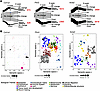 Figure 2
Fibrosis-associated genes and biological pathways are enriched in the Plin2+ and Acta2+ subsets at 3 weeks. (A) Sankey plots for fibrosis-associated DEG transcriptional programing in black, across subsets. Fibrosis-associated DEGs are genes significantly altered at 3 weeks versus naive (FDR ≤ 0.05) and return to baseline by 8 weeks versus naive (FDR ≥ 0.05). (B) Semantic-similarity clustering of significantly enriched Gene Ontology Biological Process (GO:BP) terms (adjusted P ≤ 0.05) derived from highly changed fibrosis-associated DEGs (FDR ≤ 0.05, |log2FC| ≥ 1) identified 14 semantic similarity clusters (SSC). Dots are individual GO:BP terms; dot size reflects the number of genes in the term; color indicates SSC.
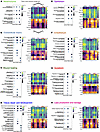 Figure 3
Transcriptional programming of fibrosis-associated genes are enriched in the Plin2+ and Acta2+ subsets at 3 weeks. (A–H) Dot-plots summarizing representative enriched GO:BP terms and top 5 up- and downregulated genes (log[TPM]) over the time course for selected SSCs based on changes in the Col1a1+ subset: (A) mesenchyme; (B) extracellular matrix; (C) wound healing; (D) tissue repair and development; (E) epithelial regulation; (F) endothelial regulation; (G) apoptosis; and (H) lipid production and storage. Dot size indicates gene count; color indicates adjusted P value. Black schematic over heatmap in A indicates expected pattern of gene changes over the time course from the Sankey plot.
Remodeling-associated DEG transcriptional patterns are enriched in Col1a1+ and Acta2+ fibroblast subsets. Utilizing the same strategy, we examined the fibroblast subsets for SSC enrichment in the DEGs with the remodeling-associated expression profile. These were identified as DEGs that were significantly different between naive and fibrotic lungs (3 weeks) and remained significant at 8 weeks (Figure 4A, teal lines). There were initially 2,192, 1,526, and 2,641 remodeling-associated DEGs for the Col1a1+, Plin2+, and Acta2+ subsets, respectively (Figure 4A), that were selected down to those with high expression changes (|logFC| ≥ 1) leaving 1,461, 419, and 1,066 genes for Col1a1+, Plin2+, and Acta2+ subsets, respectively, for analysis (Supplemental Figure 5). This resulted in 204, 28, and 249 significantly enriched GO:BP terms in Col1a1+, Plin2+, and Acta2+ fibroblast subsets, respectively, consolidated into 14 SSC biological themes that were enriched in at least 1 subset including: apoptosis, endothelium, epithelium, ECM, immune system, lipid production and storage, mesenchyme, adhesion, nervous system, cellular migration, signaling, supramolecular structure, tissue repair and development, and wound healing (Figure 4B). Only 2 SSCs were enriched across all 3 subsets: ECM and tissue repair and development. The top enriched GO:BP terms in these SSCs included ECM organization, lung development, and circulatory system development (Figure 4B and Figure 5, A and B). The most significantly upregulated genes associated with these biological processes across all subsets included Ddr2, Col14a1, Col3a1, Tgfbr2, Tgfbr1, and Wnt5a (Figure 5. A and B). SSCs associated with the mesenchyme, wound healing, the epithelium, endothelium, and lipid production and storage were only enriched within the Col1a1+ and Acta2+ subsets (Figure 4B and Figure 5, D–H). The top enriched GO:BP terms associated with these biological processes include regulation of fibroblast proliferation, wound healing, positive regulation of epithelial cell proliferation, positive regulation of endothelial cell differentiation, regulation of fat cell differentiation, and cellular response to lipid (Figure 5, D–H). Apoptosis pathways were exclusively enriched in the Acta2+ subset with negative regulation of programmed cell death as the most significantly enriched and the most significantly associated DEGs were Il6 and Tfrc (Figure 5C). The most significantly enriched DEGs common to both subsets include Igf1 and Gcnt2 for mesenchyme terms, Fgf2 and Emp2 for wound healing terms, Sfrp1 and Cdkn2b for epithelial terms, Fgf2 and Emp2 for endothelium-associated terms, and Cebpb and Itbg3 for lipid terms (Figure 5, D–H). Interestingly, the Plin2+ fibroblasts had the least amount of DEGs and enriched pathways associated with the remodeling-associated gene expression pattern and compared with the Col1a1+ and Acta2+ subsets. They both had robust and significantly sustained pathway enrichment associated with mesenchyme, ECM, and interactions with other lung cell populations, suggesting a differential role in repair processes between these unique subsets.
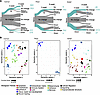 Figure 4
Biological pathways associated with remodeling transcriptional profiles are enriched in Col1a1+ and Acta2+ subsets. (A) Sankey plots for remodeling-associated DEG transcriptional programing in teal, across subsets. Remodeling-associated DEGs are genes significantly altered at 3 weeks versus naive (FDR ≤ 0.05) and either remain altered or continue to be significantly altered (FDR ≤ 0.05) at 8 weeks compared with naive (FDR ≤ 0.05). (B) Semantic-similarity clustering of significantly enriched Gene Ontology Biological Process (GO:BP) terms (adjusted P ≤ 0.05) derived from highly changed remodeling-associated DEGs (FDR ≤ 0.05, |log2FC| ≥ 1) identified 14 semantic similarity clusters (SSCs). Dots are individual GO:BP terms; dot size reflects the number of genes in the term; color indicates SSC.
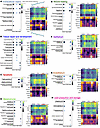 Figure 5
Remodeling-associated transcriptional profile genes are enriched in Col1a1+ and Acta2+ subsets. (A–H) Dot plots summarizing representative enriched GO:BP terms and top 5 up- and downregulated genes (log[TPM]) over the time course for selected SSCs based on changes in the Col1a1+ subset: (A) extracellular matrix, (B) tissue repair and development, (C) regulation of apoptosis, (D) mesenchymal regulation (E) wound-healing, (F) epithelial, and (G) endothelial regenerative pathways, as well as (H) lipid production and storage. Dot size indicates gene count; color indicates adjusted P value. Teal schematic over heatmap in A indicates expected pattern of gene changes over the time course from the Sankey plot.
Resolution-associated DEG transcriptional patterns are enriched in the Col1a1+ fibroblast subset. Finally, we examined genes that were defined as resolution associated. These were identified as DEGs that were not significantly different between naive and fibrotic lungs but which had significant differential expression between weeks 3 and 8 (Figure 6A). There were 7,414, 1,760, and 1,832 resolution-associated DEGs (FDR ≤ 0.05) for the Col1a1, Plin2, and Acta2 subsets, respectively (Figure 6A), with highly changed DEGs (|logFC| ≥ 1) leaving 2,348, 122, and 182 genes for Col1a1+, Plin2+, and Acta2+ subsets respectively, for analysis examined by GO:BP GSEA and SSC (Supplemental Figure 6). This resulted in 386, 38, and 7 significantly enriched GO:BP terms in Col1a1+, Plin2+, and Acta2+ fibroblast subsets, respectively, that were consolidated into 14 SSCs themes identified across 1 or more subset with resolution-associated DEGs including: apoptosis, endothelium, epithelium, ECM, immune system, lipid production and storage, mesenchyme, adhesion, nervous system, cellular migration, signaling, supramolecular structure, tissue repair and development, and wound healing. None were enriched across all 3 subsets (Figure 6B). SSCs enriched for apoptosis, mesenchymal cell interactions, and tissue repair and development in the Col1a1+ and Plin2+ subsets (Figure 6B and Figure 7, A–C). The top enrichment terms associated with these clusters included negative regulation of apoptotic processes, vascular smooth muscle cell development, mesenchymal cell migration and cell transition, and embryonic organ and lung development (Figure 7, A–C). The most significant genes associated with apoptosis included Src and Agp1. Within the mesenchyme cluster, Bmp4 and Hgf1 were significantly enriched, and Tgfb2 and Hey1 were enriched within the tissue repair and development cluster (Figure 7, A–C). SSCs that were significantly enriched in Col1a1+ fibroblasts compared with Plin2+ and Acta2+ subsets included terms associated with wound healing, ECM, epithelium, endothelium, and lipid production and storage (Figure 7, D–H). GO:BP pathways associated with wound healing were enriched for angiogenesis and platelet activation, with the most significant DEGs being Fgf18, Vegfb, Vegfd, and Fgf1 (Figure 7D). ECM-associated GO:BP pathways were enriched for ECM matrix organization and ECM structure organization with significant DEGs being: Mtfap4, Fibn5, Src, Ttgb2, and Jag1 (Figure 7E). The Col1a1+ subset had significant enrichment for GO:BP terms associated with the epithelium and endothelium. These included positive regulation of epithelial cell migration, proliferation and branching morphogenesis of epithelial tubes (significant DEGs: Fgf10 and Ctnnb1), regulation of endothelial cell migration, blood vessel endothelial cell migration, endothelial cell migration, and proliferation and establishment of the endothelial barrier (significant DEGs: Angpt1, Prkca, and Prkd1) (Figure 7, F and G). Finally, the GO:BP terms associated with lipid production and storage that were enriched in the Col1a1+ fibroblasts were cellular responses to lipid, glycolipid, and glycosphingolipid metabolic processes and regulation of lipid kinase activity and top DEGs, including St6galnac6 and B3galnt1, Rara, and Gltp1 (Figure 7H). Thus, the Col1a1+ fibroblast subset has a significantly more robust enrichment of SSC, GO:BP terms, and DEGs associated with the fibrosis resolution phase after bleomycin compared with the 2 other subsets. Using the significantly up- and downregulated DEGs from the Col1a1+ resolution–associated genes at 8 weeks after bleomycin, we enriched for associated transcription factors (TF) and identified 50 significantly upregulated TFs, while 322 were downregulated. The top 10 upregulated TFs were Jun, Runx2, Mbd3, Cebpd, Zfx, Gata4, Esr1, Myc, Oling2, and Ctcf (Supplemental Table 1). The top 10 downregulated TFs were Mecom, Irf8, Hnf1a, Smrt, Spi1, Ncor, Spfi1, Tcf7, Foxo1, and Af4 (Supplemental Table 1). TFs and their associated genes were assessed by GO:BP pathway analysis. Upregulated TFs Jun, Runx2, and Myc were associated with enriched pathways for metabolic processes, lipid modification, fatty acid oxidation, and ER stress. Mbd3, Cebpd, Gata4, Esr1, and Ctcf were enriched for pathways associated with lung development, cellular differentiation, and regulation of cell communication (Supplemental Table 1). Interestingly, the predominant enriched pathways associated with the downregulated TFs were related to regulation of the immune response, leukocyte activation, cellular response to cytokine signaling, and regulation of lymphocytes, B cells, and myeloid cell differentiation (Supplemental Table 1). Taken together, the enrichment of pathways associated with regeneration of epithelial and endothelial cell populations along with wound repair pathways suggest an active role the Col1a1+ subset in the regeneration of the fibrotic lung toward a homeostatic structure.
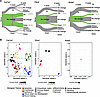 Figure 6
Col1a1+ fibroblast subset highly express resolution associated transcriptional pathways after fibrosis resolution. (A) Sankey plots for resolution-associated DEG transcriptional programing in green, across subsets. Resolution-associated DEGS are genes with significant enrichment only between 3 and 8 weeks (FDR ≤ 0.05). (B) Semantic-similarity clustering of significantly enriched Gene Ontology Biological Process (GO:BP) terms (adjusted P ≤ 0.05) derived from highly changed resolution-associated DEGs (FDR ≤ 0.05, |log2FC| ≥ 1) identified 14 semantic similarity clusters (SSCs). Dots are individual GO:BP terms; dot size reflects the number of genes in the term; color indicates SSC.
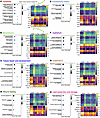 Figure 7
Resolution-associated transcriptional profile genes are selectively enriched in the Col1a1+ fibroblast subset after fibrosis resolution. (A–H) Dot-plots summarizing representative enriched GO:BP terms and top 5 up- and down-regulated genes (log(TPM)) over the time course for selected SSCs based on changes in the Col1a1+ subset: (A) regulation of apoptosis, (B) mesenchymal regulation, (C) tissue repair and development, (D) wound-healing, (E) extracellular matrix, (F) epithelial and (G) endothelial regenerative pathways, (H) lipid production and storage. Dot size = gene count; color = adjusted P value. Green schematic over heatmap in A indicates expected pattern of gene changes over the time course from the Sankey plot.


