
Research ArticleImmunologyInfectious diseaseInflammation
Open Access |  10.1172/jci.insight.198687
NK cell cytotoxicity is transiently enhanced during acute malaria and modulated by the host microenvironment
Pengjun Xi,1,2,3 Patrick A. Sandoz,4,5 Maximilian Julius Lautenbach,1,2,3 Eleni Bilev,6 Björn Önfelt,4,6 Anna Färnert,1,2,3 Quirin Hammer,6,7 and Christopher Sundling1,2,3
1Division of Infectious Diseases, Department of Medicine Solna, Stockholm, Sweden.
2Department of Infectious Diseases and
3Center for Molecular Medicine, Karolinska University Hospital, Stockholm, Sweden.
4Department of Applied Physics, Science for Life Laboratory, KTH Royal Institute of Technology, Stockholm, Sweden.
5Department of Materials Science and Engineering, Science for Life Laboratory, Uppsala University, Uppsala, Sweden.
6Center for Infectious Medicine, Department of Medicine Huddinge, Karolinska Institutet, Stockholm, Sweden.
7Institute of Immunology, Christian-Albrecht-University of Kiel, Kiel, Germany.
Address correspondence to: Christopher Sundling, Karolinska Sjukhuset, BioClinicum J7:20, Akademiska Stråket 1, 171 64, Solna, Stockholm, Sweden. Phone: 46.8.524.800.00; Email: christopher.sundling@ki.se.
Authorship note: PAS and MJL contributed equally to this work.
Find articles by Xi, P. in: PubMed | Google Scholar
1Division of Infectious Diseases, Department of Medicine Solna, Stockholm, Sweden.
2Department of Infectious Diseases and
3Center for Molecular Medicine, Karolinska University Hospital, Stockholm, Sweden.
4Department of Applied Physics, Science for Life Laboratory, KTH Royal Institute of Technology, Stockholm, Sweden.
5Department of Materials Science and Engineering, Science for Life Laboratory, Uppsala University, Uppsala, Sweden.
6Center for Infectious Medicine, Department of Medicine Huddinge, Karolinska Institutet, Stockholm, Sweden.
7Institute of Immunology, Christian-Albrecht-University of Kiel, Kiel, Germany.
Address correspondence to: Christopher Sundling, Karolinska Sjukhuset, BioClinicum J7:20, Akademiska Stråket 1, 171 64, Solna, Stockholm, Sweden. Phone: 46.8.524.800.00; Email: christopher.sundling@ki.se.
Authorship note: PAS and MJL contributed equally to this work.
Find articles by Sandoz, P. in: PubMed | Google Scholar
1Division of Infectious Diseases, Department of Medicine Solna, Stockholm, Sweden.
2Department of Infectious Diseases and
3Center for Molecular Medicine, Karolinska University Hospital, Stockholm, Sweden.
4Department of Applied Physics, Science for Life Laboratory, KTH Royal Institute of Technology, Stockholm, Sweden.
5Department of Materials Science and Engineering, Science for Life Laboratory, Uppsala University, Uppsala, Sweden.
6Center for Infectious Medicine, Department of Medicine Huddinge, Karolinska Institutet, Stockholm, Sweden.
7Institute of Immunology, Christian-Albrecht-University of Kiel, Kiel, Germany.
Address correspondence to: Christopher Sundling, Karolinska Sjukhuset, BioClinicum J7:20, Akademiska Stråket 1, 171 64, Solna, Stockholm, Sweden. Phone: 46.8.524.800.00; Email: christopher.sundling@ki.se.
Authorship note: PAS and MJL contributed equally to this work.
Find articles by Lautenbach, M. in: PubMed | Google Scholar
1Division of Infectious Diseases, Department of Medicine Solna, Stockholm, Sweden.
2Department of Infectious Diseases and
3Center for Molecular Medicine, Karolinska University Hospital, Stockholm, Sweden.
4Department of Applied Physics, Science for Life Laboratory, KTH Royal Institute of Technology, Stockholm, Sweden.
5Department of Materials Science and Engineering, Science for Life Laboratory, Uppsala University, Uppsala, Sweden.
6Center for Infectious Medicine, Department of Medicine Huddinge, Karolinska Institutet, Stockholm, Sweden.
7Institute of Immunology, Christian-Albrecht-University of Kiel, Kiel, Germany.
Address correspondence to: Christopher Sundling, Karolinska Sjukhuset, BioClinicum J7:20, Akademiska Stråket 1, 171 64, Solna, Stockholm, Sweden. Phone: 46.8.524.800.00; Email: christopher.sundling@ki.se.
Authorship note: PAS and MJL contributed equally to this work.
Find articles by Bilev, E. in: PubMed | Google Scholar
1Division of Infectious Diseases, Department of Medicine Solna, Stockholm, Sweden.
2Department of Infectious Diseases and
3Center for Molecular Medicine, Karolinska University Hospital, Stockholm, Sweden.
4Department of Applied Physics, Science for Life Laboratory, KTH Royal Institute of Technology, Stockholm, Sweden.
5Department of Materials Science and Engineering, Science for Life Laboratory, Uppsala University, Uppsala, Sweden.
6Center for Infectious Medicine, Department of Medicine Huddinge, Karolinska Institutet, Stockholm, Sweden.
7Institute of Immunology, Christian-Albrecht-University of Kiel, Kiel, Germany.
Address correspondence to: Christopher Sundling, Karolinska Sjukhuset, BioClinicum J7:20, Akademiska Stråket 1, 171 64, Solna, Stockholm, Sweden. Phone: 46.8.524.800.00; Email: christopher.sundling@ki.se.
Authorship note: PAS and MJL contributed equally to this work.
Find articles by Önfelt, B. in: PubMed | Google Scholar
1Division of Infectious Diseases, Department of Medicine Solna, Stockholm, Sweden.
2Department of Infectious Diseases and
3Center for Molecular Medicine, Karolinska University Hospital, Stockholm, Sweden.
4Department of Applied Physics, Science for Life Laboratory, KTH Royal Institute of Technology, Stockholm, Sweden.
5Department of Materials Science and Engineering, Science for Life Laboratory, Uppsala University, Uppsala, Sweden.
6Center for Infectious Medicine, Department of Medicine Huddinge, Karolinska Institutet, Stockholm, Sweden.
7Institute of Immunology, Christian-Albrecht-University of Kiel, Kiel, Germany.
Address correspondence to: Christopher Sundling, Karolinska Sjukhuset, BioClinicum J7:20, Akademiska Stråket 1, 171 64, Solna, Stockholm, Sweden. Phone: 46.8.524.800.00; Email: christopher.sundling@ki.se.
Authorship note: PAS and MJL contributed equally to this work.
Find articles by
Färnert, A.
in:
PubMed
|
Google Scholar
|

1Division of Infectious Diseases, Department of Medicine Solna, Stockholm, Sweden.
2Department of Infectious Diseases and
3Center for Molecular Medicine, Karolinska University Hospital, Stockholm, Sweden.
4Department of Applied Physics, Science for Life Laboratory, KTH Royal Institute of Technology, Stockholm, Sweden.
5Department of Materials Science and Engineering, Science for Life Laboratory, Uppsala University, Uppsala, Sweden.
6Center for Infectious Medicine, Department of Medicine Huddinge, Karolinska Institutet, Stockholm, Sweden.
7Institute of Immunology, Christian-Albrecht-University of Kiel, Kiel, Germany.
Address correspondence to: Christopher Sundling, Karolinska Sjukhuset, BioClinicum J7:20, Akademiska Stråket 1, 171 64, Solna, Stockholm, Sweden. Phone: 46.8.524.800.00; Email: christopher.sundling@ki.se.
Authorship note: PAS and MJL contributed equally to this work.
Find articles by Hammer, Q. in: PubMed | Google Scholar
1Division of Infectious Diseases, Department of Medicine Solna, Stockholm, Sweden.
2Department of Infectious Diseases and
3Center for Molecular Medicine, Karolinska University Hospital, Stockholm, Sweden.
4Department of Applied Physics, Science for Life Laboratory, KTH Royal Institute of Technology, Stockholm, Sweden.
5Department of Materials Science and Engineering, Science for Life Laboratory, Uppsala University, Uppsala, Sweden.
6Center for Infectious Medicine, Department of Medicine Huddinge, Karolinska Institutet, Stockholm, Sweden.
7Institute of Immunology, Christian-Albrecht-University of Kiel, Kiel, Germany.
Address correspondence to: Christopher Sundling, Karolinska Sjukhuset, BioClinicum J7:20, Akademiska Stråket 1, 171 64, Solna, Stockholm, Sweden. Phone: 46.8.524.800.00; Email: christopher.sundling@ki.se.
Authorship note: PAS and MJL contributed equally to this work.
Find articles by
Sundling, C.
in:
PubMed
|
Google Scholar
|
Published April 21, 2026 - More info
JCI Insight. 2026;11(11):e198687. https://doi.org/10.1172/jci.insight.198687.
© 2026 Xi et al. This work is licensed under the Creative Commons Attribution 4.0 International License. To view a copy of this license, visit http://creativecommons.org/licenses/by/4.0/.
Received: July 31, 2025; Accepted: April 6, 2026


-
Results
Time-dependent kinetics of NK cell subsets and protein expression in response to malaria infection. NK cells were assessed by spectral flow cytometry during acute symptomatic malaria and at convalescence (12 months after treatment) (n = 14 matched donors). NK cell subsets were gated for CD56bright, CD56dim, and CD56– cells (Figure 1A). To understand functional implications, we measured several proteins on the cell surface (CD8, CD57, NKG2A, and NKG2C) and intracellular (FcRγ, PLZF, perforin, and granzyme B) proteins (Supplemental Figure 1, A–C; supplemental material available online with this article; https://doi.org/10.1172/jci.insight.198687DS1).
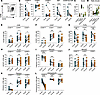 Figure 1
NK cell dynamics and protein expression during and after acute malaria. (A) Representative FACS plot showing gating strategy for NK cell subsets based on CD56 and CD16 expression. (B) Percent CD56bright, CD56dim, CD56–, proliferating (Ki67+), and activated (CD38+HLA-DR+) cells out of total NK cells. (C) Percent Ki67+ cells among NK cell subsets and activated NK cells. (D) The ratio between Ki67+ cells out of total NK cells, indicating preferential enrichment. (E–L) Expression of NK cell markers (E) CD8, (F) CD57, (G) FcRγ, (H) PLZF, (I) NKG2A, (J) NKG2C, (K) perforin, and (L) granzyme B among CD56bright, CD56dim, and CD56– NK cells. Protein levels were compared between acute (blue circles) and convalescent (12 month; orange boxes) time points for matched donor samples (n = 14). Statistical analyses for (B and E–L) were done using 2-tailed paired t tests. Analysis for (D) was done using one-way ANOVA followed by Tukey’s post hoc test. *P < 0.05, **P < 0.01, ***P < 0.001, ****P < 0.0001.
The frequency of CD56bright NK cells was significantly increased during acute malaria compared with convalescence, while the frequency of CD56dim cells was reduced (Figure 1B). This was primarily due to reduced counts of CD56dim NK cells during acute infection (Supplemental Figure 1D). The frequency and count of proliferating (Ki67+) and activated NK cells (CD38+HLA-DR+) was significantly higher during acute malaria compared with convalescence, with an average Ki67+ frequency of 42% versus 3.2% and CD38+HLA-DR+ frequency of 8.1% versus 0.8%, respectively (Figure 1B and Supplemental Figure 1E). Among the proliferating cells, CD56dim cells were most abundant (Figure 1C). However, calculating proportions between proliferating and total NK cells, only activated (CD38+HLA-DR+) NK cells were specifically enriched among proliferating cells (ratio > 1), indicating an overall broad proliferation of NK cells during acute malaria (Figure 1D).
Investigating changes in protein levels, significantly more CD56bright NK cells expressed FcRγ, NKG2A, perforin, and granzyme B and less PLZF and NKG2C during acute malaria compared with convalescence (Figure 1, E–L). Similarly, more CD56dim NK cells expressed FcRγ, NKG2A, and granzyme B during acute malaria compared with the convalescent time point. In contrast, cells expressing CD8 and CD57 levels significantly more frequent at convalescence (Figure 1, E–L). Significantly more CD56– cells expressed NKG2A during acute malaria, but fewer CD8 and perforin.
Repeated malaria exposure is known to reshape the immune landscape, but its long-term effect on NK cell profiles remains unclear, especially in the context of reexposure. To investigate this, we reanalyzed an NK cell dataset from a previously published immune landscape study, which included travelers with acute malaria who were infected for the first time (n = 24) and individuals who had grown up in endemic areas and had reported a previous history of malaria exposure but had lived in nonendemic area for an average of 13.4 years (n = 48) (Supplemental Table 1) (27). NK cells were gated based on CD56 and CD16, and total NK cell numbers and subset dynamics were assessed over 1 year after treatment (Supplemental Figure 2). We observed overall higher counts of total NK cells and of several NK cell subsets for previously exposed donors compared with primary infected individuals. However, this effect was not clear when adjusting for time after diagnosis. There was a clear overarching time-dependent kinetics, both associated with initial lymphopenia but also with subset-specific regulation over the 1 year of follow-up. Consistent with Figure 1F, CD57+ NK cells increased over time in both datasets (Supplemental Figure 2C).
In summary, longitudinal NK cell phenotyping revealed both kinetic and functional changes among NK cell subsets following acute malaria. These findings suggest that the acute infection is a strong driver of NK cell remodeling, while immune history older than 13 years had a limited effect in this setting. This could indicate that NK cell memory has a shorter half-life as compared with γδT cells, atypical B cells, and antibody responses characterized in the same cohort (27–30), where prior malaria exposure had a significant effect.
Acute malaria primes NK cells to kill targets using granzyme B. To assess whether NK cell cytotoxic function mirrored the observed kinetic changes over time, we performed time-lapse confocal microscopy in a microwell chip using a dual-reporter A498 kidney carcinoma cell line (A498GBDR) that allows us to distinguish between granzyme B– and death receptor–mediated killing (Figure 2A) (31, 32). This system enabled real-time tracking of NK cell killing strategies, timing, and contact dynamics at single-cell resolution (Figure 2A); Supplemental Figure 3, A–C; and Supplemental Videos 1–3, showing killing mechanisms and contact types).
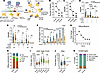 Figure 2
NK cells have increased killing capacity during acute malaria infection. (A) Schematic overview of NK cell killing mechanisms and contact types assessed using A498GBDR dual-reporter target cells. (B) Total killing by CD56+ NK cells from acute, day 10, and convalescent (12-month) time points. Each line represents a patient with malaria. (C) Killing efficiency normalized to the number of NK cells per microwell. (D) Killing capacity of CD56+ NK cells under different stimulation conditions (IL-2, IL-15, and/or CetAb antibody). (E) Killing efficiency of sorted NK cell subsets from acute and convalescent time points, stimulated with IL-2, IL-15, and CetAb antibody. NA indicates that the marker was not assessed during cell sorting. (F) Time-resolved killing efficiency of CD56+ NK cells over the first 24 hours of coculture. Each dot represents a microwell (n = 35–37 microwells) in D–F. (G) Ratio of killing efficiency, shown in F, between acute and convalescent NK cells over time. Each dot represents the ratio at a given time point. (H) Distribution of killing mechanisms used by CD56+ NK cells. (I) Time from NK cell–target cell contacts to target cell lysis for granzyme B– and caspase-8–mediated killing (n = 93–595 killing events). (J) Killing time for events classified as “other,” including atypically fast or slow killing events (n = 119 and 158 killing events). (K) Contact types used during granzyme B–mediated killing by CD56+ NK One-way ANOVA followed by 2-tailed paired (B and C) or 2-tailed unpaired (D–F and I) t tests with correction for multiple comparisons; unpaired t test for J. *P < 0.05, **P < 0.01, ***P < 0.001, ****P < 0.0001. (H–K) One representative donor based on 36 microwells, see Supplemental Figure 4 for the second donor.
We first compared CD56+ NK cells sorted from acute, day 10, and 12-month (convalescent) time points (Supplemental Figure 4A). NK cells from the acute phase exhibited the highest cytotoxicity, while convalescent NK cells showed the lowest (Figure 2B, Supplemental Figure 4B, and Supplemental Figure 3D). This pattern remained consistent when normalizing for NK cell numbers per microwell (Figure 2C). To dissect the contribution of cytokines and antibody-dependent mechanisms, we stimulated NK cells with IL-2 and/or IL-15 and used cetuximab (CetAb) to coat target cells with IgG1 antibody (Ab). Killing was minimal without stimulation but markedly enhanced by IL-15 and CetAb (Figure 2D and Supplemental Figure 4B). IL-15 synergized with IL-2 to boost cytotoxicity, and CetAb further amplified this effect. Notably, acute NK cells consistently outperformed convalescent NK cells under all stimulation conditions (Figure 2D and Supplemental Figure 4B).
We next evaluated cytotoxicity across NK subpopulations sorted by CD56, CD57, and NKG2C expression without using CD16, as that could influence antibody-dependent functions (Supplemental Figure 4A). CD56dimCD57– NK cells showed the highest killing capacity while the CD57+ memory-like NK cells were less cytotoxic (Figure 2E). However, subset-specific killing patterns were inconsistent across replicates (Supplemental Figure 4C), while it remained consistent for the total CD56+ NK cells, suggesting that overall cytotoxicity differences were not driven by a single subset. This is also consistent with our NK cell phenotyping data indicting granzyme B upregulation among both CD56bright and CD56dim NK cells during acute malaria.
We then analyzed the kinetics of target cell killing. Acute NK cells initiated killing more rapidly and achieved higher cumulative cytotoxicity within the first 24 hours compared with convalescent NK cells (Figure 2F). The ratio of acute/convalescent killing efficiency peaked at 1–2 hours with a 4- to 15-fold difference, which then declined over time (Figure 2G and Supplemental Figure 4E), consistent with a shift from rapid granzyme B–mediated killing to slower death receptor–mediated mechanisms (33).
Analysis of killing strategies revealed that granzyme B–mediated cytotoxicity dominated (>50%) in both acute and convalescent NK cells, followed by caspase-8–mediated killing (~20%) and other or unclassified mechanisms (Figure 2H and Supplemental Figure 4F). Importantly, acute NK cells executed granzyme B–mediated killing significantly faster than convalescent NK cells (Figure 2I and Supplemental Figure 4G), while no difference was observed for death receptor–mediated killing. The “other” category included undetermined killing mechanisms that, in some cases, exhibited atypical kinetics (Figure 2J).
Finally, we assessed NK-target cell contact types during granzyme B–mediated killing. Most events involved committed contacts (>2 frames), with no significant differences between acute and convalescent NK cells (Figure 2K and Supplemental Video 3), consistent with the requirement for stable synapse formation in granule-mediated cytotoxicity.
In summary, the enhanced target cell killing by NK cells during acute malaria appears to primarily be driven by increased levels of granzyme B–mediated killing, which were not accompanied by dynamic changes in cell-cell contacts or mediated by specific NK cell subsets.
NK cells during acute malaria have increased expression of perforin and granzymes but not death ligands. To better understand why NK cell cytotoxicity was increased during acute infection compared with later time points, we performed transcriptional analysis of NK cells by repurposing a targeted single-cell multi-omics dataset from 4 donors in the same cohort (34). We extracted NK cells from the dataset, reclustered them (Figure 3A), and annotated 4 major subsets based on gene expression (Figure 3B) and surface protein markers (Figure 3C). The subsets corresponded to CD56bright, CD56dim, CD56dimCD16+, and proliferating NK cells (Figure 3, A–C), each displaying distinct transcriptional and surface marker profiles. These largely overlapped with recently described NK2 (CD56bright), NK3 (CD56dim), and NK1 (CD56dimCD16+) clusters (35). The CD56dim cells expressed low but detectable levels of CD16 (Figure 3C) and were a proportionally larger population than CD56dimCD16– cells shown in Supplemental Figure 2D, suggesting that this cluster included CD16+ NK cells with reduced CD16 surface levels. This reduction could suggest recent activation, as also indicated by the increased expression levels of LAG-3 (Figure 3B) and as shown previously in mice (36).
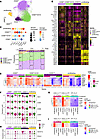 Figure 3
NK cells during acute malaria have increased expression of perforin and granzymes. (A) UMAP projection of 12,808 NK cells from 4 patients with malaria across 3 time points (acute, day 10, and 12 months), based on targeted single-cell RNA-seq and antibody-derived surface protein data. (B) Heatmap showing scaled expression of key marker genes across the identified NK cell subsets. (C) Dot plot of surface protein expression (Ab-Seq) for selected markers used to annotate NK cell subsets. (D) Temporal dynamics of NK cell subset frequencies across the 3 time points. (E) Individual-specific pseudobulk expression of cytotoxicity-associated (PRF1, GZMA, GZMB, GZMH, GZMK) and death ligand genes (FASLG, and TNFSF10) across NK cell subsets and time points. (F and H) Violin plots indicating overall expression levels in pooled NK cell subsets. (G and I) Grouped pseudobulk expression of cytotoxicity associated genes (G) and death ligand genes (I) across NK cell subsets and time points. Statistical analysis for G and I was performed using DESeq2 on individual pseudobulk data with *P < 0.01.
CD56bright NK cells expressed CD27 and CD25 (IL-2R) on the cell surface and high levels of cytokine receptors (e.g., IL18RAP, IL12RB2, IL7R), cytotoxic mediators (GZMK), and migration-associated genes (CXCR3), consistent with a cytokine-responsive phenotype. CD56dim cells expressed CCL5 and GZMH, suggesting roles in immune recruitment and caspase-independent killing (37). CD56dimCD16+ cells expressed CD11c on the cell surface and elevated expression of cytotoxicity-associated genes (NCR3), cytokine receptors (IL18RAP, CXCR2), and inhibitory markers (HAVCR2 [TIM-3] and LGALS9 [Galectin-9]), indicating a balance of activation and regulation (38). The proliferating NK cells expressed cell cycle genes (e.g., MCM2, MKI67) and cell surface activation markers (CD11c, HLA-DR), with intermediate CD56/CD16 levels, suggesting a recently activated state and potentially indicating a mix of CD56bright and CD56dim cells (Figure 3, B and C). This is also consistent with the NK phenotyping data (Figure 1C), where all NK subsets could be observed among Ki67+ cells.
Temporal analysis revealed that proliferating NK cells were enriched during acute malaria and contracted thereafter, while CD56dimCD16+ NK cells expanded from acute to day 10, mirroring flow cytometry data (Figure 3D). To link transcriptional changes with cytotoxic function, we assessed pseudobulk expression of PRF1 (perforin) and granzymes GZMA, GZMB, GZMH, and GZMK across subsets and time points at an individual donor level (Figure 3E) and group level (Figure 3, F and G). All NK cell subsets showed significantly elevated GZMA and GZMB expression during acute malaria compared with 12 months after treatment, while PRF1 was increased in proliferating and CD56dimCD16+ cells. GZMH was modestly increased in CD56bright cells. GZMB was also significantly upregulated for most NK cell subsets compared with 10 days after treatment, while CD56dimCD16+ cells also expressed significantly more PRF1 and GZMA (Figure 3G). These findings align with the enhanced granzyme-mediated killing observed in vitro. In contrast, expression of death ligands FASLG and TNFSF10 (TRAIL) remained unchanged across subsets and time points (Figure 3, H and I). This suggests that granule-mediated cytotoxicity, not caspase-8–dependent death receptor pathways, dominates during acute malaria.
In summary, acute malaria induces broad transcriptional upregulation of perforin and granzymes across NK cell subsets, supporting a transient but potent cytotoxic phenotype. This transcriptional signature aligns with functional data and underscores the role of granzyme-mediated killing as the primary effector mechanism during acute infection.
Inflammatory cytokines and granzymes are elevated in plasma during acute malaria. Given the enhanced granzyme B–mediated cytotoxicity and transcriptional upregulation of cytotoxic genes in NK cells during acute malaria, we next assessed whether this was reflected in the systemic protein milieu. Using a recently published plasma proteomics dataset from the same cohort (34), we assessed the relative levels of granzymes A, B, and H as surrogate markers of cytotoxic cell activation. All 3 granzymes were significantly elevated during acute malaria and remained higher at day 10 after treatment compared with 12 months (Figure 4A). granzyme B showed the most pronounced increase, consistent with its dominant role in NK cell–mediated killing. These findings support the notion of widespread cytotoxic activity during acute malaria.
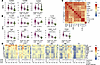 Figure 4
Temporal dynamics of NK cell effector molecule and cytokine abundance. (A) Plasma levels of granzymes A, B, and H at acute infection (pink, n = 72), 10 days after treatment (light pink, n = 27), and 12 months after treatment (green, n = 33), measured as normalized protein expression (NPX) were repurposed from Lautenbach et al. (34). (B) Plasma concentrations of NK cell–activating cytokines (IL-12, IL-15, IL-18) and general inflammatory cytokines (TNF, IL-6, IL-10, IL-27, IFN-γ) across the same time points from the same dataset. LOD indicates average assay plate limit of detection ± SD for each protein. (C) Spearman correlation matrix showing pairwise relationships between cytokines and granzymes at the acute time point. (D) Summary of correlations between acute-phase protein levels (ΔNPX from acute to 12 months) and NK cell subset frequencies over time (acute to 12 months) as presented in Supplemental Figure 2. Subsets are defined by CD56, CD16, and CD57 expression. Symbols: (+) = positive expression; (–) = no expression, (b) = bright; (m) = dim; (N) = Not measured. Statistical analyses in A and B were performed using linear mixed-effects models accounting for repeated measures. *P < 0.05, **P < 0.01, ***P < 0.001, ****P < 0.0001.
We then measured plasma levels of key NK cell–activating cytokines (IL-12, IL-15, and IL-18), which were all significantly elevated during acute malaria (Figure 4B). IL-12 and IL-18 remained elevated at day 10, while IL-15 declined more rapidly. Additional general markers of inflammation (TNF, IL-6, IL-10, IL-27, and IFN-γ) also peaked during acute malaria, indicating a broad inflammatory response. To explore potential coordination among these mediators, we generated a correlation matrix of cytokines and granzymes at the acute time point (Figure 4C). Most proteins were positively correlated, suggesting a coordinated inflammatory program. Notably, IL-18 correlated primarily with GZMA and GZMH, while TNF and GZMB shared similar correlation patterns. IL-10, IL-6, IL-12, IL-15, and IFN-γ formed a larger cocorrelated cluster.
We next examined whether acute-phase cytokine and granzyme levels were associated with NK cell subset dynamics over time. Using Spearman correlations between relative protein levels and NK cell subset frequencies (Supplemental Figure 2), we found that IL-18 and IL-27 were positively associated with multiple NK subsets during acute malaria. IL-18 was specifically correlated with CD56–CD16+, CD56brightCD16+/–, and CD56dimCD16+ cells while IL-27 was correlated with CD56dimCD16– NK cells. In contrast, CD56– NK cells showed negative correlations with most inflammatory mediators, both during acute malaria, and especially at later time points (Figure 4D). This indicates that the levels of CD56– NK cells are associated with reduced inflammation and potentially milder disease.
In summary, acute malaria is characterized by a surge in plasma granzymes and proinflammatory cytokines, which are coregulated and correlate with specific NK cell subsets. These findings reinforce the role of the inflammatory microenvironment in shaping NK cell activation and function during acute infection.
IL-15 and IL-12 enhances, while TGF-β suppresses, NK cell cytotoxic potential. To investigate how specific cytokines modulate NK cell cytotoxic potential, we stimulated purified NK cells from healthy donors with recombinant cytokines and assessed intracellular levels of perforin and granzyme B in CD56brightCD16– and CD56dimCD16+ NK cell subsets (Figure 5A).
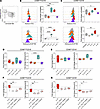 Figure 5
In vitro cytokine stimulation of isolated NK cells from healthy PBMC. (A) Representative gating strategy for CD56brightCD16– and CD56dimCD16+ NK cells following 24 hours of in vitro stimulation. (B and C) Intracellular expression of perforin (top) and granzyme B (bottom) in (B) CD56brightCD16– and (C) CD56dimCD16+ NK cells following 24h left untreated (gray) or stimulated with IL-1β (orange), IL-12 (turquoise), IL-15 (red), or IL-18 (purple). Values are normalized to the average geoMFI of untreated controls (FBS). (D and E) perforin (left) and granzyme B (right) expression in (D) CD56brightCD16– and (E) CD56dimCD16+ NK cells following combined cytokine stimulation. Values are normalized to the average geoMFI IL-15 alone. (F and G) perforin (left) and granzyme B (right) expression in (F) CD56brightCD16– and (G) CD56dimCD16+ NK cells after stimulation with IL-15 alone, IL-15 + TGF-β, IL-15 + anti–TGF-β antibody, or IL-15 + isotype control. Values are normalized to the average geoMFI of IL-15 alone. Statistical analyses were done using repeated-measures 2-way ANOVA. *P < 0.05, **P < 0.01, ***P < 0.001, ****P < 0.0001. Results were pooled from 3 separate experiments including in total 4–7 donors.
Stimulation with IL-15 significantly increased both perforin and granzyme B in both subsets. IL-12 had a strong effect on CD56bright NK cells but not on CD56dimCD16+ cells. In contrast, IL-1β and IL-18 alone did not enhance cytotoxic molecule expression in either subset (Figure 5, B and C, and Supplemental Figure 5, A and B). We next tested whether cytokine combinations could synergize to further enhance cytotoxic capacity. Costimulation with IL-12 and IL-15 led to a synergistic increase in granzyme B (but not perforin) in both NK subsets, while combinations with IL-1β or IL-18 did not show additional effects (Figure 5, D and E, and Supplemental Figure 5, C and D).
To assess the effect of immunosuppressive signals, we cultured NK cells with IL-15 alone, IL-15 plus TGF-β, or IL-15 plus TGF-β with or without a blocking antibody. TGF-β significantly reduced perforin and granzyme B levels in both NK subsets, while blockade of TGF-β partly restored cytotoxic molecule expression (Figure 5, F and G, and Supplemental Figure 5, E and F).
In summary, IL-15 and IL-12 act as potent enhancers of NK cell cytotoxic potential, particularly in CD56bright cells, while TGF-β suppresses this enhancement. These findings highlight the dual regulatory role of the cytokine milieu in shaping NK cell effector function during malaria.
The plasma composition during acute malaria can both stimulate and inhibit NK cell function. Given the elevated levels of proinflammatory cytokines in acute malaria plasma, we next investigated whether these soluble factors could directly enhance the expression of cytotoxic molecules in NK cells. We cultured sorted NK cells from healthy donors with 20% pooled plasma from either the acute or convalescent (12-month) time points and assessed intracellular perforin and granzyme B levels.
Initial experiments using untreated plasma led to aberrant NK cell phenotypes, including reduced CD56 and CD16 expression and increased cell death (Supplemental Figure 6A). We hypothesized that circulating antibodies in the plasma might be activating or opsonizing NK cells. To address this, we removed IgG using protein G columns, achieving > 99.8% depletion of total and malaria-specific IgG, while preserving IgM (Supplemental Figure 6, B–G). After IgG removal, NK cell viability and phenotype were preserved (Supplemental Figure 6A).
When cultured with IgG-depleted acute plasma, CD56brightCD16– NK cells showed significantly increased perforin expression compared with those cultured with convalescent plasma, while granzyme B levels remained unchanged (Figure 6A and Supplemental Figure 7A). No significant changes were observed in CD56dimCD16+ NK cells (Figure 6B and Supplemental Figure 7B).
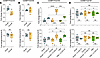 Figure 6
Acute malaria plasma contains both NK cell stimulatory and inhibitory factors. (A and B) Intracellular expression of perforin (top panel) and granzyme B (bottom panel) in (A) CD56brightCD16– or (B) CD56dimCD16+ NK cells cultured with 20% IgG-depleted pooled plasma from acute (blue) or convalescent (orange) patients with malaria, respectively. Values are normalized to convalescent plasma-treated controls. (C and D) Fold change in perforin (top) and granzyme B (bottom) expression in (C) CD56brightCD16– or (D) CD56dimCD16+ NK cells cultured with pooled plasma or fetal bovine serum (FBS), with or without additional IL-12 and IL-15. Values are normalized to respective average conditions without cytokine supplementation. Statistical analysis was performed using 2-tailed paired Student’s t tests. *P < 0.05, **P < 0.01, ***P < 0.001, ****P < 0.0001. Experiments were done on cells sorted from 5 separate donors.
To determine whether acute plasma also contained inhibitory mediators, we cultured NK cells with plasma (acute or convalescent) in the presence or absence of exogenous IL-12 and IL-15. In CD56bright NK cells, the addition of cytokines significantly boosted perforin and granzyme B levels, but the enhancement was greater in convalescent plasma than in acute plasma shown both in the calculated ratio (Figure 6C) and geometric mean fluorescent intensity (Supplemental Figure 7C). This suggests that acute plasma contains factors that limit the responsiveness of NK cells to cytokine stimulation. A similar, though less pronounced, pattern was observed in CD56dim NK cells, where only perforin levels were modestly affected (Figure 6D and Supplemental Figure 7D).
In summary, plasma from acute malaria contains both activating cytokines that enhance NK cell cytotoxicity and inhibitory mediators that constrain inflammatory-induced activation. This dual regulation may serve to balance parasite control with the prevention of excessive immune-mediated damage.
Temporal modulation of pro- and antiinflammatory plasma proteins during and after acute malaria infection. To better understand how the immune system balances NK cell activation and suppression during malaria, we reanalyzed a comprehensive plasma proteomics dataset (>1,400 proteins) using gene ontology (GO) pathway enrichment analysis (34). We focused on pathways related to immune regulation and NK cell function.
We first examined positive and negative regulation of immune responses (Figure 7, A and B). Both types of pathways were significantly enriched during acute malaria and declined over time. NK cell–specific regulatory pathways followed a similar pattern, peaking during acute infection and contracting after treatment (Figure 7C). Despite some overlap, most proteins were unique to each pathway (Figure 7D and Supplemental Table 2), indicating distinct regulatory programs.
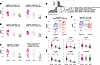 Figure 7
Temporal modulation of NK cell–associated immune regulatory pathways. (A–C) Single-sample enrichment scores (ssES) for gene ontology (GO) pathways related to (A) negative regulation of immune responses, (B) positive regulation of immune responses, and (C) NK cell regulation, across acute malaria, day 10 (D10), and 12 months after treatment (M12). (D) Upset plot showing the overlap of proteins among the GO pathways analyzed in A–C. (E and F) Comparison of ssES for positive (red) and negative (blue) regulation of (E) inflammatory response and (F) innate immune response pathways at the acute time point. (G) Longitudinal plasma levels of selected inhibitory mediators and soluble cytokine receptors relevant to NK cell regulation: TGF-β, IL-2RA (sCD25), IL-2RB, IL-12RB1, IL-18R1, IL-18BP, and IL-18RAP. Protein abundance is shown as normalized protein expression (NPX) at acute (pink, n = 72), D10 (light pink, n = 27), and M12 (green, n = 33) time points. Protein data were repurposed from Lautenbach et al. (34). Statistical analyses were performed using linear mixed-effects models to account for repeated measures and interindividual variability. *P < 0.05, **P < 0.01, ***P < 0.001, ****P < 0.0001.
To assess the balance between immune activation and suppression, we compared enrichment scores for positive versus negative regulation of 2 key processes: the inflammatory response and the innate immune response. During acute malaria, positive regulation dominated the inflammatory response (Figure 7E), suggesting an active proinflammatory state. In contrast, negative regulation was more prominent in the innate immune response (Figure 7F), potentially reflecting a feedback mechanism to limit excessive activation of innate cells, including NK cells.
Because no GO pathway specifically captured NK cell suppression, we directly examined plasma levels of known inhibitory mediators and soluble cytokine receptors that could modulate NK cell activity (Figure 7G). These included TGF-β, soluble IL-2RA (sCD25), IL-2RB, IL-12RB1, IL-18R1, IL-18BP, and IL-18RAP. All except IL-18RAP were significantly elevated during acute malaria, with several remaining elevated at day 10. These proteins may reduce cytokine bioavailability or block receptor signaling, thereby dampening NK cell responses.
In summary, acute malaria triggers a coordinated upregulation of both activating and inhibitory immune pathways. While the inflammatory response is strongly activated, innate immune regulation, including NK cell suppression, is also engaged. This dual modulation likely serves to optimize parasite control while minimizing immunopathology.


