
Research ArticleInflammationMicrobiology
Open Access |  10.1172/jci.insight.185743
BDKRB1 activation induces CXCR2 desensitization in neutrophils during severe sepsis and exacerbates disease severity
Raquel Duque do Nascimento Arifa,1,2 Carolina Braga Resende Mascarenhas,1 Lívia Caroline Resende Rossi,1 Maria Eduarda Freitas Silva,1 Larissa M. Lucas,1 João Paulo Pezzini Barbosa,1 Daiane Boff,1 Brenda Gonçalves Resende,1 Lívia Duarte Tavares,1 Alesandra Corte Reis,3 Vanessa Pinho,3 Flavio Almeida Amaral,4 Caio Tavares Fagundes,1 Cristiano Xavier Lima,5 Mauro Martins Teixeira,4 and Daniele G Souza1
1Laboratory of Microorganism-Host Interaction, Department of Microbiology, Universidade Federal de Minas Gerais (UFMG), Belo Horizonte, Brazil.
2Instituto René Rachou, FIOCRUZ-Minas, Belo Horizonte, Brazil.
3Department of Morphology and
4Department of Biochemistry and Immunology, Institute of Biological Sciences, Belo Horizonte, Brazil.
5Department of Surgery, Medical School, UFMG, Belo Horizonte, Brazil.
Address correspondence to: Daniele G Souza, Departamento de Microbiologia, Instituto de Ciências Biológicas, Universidade Federal de Minas Gerais, Avenida Antônio Carlos, 6627, Pampulha, CEP 31270-901, Belo Horizonte, Mina Gerais, Brazil. Email: danisouza@ufmg.br.
Authorship note: RDNA, CBRM, and LCRR contributed equally to this work.
Find articles by
Arifa, R.
in:
PubMed
|
Google Scholar
|

1Laboratory of Microorganism-Host Interaction, Department of Microbiology, Universidade Federal de Minas Gerais (UFMG), Belo Horizonte, Brazil.
2Instituto René Rachou, FIOCRUZ-Minas, Belo Horizonte, Brazil.
3Department of Morphology and
4Department of Biochemistry and Immunology, Institute of Biological Sciences, Belo Horizonte, Brazil.
5Department of Surgery, Medical School, UFMG, Belo Horizonte, Brazil.
Address correspondence to: Daniele G Souza, Departamento de Microbiologia, Instituto de Ciências Biológicas, Universidade Federal de Minas Gerais, Avenida Antônio Carlos, 6627, Pampulha, CEP 31270-901, Belo Horizonte, Mina Gerais, Brazil. Email: danisouza@ufmg.br.
Authorship note: RDNA, CBRM, and LCRR contributed equally to this work.
Find articles by Mascarenhas, C. in: PubMed | Google Scholar
1Laboratory of Microorganism-Host Interaction, Department of Microbiology, Universidade Federal de Minas Gerais (UFMG), Belo Horizonte, Brazil.
2Instituto René Rachou, FIOCRUZ-Minas, Belo Horizonte, Brazil.
3Department of Morphology and
4Department of Biochemistry and Immunology, Institute of Biological Sciences, Belo Horizonte, Brazil.
5Department of Surgery, Medical School, UFMG, Belo Horizonte, Brazil.
Address correspondence to: Daniele G Souza, Departamento de Microbiologia, Instituto de Ciências Biológicas, Universidade Federal de Minas Gerais, Avenida Antônio Carlos, 6627, Pampulha, CEP 31270-901, Belo Horizonte, Mina Gerais, Brazil. Email: danisouza@ufmg.br.
Authorship note: RDNA, CBRM, and LCRR contributed equally to this work.
Find articles by Resende Rossi, L. in: PubMed | Google Scholar
1Laboratory of Microorganism-Host Interaction, Department of Microbiology, Universidade Federal de Minas Gerais (UFMG), Belo Horizonte, Brazil.
2Instituto René Rachou, FIOCRUZ-Minas, Belo Horizonte, Brazil.
3Department of Morphology and
4Department of Biochemistry and Immunology, Institute of Biological Sciences, Belo Horizonte, Brazil.
5Department of Surgery, Medical School, UFMG, Belo Horizonte, Brazil.
Address correspondence to: Daniele G Souza, Departamento de Microbiologia, Instituto de Ciências Biológicas, Universidade Federal de Minas Gerais, Avenida Antônio Carlos, 6627, Pampulha, CEP 31270-901, Belo Horizonte, Mina Gerais, Brazil. Email: danisouza@ufmg.br.
Authorship note: RDNA, CBRM, and LCRR contributed equally to this work.
Find articles by Silva, M. in: PubMed | Google Scholar
1Laboratory of Microorganism-Host Interaction, Department of Microbiology, Universidade Federal de Minas Gerais (UFMG), Belo Horizonte, Brazil.
2Instituto René Rachou, FIOCRUZ-Minas, Belo Horizonte, Brazil.
3Department of Morphology and
4Department of Biochemistry and Immunology, Institute of Biological Sciences, Belo Horizonte, Brazil.
5Department of Surgery, Medical School, UFMG, Belo Horizonte, Brazil.
Address correspondence to: Daniele G Souza, Departamento de Microbiologia, Instituto de Ciências Biológicas, Universidade Federal de Minas Gerais, Avenida Antônio Carlos, 6627, Pampulha, CEP 31270-901, Belo Horizonte, Mina Gerais, Brazil. Email: danisouza@ufmg.br.
Authorship note: RDNA, CBRM, and LCRR contributed equally to this work.
Find articles by Lucas, L. in: PubMed | Google Scholar
1Laboratory of Microorganism-Host Interaction, Department of Microbiology, Universidade Federal de Minas Gerais (UFMG), Belo Horizonte, Brazil.
2Instituto René Rachou, FIOCRUZ-Minas, Belo Horizonte, Brazil.
3Department of Morphology and
4Department of Biochemistry and Immunology, Institute of Biological Sciences, Belo Horizonte, Brazil.
5Department of Surgery, Medical School, UFMG, Belo Horizonte, Brazil.
Address correspondence to: Daniele G Souza, Departamento de Microbiologia, Instituto de Ciências Biológicas, Universidade Federal de Minas Gerais, Avenida Antônio Carlos, 6627, Pampulha, CEP 31270-901, Belo Horizonte, Mina Gerais, Brazil. Email: danisouza@ufmg.br.
Authorship note: RDNA, CBRM, and LCRR contributed equally to this work.
Find articles by Pezzini Barbosa, J. in: PubMed | Google Scholar
1Laboratory of Microorganism-Host Interaction, Department of Microbiology, Universidade Federal de Minas Gerais (UFMG), Belo Horizonte, Brazil.
2Instituto René Rachou, FIOCRUZ-Minas, Belo Horizonte, Brazil.
3Department of Morphology and
4Department of Biochemistry and Immunology, Institute of Biological Sciences, Belo Horizonte, Brazil.
5Department of Surgery, Medical School, UFMG, Belo Horizonte, Brazil.
Address correspondence to: Daniele G Souza, Departamento de Microbiologia, Instituto de Ciências Biológicas, Universidade Federal de Minas Gerais, Avenida Antônio Carlos, 6627, Pampulha, CEP 31270-901, Belo Horizonte, Mina Gerais, Brazil. Email: danisouza@ufmg.br.
Authorship note: RDNA, CBRM, and LCRR contributed equally to this work.
Find articles by Boff, D. in: PubMed | Google Scholar
1Laboratory of Microorganism-Host Interaction, Department of Microbiology, Universidade Federal de Minas Gerais (UFMG), Belo Horizonte, Brazil.
2Instituto René Rachou, FIOCRUZ-Minas, Belo Horizonte, Brazil.
3Department of Morphology and
4Department of Biochemistry and Immunology, Institute of Biological Sciences, Belo Horizonte, Brazil.
5Department of Surgery, Medical School, UFMG, Belo Horizonte, Brazil.
Address correspondence to: Daniele G Souza, Departamento de Microbiologia, Instituto de Ciências Biológicas, Universidade Federal de Minas Gerais, Avenida Antônio Carlos, 6627, Pampulha, CEP 31270-901, Belo Horizonte, Mina Gerais, Brazil. Email: danisouza@ufmg.br.
Authorship note: RDNA, CBRM, and LCRR contributed equally to this work.
Find articles by Gonçalves Resende, B. in: PubMed | Google Scholar
1Laboratory of Microorganism-Host Interaction, Department of Microbiology, Universidade Federal de Minas Gerais (UFMG), Belo Horizonte, Brazil.
2Instituto René Rachou, FIOCRUZ-Minas, Belo Horizonte, Brazil.
3Department of Morphology and
4Department of Biochemistry and Immunology, Institute of Biological Sciences, Belo Horizonte, Brazil.
5Department of Surgery, Medical School, UFMG, Belo Horizonte, Brazil.
Address correspondence to: Daniele G Souza, Departamento de Microbiologia, Instituto de Ciências Biológicas, Universidade Federal de Minas Gerais, Avenida Antônio Carlos, 6627, Pampulha, CEP 31270-901, Belo Horizonte, Mina Gerais, Brazil. Email: danisouza@ufmg.br.
Authorship note: RDNA, CBRM, and LCRR contributed equally to this work.
Find articles by Tavares, L. in: PubMed | Google Scholar
1Laboratory of Microorganism-Host Interaction, Department of Microbiology, Universidade Federal de Minas Gerais (UFMG), Belo Horizonte, Brazil.
2Instituto René Rachou, FIOCRUZ-Minas, Belo Horizonte, Brazil.
3Department of Morphology and
4Department of Biochemistry and Immunology, Institute of Biological Sciences, Belo Horizonte, Brazil.
5Department of Surgery, Medical School, UFMG, Belo Horizonte, Brazil.
Address correspondence to: Daniele G Souza, Departamento de Microbiologia, Instituto de Ciências Biológicas, Universidade Federal de Minas Gerais, Avenida Antônio Carlos, 6627, Pampulha, CEP 31270-901, Belo Horizonte, Mina Gerais, Brazil. Email: danisouza@ufmg.br.
Authorship note: RDNA, CBRM, and LCRR contributed equally to this work.
Find articles by Corte Reis, A. in: PubMed | Google Scholar
1Laboratory of Microorganism-Host Interaction, Department of Microbiology, Universidade Federal de Minas Gerais (UFMG), Belo Horizonte, Brazil.
2Instituto René Rachou, FIOCRUZ-Minas, Belo Horizonte, Brazil.
3Department of Morphology and
4Department of Biochemistry and Immunology, Institute of Biological Sciences, Belo Horizonte, Brazil.
5Department of Surgery, Medical School, UFMG, Belo Horizonte, Brazil.
Address correspondence to: Daniele G Souza, Departamento de Microbiologia, Instituto de Ciências Biológicas, Universidade Federal de Minas Gerais, Avenida Antônio Carlos, 6627, Pampulha, CEP 31270-901, Belo Horizonte, Mina Gerais, Brazil. Email: danisouza@ufmg.br.
Authorship note: RDNA, CBRM, and LCRR contributed equally to this work.
Find articles by
Pinho, V.
in:
PubMed
|
Google Scholar
|
1Laboratory of Microorganism-Host Interaction, Department of Microbiology, Universidade Federal de Minas Gerais (UFMG), Belo Horizonte, Brazil.
2Instituto René Rachou, FIOCRUZ-Minas, Belo Horizonte, Brazil.
3Department of Morphology and
4Department of Biochemistry and Immunology, Institute of Biological Sciences, Belo Horizonte, Brazil.
5Department of Surgery, Medical School, UFMG, Belo Horizonte, Brazil.
Address correspondence to: Daniele G Souza, Departamento de Microbiologia, Instituto de Ciências Biológicas, Universidade Federal de Minas Gerais, Avenida Antônio Carlos, 6627, Pampulha, CEP 31270-901, Belo Horizonte, Mina Gerais, Brazil. Email: danisouza@ufmg.br.
Authorship note: RDNA, CBRM, and LCRR contributed equally to this work.
Find articles by Amaral, F. in: PubMed | Google Scholar
1Laboratory of Microorganism-Host Interaction, Department of Microbiology, Universidade Federal de Minas Gerais (UFMG), Belo Horizonte, Brazil.
2Instituto René Rachou, FIOCRUZ-Minas, Belo Horizonte, Brazil.
3Department of Morphology and
4Department of Biochemistry and Immunology, Institute of Biological Sciences, Belo Horizonte, Brazil.
5Department of Surgery, Medical School, UFMG, Belo Horizonte, Brazil.
Address correspondence to: Daniele G Souza, Departamento de Microbiologia, Instituto de Ciências Biológicas, Universidade Federal de Minas Gerais, Avenida Antônio Carlos, 6627, Pampulha, CEP 31270-901, Belo Horizonte, Mina Gerais, Brazil. Email: danisouza@ufmg.br.
Authorship note: RDNA, CBRM, and LCRR contributed equally to this work.
Find articles by Fagundes, C. in: PubMed | Google Scholar
1Laboratory of Microorganism-Host Interaction, Department of Microbiology, Universidade Federal de Minas Gerais (UFMG), Belo Horizonte, Brazil.
2Instituto René Rachou, FIOCRUZ-Minas, Belo Horizonte, Brazil.
3Department of Morphology and
4Department of Biochemistry and Immunology, Institute of Biological Sciences, Belo Horizonte, Brazil.
5Department of Surgery, Medical School, UFMG, Belo Horizonte, Brazil.
Address correspondence to: Daniele G Souza, Departamento de Microbiologia, Instituto de Ciências Biológicas, Universidade Federal de Minas Gerais, Avenida Antônio Carlos, 6627, Pampulha, CEP 31270-901, Belo Horizonte, Mina Gerais, Brazil. Email: danisouza@ufmg.br.
Authorship note: RDNA, CBRM, and LCRR contributed equally to this work.
Find articles by Lima, C. in: PubMed | Google Scholar
1Laboratory of Microorganism-Host Interaction, Department of Microbiology, Universidade Federal de Minas Gerais (UFMG), Belo Horizonte, Brazil.
2Instituto René Rachou, FIOCRUZ-Minas, Belo Horizonte, Brazil.
3Department of Morphology and
4Department of Biochemistry and Immunology, Institute of Biological Sciences, Belo Horizonte, Brazil.
5Department of Surgery, Medical School, UFMG, Belo Horizonte, Brazil.
Address correspondence to: Daniele G Souza, Departamento de Microbiologia, Instituto de Ciências Biológicas, Universidade Federal de Minas Gerais, Avenida Antônio Carlos, 6627, Pampulha, CEP 31270-901, Belo Horizonte, Mina Gerais, Brazil. Email: danisouza@ufmg.br.
Authorship note: RDNA, CBRM, and LCRR contributed equally to this work.
Find articles by
Teixeira, M.
in:
PubMed
|
Google Scholar
|
1Laboratory of Microorganism-Host Interaction, Department of Microbiology, Universidade Federal de Minas Gerais (UFMG), Belo Horizonte, Brazil.
2Instituto René Rachou, FIOCRUZ-Minas, Belo Horizonte, Brazil.
3Department of Morphology and
4Department of Biochemistry and Immunology, Institute of Biological Sciences, Belo Horizonte, Brazil.
5Department of Surgery, Medical School, UFMG, Belo Horizonte, Brazil.
Address correspondence to: Daniele G Souza, Departamento de Microbiologia, Instituto de Ciências Biológicas, Universidade Federal de Minas Gerais, Avenida Antônio Carlos, 6627, Pampulha, CEP 31270-901, Belo Horizonte, Mina Gerais, Brazil. Email: danisouza@ufmg.br.
Authorship note: RDNA, CBRM, and LCRR contributed equally to this work.
Find articles by Souza, D. in: PubMed | Google Scholar
Published December 8, 2025 - More info
JCI Insight. 2025;10(23):e185743. https://doi.org/10.1172/jci.insight.185743.
© 2025 Arifa et al. This work is licensed under the Creative Commons Attribution 4.0 International License. To view a copy of this license, visit http://creativecommons.org/licenses/by/4.0/.
Received: August 23, 2024; Accepted: October 17, 2025


-
Results
BDKRB1, but not BDKRB2, plays a pivotal role in the pathogenesis of severe polymicrobial sepsis. In the severe sepsis model, 100% of WT or Bdkrb2−/− mice were dead 3 days after cecal ligation and puncture (CLP). In contrast, Bdkrb1−/− mice began to die after 4 days and 50% were still alive on day 7 after CLP (Figure 1A). Six hours after CLP, the bacterial load recovered in blood and peritoneal lavage was comparable in WT and Bdkrb2−/− mice but about 2 logs lower in Bdkrb1−/− mice (Figure 1B). In septic WT and Bdkrb2−/− mice, migration of leukocytes, especially neutrophils, into the peritoneal cavity was markedly restricted, whereas in Bdkrb1−/− mice there was a marked influx of neutrophils (Figure 1, C and D). In WT mice, the inability of neutrophils to reach the site of infection was associated with reduced adherence to the endothelium, which was not the case in Bdkrb1−/− mice (Figure 1E). Thus, activation of BDKRB1 impedes neutrophil migration and consequently compromises bacterial clearance in the CLP model, whereas BDKRB2 appears to be less important under these conditions. Therefore, Bdkrb2−/− mice were not used for further experiments.
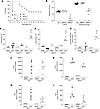 Figure 1
BDKRB1, but not the BDKRB2, plays a pivotal role in the pathogenesis of CLP sepsis. WT, Bdkrb1−/−, or Bdkrb2−/− mice were subjected to sham or CLP sepsis surgery. (A) Survival of mice subjected to CLP sepsis was followed for 14 days. Results are percentage of (A) survival, analyzed by the log-rank (Mantel-Cox) test, with 10 mice/group. Six hours after CLP sepsis, groups of mice were euthanized, blood was drawn, and peritoneal lavage was performed. (B) CFUs in blood and peritoneal exudate, (C) total leukocytes, and (D) neutrophil recruitment in the peritoneal cavity were analyzed. (E) Leukocyte adhesion was analyzed 3 hours after CLP in the cremaster by intravital microscopy. Results are expressed as mean ± SEM of at least 4 animals/group. Six hours after CLP, groups of mice were euthanized, blood was drawn, and peritoneal lavage was performed. (F and G) CXCL1 and (H and I) TNF concentrations were quantified in the peritoneal lavage and serum. Experiments were replicated at least once, and 1 representative experiment is presented. Survival analysis was performed with at least 10 animals/group. The Mantel-Cox log-rank test (χ2) was used for statistical analysis of survival curves. ANOVA followed by Tukey’s multiple comparisons posttest was used for data with a normal distribution. For data that did not follow a normal distribution, the Kruskal-Wallis test followed by Dunn’s multiple comparisons posttest was applied to compare 3 or more independent groups. P < 0.05. *, P < 0.05, compared with the sham group; #, P < 0.05, compared with the WT mice subjected to CLP.
CLP led to increased concentrations of CXCL1 and TNF in the peritoneal lavage and serum (Figure 1, F–I) of WT mice. Except for TNF, Bdkrb1−/−-CLP mice showed increased cytokine levels compared with Bdkrb1−/−-sham mice in the peritoneal lavage (Figure 1, F and H). Interestingly, sepsis induced in Bdkrb1−/− mice resulted in lower concentrations of CXCL1 in serum and of TNF in both peritoneal lavage and serum compared with WT-CLP mice (Figure 1, F–I). CLP also led to increased CXCL2, IL-1β, and IL-10 concentrations in the lavage fluid of both WT and Bdkrb1−/− mice, though there was no substantial difference between the WT and Bdkrb1−/− mice subjected to CLP (Supplemental Table 1; supplemental material available online with this article; https://doi.org/10.1172/jci.insight.185743DS1). CLP also induced an increase in IL-6 production in the peritoneal lavage, but it is noteworthy that this cytokine concentration was reduced in Bdkrb1−/− mice (Supplemental Table 1).
CLP induced marked lung injury characterized by severe capillary congestion, hemorrhage, infiltration of inflammatory cells, and alveolar edema (Figure 2, A and B) and increase in neutrophil influx into the lungs, as assessed by myeloperoxidase (MPO) activity (Figure 2C) and histological analysis (Figure 2, A and B). Bdkrb1−/− mice showed improvement in all histopathologic parameters (Figure 2, A and B), resulting in a substantial reduction in lung injury and MPO activity (Figure 2C) compared with WT mice. The lungs of CLP-WT mice showed an intense production of cytokines, as shown by the increase in CXCL1 (Figure 2D) and TNF (Figure 2E). Indeed, CLP led to an increase in these cytokines in the lungs of Bdkrb1−/− mice compared with the sham group. However, the levels of CXCL1 (Figure 2D) and TNF (Figure 2E) decreased in CLP-Bdkrb1−/− mice compared with CLP-WT mice. The production of CXCL2, IL-1β, IL-6, and IL-10 in the lungs of WT and Bdkrb1−/− mice was increased. Interestingly, the concentrations of CXCL2 and IL-6 were reduced in Bdkrb1−/− mice compared with WT mice (Supplemental Table 1). These results suggest that BDKRB1 plays a central role in CLP-induced lung inflammation and injury.
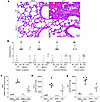 Figure 2
Absence of BDKRB1 prevents lung inflammation and injury. (A) Lung sections were stained with H&E for histopathologic analysis, and (B) tissue damage was quantified in 3 sections of each sample to assess capillary congestion, hemorrhage, neutrophil infiltration, and alveolar edema. (C) Neutrophil influx was determined by quantification of MPO activity. (D) CXCL1 and (E) TNF concentration in the lung was determined by ELISA. Experiments were replicated at least twice, and 1 representative experiment is presented in the figure. Results are expressed as mean ± SEM of at least 4 animals per group. ANOVA followed by Tukey’s multiple comparisons posttest was used for data with a normal distribution. For data that did not follow a normal distribution, the Kruskal-Wallis test followed by Dunn’s multiple comparisons posttest was applied to compare 3 or more independent groups. *, P < 0.05, compared with the sham group; #, P < 0.05, compared with WT mice subjected to CLP.
BDKRB1 in myeloid cells plays an essential role in exacerbating the inflammatory response triggered by severe sepsis. To investigate the role of BDKRB1 in myeloid cells in CLP sepsis, Bdkrb1−/− and WT mice were irradiated and subsequently transplanted with bone marrow–derived cells (BMDCs) from Bdkrb1−/− or WT mice. WT mice receiving Bdkrb1−/− BMDCs (Bdkrb1−/− → WT) exhibited increased peritoneal leukocyte (Figure 3A) and neutrophil (Figure 3B) counts and reduced local (Figure 3C) and systemic (Figure 3D) bacterial load after CLP compared with Bdkrb1−/− mice transplanted with WT BMDCs (WT → Bdkrb1−/−). Furthermore, Bdkrb1−/− → WT mice exhibited similar cytokine levels and neutrophil influx into the lungs as Bdkrb1−/− mice receiving Bdkrb1−/− BMDCs (Bdkrb1−/− → Bdkrb1−/−) (Figure 3, B and E–K). In contrast, Bdkrb1−/− mice receiving BMDCs from WT (WT→ Bdkrb1−/−) showed the same phenotype as WT mice receiving WT BMDCs (WT→ WT), no neutrophil migration (Figure 3, B and K), and consequently a high bacterial burden (Figure 3, C and D) after CLP. In addition, WT-Bdkrb1−/− mice had higher concentrations of TNF and CXCL1 in the peritoneal cavity (Figure 3, E and F), blood (Figure 3, G and H), and lungs (Figure 3, I and J) compared with Bdkrb1−/−-WT mice. These results emphasize that the role of BDKRB1 in sepsis depends on its presence in myeloid cells, which are critical for the migration in neutrophils to the site of infection and for the regulation of the inflammatory response CLP triggers.
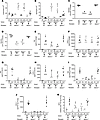 Figure 3
BDKRB1 in myeloid cells plays an essential role in exacerbating the inflammatory response induced by CLP. Chimeric mice were generated by the adoptive transfer of 106 BM cells from donor to recipient mice. Four groups of mice were generated: cells from WT mice to WT mice, cells from Bdkrb1−/− mice to Bdkrb1−/− mice, cells from Bdkrb1−/− mice to WT mice, and cells from WT mice to Bdkrb1−/− mice. Each group was divided into 2 groups that underwent sham or CLP surgery. Six hours after CLP, the groups of mice were euthanized, blood and lungs were collected, and peritoneal lavage was performed. (A) Total leukocytes and (B) neutrophil influx into the peritoneal cavity. (C) The bacterial load in peritoneal exudate and (D) blood was determined by plating and CFU counting. The concentrations of (E) TNF and (F) CXCL1 were determined in peritoneal lavage, (G and H) blood, and (I and J) lungs. (K) MPO activity was determined in the lung. Experiments were replicated at least twice, and 1 representative experiment is presented in the figure. Results are expressed as mean ± SEM of at least 5 animals per group. ANOVA followed by Tukey’s multiple comparisons posttest was used for data with a normal distribution. For data that did not follow a normal distribution, the Kruskal-Wallis test followed by Dunn’s multiple comparisons posttest was applied to compare 3 or more independent groups. *, P < 0.05, compared with the sham group; #, P < 0.05, compared with WT mice subjected to CLP.
BDKRB1 activation induces increased PI3Kγ expression and desensitization of CXCR2 on neutrophils. CLP induced a decrease in both the percentage (Figure 4A) and number of circulating neutrophils (Figure 4B) expressing CXCR2 in WT mice, accompanied by a decrease in the MFI of CXCR2 on these cells (Figure 4C). Furthermore, CLP-induced sepsis resulted in upregulation of P110γ, the catalytic subunit of PI3Kγ, in WT mice compared with WT-sham mice (Figure 4, D and E). The genetic absence of BDKRB1 resulted in a reversal of CXCR2 desensitization and P110γ activation, which were very similar to the profiles observed in sham-operated mice. Collectively, these results suggest that BDKRB1 disrupts neutrophil migration by desensitizing CXCR2 in response to PI3Kγ activation.
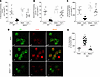 Figure 4
BDKRB1 activation induces PI3Kγ activation and desensitization of CXCR2 in circulating neutrophils after CLP-induced sepsis. Two hours postsurgery, circulating neutrophils from WT and Bdkrb1–/– mice subjected to CLP or sham procedures were analyzed. (A) Percentage of neutrophils positive for CXCR2 labeling. (B) Number of circulating neutrophils expressing CXCR2. (C) MFI of CXCR2 in neutrophils, assessed by flow cytometry. (D) Representative immunofluorescence images showing neutrophils labeled with anti-Gr1 (green), P110γ labeled with anti-P110γ (red), and the merged overlay. Scale bar: 5.2 µm. (E) Quantification of P110γ immunofluorescence (MFI), measured across 20 cells per group. Data are representative of at least 2 independent experiments. ANOVA followed by Tukey’s multiple comparisons posttest was used for data with a normal distribution. For data that did not follow a normal distribution, the Kruskal-Wallis test followed by Dunn’s multiple comparisons posttest was applied to compare 3 or more independent groups. *P < 0.05 compared with the sham group and #P < 0.05 compared with the WT CLP group.
Stimulation of human neutrophils with LPS resulted in increased percentage of BDKRB1-expressing cells (Figure 5A) and higher expression of BDKRB1, as assessed by the MFI (Figure 5B). Preincubation with LPS also resulted in upregulation of P110γ expression (Figure 5C). Interestingly, treatment with DALBK, a selective BDKRB1 antagonist, inhibited the LPS-induced increase in P110γ levels. To further investigate the role of BDKRB1, we treated neutrophils with LPS or DABK, a specific BDKRB1 agonist, and examined CXCR2 expression. Both LPS and DABK independently decreased neutrophil CXCR2 expression; however, their combined treatment did not result in an additive effect. Of note, DALBK reversed the LPS-induced downregulation of CXCR2, highlighting the involvement of BDKRB1 in modulating expression (Figure 5D). Consistent with these results, pretreatment with LPS or DABK reduced neutrophil transmigration in response to CXCL8, whereas DALBK restored migration impaired by LPS. Moreover, DABK failed to induce neutrophil migration after LPS exposure (Figure 5E).
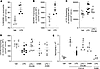 Figure 5
Activation of BDKRB1 impairs the migratory capacity of human neutrophils under septic conditions. Human neutrophils isolated from healthy donor blood were stimulated with LPS (10 μM) or vehicle control for 2 hours. Panels show (A) percentage of neutrophils positive for BDKRB1; MFI of (B) BDKRB1, (C) P110γ, and (D) CXCR2. (E) Transwell migration assay: cells pretreated for 30 minutes with BDKRB1 agonist Des-Arg9-Bradykinin (DABK, 1 μM) or antagonist des-Arg9[Leu8]-Bradykinin (DALBK, 10 μM), then allowed to migrate toward CXCL8 (10 μM) or DABK (1 μM, included as a chemotactic control). Data are presented as mean ± SEM from ≥ 5 wells per group for panels A–D and from 4 wells per group for panel E. *P < 0.05 versus control; #P < 0.05 versus LPS-treated group for panels A–D. *P < 0.05 versus vehicle control; #P < 0.05 versus vehicle + CXCL8–treated group; &P < 0.05 versus LPS + CXCL8–treated group for panel E. The Mann-Whitney U test was used to assess the significance of differences between the means of 2 groups. ANOVA followed by Tukey’s multiple comparisons posttest was used for data with a normal distribution. For data that did not follow a normal distribution, the Kruskal-Wallis test followed by Dunn’s multiple comparisons posttest was applied to compare 3 or more independent groups. All experiments were replicated at least twice, and 1 representative experiment is shown.
BDKRB1 antagonist improves sepsis and has a synergistic effect with broad-spectrum antibiotics. WT mice subjected to CLP were treated with DALBK, a BDKRB1 antagonist, 1 hour before (pretreatment) or 6 hours after (posttreatment) the CLP procedure. Both pre- and posttreatment DALBK reduced CLP-induced lethality. Approximately 50% of mice survived up to 14 days after sepsis (Figure 6A). Since broad-spectrum antibiotics are the recommended treatment for patients with sepsis, we next examined the effect of treatment with DALBK in mice previously treated with imipenem. Figure 6B shows that imipenem, as well as DALBK alone, reduced CLP-induced lethality by approximately 50%. Interestingly, posttreatment DALBK provided 90% protection against lethality in CLP mice that had previously been treated with an antibiotic. Bdkrb1−/− mice treated with antibiotics survived 100% of the time. In addition, both pretreatment and posttreatment DALBK prevented the lack of migration of neutrophils into the peritoneal cavity (Figure 6, C and D), resulting in a reduction of bacterial load in the peritoneal lavage and serum (Figure 6E) compared with vehicle treatment. Pre- and posttreatment DALBK substantially reduced the TNF concentration in the peritoneal cavity, serum, and lung (Figure 6, F–H) induced by CLP. In addition, pre- or posttreatment DALBK reduced CXCL1 concentration in lung and serum (Figure 6, J and K), though it had no effect on CXCL1 concentration in the peritoneal cavity (Figure 6I). BDKRB1 blockade also reduced CLP-induced MPO activity in the lung (Figure 6L). Importantly, taken together, these results suggest that DALBK could be a potential agent for the treatment of sepsis.
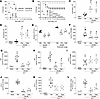 Figure 6
Treatment with a BDKRB1 antagonist prevents neutrophil dysfunction, bacterial burden, inflammation, and lethality associated with CLP in WT mice. (A) Survival of WT mice treated with a BDKRB1 antagonist alone and (B) survival of mice treated post-CLP with both a BDKRB1 antagonist and the antibiotic imipenem, monitored for 14 days. Imipenem was administered 3 hours after sepsis induction. Survival rates (%) were analyzed using the log-rank (Mantel-Cox) test; n = 10 mice per group. WT mice received the BDKRB1 antagonist DALBK (50 nM/kg) either 1 hour before (pretreatment) or 3 hours after (posttreatment) CLP. Six hours after CLP, mice were euthanized, and blood, lungs, and peritoneal lavage fluid were collected. (C) Total leukocyte count, (D) neutrophil influx into the peritoneal cavity, and (E) bacterial load (CFU) were evaluated. Concentrations of TNF were measured in the (F) peritoneal lavage, (G) lung, and (H) serum. CXCL1 levels were measured in the (I) peritoneal lavage, (J) lung, and (K) serum. (L) MPO activity was assessed in lung tissue. Survival analysis was performed with at least 10 animals per group. The Mantel-Cox log-rank test (χ2) was used for statistical analysis of survival curves. ANOVA followed by Tukey’s multiple comparisons posttest was used for data with a normal distribution. For data that did not follow a normal distribution, the Kruskal-Wallis test followed by Dunn’s multiple comparisons posttest was applied to compare 3 or more independent groups. Results are expressed as mean ± SEM from at least 5 animals per group. *P < 0.05 vs. sham group; #P < 0.05 vs. WT-CLP group. All experiments were replicated at least twice; 1 representative experiment is shown.


