
Neuroscience
Abstract
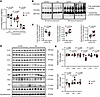
Defective synaptic transmission is a prominent pathology that underlies cognitive deficits in Alzheimer’s disease (AD), highlighting the need to elucidate molecular mechanisms of synaptic failure. Vacuolar H+-ATPase (V-ATPase), a proton-pumping enzyme, is essential for synaptic vesicle acidification and neurotransmitter loading. However, whether SV-associated V-ATPase is vulnerable to AD remains unclear. Here, using SV-rich fractions from postmortem brain tissues, we identified SV-associated V-ATPase deficits, including decreased enzymatic activity, impaired complex assembly, and altered expression of its key subunits in AD. SV-associated V-ATPase dysfunction was further associated with pathological and clinical characteristics of AD. Genetic downregulation of the V-ATPase V1D subunit, a component reduced in AD brains, disrupted V-ATPase proton transport and impaired SV acidification. Further experiments using 5×FAD mice, which exhibited AD-like SV-associated V-ATPase deficits, demonstrated the deleterious impact of V-ATPase dysfunction on SV acidification and synaptic transmission including presynaptic neurotransmitter release. In addition, ex vivo studies identified amyloid β–induced oxidative stress as a driver of V1D loss and V-ATPase disassembly, linking AD pathology to SV-associated V-ATPase dysfunction. These findings indicate that SV-associated V-ATPase dysfunction contributes to synaptic failure and cognitive deficits in AD. Therapeutic avenues to mitigate V-ATPase dysfunction have the potential to attenuate synaptic failure for the management of AD.
Authors
Yanting Chen, Khloud Ashraf Farouk Emam, Shuwen Yue, Jing Tian, Tienju Wang, Albert Park, Shalini Mishra, Gagan Deep, Zi-Jun Wang, Heng Du, Lan Guo
Abstract
The hypothesized cellular and molecular mechanisms underlying dystonia are broad and include mutations that perturb Ca2+ signaling, including those affecting voltage gated calcium channels (VGCC). In mice, pharmacological activation of neuronal L-type VGCCs induces dystonia in a dose dependent manner. Here we demonstrate that mice expressing a gain-of-function mutation in the L-type VGCC CaV1.2, associated with Timothy syndrome (TS), exhibit motor dysfunction consistent with dystonia. Although CaV1.2 is broadly expressed throughout peripheral tissues and across the brain, we establish that the dystonia-like behavior is driven by neuronal expression of the mutant calcium channel and observe an associated potential excitatory/inhibitory (E/I) imbalance. Because patients with TS have profound metabolic dysregulation, which is associated with some dystonias, we measured changes in circulating metabolites. The dystonia-like events are sensitive to perturbations in pyruvate metabolism, reminiscent of a subset of dystonias associated with pyruvate dysregulation. Our study provides insight into the potential convergence of previously established causes of dystonia, calcium signaling and metabolic homeostasis.
Authors
Patrick Towers, Hong-Gang Wang, Maiko Matsui, Geoffrey S. Pitt
Abstract
The hypothalamic-pituitary-adrenal (HPA) axis integrates central neural processing and responses to stress with endocrine and metabolic responses. We utilized a monoclonal antibody binding corticotrophin-releasing factor (anti-CRF) to achieve durable HPA axis modulation. In mice, anti-CRF treatment decreased plasma corticosterone, food-intake, body weight and fat mass, but preserved lean mass and improved metabolic parameters including insulin sensitization. These body composition effects were observed in middle aged mice on normal chow or high fat diet, aged mice, and Mc4r-/- and ob/ob mice. Single-dose studies demonstrated impacts on weight gain and body composition lasting beyond the period of pharmacological target engagement. Multi-organ transcriptomic and proteomic analyses revealed organ-specific effects of anti-CRF and are consistent with altered glucocorticoid receptor (GR) signaling as a mediator of the observed phenotypes. These studies support anti-CRF-mediated HPA-axis modulation as a metabolic and anti-obesity therapeutic approach distinct from incretins.
Authors
Zachary A. Krumm, Tariful Islam, Caroline M. Watson, Yong Ran, Yona Levites, Hunter S. Futch, Luming Yin, Edgardo Rodriguez-Lebron, Xuefei Liu, Kazi Farhana Afroz, Ariella Goloborodsky, Thomas B. Ladd, Kristy D. Dillon, Danny Ryu, Jennifer L. Bizon, Jada Lewis, Karen A. Scott, Annette de Kloet, Nicholas T. Seyfried, Eric G. Krause, Karen N. McFarland, Todd E. Golde
Serine palmitoyltransferase (SPT) inhibition in SPTSSA-related complex hereditary spastic paraplegia
Abstract
Defective feedback inhibition of serine palmitoyltransferase (SPT) caused by pathogenic SPTSSA variants underlies childhood-onset complex hereditary spastic paraplegia, yet the developmental timing and therapeutic reversibility of sphingolipid dysregulation remain unclear. We generated a knock-in mouse carrying the disease-associated SptssaT51I variant and show that heterozygous animals exhibit preserved intrinsic SPT activity but impaired ORMDL-mediated regulation, leading to sustained elevation of bioactive sphingolipid intermediates that peak during postnatal myelination. Although gross myelin formation was initially maintained, excess sphingolipid flux rendered oligodendrocytes and neurons selectively vulnerable. Dietary L-serine, which augments SPT substrate availability, amplified sphingolipid accumulation in mutant but not wild-type mice, unmasking progressive spasticity, axonal injury, myelin ultrastructural defects, and, when administered during early postnatal development, severe pulmonary pathology likely responsible for lethality. Pharmacologic SPT inhibition with myriocin normalized sphingolipid synthesis, prevented serine-induced lethality, and reversed neurological and metabolic abnormalities. Translating these findings, treatment of a child with SPTSSA-T51I–associated complex hereditary spastic paraplegia using the FDA approved SPT inhibitor D-Cycloserine resulted in sustained improvement in spasticity, reduced baclofen requirement, and decreased plasma levels of neurofilament light chain (NFL). These data define dysregulated sphingolipid biosynthesis as a developmentally and metabolically sensitive driver of neurodegeneration and suggest SPT inhibition as a mechanistically grounded therapeutic strategy.
Authors
Yi Gong, Robert Thompson, Ashley M. Glover, Kenneth Gable, Sita D. Gupta, Natalie Golovanov, Julie Tassinari, Nathan Casey, Brian D. Wishart, Elise L. Townsend, April Qian, Martin Selig, Armen Yerevanian, Teresa M. Dunn, Florian Eichler
Abstract
Premature infants often require supplemental oxygen therapy, a major risk factor for bronchopulmonary dysplasia and subsequent neurodevelopmental impairment. To determine how neonatal hyperoxia affects prefrontal cortex (PFC) development, we exposed neonatal mice to 85% oxygen (O₂) from postnatal day (P)1–P14 and performed integrated single-nucleus transcriptomic and chromatin accessibility profiling with in vivo and in vitro validation. Hyperoxia induced sex-dependent cellular remodeling, reducing L4/5 intratelencephalic projecting glutamatergic neurons in females and mature oligodendrocytes in males. Across both sexes, hyperoxia suppressed oligodendrocyte maturation, with decreased expression of the myelination genes proteolipid protein 1 (Plp1) and myelin basic protein (Mbp), altered chromatin accessibility, and increased oligodendrocyte transcription factor 2 (OLIG2) protein expression. Regulatory responses were sex specific, with tumor protein p53 (TP53)-regulated metabolic disruption and lysine demethylase 3A (Kdm3a) induction in females, and Netrin-1 signaling in males. Hyperoxia impaired oligodendrocyte progenitor cell (OPC) proliferation and differentiation. These abnormalities were recapitulated in postmortem PFC tissue from infants with BPD and human induced pluripotent stem cell (iPSC)-derived OPCs. These findings show that neonatal hyperoxia disrupts PFC development through sex-dependent effects on neuronal and oligodendrocyte lineages while converging on impaired myelination, highlighting oligodendrocyte dysfunction as a clinically relevant consequence of neonatal oxygen exposure.
Authors
Xingrao Ke, Wei Yu, Carl F. Schreck, Joseph M. Varberg, Melissa A. Gener, Daniel A. Louiselle, Sheng Xia, Sherry M. Mabry, Heather L. Menden, Venkatesh Sampath, Robert H. Lane, Kaela M. Varberg
Abstract
Congenital and early-life Zika virus (ZIKV) infection can result in neurologic deficits. Precise mechanisms of injury, especially in the more subtle presentation of postnatal infection, are not fully elucidated. Here, we defined the effects of ZIKV on the developing brain using single cell transcriptomics, histopathology and design-based stereology, diffusion MRI, and neurobehavioral assessments in infant rhesus macaques. ZIKV upregulated interferon-stimulated genes in activated microglia and cell death pathways in neurons and downregulated metabolism and differentiation genes in mature oligodendrocytes. Abnormal micro-organization of the corpus collosum and limbic white matter tracts was seen on diffusion weighted imaging. A curated gene set associated with autism spectrum disorder risk was negatively enriched in inhibitory and excitatory neurons from ZIKV-infected infants, with increased emotional reactivity already evident two weeks following infection. From single cells to organism-level behaviors, these results define the pathways and processes disrupted by early-life ZIKV infection.
Authors
Venkata-Viswanadh Edara, Sienna Freeman, Maureen Sampson, Kathryn M. Moore, Rebecca Richardson, Nils Schoof, Divine Burgess, Michelle J. Lee, Gregory K. Tharp, Roza Vlasova, Shane Taylor, Ariana Hodjatzadeh, Yihana P. Melendez-Alejandro, Samia M. Abdallah, Esther W. Ndungu, Ava K. Mascarenhas, Chao-Hsiung Hsu, Tsang-Wei Tu, Martin Styner, Mehul S. Suthar, Mar M. Sanchez, Steven E. Bosinger, Mark W. Burke, Steven A. Sloan, Jessica Raper, Ann Chahroudi

Mitochonic acid 5 alleviates amyotrophic lateral sclerosis phenotypes via mitochondrial augmentation
Abstract
Amyotrophic lateral sclerosis (ALS) is a fatal neurodegenerative disease that urgently requires effective treatment. Mitochondrial dysfunction underlies ALS pathology and represents a potential therapeutic target. Here, we demonstrated the therapeutic potential of mitochonic acid 5 (MA-5), a novel mitochondria-targeted compound that ameliorated ALS phenotypes by enhancing mitochondrial function. In a Drosophila ALS model expressing a mutant human SOD1 (G85R), MA-5 significantly improved locomotor activity, with a trend toward restoration of mitochondrial integrity. In skin fibroblasts derived from ALS patients and motor neurons derived from induced pluripotent stem cells, MA-5 restored ATP production and increased mitochondrial motility. Multiomics analyses suggested that MA-5 modulated mitochondria-linked gene expression and downregulated the glycerophosphate shuttle, contributing to mitochondrial reactive oxygen species production. Transcriptomic analysis identified C7orf31 as a potential marker for monitoring the therapeutic effects of MA-5 and diagnosing ALS subtypes. These findings support MA-5 as a promising therapeutic candidate for ALS and propose C7orf31 as a potential biomarker for treatment monitoring and for disease subtyping.
Authors
Yoshitsugu Oikawa, Yuhan Luo, Naoki Suzuki, Tomoko Kasahara, Yoshiyasu Tongu, Yuki Yoshida, Tsukasa Tominari, Shogo Tanabe, Yoshiko Suto, Hitomi Kashiwagi, Saki Saito, Kensuke Ikeda, Chitose Suzuki, Arata Kuranaga, Tetsuya Akiyama, Satoru Morimoto, Yoshitsugu Aoki, Rieko Muramatsu, Tomoyoshi Soga, Masashi Aoki, Hideyuki Okano, Tetsuhiro Tanaka, Takaaki Abe, Erina Kuranaga, Takafumi Toyohara
Abstract
Identifying factors that govern retinal ganglion cells’ (RGCs) ability to extend axons is an important step in developing therapies to achieve recovery after optic nerve injury. Here we report that the intracellular domain of the leukemia inhibitory factor receptor (LIFR/CD118) is essential for mature RGCs’ ability to regenerate injured axons independent of the cognate ligand (LIF) and other therapies. Overexpression of LIFR in adult RGCs induces neurite outgrowth in cultured RGCs and axon regeneration in vivo while strongly amplifying RGCs’ response to LIF itself and to unrelated growth factors. Conversely, downregulation of LIFR strongly suppresses the pro-regenerative effects of Pten deletion and other potent stimuli. LIFR modulation alters the constitutive activity of the MAP kinase pathway, in contrast to LIF itself, which primarily activates pSTAT3. The extracellular-domain-truncated LIFR construct retains substantial pro-regenerative activity, whereas mutation of intracellular signaling motifs reduces the full regenerative effect of LIFR. Together, these findings identify LIFR as a key cell-autonomous regulator of optic nerve regeneration in mature RGCs.
Authors
Qian Jiang, Cong Wang, Yuerong Ren, Peiyun Duan, Ke Tian, Xiangwei Duan, Binghan Cai, Changzhong Xu, Ke Liu, Jian Li, Larry Benowitz, Ningli Wang, Bing Jiang, Lili Xie
Abstract
Rationale: Persistent monocyte activation contributes to HIV-associated neurocognitive disorders (HAND), yet biomarkers that predict neurocognitive impairment before and after antiretroviral therapy (ART) remain incompletely defined. Objectives: We evaluated monocyte subsets and activation markers in participants from the SEARCH007 cohort prior to ART initiation and at 6 and 12 months following treatment. Methods and Results: Increased frequencies of CD14+CD16+ monocytes and elevated CD163 expression were associated with worsening neurocognitive performance and HAND severity. Plasma soluble CD163 levels increased with neurocognitive impairment and correlated with plasma HIV RNA levels, while CCR2 expression was associated with NPZ Global scores. Notably, CD169 expression was elevated across all monocyte subsets and demonstrated a stepwise increase with worsening neurocognitive impairment. Although ART reduced overall monocyte activation, elevated CD169 expression persisted in some individuals despite virologic suppression. Bayesian kernel machine regression and random forest analyses identified CD169 expression as one of the strongest predictors of cognitive impairment, surpassing plasma viral load, CD4+ T-cell count, and several established monocyte activation markers. Conclusions: These findings identify monocyte CD169 expression as a biomarker of neurocognitive dysfunction before and during the first year of ART and support further investigation of its role in HAND pathogenesis.
Authors
Hai Duc Nguyen, Andrew K. Ding-Su, Caroline Soulas, Tricia H. Burdo, Patrick Autissier, Pasiri Sithinamsuwan, Nitiya Chomchey, Jintanat Ananworanich, Victor Valcour, Silvia Ratto-Kim, Woong-Ki Kim, Kenneth C. Williams
Abstract
Noise-induced hearing loss (NIHL) is a major public health problem caused by damage to cochlear hair cells, synapses, and spiral ganglion neurons (SGNs). Since effective treatments are lacking, we investigated cellular stress responses induced by moderate and loud noise in a mouse model of cochlear synaptopathy. RNA sequencing and spatial transcriptomics revealed that noise exposure elicited a robust but transient upregulation of endoplasmic reticulum chaperones and proteasome subunits in SGNs and their supporting cells. To target this response, we administered TRC051384, a small-molecule activator of the heat shock transcription factor Hsf1, prior to noise exposure. TRC051384 crossed the blood–labyrinth barrier and reached the cochlea, induced heat shock protein gene expression, and restored ubiquitin–proteasome function in SGNs. Notably, TRC051384 treatment enhanced auditory brainstem response threshold recovery, preserved Wave I amplitudes, and maintained ribbon synapse density. Together with the existing literature, these findings identify proteotoxic stress in spiral ganglion neurons as a contributor to noise-induced hearing loss and support pharmacological activation of HSF1 as a promising therapeutic strategy.
Authors
Jintao Yu, Miguel A. Ramirez, Yi-Zhi Wang, Seby Edassery, Maxwell Shramuk, SangEun Yeom, Casey Jiaxi Li, Yuvraj Joshi, Mary Ann Cheatham, Mark A. Rutherford, Leah J. Welty, Jeffrey N. Savas
No posts were found with this tag.


