
Metabolism
Abstract
Adipocytes exist along a functional spectrum: white adipocytes are energy storing while brown adipocytes have thermogenic capacity such that activation may counteract obesity-related disease. In between are UCP1-expressing beige adipocytes, which can transition between these two energetic states. We previously showed that bone morphogenetic protein 7 (BMP7), a member of the transforming growth factor-β (TGFβ) superfamily, enables differentiation of brown preadipocytes to mature thermogenic cells. To see if immortalized, clonal human white and brown preadipocytes (hWA and hBA, respectively) would become more thermogenic in response to BMP exposure, we treated them with BMP7 or BMP4 for the first 7d of a 30d differentiation protocol. In hBA, absence of either BMP7 or BMP4 led to lower expression of brown-specific markers and oxygen consumption relative to 7d with either BMP. hWA treated for 7d with either BMP did not increase expression of thermogenic protein UCP1 nor induce a brown-like transcription profile. However, BMP-treated hWA produced adipocytes that had higher basal and drug-induced maximal oxygen consumption, which was UCP1-independent and due substantially to the futile creatine cycle (FCC). Our results demonstrate that energetically quiescent human white preadipocytes can be pushed into an energy expending phenotype without transdifferentiation into beige adipocytes, providing a new approach to treat obesity-related metabolic disease.
Authors
Kelly T. Long, Cheryl Cero, Sahara L. Ali, Nhuquynh Nguyen, Adrienne R. Guarnieri, Ju Hee Kim, Young Jae Bahn, Jurgen Heymann, Jonathan M. Dreyfuss, Sushil G. Rane, Yu-Hua Tseng, Aaron M. Cypess
Abstract
GLP-1 receptor (GLP-1R) agonists decrease blood glucose and body weight and reduce rates of cardiovascular and renal disease. Although GLP-1R activation lowers blood pressure (BP), the underlying mechanisms remain incompletely understood and have been attributed to weight loss and endothelial cell GLP-1R signaling. Here, we show that GLP-1Rs in vascular smooth muscle cells (VSMCs) are essential for semaglutide-mediated BP reduction in mice. In contrast, GLP-1Rs in Tie2+ endothelial or immune cells are not required for semaglutide to lower BP. The VSMC GLP-1R is dispensable for the effects of semaglutide on food intake, body weight, and blood glucose, but is required for its actions to increase glomerular filtration rate and promote natriuresis. Systemic semaglutide administration resulted in proteomic changes in the renal artery and kidney in pathways related to platelet aggregation, fibrin clot formation, lipid metabolism, and pro-apoptotic signaling that are abolished in mice lacking VSMC GLP-1R expression. Moreover, semaglutide directly induced vasorelaxation in pre-constricted mesenteric arteries ex vivo. Together, these findings identify VSMCs as a key cellular target linking GLP-1R activation to BP regulation, renal electrolyte excretion, and proteomic changes in renal artery and kidney.
Authors
Kyle D. Medak, Jacqueline A. Koehler, Laurie L. Baggio, Maria J. Gonzalez-Rellan, Chi Kin Wong, Xiemin Cao, Vivikta Rao, Sean Kao, Yu Cui, Jiayi Fu, Easton Liaw, M. Golam Kabir, Jie Zhang, Jin Wei, Daniel J. Drucker
Abstract
Insulin and glucagon are described to have opposing actions on hepatic glycogen metabolism. However, here we showed that their coordinated action promoted glycogen turnover and meal glucose storage. In mice, pharmacological doses of insulin or glucagon failed to alter hepatic glycogen, but the combination produced a robust decrease in glycogen content. Additivity between insulin and glucagon was also seen with the activation of hepatic insulin signaling intermediates. This signaling pathway drove glycogen synthesis, suggesting concurrent actions on glycogen breakdown and repletion. A mixed nutrient meal, which stimulates an increase in both insulin and glucagon, enhanced the incorporation of dietary glucose into hepatic glycogen. This was much more pronounced than the effects of glucose alone, which only stimulated insulin secretion. These findings revealed that glucagon is required for efficient hepatic glucose storage when acting in concert with insulin. Coordinated insulin-glucagon signaling thus emerged as a critical mechanism for hepatic glycogen cycling, challenging the classical paradigm that these hormones work in opposition.
Authors
Nidhi Kejriwal, David Bouslov, Cheyenne R. Castle, Riya S. Karve, Galina A. Arkharova, Ashot Sargsyan, Daniel J. Drucker, Guo-Fang Zhang, David A. D'Alessio, Jonathan E. Campbell, Megan E. Capozzi
Abstract
Mitochondrial dysfunction devastates the heart in major cardiovascular diseases, yet the mechanisms governing mitochondrial quality control remain elusive. We discovered that TIGAR (TP53-induced glycolysis and apoptosis regulator) deficiency established profound cardiac protection through developmental epigenetic programming of Parkin expression. Using whole-body and cardiomyocyte-specific TIGAR knockout mice, we demonstrated remarkable cardioprotection following myocardial infarction with maintained ejection fraction, and complete resistance to diet-induced cardiac hypertrophy despite comparable weight gain. TIGAR deficiency triggered dramatic increases in Parkin expression across all somatic tissues except testes, where Parkin levels remained extraordinarily high (100-fold greater than cardiac levels) regardless of TIGAR status, revealing tissue-specific regulatory mechanisms. This protection was entirely Parkin-dependent, as double knockout mice lost all cardioprotective benefits. Crucially, adult TIGAR manipulation failed to alter Parkin levels, demonstrating that this pathway operated exclusively during critical developmental windows to program lifelong cardiac resilience. Whole-genome bisulfite sequencing identified reduced DNA methylation in Prkn intron 10 as the key regulatory mechanism, with CRISPR deletion dramatically increased Parkin expression in multiple cell lines. Our findings reveiled how early cardiac metabolism programmed lifelong cardiac function through epigenetic mechanisms, and identifyied developmental metabolic programming as a potential therapeutic target for preventing both ischemic heart disease and metabolic cardiomyopathy.
Authors
Yan Tang, Stanislovas S. Jankauskas, Li Liu, Xujun Wang, Alus M. Xiaoli, Fajun Yang, Gaetano Santulli, Daorong Feng, Jeffrey E. Pessin
Abstract
Fontan-associated liver disease (FALD) is a frequent complication in single ventricle patients palliated with the Fontan operation. FALD severity can impact clinical decisions; however, the pathophysiology of FALD progression is unknown. Single-cell spatial transcriptomics (ST) was performed on liver explant tissue sections from FALD patients with early (n=1) and advanced fibrosis (n=1) using CosMxTM Spatial Molecular Imaging with in-situ hybridization of 6000 genes. Immunofluorescence for liver zonation and cellular stress markers was performed to confirm protein expression based on ST analysis in additional FALD tissues (n=18). Unbiased clustering yielded 12 liver cell types, comprising six subtypes of hepatocytes. FALD with advanced fibrosis demonstrated expansion of mid-zonal hepatocytes, accompanied by loss of zonal markers characteristic of canonical pericentral and periportal hepatocytes. A subset of hepatocytes in advanced FALD demonstrated increased cellular stress and a redundant zonal phenotype, which we have termed zonally ambiguous and stressed hepatocytes. CellChat analysis revealed that ectopic WNT2 signaling is likely driving disrupted hepatocyte zonation. To corroborate these bioinformatic findings, we performed immunofluorescence staining of FALD specimens, which confirmed a disruption of liver zonation, and a significant increase in heat shock protein 70 (HSP70). Lastly, HSP70 expression strongly correlated with the Congestive Hepatic Fibrosis (CHF) score. Thus, single-cell ST has identified a unique population of hepatocytes with features of cellular stress and redundant zonal gene expression specific to advanced FALD. Further studies on hepatocyte metabolic function in Fontan patients will lead to a greater understanding of FALD development and progression during chronic maladaptation.
Authors
Brandon M. Lehrich, Jordann N. Lewis, Vik Meadows, Lori Schmitt, Mylarappa B. Ningappa, Jia-Jun Liu, Silvia Liu, Catherine K. Gestrich, Victor O. Morell, Rakesh Sindhi, Satdarshan P. Monga, Anita Saraf
Abstract
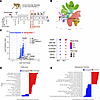
We previously demonstrated that blocking TGF-β with galunisertib, a safe, orally available small drug, reactivated latent SIV in vivo by shifting T cells toward a transitional effector phenotype. Here, we investigated the mechanisms underlying this effect using single-cell RNA sequencing, metabolic profiling, and high-dimensional spectral flow cytometry of samples from SIV-infected, antiretroviral therapy–treated (ART-treated) macaques before and after galunisertib. To characterize virus-transcribing, infected cells during ART, we developed a novel, sensitive SIV Transcripts Capture Assay (SCAP) that detected 127 SIV-expressing cells within lymph node single-cell transcriptome libraries. Galunisertib drove broad metabolic reprogramming in CD4+ T cells, with transcriptional upregulation of inflammatory and mitochondrial biosynthesis pathways, confirmed by Seahorse profiling. Metabolomics revealed increased energy metabolites and amino acids and enhanced metabolic flux without proliferation. SIV transcript–positive cells before galunisertib were metabolically quiescent compared with cells without detectable viral transcripts. After galunisertib, virus-expressing cells showed a dramatic metabolic activation, with upregulation of glycolysis, fatty acid metabolism, and TNF-α signaling. High-dimensional flow cytometry demonstrated effects beyond CD4+ T cells, including fewer tissue-resident memory T cells, but more inflammatory macrophages. In conclusion, SCAP represents a specific tool for characterizing rare SIV-infected cells transcribing virus during ART, and it reveals TGF-β as a key mediator of viral latency in vivo through metabolic suppression.
Authors
Romaila Abd-El-Raouf, Jakob Harrison-Gleason, Jinhee Kim, Ching Man Wai, Kayla L. Yerlioglu, Catarina Ananias-Saez, Alec Ksiazek, Jeffrey T. Poomkudy, Mariluz Araínga, Deepanwita Bose, Claudia Cicala, James Arthos, Francois J. Villinger, Ramon Lorenzo-Redondo, Elena Martinelli
Abstract
Dysfunctional white adipose tissue contributes to the development of obesity-related morbidities, including insulin resistance, dyslipidemia, and other metabolic disorders. Adipose tissue macrophages (ATMs) accumulate in obesity and play both beneficial and harmful roles in the maintenance of adipose tissue homeostasis and function. Despite their importance, the molecules and mechanisms that regulate these diverse functions are not well understood. Lipid-associated macrophages (LAMs), the dominant subset of obesity-associated ATMs, accumulate in crown-like structures and are characterized by a metabolically activated and proinflammatory phenotype. We previously identified CD9 as a surface marker of LAMs. However, the contribution of CD9 to the activation and function of LAMs during obesity is unknown. Using a myeloid-specific CD9 knockout model, we show that CD9 supports ATM-adipocyte adhesion and crown-like structure formation. Furthermore, CD9 promotes the expression of pro-fibrotic and extracellular matrix remodeling genes. Loss of myeloid CD9 reduces adipose tissue fibrosis, increases visceral adipose tissue accumulation, and improves global metabolic outcomes during diet-induced obesity. These results identify CD9 as a causal regulator of pathogenic LAM functions, highlighting CD9 as a potential therapeutic target for treating obesity-associated metabolic disease.
Authors
Julia Chini, Nicole DeMarco, Dana V. Mitchell, Sam J. McCright, Kaitlyn M. Shen, Divyansi Pandey, Rachel L. Clement, Jessica Miller, Rajan Jain, Deanne M. Taylor, Mitchell A. Lazar, David A. Hill
Abstract
Nicotinamide adenine dinucleotide (NAD⁺) is essential for cellular metabolism, DNA repair, and stress responses. NAD+ is synthesized from nicotinamide, nicotinic acid (collectively termed niacin), and tryptophan. In humans, deficiencies in these nutrients result in pellagra, marked by dermatitis, diarrhea, and dementia. The dermatitis associated with pellagra typically manifests as photodermatosis in sun-exposed areas. This study examined the effects of NAD+ deficiency on skin homeostasis using epidermis-specific Nampt conditional knockout (cKO) mice. These mice displayed substantial NAD⁺ depletion, reduced poly(ADP-ribose) polymerase (PARP) activity, and increased DNA damage. Consequently, Nampt cKO mice developed spontaneous skin inflammation and epidermal hyperplasia. RNA sequencing and immunohistochemical analyses demonstrated increased interleukin-36 (IL-36) cytokine expression, suggesting that DNA repair-related genomic stress triggers keratinocyte-driven IL-36 production, which promotes inflammation. Furthermore, reduced collagen17A1 expression and elevated thymic stromal lymphopoietin (TSLP) levels were observed. NAD+ repletion by transdermal supplementation of nicotinamide mononucleotide (NMN) suppressed the rise of IL-36 levels and skin inflammation. These findings underscore the importance of Nampt-mediated NAD⁺ metabolism for epidermal stability and indicate that NAD⁺ depletion may contribute to IL-36-mediated skin inflammation, offering insights for therapeutic strategies in inflammatory skin disorders.
Authors
Taiki Seki, Jun-Dal Kim, Yasuhito Yahara, Hitoshi Uchida, Keisuke Yaku, Mariam Karim, Teruhiko Makino, Tadamichi Shimizu, Takashi Nakagawa

Abstract
Mitochondria-derived acyl-coenzyme A (acyl-CoA) species chemically modify proteins, causing damage when acylation reactions are not adequately detoxified by enzymatic removal or protein turnover. Defects in genes encoding the mitochondrial respiratory complex and TCA cycle enzymes have been shown to increase acyl-CoA levels due to reduced enzymatic flux and result in proteome-wide hyperacylation. How pathologically elevated acyl-CoA levels contribute to bioenergetics failure in mitochondrial diseases is not well understood. Here, we demonstrate that bulk succinylation from succinyl-CoA excess consumes the enzymatic cofactor NAD+ and propagates mitochondrial respiratory defects in a zebrafish model of succinyl-CoA ligase deficiency, a childhood-onset encephalomyopathy. To explore this mechanism as a therapeutic target, we developed a workflow to monitor behavioral defects in sucla2–/– zebrafish and show that hypersuccinylation is associated with reduced locomotor behavior and impaired ability to execute food hunting patterns. Postembryonic NAD+ precursor supplementation restores NAD+ levels and improves locomotion and survival of sucla2–/– zebrafish. Mechanistically, nicotinamide and nicotinamide riboside require the NAD+-dependent desuccinylase Sirt5 to enhance oxidative metabolism and nitrogen elimination through the urea cycle. Collectively, NAD+ supplementation activates Sirt5 to protect against damage to mitochondria and locomotor circuits caused by protein succinylation.
Authors
Joy Richard, Giulia Lizzo, Noélie Rochat, Adrien Jouary, Pedro T.M. Silva, Alice Parisi, Stefan Christen, Sofia Moco, Michael B. Orger, Philipp Gut

Abstract
Neutrophils play a pivotal role in the progression of metabolic dysfunction–associated steatohepatitis (MASH) by mediating inflammatory responses. However, the heterogeneity of neutrophil subsets in MASH and their specific contributions to disease progression remain unclear. In this study, analysis of liver biopsies from 265 patients revealed a strong association between elevated neutrophil counts and MASH severity, particularly fibrosis. Five distinct neutrophil subsets were identified in human liver tissue, with PAD4+ neutrophils serving as key drivers in MASH progression. Mechanistically, PAD4+ neutrophils generate neutrophil extracellular traps (NETs) and activate hepatic stellate cells via the TAOK1-dependent MAPK signaling pathway. Inhibition of PAD4+ neutrophils in vivo attenuated the progression of liver fibrosis without exacerbating liver injury. Collectively, these findings elucidate the pivotal involvement of PAD4+ neutrophils in MASH progression and identify them as promising therapeutic targets for mitigating fibrosis and inflammation.
Authors
Jiajia Shen, Shanshan Huang, Yaohui Wang, Qingyuan Wang, Shibo Lin, Wei Guan, Yingyun Gong, Yiming Si, Ming Zhao, Hongwen Zhou, Hui Liang
No posts were found with this tag.


