
Metabolism

Abstract
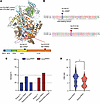
The induced membrane technique (IMT) is a 2-stage surgical intervention for critical-sized bone defects (CSBD), yet the metabolic mechanisms driving neovascularization within the induced membrane remain unclear. Here, we combined a rat IMT model, metabolomic profiling, and endothelial assays to delineate the role of purine metabolism in neovascularization of type H vessels. Using a rat IMT model and metabolomic profiling, we identified purine metabolism as the most substantial pathway during the formation of induced membranes, with consistent trends of adenosine, inosine, hypoxanthine, and xanthosine found in both serum and induced membranes. Histological analysis revealed abundant CD31hiEMCNhi type H vessels, critical for osteogenesis, within the induced membrane. Inhibition of purine metabolism suppressed the CD31hiEMCNhi type H phenotype in human umbilical vein endothelial cells, whereas treatment with inosine, hypoxanthine, or xanthosine promoted endothelial activation and the type H phenotype. Notably, inosine and hypoxanthine displayed parallel changes across consistent systemic (serum) and local alterations (induced membranes), highlighting their potential as serum indicators of induced membrane formation. Collectively, these findings uncover a previously unrecognized metabolic mechanism driving neovascularization of type H vessels in induced membranes and suggest purine metabolites as promising indicators and therapeutic targets for improving IMT outcomes as well as CBSD treatment.
Authors
Yung-Heng Hsu, Guan-Lin Lee, Yu-Chih Lin, Mei-Feng Chen, Yuhan Chang, Ying-Yu Wu, Chih-Chien Hu
Abstract
Mitochondrial gene expression is essential for oxidative phosphorylation that generates the bulk of the cellular ATP, and mitochondrial dysfunction is a common cause of human metabolic diseases. Recently, the first pathogenic variants in the only known mitochondrial RNA polymerase (POLRMT) were described in patients presenting with a wide variety of clinical manifestations, including hypotonia, short stature, and developmental delay. Here, we modeled two human pathogenic POLRMT variants by creating the corresponding substitutions in mice: the dominant S582F and the recessive R984C variant. Mice homozygous for the R984C variant showed perinatal lethality without apparent embryonic developmental defects, a finding consistent with a failure to adapt to the metabolic transition to oxidative metabolism at birth. Mice carrying the S582F variant were viable and exhibited decreased mitochondrial transcript levels due to impaired de novo transcription. However, mtDNA levels and in organello mtDNA replication remained normal, which recapitulates the molecular phenotypes observed in patients. Altogether, our findings indicate that the conserved arginine near the active site is essential for POLRMT function, while the serine in the intercalating hairpin of the N-terminal domain is required for near-genome length transcription but not primase activity. This study highlights genotype-phenotype differences and provides new insights into POLRMT function.
Authors
David Alsina, Diana Rubalcava-Gracia, Kristina Bubb, Rodolfo Garcia-Villegas, Akos Vegvari, Roberta Filograna, Florian A. Rosenberger, Camilla Koolmeister, Nils-Göran Larsson
Abstract
Given the central role of peroxisomes in lipid metabolism and redox homeostasis, we hypothesized that peroxisomal activity is critical for sustaining β cell function and identity. Pex5 deletion models were employed to investigate loss of peroxisomal function on glucose-stimulated insulin secretion (GSIS), oxidative stress, and β cell maturity markers. Peroxisome deficiency in male mice resulted in elevated GSIS. Glucose intolerance developed despite increased insulin secretion. Ion mobility mass spectrometry revealed oxidation of insulin proteins, and a truncated insulin 2-derived peptide, in islets from mice with a tissue-specific deficiency in peroxisomes. Peroxisome loss of function increased multiple markers of oxidative stress, including altered metabolite profiles, lipid peroxidation, and protein carbonylation. These findings reveal that increased secretion of oxidized insulin protein is insufficient to regulate whole-body glucose homeostasis. Peroxisome deficiency also reduced markers of β cell maturity. Based on these outcomes, we identified the peroxisome organelle as a key regulatory component of glucose homeostasis by protecting insulin from oxidative modification and degradation and by supporting maintenance of mature β cells.
Authors
J. Jason Collier, Caroline R. Cothern, Maggie P. Ducote, Thomas M. Martin, Melissa A. Linden, Robert C. Noland, David H. Burk, Samuel D. Dupuy, Michael D. Karlstad, Krisztian Stadler, Sarah S. Hirschbeck, Thanh D. Do, Anastasia Coldren, Marcela Brissova, Teayoun Kim, Kirk M. Habegger, Sujoy Ghosh, Zane A. Vickery, Qudus Sarumi, Shawn R. Campagna, Susan J. Burke
Abstract
It is necessary for naïve CD8 T cells to be actively maintained in a quiescent metabolic state in order to respond robustly to infection while avoiding inappropriate activation during homeostasis. With age this quiescent state is lost and the CD8 T cell response to infection decreases. The factors regulating metabolic quiescence of CD8 T cells and how this regulation is lost during aging are not completely understood. Herein, we identify the transcription factor AFF3 as a regulator of metabolic quiescence in naïve CD8 T cells. While naïve AFF3 deficient CD8 T cells are more metabolically active prior to infection, they have reduced accumulation in response to viral infection, and this is correlated with a poor capacity to engage glycolysis. During aging in both murine and human CD8 T cells, AFF3 expression is decreased. In mice, this is associated with a loss of metabolic quiescence and reduced capacity to accumulate following infection. Our data highlight the role of metabolic regulation in CD8 T cell quiescence and identifies a transcription factor that may be a target to reinvigorate CD8 T cell responses during aging.
Authors
Molly E. Lumnitzer, Stefanie F. Valbon, Stephanie A. Condotta, Allison E. Norlander, Sheng Liu, Jun Wan, Martin J. Richer
Abstract
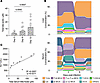
Postnatal growth faltering is a pervasive problem among extremely preterm infants that is independently associated with adverse neurodevelopmental outcomes. We previously observed that preterm infants with poor postnatal growth have altered development of the intestinal microbiota relative to preterm infants with appropriate postnatal growth. Here, we used gnotobiotic mice to investigate whether these differences in microbiota development independently contribute to growth faltering. We found that colonization of neonatal mice with microbiotas from extremely preterm infants with poor growth reproduced postnatal growth impairment and induced a metabolic signature of enhanced lipolysis and fatty acid oxidation in the mice, characterized by elevated hepatic acylcarnitines and circulating ketones. In mice colonized at birth with microbiotas from infants with poor growth, postnatal treatment with microbiotas from infants with appropriate growth prevented growth impairment. These results indicate that altered development of the intestinal microbiota contributes to growth faltering in extremely preterm infants, and that microbiota modification can restore postnatal growth.
Authors
Kwai Tei Chan Poon, Se Hyang Han, Olga Ilkayeva, Michael J. Muehlbauer, Christopher B. Newgard, Charles M. Cotten, Patricia L. Ashley, Patrick C. Seed, John F. Rawls, Noelle E. Younge
Abstract
Antiviral immunity profoundly impacts host metabolism, which can, in turn, modulate immune responses and influence disease pathology. The liver orchestrates systemic bile acid (BA) metabolism, a pathway disrupted in chronic liver diseases such as viral hepatitis. BAs are increasingly recognized for their immunomodulatory properties. Thus, improved understanding of the interplay between immunity and BA metabolism may reveal novel therapeutic avenues. Using lymphocytic choriomeningitis virus (LCMV) as a model, we investigated the interplay between chronic virus infection, BA metabolism, and immunity. Chronic LCMV infection increased BA levels and shifted circulating and liver BA composition toward host-derived, conjugated BAs. Hepatic BA transport and synthesis genes were broadly downregulated, in part depending on CD8+ T cells. Pharmacological inhibition of the main hepatic transporter of conjugated BAs, NTCP (Slc10a1), increased hepatic damage, while combined genetic disruption of the BA transporters Slco1a1, Slco1a4, and Slco1b2, responsible for the hepatic reuptake of unconjugated BA, reduced liver pathology and impaired antiviral CD8+ T cell responses. These findings reveal a reciprocal interplay between BA metabolism and CD8+ T cells, expanding our understanding of adaptive immunity in viral hepatitis. They also highlight how immunometabolic changes in liver disease may affect adaptive immune responses against infections.
Authors
Felix Clemens Richter, Zsofia Keszei, Csilla Viczenczova, Maximilian Baumgartner, Henrique G. Colaço, Magdalena Siller, Lisa Holnsteiner, Hatoon Baazim, Anna Hofmann, Aubrey Burrett, Anna Schönbichler, Lukas Endler, Joel Xu En Wong, Laura Antonio-Herrera, Oleksandr Petrenko, Fabian Amman, Jakob-Wendelin Genger, Claudia D. Fuchs, Hubert Scharnagl, Hanns-Ulrich Marschall, Thomas Reiberger, Karl S. Lang, Clarissa Campbell, Michael Trauner, Andreas Bergthaler
Abstract
Amyotrophic lateral sclerosis (ALS) is a devastating neurodegenerative disease caused by the selective loss of upper and lower motor neurons. There is a considerable variability in the disease progression of sporadic ALS, but the molecular basis for phenotypic heterogeneity remains largely unknown. ALS patients often manifest systemic metabolic abnormalities such as glucose intolerance and hypermetabolic state. We conducted reverse translational research to explore therapeutic targets in ALS based on the systemic metabolic alterations in patients and identified several metabolites associated with the disease progression, including metabolites involved in the expanded endocannabinoid system (ECS). In particular, the levels of N-acyl taurines (NATs) were correlated with the longitudinal change in the revised ALS functional rating scale and survival. Experiments with ALS cellular models, iPS cells derived from ALS patients and SOD1G93A transgenic mice revealed that PF-04457845, a fatty acid amide hydrolase inhibitor, upregulated the expanded ECS, particularly the levels of NATs and ameliorated motor neuron degeneration through the regulation of microglial environment, synapse plasticity, and neuronal development. These results collectively indicate that dysregulation of NATs is associated with ALS progression and PF-04457845 may represent a potential disease-modifying therapy for ALS.
Authors
Daisuke Ito, Madoka Iida, Yohei Iguchi, Atsushi Hashizume, Shinichiro Yamada, Yoshiyuki Kishimoto, Shota Komori, Kazuki Obara, Shuto Nishisaki, Satoshi Yokoi, Teppei Shimamura, Yuto Takemoto, Masahiro Nakatochi, Tomohiro Akashi, Kunihiko Hinohara, Hyeon-Cheol Lee-Okada, Yohei Okada, Junichi Niwa, Gen Sobue, Shinji Tanaka, Ken Takashina, Takehiko Yokomizo, Masahisa Katsuno
Abstract
While glucagon-like peptide-1 receptor agonists (GLP-1RAs) like semaglutide are effective in treating obesity, up to 45% of the resulting weight loss can be attributed to skeletal muscle loss. Given the critical role of skeletal muscle in health and mobility, this may have long-term adverse consequences. Herein we investigated whether oral ketone ester supplementation could prevent semaglutide-induced muscle loss and explored the underlying molecular mechanisms. Obese, glucose-intolerant mice received vehicle, semaglutide, or semaglutide plus a β-hydroxybutyrate–generating ketone ester for three weeks. Body composition, muscle strength, and endurance were assessed longitudinally. Semaglutide monotherapy reduced lean mass, impaired muscle strength, and suppressed mitochondrial gene expression while elevating atrophy-related genes in skeletal muscle samples. Co-administration with ketone ester preserved skeletal muscle mass and function without compromising fat loss. Mechanistically, ketone ester co-treatment prevented semaglutide-induced changes in mitochondrial and atrophy-related gene expression, suggesting mitochondrial defects and impaired ketone metabolism contribute to GLP-1RA-induced muscle loss. Together, these findings demonstrate that ketone ester supplementation can maintain muscle mass and performance during semaglutide-driven weight loss. These preclinical findings support ketone therapy as a promising strategy to counteract the sarcopenia-promoting effects of GLP-1RAs and warrant clinical evaluation to assess its translational potential.
Authors
Yasser Abuetabh, Mya A. Schmidt, Masaaki Naganuma, Ramana Vaka, Mahmoud A. El-Ghiaty, Shelly Braun, Ethan A. Kwan, Matthieu C.P. Zolondek, Darius Sahid, Laibah Khan, Rajat K. Shandal, Ashley L. Trudeau, Yaning Li, Sufyan O. Malik, Qiuyu Sun, Danica K. Roth, Daniela Y. Morales-Llamas, Jody L. Levasseur, Mourad Ferdaoussi, Richard P. Fahlman, Jason R.B. Dyck
Abstract
The composition of mitochondrial membrane lipids is crucial to cellular respiration, as seen in Barth syndrome (BTHS), a rare disease affecting skeletal muscle, heart, and neutrophils. In BTHS, mutations in the tafazzin (TAZ) gene reduce remodeling of the mitochondrial phospholipid, cardiolipin, causing mitochondrial dysfunction in skeletal muscle and heart. Here, we investigated effects of altering polyunsaturated fatty acid content in cardiolipin using preclinical models of BTHS. In vitro, the absence of TAZ did not impair omega-3 fatty acid incorporation into cardiolipin and resulted in increased turnover of these acyl chains. To examine this in a functional model, we generated a muscle-specific knockout mouse of TAZ (TAZ MKO), which recapitulated the human phenotype in skeletal muscle. Supplementing the diet of TAZ MKO with fish-oil-derived omega-3 fatty acids prevented lean mass loss, improved mitochondrial respiration, altered mitochondrial structure, and revealed moderate improvements in the stress response. Surprisingly, no diet-induced changes to cardiolipin species were observed in the TAZ MKO, but other phospholipids were altered by both genotype and diet, revealing complex regulation and potential compensation. Overall, this work provides evidence that omega-3 fatty acid supplementation is beneficial in muscle lacking TAZ to improve quality of life when added to current BTHS treatments.
Authors
Katharina B. Kuentzel, Ana Vranešević, Samuel A.J. Trammell, Fabian Finger, Jesper F. Havelund, Yvette L. Schooneveldt, Ivan Bradić, Nicoline R. Andersen, Anna S. Hassing, Katja T. Michler, Martin R. Larsen, Zachary Gerhart-Hines, Steven M. Claypool, Jonas T. Treebak, Andreas M. Fritzen, Matthew P. Gillum, Steen Larsen, Nils Færgeman, Trisha J. Grevengoed
Abstract
Cellular senescence is an irreversible stress response, which leads to loss of cellular function and remodelling of the cellular secretory profile. In humans, pancreatic β-cells undergo cellular senescence during the progression to type 2 diabetes (T2D). However, the mechanism linking β-cell senescence to islet dysfunction remains unknown and thus, the therapeutic potential of targeting senescent cells in T2D is not established. Herein, we identified a subpopulation of senescent β-cells expressing p21, which emerged early in the progression of T2D in humans and mice. Spatial transcriptomics, and proteomics analyses confirmed senescence and loss of cellular identity in this subpopulation in humans. Functional analysis revealed lack of glucose responsiveness, high basal insulin secretion, and transcription of senescence-associated secretory phenotype (SASP) factors. SASP factors from p21+ β-cells induced secondary senescence in neighbouring cells, characterized by dysfunction and loss of identity. Janus kinase inhibitors (JAKi) counteracted the induction of secondary senescence and restored β-cell function in islets from humans with T2D and in high-fat diet-fed mice. These findings reveal the critical role of p21+ β-cells in T2D pathogenesis and the therapeutic potential of targeting this pathophysiological process.
Authors
Kanako Iwasaki, Priscila Carapeto, Cristian Abarca, Francesko Hela, Stephanie Sanjines, Sebastian Pena, Sandra Le, Hui Pan, Maya Jackson, Christopher Cahill, Ayush Midha, Juliana Alcoforado Diniz, Dylan Baker, Sergii Domanskyi, Sara Espinoza, Alejandro Pena, Francisco G. Cigarroa, Jillian L. Woodworth, Jeffrey H. Chuang, Vesna D. Garovic, James L. Kirkland, Tamara Tchkonia, Nicolas Musi, George A. Kuchel, Paul Robson, Cristina Aguayo-Mazzucato
No posts were found with this tag.


