
Research ArticleImmunology
Open Access |  10.1172/jci.insight.208009
Single-cell RNA sequencing reveals clonally expanded CD4+ tissue-resident memory T cells in histidyl-tRNA synthetase–induced myositis
Decheng Li,1,2 Daniel P. Reay,1 Iago Pinal-Fernandez,3,4 Maria Casal-Dominguez,3,4 Andrew L. Mammen,3,4,5 Sarah L. Gaffen,1 Timothy B. Oriss,1 and Dana P. Ascherman1
1Division of Rheumatology and Clinical Immunology, Department of Medicine, University of Pittsburgh, Pittsburgh, Pennsylvania, USA.
2Tsinghua Medicine, Tsinghua University, Beijing, China.
3National Institute of Arthritis and Musculoskeletal and Skin Diseases, National Institutes of Health, Bethesda, Maryland, USA.
4Department of Neurology and
5Department of Medicine, Johns Hopkins University School of Medicine, Baltimore, Maryland, USA.
Address correspondence to: Dana P. Ascherman, Biomedical Tower South 711, 3500 Terrace Street, Pittsburgh, Pennsylvania 15231, USA. Phone: 412.383.8123; Email: DAscher@pitt.edu.
Find articles by Li, D. in: PubMed | Google Scholar
1Division of Rheumatology and Clinical Immunology, Department of Medicine, University of Pittsburgh, Pittsburgh, Pennsylvania, USA.
2Tsinghua Medicine, Tsinghua University, Beijing, China.
3National Institute of Arthritis and Musculoskeletal and Skin Diseases, National Institutes of Health, Bethesda, Maryland, USA.
4Department of Neurology and
5Department of Medicine, Johns Hopkins University School of Medicine, Baltimore, Maryland, USA.
Address correspondence to: Dana P. Ascherman, Biomedical Tower South 711, 3500 Terrace Street, Pittsburgh, Pennsylvania 15231, USA. Phone: 412.383.8123; Email: DAscher@pitt.edu.
Find articles by Reay, D. in: PubMed | Google Scholar
1Division of Rheumatology and Clinical Immunology, Department of Medicine, University of Pittsburgh, Pittsburgh, Pennsylvania, USA.
2Tsinghua Medicine, Tsinghua University, Beijing, China.
3National Institute of Arthritis and Musculoskeletal and Skin Diseases, National Institutes of Health, Bethesda, Maryland, USA.
4Department of Neurology and
5Department of Medicine, Johns Hopkins University School of Medicine, Baltimore, Maryland, USA.
Address correspondence to: Dana P. Ascherman, Biomedical Tower South 711, 3500 Terrace Street, Pittsburgh, Pennsylvania 15231, USA. Phone: 412.383.8123; Email: DAscher@pitt.edu.
Find articles by
Pinal-Fernandez, I.
in:
PubMed
|
Google Scholar
|

1Division of Rheumatology and Clinical Immunology, Department of Medicine, University of Pittsburgh, Pittsburgh, Pennsylvania, USA.
2Tsinghua Medicine, Tsinghua University, Beijing, China.
3National Institute of Arthritis and Musculoskeletal and Skin Diseases, National Institutes of Health, Bethesda, Maryland, USA.
4Department of Neurology and
5Department of Medicine, Johns Hopkins University School of Medicine, Baltimore, Maryland, USA.
Address correspondence to: Dana P. Ascherman, Biomedical Tower South 711, 3500 Terrace Street, Pittsburgh, Pennsylvania 15231, USA. Phone: 412.383.8123; Email: DAscher@pitt.edu.
Find articles by Casal-Dominguez, M. in: PubMed | Google Scholar
1Division of Rheumatology and Clinical Immunology, Department of Medicine, University of Pittsburgh, Pittsburgh, Pennsylvania, USA.
2Tsinghua Medicine, Tsinghua University, Beijing, China.
3National Institute of Arthritis and Musculoskeletal and Skin Diseases, National Institutes of Health, Bethesda, Maryland, USA.
4Department of Neurology and
5Department of Medicine, Johns Hopkins University School of Medicine, Baltimore, Maryland, USA.
Address correspondence to: Dana P. Ascherman, Biomedical Tower South 711, 3500 Terrace Street, Pittsburgh, Pennsylvania 15231, USA. Phone: 412.383.8123; Email: DAscher@pitt.edu.
Find articles by Mammen, A. in: PubMed | Google Scholar
1Division of Rheumatology and Clinical Immunology, Department of Medicine, University of Pittsburgh, Pittsburgh, Pennsylvania, USA.
2Tsinghua Medicine, Tsinghua University, Beijing, China.
3National Institute of Arthritis and Musculoskeletal and Skin Diseases, National Institutes of Health, Bethesda, Maryland, USA.
4Department of Neurology and
5Department of Medicine, Johns Hopkins University School of Medicine, Baltimore, Maryland, USA.
Address correspondence to: Dana P. Ascherman, Biomedical Tower South 711, 3500 Terrace Street, Pittsburgh, Pennsylvania 15231, USA. Phone: 412.383.8123; Email: DAscher@pitt.edu.
Find articles by
Gaffen, S.
in:
PubMed
|
Google Scholar
|
1Division of Rheumatology and Clinical Immunology, Department of Medicine, University of Pittsburgh, Pittsburgh, Pennsylvania, USA.
2Tsinghua Medicine, Tsinghua University, Beijing, China.
3National Institute of Arthritis and Musculoskeletal and Skin Diseases, National Institutes of Health, Bethesda, Maryland, USA.
4Department of Neurology and
5Department of Medicine, Johns Hopkins University School of Medicine, Baltimore, Maryland, USA.
Address correspondence to: Dana P. Ascherman, Biomedical Tower South 711, 3500 Terrace Street, Pittsburgh, Pennsylvania 15231, USA. Phone: 412.383.8123; Email: DAscher@pitt.edu.
Find articles by Oriss, T. in: PubMed | Google Scholar
1Division of Rheumatology and Clinical Immunology, Department of Medicine, University of Pittsburgh, Pittsburgh, Pennsylvania, USA.
2Tsinghua Medicine, Tsinghua University, Beijing, China.
3National Institute of Arthritis and Musculoskeletal and Skin Diseases, National Institutes of Health, Bethesda, Maryland, USA.
4Department of Neurology and
5Department of Medicine, Johns Hopkins University School of Medicine, Baltimore, Maryland, USA.
Address correspondence to: Dana P. Ascherman, Biomedical Tower South 711, 3500 Terrace Street, Pittsburgh, Pennsylvania 15231, USA. Phone: 412.383.8123; Email: DAscher@pitt.edu.
Find articles by Ascherman, D. in: PubMed | Google Scholar
Published July 23, 2026 - More info
JCI Insight. 2026;11(17):e208009. https://doi.org/10.1172/jci.insight.208009.
© 2026 Li et al. This work is licensed under the Creative Commons Attribution 4.0 International License. To view a copy of this license, visit http://creativecommons.org/licenses/by/4.0/.
Received: April 13, 2026; Accepted: July 20, 2026

-
Results
Upregulation of signature genes associated with TRMs and type II interferon signaling in human anti–Jo-1 myositis. Given the important role of TRMs in driving autoimmune disease responses (33, 35–37), we used bulk RNA sequencing to assess a large compendium of muscle biopsy specimens (n = 662) derived from patients with various IIM subtypes and other non-inflammatory muscle conditions for transcriptional evidence of TRMs. Consistent with prior findings, genes encoding TRM-associated cell surface markers and adhesion molecules were significantly upregulated in muscle tissue of the anti–Jo-1 myositis subset compared with muscle tissue from healthy controls, including CD69, CXCR6, and CXCR3 (Figure 1A). Additionally, TRM-related transcription factors, such as ZNF683 and PRDM1, also exhibited increased expression in diseased muscle tissue from anti–Jo-1 myositis. Notably, expression of many TRM signature genes appeared to be preferentially upregulated in anti–Jo-1 myositis relative to other myositis subtypes (Figure 1B). When compared with subsets of dermatomyositis (DM), immune-mediated necrotizing myopathy (IMNM), and inclusion body myositis (IBM), for example, anti–Jo-1 myositis tissue demonstrated significantly elevated levels of ITGAL, CXCR6, and CXCR3, further indicating a prominent tissue-resident T cell phenotype. As shown by additional volcano plots comparing anti–Jo-1 myositis with different subsets of myositis (Supplemental Figure 1, A–C; supplemental material available online with this article; https://doi.org/10.1172/jci.insight.208009DS1) and the heatmap of Figure 1C, the profile of TRM signature genes clearly distinguished anti–Jo-1 myositis from non–Jo-1 anti-synthetase myositis, DM, and IMNM — but overlapped considerably with anti-PM/Scl and IBM subsets.
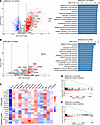 Figure 1
Bulk RNA sequencing analysis of human myositis biopsy specimens. (A) Left: Volcano plot displaying differentially expressed genes (DEGs) in anti–Jo-1 myositis patients (n = 37) compared with healthy controls (n = 37), identified by Wilcoxon’s rank-sum test, with adjusted P value < 0.05 and log2 fold change (FC) > 1 or < –1. Genes with log2 FC > 1 and adjusted P < 0.05 were designated as upregulated (Up); those with a log2 FC < –1 and adjusted P < 0.05 were classified as downregulated (Down). Right: Bar plot demonstrating Gene Ontology (GO) enrichment analysis comparing anti–Jo-1 myositis with healthy muscle, ordered by normalized enrichment scores. FDR < 0.05; minimum gene IDs in category = 20. (B) Left: Volcano plot displaying DEGs in anti–Jo-1 myositis patients (n = 37) compared with all other myositis subtypes (n = 625). Right: Bar plot demonstrating GO enrichment analysis ordered by normalized enrichment scores. FDR < 0.05; minimum gene IDs in category = 20. (C) The depicted heatmap demonstrates relative expression of key genes representative of resident memory T cells (TRMs) in different subsets of inflammatory myopathy, genetic myopathies, and healthy controls. Genes reflecting type I versus type II interferon responses are included. (D and E) Illustration of gene set enrichment for selected biological processes identified by GO comparing anti–Jo-1 myositis with non-myositis controls (D) or other subtypes of myositis (E). ASyS, anti-synthetase syndrome; DM, dermatomyositis; IBM, inclusion body myositis; PM, polymyositis; Scl, scleroderma; HMGCR, HMG-CoA reductase (3-hydroxy-3-methylglutaryl-CoA reductase); SRP, signal recognition particle.
Beyond these specific TRM-associated genes/transcription factors, enrichment analysis based on Gene Ontology (GO) revealed several immune regulatory programs potentially involved in the pathogenesis of anti–Jo-1 myositis (Figure 1, A and B). Chief among these were transcriptional programs associated with antigen recognition, adaptive immune responses, and type II interferon (IFN-γ) signaling. Notably, gene set enrichment analysis (GSEA) demonstrated that both the production of, and the response to, type II interferon were increased, suggesting a potential regulatory network driven by IFN-γ signaling in anti–Jo-1 myositis (Figure 1, D and E; and Supplemental Figure 1D) distinct from that of non–Jo-1 anti-synthetase and DM subsets (the latter dominated by type I interferon; Supplemental Figure 1E).
Given these results, we sought to determine whether a similar transcriptional profile could be identified in our murine model of HRS-induced myositis. Bulk RNA sequencing of hamstring muscle tissue revealed that the murine model consistently exhibited a comparable gene expression pattern, with high expression of Ifng, Cd69, Cxcr6, and Prdm1, as well as low expression of Cd103 (Supplemental Figure 2A). Importantly, enrichment of genes linked to adaptive immunity and type II interferon signaling was also detected in muscle tissue from the mouse model (5) (Supplemental Figure 2B), further paralleling human disease.
scRNA-seq profiles of muscle-infiltrating cells in experimental HRS-induced myositis reveals the presence of CD4+ tissue-resident memory cells. Based on these observations derived from bulk RNA sequencing of muscle tissue from human IIM subsets as well as our mouse model, we next performed scRNA-seq of hamstring muscle tissue in HRS-induced myositis to more precisely characterize the gene expression profile of muscle-infiltrating TRMs. Per established protocol, C57BL/6 mice were immunized with a single dose of recombinant murine HRS (diluted in PBS) in bilateral hamstring muscles, a procedure that uniformly induces robust in situ inflammation (5, 38, 39). Two weeks after immunization (a time point corresponding to peak inflammation) (39), muscle-infiltrating and other tissue-resident cells were isolated and processed to allow for RNA extraction, library preparation, and subsequent scRNA-seq (Figure 2A). Samples from individual mice were pooled as outlined in Figure 2, and datasets from 4 independent experiments were analyzed simultaneously.
 Figure 2
Single-cell profile in murine muscle with histidyl-tRNA synthetase–induced myositis. (A) Histidyl-tRNA synthetase (HRS) immunization protocol for induction of experimental murine myositis. (B) UMAP visualization of 8 clusters identified in muscle-infiltrating cells of mice with HRS-induced myositis, 2 weeks after immunization (n = 28,903 cells). (C) UMAP visualization of 8 clusters split into 2 groups corresponding to HRS-immunized versus PBS control mice. While HRS group A and PBS control group A each consisted of pooled muscle cell–infiltrating cells from 2 mice, HRS groups B–D and PBS control groups B–D each consisted of pooled cells from 3–5 mice. (D) Percentage of each cell cluster in total cell counts across different sample groups (HRS A–D, PBS A–D). (E) The normalized expression of Cd3e and Cd28 visualized in feature plots.
After quality control, batch correction, and normalization, 28,903 cells were obtained for analysis. Unsupervised clustering of these cells was performed, which identified 8 clusters (annotated by known genes) that were then visualized by uniform manifold approximation and projection (UMAP) (Figure 2B and Supplemental Figure 3). In comparison with the PBS-treated control group, HRS-immunized mice demonstrated significant infiltration of immune cells, including macrophages/dendritic cells (DCs), B cells, and T/NK cells (Figure 2C). Notably, neutrophils represented only a small percentage of cells isolated from muscle tissue of mice immunized with recombinant HRS (Figure 2D).
The cluster containing T and NK cells was initially annotated based on the top 10 marker genes within this cluster (Supplemental Figure 4A), including Cd3e and Cd28, both of which were found exclusively in this cluster on the UMAP (Figure 2E). To analyze the T cell profile of HRS-immunized mice in greater detail, the T/NK cluster was separated and renormalized for subclustering. We recovered 2,698 cells from this analysis, leading to the identification of 7 clusters within the overall T/NK population as visualized by UMAP (Figure 3A). Notably, NK and NKT cells were clearly delineated from T cell subpopulations following this reclustering process. As in the initial analysis, each subcluster was identified based on its top 10 marker genes (Supplemental Figure 4B). Using annotations derived from known resident memory marker genes (40, 41), this analysis revealed that, on average, CD4+ TRMs accounted for 22% of the original T/NK cell cluster (Figure 3B).
 Figure 3
T/NK cell subclusters in muscle tissue from HRS-induced myositis. (A) UMAP visualization of subsets of T/NK cells isolated from muscle tissue in HRS-induced myositis. (B) Percentage of each subcluster in total T/NK cell counts displayed across different samples. (C) Dot plot displaying the expression level of highly expressed genes for each subcluster. (D) Normalized expression of Cd4, Cd8a, Cd69, Cd103, Cxcr6, and Ifng visualized in violin plots. (E) Cells isolated from muscle were analyzed by spectral flow cytometry. Data show CD3+CD4+, CD3+FoxP3+, and CD3+CD161+ cells; more detailed assessment of CD3+CD4+CD69+ cells demonstrates a CD44+CD62LloCCR7loCXCR6hi phenotype. Also shown is IFN-γ expression with or without in vitro stimulation with αTCR activation beads and PMA/ionomycin. (F) Pseudotime trajectory combined with identified cell clusters in T/NK subsets, visualized in the depicted UMAP. Color corresponds to the clusters shown in A. (G) Pseudotime values across different T/NK subsets, visualized via violin plots and aligned from low to high.
We then assessed levels of gene expression for previously described TRM markers representing cell surface as well as intracellular molecules — including Cd69, Cd103, Itgal, Cxcr3, Cd44, Ifng, and several different transcription factors (40–42) (Supplemental Table 1). In addition to being a general marker of T cell activation, the protein encoded by Cd69 inhibits T cell egress from resident tissues and is one of the most prominent markers of CD4+ TRMs. Cd69 was widely expressed across multiple T cell clusters and is therefore not exclusive to CD4+ TRMs (Figure 3, C and D). Interestingly, another adhesion molecule commonly associated with TRMs, Cd103 (Itgae), was not highly expressed by the CD4+ TRMs isolated from involved muscle (Figure 3D). An additional adhesion molecule encoded by Itgal (CD11a) (8) was expressed across a range of cells, but appeared to be mostly concentrated within CD4+ TRMs as well as NK/NKT cells (Supplemental Figure 5, A and B). The chemokine receptor CXCR6 has been widely reported as a major marker of TRMs residing in various tissues (18–20), which was corroborated by the highly enriched expression of Cxcr6 in the CD4+ TRM cluster. Cxcr3 expression followed a similar pattern across cell clusters (43) (Supplemental Figure 5, A and B). Although not limited to CD4+ TRMs, expression of the T cell activation marker gene Cd44 was nonetheless elevated, consistent with a memory-like signature (Figure 3C). Ifng was also expressed in CD4+ TRMs and, to a lesser extent, NK and NKT cells (Figure 3, C and D). Intriguingly, Ifng expression was found in both proliferating and non-proliferating CD4+ TRMs and CD8+ T cells (Figure 3D).
Of the transcription factors commonly associated with TRMs, Prdm1 (Blimp-1) expression and Notch1 (Notch) expression were both increased in CD4+ TRMs (Figure 3C), while Zfp683 (Hobit) was not (22, 44) (Supplemental Figure 5A). Runx3 was expressed in CD4+ TRMs as expected but was also observed in CD8+ T cells as well as other subsets of NK/NKT cells (Supplemental Figure 5A). Several other genes reported to be decreased in TRMs, including S1pr1, Sell (CD62L), and Tcf7 (TCF1) (21), were, in fact, expressed at low levels in CD4+ TRMs relative to other cells in the T/NK cluster (Figure 3C). Thus, these transcription profiles were consistent with a tissue-resident memory CD4+ T cell phenotype residing in inflamed muscle.
Among other cell types within the original T/NK cluster, CD8+ T cells and NK/NKT cells shared some cytotoxicity-related genes (Cd7 [ref. 45], Klrd1, Klrk1) that were distinct from the expression of NK-specific marker genes such as Gama and Prf1 (46). Proliferating T cells uniquely expressed cell cycle regulation genes such as Pclaf and Mcm3 but also shared a number of marker genes with CD4+ TRMs and CD8+ T cells (e.g., Cd44, Cxcr6, Cxcr3, Ifng, Prdm1, Runx3, Notch1) (Supplemental Figure 5, A and B). The cluster containing central memory T cells (TCMs) and effector memory T cells (TEMs) was delineated based on high expression of Il7r, Tcf7, and Slamf6 (47). Importantly, the gene expression signature of murine TRMs from scRNA-seq analysis paralleled the bulk RNA-sequencing analysis of human myositis muscle tissue with regard to key markers. Coupled with Flex scRNA-seq of archived human muscle biopsy specimens demonstrating TRM expression profiles in muscle-infiltrating CD4+ T cells linked to different subsets of myositis (including anti–Jo-1 myositis; Supplemental Figures 6 and 7), these results provide compelling evidence that CD4+ TRMs are associated with human anti–Jo-1 myositis and thus could be a critical area for future investigation.
In order to assess TRM phenotype at the protein level, we performed flow cytometry analysis of muscle-infiltrating/resident cells. Various T cell subsets, including FoxP3+ Tregs, as well as NK and NKT cells, could be readily discerned (Figure 3E). The relative proportions of each were generally comparable to those obtained by sequencing (Figure 3B). The CD4+ TRM cells were very similar to the scRNA-seq subset in terms of high CD69 expression with comparatively low CD103. This analysis aligned with the expected activation phenotype of CD4+CD69+ cells indicated by RNA sequencing (Figure 3, C and D), demonstrating the following cell surface expression profile: CD44+CD62LloCCR7loCXCR6hi. Importantly, these cells expressed IFN-γ following in vitro reactivation (Figure 3E). More detailed analysis demonstrated that CD69+CCR7–CXCR6hi-gated cells (marking CD4+ TRMs) were capable of producing IFN-γ (see below), consistent with findings from our transcriptomic analysis.
The scRNA-seq subclustering analysis did not definitively identify CD8+ TRMs (Figure 3A), and flow analysis also failed to support a significant population of CD8+ TRMs based on relatively low CD44 expression combined with relatively high expression of CD62L and CCR7 (Supplemental Figure 8). Notably, FoxP3+ Tregs presented with a cell surface phenotype distinct from other CD4+ and CD8+ T cells (Supplemental Figure 8), consistent with findings at the level of RNA expression (Figure 3, C and D). Therefore, although direct quantitative comparison between the two methods was limited by variations in the respective phenotypes identified, the relative proportions of muscle-infiltrating inflammatory cells and their overall phenotype were in general agreement between scRNA-seq and flow cytometric approaches.
To investigate the temporal/developmental relationship between different cell types represented in the T/NK cell cluster, we performed pseudotime analysis. Using naive T cells as a point of origin, this analysis revealed two major trajectories in T/NK subsets. One branching trajectory corresponded to CD8+ T cells, and the other corresponded to CD4+ T cells and Tregs (Figure 3F). These trajectories highlighted the distinctive developmental pathway/branch points of CD4+ TRMs within the CD4+ lineage. In addition, the pseudotime value of each cell subset suggested that CD4+ TRMs occupy a later developmental stage compared with TCMs/TEMs and Tregs (Figure 3G). Overall, this pseudotime analysis indicated a possible differentiation progressing from naive T cells to TCMs/TEMs to CD4+ TRMs (48).
Pathway and cell-cell communication analysis indicates participation of CD4+ TRMs in myositis-associated immune responses. Despite numerous investigations of CD8+ TRMs in recent years, characterization of CD4+ TRMs has not been as thoroughly elucidated (7). In order to gain insight into the functional significance of CD4+ TRMs in our model of HRS-induced myositis, we conducted GO and Kyoto Encyclopedia of Genes and Genomes (KEGG) enrichment analysis on differentially expressed genes in CD4+ TRMs within the T/NK cluster of muscle-infiltrating lymphocytes (Figure 4, A and B). Pathways were filtered based on an adjusted P value less than 0.05 and sorted by normalized enrichment score, from high to low, after which the top 70 relevant pathways were selected (Supplemental Tables 2 and 3). These analyses indicated that CD4+ TRMs participate in immune cell differentiation and proliferation, as well as regulation of different aspects of the innate immune response. With regard to signaling pathways, TCR activation was notable in CD4+ TRMs as expected, as were pathways associated with downstream activation of NF-κB, TNF, and MAPK.
 Figure 4
Functional characterization of TRMs and interactions between TRMs and other cells. (A and B) Pathway analysis based on DEGs of CD4+ TRMs in T/NK subsets. Pathways generated from GO were selected from the top 40 pathways identified (A), and pathways generated from KEGG were selected from the top 70 (B). (C and D) Interaction strength between CD4+ TRMs and all clusters, visualized by network and scatter plots. Interaction strength represents ligand-receptor–mediated intercellular communication probability, measured by CellChat. Vertex size is proportional to cell counts in each cluster (C). In scatter plots displaying sources and targets across all clusters (D), dot size is proportional to the number of inferred outgoing and incoming links associated with each cell cluster. (E) Heatmap visualizing TNF and IFN-γ signaling networks across different clusters. Horizontal and longitudinal axes indicate incoming and outgoing signals, respectively. (F and G) Interaction strength between CD4+ TRMs and other subsets of T/NK cells, again depicted as network and scatter plots with parameters as described for plots shown in C and D. (H) Heatmap visualizing TNF signaling network across different subsets within T/NK cells. Horizontal and longitudinal axes indicate respective incoming and outgoing signals.
To delve deeper into signaling pathways mediated by CD4+ TRMs, we performed cell-cell communication analysis with CellChat, a software algorithm based on predicted ligand-receptor pairs. This analysis demonstrated that CD4+ TRMs exhibited distinct interaction characteristics that were unique in comparison with other cell subsets. Review of Figure 4 indicates that muscle-residing CD4+ TRMs showed strong interactions with macrophages/DCs and neutrophils (Figure 4, C and D), despite the fact that neutrophils represent a small percentage of muscle-infiltrating cell populations based on histology, flow cytometry, and cell clustering analyses (which could be skewed by neutrophil fragmentation and/or low mRNA content). When interaction strength was assessed, CD4+ TRMs demonstrated slightly higher outgoing strength, but comparable incoming strength, relative to the other cell types (Figure 4, C and D). Among the signaling interactions observed in muscle-infiltrating cells (Supplemental Figure 9), TNF- and IFN-γ–mediated signals were notably transduced from CD4+ TRMs to macrophages or DCs (Figure 4E). Migration inhibitory factor (MIF), a proinflammatory chemokine regulating macrophage migration, was also expressed by CD4+ TRMs. These findings suggested a robust reciprocal communication between CD4+ TRMs and macrophages (as well as DCs) in HRS-induced myositis, aligning with previous reports that chemokines from macrophages are involved in sustaining TRMs (49, 50), which, in turn, are important for macrophage tissue retention (51).
Beyond these reciprocal interactions with macrophages, we investigated communication networks between CD4+ TRMs and other muscle-infiltrating T cell populations (Figure 4, F and G, and Supplemental Figure 10). These analyses demonstrated that although CD4+ TRMs delivered signals to CD8+ T cells, proliferating T cells, and Tregs, incoming signals from other cell types were more prominent (Figure 4G). One of the most notable observed interactions involved the TNF/TNFR2 signaling network, which showed TNF-mediated signals delivered from CD4+ TRMs to Tregs (Figure 4H). This observation is of potential importance since TNFR2 (Tnfsfr1) expression is largely responsible for maximizing the suppressive function of Tregs (52, 53), suggesting a dual, possibly inflammation-balancing, role for CD4+ TRMs in both promotion of muscle pathology and activation of suppressive Treg function.
Clonally expanded CD4+ TRMs predominate in HRS-induced myositis. By employing TCR sequencing in combination with scRNA-seq, we comprehensively analyzed clonotypes in different T cell subsets across multiple independent experiments. These analyses provided insights regarding the clonal expansion of CD4+ TRMs as well as the activation status of T cells within inflamed muscle. Clonal expansion was classified as large (5 < x ≤ 15), medium (3 < x ≤ 5), and small (1 < x ≤ 3) based on the number of expanded clones sharing identical TCRα/TCRβ CDR3 sequences. Note that none of the clonotypes were represented by more than 15 cells. Importantly, the expansion levels were similar in 4 independent experiments, with control groups showing no T cell clonal expansion (Figure 5A and Supplemental Table 4). Among all muscle-infiltrating cell types within the T/NK cell cluster, CD4+ TRMs and proliferating T cells exhibited the highest frequency of expanded clonotypes. In CD4+ TRMs, for example, we detected a total of 20 expanded clonotypes containing between 5 and 15 cells (Figure 5B).
 Figure 5
Expanded clonotypes are identified in muscle tissue from HRS-induced myositis. (A) While the bar graphs demonstrate counts of T cell clonotypes (cell counts from a specific clonotype) across 5 independent experimental groups of mice (n = 4 HRS-immunized, n = 1 PBS control group), the checkerboard matrix depicts the number of overlapping clonotypes as a heatmap. Clonotypes were divided into 4 groups based on the number of identical TCR clones (5 < large ≤ 15; 3 < medium ≤ 5; 1 < small ≤ 3; single = 1). (B) Complementary analyses show clonotype counts across 7 subsets of T/NK cells (bar graphs), with the number of overlapping clonotypes illustrated by the accompanying heatmap. (C) Clustering network of different clonotypes from CD4+ TRMs with high sequence similarity, where each dot represents a specific clonotype and cluster size indicates the number of connections with different clonotypes. The accompanying sequence logo plot shows CDR3 (TCRα and TCRβ) sequence alignments of 3 clusters of clonotypes selected from this plot (circled and numbered). (D) Clusters of closely related clonotypes with a high degree of similarity in TCR sequence were divided into 4 groups based on cell counts contained within the specified cluster (hyper > 10; 5 < large < 10; 2 < medium ≤ 5; small ≤ 2). Right: Counts of shared clusters across 4 HRS-treated groups, with the number of overlapping clusters represented by the accompanying heatmap.
Shared clonotypes were evaluated between different cell populations within the T/NK cell cluster in 4 independent experiments. Each experiment shared 3 to 8 clonotypes with the other independent experiments, strongly suggesting a highly reproducible antigen-specific T cell response in HRS-induced myositis. Intriguingly, several clonotypes were shared between CD4+ TRMs and proliferating T cells, demonstrating that a portion of CD4+ TRMs were undergoing a proliferative process indicative of ongoing TRM activation (Figure 5B and Supplemental Table 5).
Based on previously published research, the antigen specificity of TCRs is highly dependent on a short protein motif in the CDR3 sequence (54). Because CDR3 sequences demonstrating sequence homology indicate shared processes involved in antigen recognition and clonotype convergence (54–57), we analyzed the similarity of TCRα/TCRβ CDR3 amino acid sequences within CD4+ TRM subsets derived from 4 independent experiments. An algorithm named igraph (https://igraph.org/) was used to group closely related clonotypes into clusters (Figure 5C and Supplemental Tables 6 and 7). Clusters 11, 17, and 24 were each composed of related clonotypes from different experimental samples demonstrating a high degree of TCRα/TCRβ CDR3 sequence consensus, with a similar start sequence of CASS/CASG (Figure 5C). Further analysis showed that many of the remaining clusters were also composed of clonotypes from separate experiments (Figure 5D). Notably, the presence of clusters composed of clonotypes from multiple samples across independent datasets strongly suggested shared antigen recognition (likely driven by HRS) based on similarity of TCR sequences (Figure 5, C and D).
Refinement of CD4+ TRM gene signature and function during long-term follow-up of HRS-induced myositis. To assess the profile of CD4+ TRMs over time, we performed scRNA-seq analysis of muscle tissue at a later time point following immunization with HRS, namely at 6 weeks after immunization (Figure 6A). Muscle-infiltrating cells were processed for scRNA-seq as described above. After quality control and normalization, 13,598 cells were recovered for analysis. Subsequently, unsupervised clustering of muscle-infiltrating cells was conducted using the same standard as in the previously presented analysis of muscle tissue harvested 2 weeks after immunization. Again, 8 clusters annotated by designated marker genes were identified and visualized by UMAP (Figure 6B). Comparison of muscle-infiltrating/resident cells isolated 2 weeks and 6 weeks after immunization suggested a modest decrease in inflammatory cell burden (based on reduced proportion of CD45+ to CD45– cells; data not shown), with contraction of the T/NK, macrophage/DC, and B cell clusters over that time period (Figure 6B and Supplemental Figure 11A). Further subclustering of T/NK cells yielded 1,380 cells, including a subset of CD4+ TRMs that were annotated based on the same criteria as in Figure 3. Notably, the general proportion of CD4+ TRMs within the T/NK cluster was retained (Figure 6C and Supplemental Figure 11B). Furthermore, the overall gene expression profile of this subcluster demonstrated persistence of the CD4+ TRM phenotype from 2 weeks to 6 weeks after immunization (Figure 6D and Supplemental Table 1).
 Figure 6
CD4+ TRM profile is maintained from 2 to 6 weeks after HRS immunization. (A) HRS immunization protocol for assessment of experimental murine myositis at different time points. (B) UMAP visualization of 8 clusters identified in muscle-infiltrating cells from mice with HRS-induced myositis, with the percentage of each cell cluster relative to total cell number shown in the bar graphs at right. Data were pooled from mice immunized with recombinant HRS at 2 weeks (n = 2) and 6 weeks (n = 3) after immunization. (C) UMAP visualization of T/NK cell subclusters, along with the percentage of each subcluster of T/NK cells (bar graphs, right). (D) Average expression level of signature genes in CD4+ TRMs at 2 versus 6 weeks after immunization.
Consistent with these findings, flow cytometry also demonstrated a stable phenotype of cell surface marker expression characteristic of CD4+ TRMs over this time period (Supplemental Figure 12). Limited variations from the 2-week time point were observed among other cell types in the T/NK cluster, with slightly decreased naive cells (CD69–CCR7+) and a concomitant increase in CD69+CCR7+ inflammatory T cells likely marking TEMs/TCMs (Supplemental Figure 13). Similarly, the number of FoxP3+ cells was stable over the 2- to 6-week period. Finally, the ability to express IFN-γ at the protein level upon in vitro activation was also found to be stable in CD69+CCR7–CXCR6+CD4+ TRMs (Supplemental Figure 14). Though the overall phenotypic differences among subsets were subtle, they generally mirrored changes in the relative proportions of naive cells and TEMs/TCMs by sequencing analysis (Figure 6C). Most importantly, these results demonstrated CD4+ TRM stability over time at both the RNA and protein expression levels.
Given the persistence of (presumed) antigen-experienced CD4+ TRMs in muscle tissue over time (demonstrated by both scRNA-seq and flow cytometry), clonal expansion was examined at the 6-week post-immunization time point through combined TCR and RNA sequencing. Clonal expansion decreased from 2 weeks to 6 weeks (Figure 7A), indicating an overall reduction in inflammation within the muscle. Nevertheless, at both the 2-week and 6-week time points, most of the expanded clonotypes resided within the CD4+ TRM population (Figure 7, B and C). At 2 weeks after HRS immunization, 11 clonotypes were shared between proliferating T cells and CD4+ TRMs, while this number decreased to only 3 at the 6-week time point (Figure 7, D and E). This relative contraction suggests that CD4+ TRMs proliferated and differentiated significantly less in the absence of additional exogenous antigen stimulation. Furthermore, there were no shared clonotypes within the CD4+ TRM cell compartment when mice harvested 2 versus 6 weeks after immunization were compared, which might suggest dynamic attrition and recruitment in the context of declining numbers of TRMs over an extended period. Unfortunately, because individual mice could not be assessed at both 2 weeks and 6 weeks after immunization via sequential muscle biopsies (for technical reasons), it was not possible to determine whether CD4+ TRMs expressing a particular TCR would have been maintained over time.
 Figure 7
Expanded T cell clonotypes 2 weeks and 6 weeks after immunization. (A) Counts of T cell clonotypes (segregated by clonotype size) at 2 versus 6 weeks after immunization. (B and C) Counts of T cell clonotypes residing in 7 subsets of T/NK cells 2 weeks (B) and 6 weeks (C) after immunization. (D and E) Shared clonotypes between designated subclusters of T/NK cells 2 weeks (D) and 6 weeks (E) after immunization.


