
Abstract
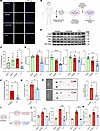
DNA damage and the cGAS/STING innate immunity pathway have been associated with fibrosis in systemic sclerosis (SSc), but a cause-and-effect role has not been established. Here we report the effects of TY1, a noncoding RNA drug of the exomer class that suppresses DNA damage and thereby inhibits cGAS/STING, in human SSc cells and in 2 preclinical models of SSc. Macrophages from patients with SSc exhibited high levels of phosphorylated DNA damage, cGAS, 2’3’-cGAMP, STING, and IFNs, all of which decreased after exposure to TY1. In mice that had been injected s.c. with bleomycin to model SSc, exercise tolerance, cardiac function, lung hydroxyproline, and skin thickness reverted to normal levels after oral administration of TY1. Similar therapeutic benefits were evident in the genetic tsk-1 mouse model of SSc. TY1 attenuated fibrosis and/or fibrotic gene expression in both mouse models of SSc and in human SSc skin fibroblasts. Our findings support the hypothesis that cGAS/STING, activated by DNA damage, is a key driver of fibrosis in SSc.
Authors
Xaviar M. Jones, Salwa Soussi, Alessandra Ciullo, Kara Tsi, Weixin Liu, Liang Li, Mario Fournier, Thassio Mesquita, Alberto M. Marchevsky, Nunzio Bottini, Francesco Boin, Ahmed G.E. Ibrahim, Eduardo Marbán
This file is in Adobe Acrobat (PDF) format. If you have not installed and configured the Adobe Acrobat Reader on your system.
Having trouble reading a PDF?
PDFs are designed to be printed out and read, but if you prefer to read them online, you may find it easier if you increase the view size to 125%.
Having trouble saving a PDF?
Many versions of the free Acrobat Reader do not allow Save. You must instead save the PDF from the JCI Online page you downloaded it from. PC users: Right-click on the Download link and choose the option that says something like "Save Link As...". Mac users should hold the mouse button down on the link to get these same options.
Having trouble printing a PDF?
- Try printing one page at a time or to a newer printer.
- Try saving the file to disk before printing rather than opening it "on the fly." This requires that you configure your browser to "Save" rather than "Launch Application" for the file type "application/pdf", and can usually be done in the "Helper Applications" options.
- Make sure you are using the latest version of Adobe's Acrobat Reader.


