
Research ArticleInflammationNephrology
Open Access |  10.1172/jci.insight.194604
MYO1C is a urinary extracellular vesicle biomarker and mediator of podocyte injury in diabetic nephropathy
Zihao Zhao,1,2,3 Qianqian Yan,4 Sijie Zhou,2,3 Fengxun Liu,2,3 Yong Liu,2,3 Jingjing Ren,2,3,5 Shaokang Pan,2,3 Zhenjie Liu,2,3 Dongwei Liu,2,3 Zhangsuo Liu,2,3,6,7 and Jiayu Duan2,3,6,7,8
1Department of Radiology, Department of Nephrology, and
2Nephrology Research Center, The First Affiliated Hospital of Zhengzhou University, Zhengzhou, China.
3Key Laboratory of Precision Diagnosis and Treatment for Chronic Kidney Disease in Henan Province, Zhengzhou, China.
4Department of Nephrology, Institute of Kidney Diseases, West China Hospital of Sichuan University, Chengdu, China.
5Department of Medicine, Brigham and Women’s Hospital and Harvard Medical School, Boston, Massachusetts, USA.
6Innovation Center of Basic Research for Metabolic-Associated Fatty Liver Disease, Ministry of Education of China, Zhengzhou, China.
7Tianjian Laboratory of Advanced Biomedical Sciences, Academy of Medical Sciences Zhengzhou University, Zhengzhou, China.
8The Jockey Club School of Public Health and Primary Care, The Chinese University of Hong Kong, Hong Kong, China.
Address correspondence to: Jiayu Duan or Zhangsuo Liu, No.1 Longhu Middle Ring, Jinshui District, Zhengzhou, 450052, P.R. China. Phone: 0371.66278517; Email: jyduan@zzu.edu.cn (JD); Email: zhangsuoliu@zzu.edu.cn (Zhangsuo Liu).
Find articles by Zhao, Z. in: PubMed | Google Scholar
1Department of Radiology, Department of Nephrology, and
2Nephrology Research Center, The First Affiliated Hospital of Zhengzhou University, Zhengzhou, China.
3Key Laboratory of Precision Diagnosis and Treatment for Chronic Kidney Disease in Henan Province, Zhengzhou, China.
4Department of Nephrology, Institute of Kidney Diseases, West China Hospital of Sichuan University, Chengdu, China.
5Department of Medicine, Brigham and Women’s Hospital and Harvard Medical School, Boston, Massachusetts, USA.
6Innovation Center of Basic Research for Metabolic-Associated Fatty Liver Disease, Ministry of Education of China, Zhengzhou, China.
7Tianjian Laboratory of Advanced Biomedical Sciences, Academy of Medical Sciences Zhengzhou University, Zhengzhou, China.
8The Jockey Club School of Public Health and Primary Care, The Chinese University of Hong Kong, Hong Kong, China.
Address correspondence to: Jiayu Duan or Zhangsuo Liu, No.1 Longhu Middle Ring, Jinshui District, Zhengzhou, 450052, P.R. China. Phone: 0371.66278517; Email: jyduan@zzu.edu.cn (JD); Email: zhangsuoliu@zzu.edu.cn (Zhangsuo Liu).
Find articles by Yan, Q. in: PubMed | Google Scholar
1Department of Radiology, Department of Nephrology, and
2Nephrology Research Center, The First Affiliated Hospital of Zhengzhou University, Zhengzhou, China.
3Key Laboratory of Precision Diagnosis and Treatment for Chronic Kidney Disease in Henan Province, Zhengzhou, China.
4Department of Nephrology, Institute of Kidney Diseases, West China Hospital of Sichuan University, Chengdu, China.
5Department of Medicine, Brigham and Women’s Hospital and Harvard Medical School, Boston, Massachusetts, USA.
6Innovation Center of Basic Research for Metabolic-Associated Fatty Liver Disease, Ministry of Education of China, Zhengzhou, China.
7Tianjian Laboratory of Advanced Biomedical Sciences, Academy of Medical Sciences Zhengzhou University, Zhengzhou, China.
8The Jockey Club School of Public Health and Primary Care, The Chinese University of Hong Kong, Hong Kong, China.
Address correspondence to: Jiayu Duan or Zhangsuo Liu, No.1 Longhu Middle Ring, Jinshui District, Zhengzhou, 450052, P.R. China. Phone: 0371.66278517; Email: jyduan@zzu.edu.cn (JD); Email: zhangsuoliu@zzu.edu.cn (Zhangsuo Liu).
Find articles by Zhou, S. in: PubMed | Google Scholar
1Department of Radiology, Department of Nephrology, and
2Nephrology Research Center, The First Affiliated Hospital of Zhengzhou University, Zhengzhou, China.
3Key Laboratory of Precision Diagnosis and Treatment for Chronic Kidney Disease in Henan Province, Zhengzhou, China.
4Department of Nephrology, Institute of Kidney Diseases, West China Hospital of Sichuan University, Chengdu, China.
5Department of Medicine, Brigham and Women’s Hospital and Harvard Medical School, Boston, Massachusetts, USA.
6Innovation Center of Basic Research for Metabolic-Associated Fatty Liver Disease, Ministry of Education of China, Zhengzhou, China.
7Tianjian Laboratory of Advanced Biomedical Sciences, Academy of Medical Sciences Zhengzhou University, Zhengzhou, China.
8The Jockey Club School of Public Health and Primary Care, The Chinese University of Hong Kong, Hong Kong, China.
Address correspondence to: Jiayu Duan or Zhangsuo Liu, No.1 Longhu Middle Ring, Jinshui District, Zhengzhou, 450052, P.R. China. Phone: 0371.66278517; Email: jyduan@zzu.edu.cn (JD); Email: zhangsuoliu@zzu.edu.cn (Zhangsuo Liu).
Find articles by Liu, F. in: PubMed | Google Scholar
1Department of Radiology, Department of Nephrology, and
2Nephrology Research Center, The First Affiliated Hospital of Zhengzhou University, Zhengzhou, China.
3Key Laboratory of Precision Diagnosis and Treatment for Chronic Kidney Disease in Henan Province, Zhengzhou, China.
4Department of Nephrology, Institute of Kidney Diseases, West China Hospital of Sichuan University, Chengdu, China.
5Department of Medicine, Brigham and Women’s Hospital and Harvard Medical School, Boston, Massachusetts, USA.
6Innovation Center of Basic Research for Metabolic-Associated Fatty Liver Disease, Ministry of Education of China, Zhengzhou, China.
7Tianjian Laboratory of Advanced Biomedical Sciences, Academy of Medical Sciences Zhengzhou University, Zhengzhou, China.
8The Jockey Club School of Public Health and Primary Care, The Chinese University of Hong Kong, Hong Kong, China.
Address correspondence to: Jiayu Duan or Zhangsuo Liu, No.1 Longhu Middle Ring, Jinshui District, Zhengzhou, 450052, P.R. China. Phone: 0371.66278517; Email: jyduan@zzu.edu.cn (JD); Email: zhangsuoliu@zzu.edu.cn (Zhangsuo Liu).
Find articles by Liu, Y. in: PubMed | Google Scholar
1Department of Radiology, Department of Nephrology, and
2Nephrology Research Center, The First Affiliated Hospital of Zhengzhou University, Zhengzhou, China.
3Key Laboratory of Precision Diagnosis and Treatment for Chronic Kidney Disease in Henan Province, Zhengzhou, China.
4Department of Nephrology, Institute of Kidney Diseases, West China Hospital of Sichuan University, Chengdu, China.
5Department of Medicine, Brigham and Women’s Hospital and Harvard Medical School, Boston, Massachusetts, USA.
6Innovation Center of Basic Research for Metabolic-Associated Fatty Liver Disease, Ministry of Education of China, Zhengzhou, China.
7Tianjian Laboratory of Advanced Biomedical Sciences, Academy of Medical Sciences Zhengzhou University, Zhengzhou, China.
8The Jockey Club School of Public Health and Primary Care, The Chinese University of Hong Kong, Hong Kong, China.
Address correspondence to: Jiayu Duan or Zhangsuo Liu, No.1 Longhu Middle Ring, Jinshui District, Zhengzhou, 450052, P.R. China. Phone: 0371.66278517; Email: jyduan@zzu.edu.cn (JD); Email: zhangsuoliu@zzu.edu.cn (Zhangsuo Liu).
Find articles by Ren, J. in: PubMed | Google Scholar
1Department of Radiology, Department of Nephrology, and
2Nephrology Research Center, The First Affiliated Hospital of Zhengzhou University, Zhengzhou, China.
3Key Laboratory of Precision Diagnosis and Treatment for Chronic Kidney Disease in Henan Province, Zhengzhou, China.
4Department of Nephrology, Institute of Kidney Diseases, West China Hospital of Sichuan University, Chengdu, China.
5Department of Medicine, Brigham and Women’s Hospital and Harvard Medical School, Boston, Massachusetts, USA.
6Innovation Center of Basic Research for Metabolic-Associated Fatty Liver Disease, Ministry of Education of China, Zhengzhou, China.
7Tianjian Laboratory of Advanced Biomedical Sciences, Academy of Medical Sciences Zhengzhou University, Zhengzhou, China.
8The Jockey Club School of Public Health and Primary Care, The Chinese University of Hong Kong, Hong Kong, China.
Address correspondence to: Jiayu Duan or Zhangsuo Liu, No.1 Longhu Middle Ring, Jinshui District, Zhengzhou, 450052, P.R. China. Phone: 0371.66278517; Email: jyduan@zzu.edu.cn (JD); Email: zhangsuoliu@zzu.edu.cn (Zhangsuo Liu).
Find articles by Pan, S. in: PubMed | Google Scholar
1Department of Radiology, Department of Nephrology, and
2Nephrology Research Center, The First Affiliated Hospital of Zhengzhou University, Zhengzhou, China.
3Key Laboratory of Precision Diagnosis and Treatment for Chronic Kidney Disease in Henan Province, Zhengzhou, China.
4Department of Nephrology, Institute of Kidney Diseases, West China Hospital of Sichuan University, Chengdu, China.
5Department of Medicine, Brigham and Women’s Hospital and Harvard Medical School, Boston, Massachusetts, USA.
6Innovation Center of Basic Research for Metabolic-Associated Fatty Liver Disease, Ministry of Education of China, Zhengzhou, China.
7Tianjian Laboratory of Advanced Biomedical Sciences, Academy of Medical Sciences Zhengzhou University, Zhengzhou, China.
8The Jockey Club School of Public Health and Primary Care, The Chinese University of Hong Kong, Hong Kong, China.
Address correspondence to: Jiayu Duan or Zhangsuo Liu, No.1 Longhu Middle Ring, Jinshui District, Zhengzhou, 450052, P.R. China. Phone: 0371.66278517; Email: jyduan@zzu.edu.cn (JD); Email: zhangsuoliu@zzu.edu.cn (Zhangsuo Liu).
Find articles by Liu, Z. in: PubMed | Google Scholar
1Department of Radiology, Department of Nephrology, and
2Nephrology Research Center, The First Affiliated Hospital of Zhengzhou University, Zhengzhou, China.
3Key Laboratory of Precision Diagnosis and Treatment for Chronic Kidney Disease in Henan Province, Zhengzhou, China.
4Department of Nephrology, Institute of Kidney Diseases, West China Hospital of Sichuan University, Chengdu, China.
5Department of Medicine, Brigham and Women’s Hospital and Harvard Medical School, Boston, Massachusetts, USA.
6Innovation Center of Basic Research for Metabolic-Associated Fatty Liver Disease, Ministry of Education of China, Zhengzhou, China.
7Tianjian Laboratory of Advanced Biomedical Sciences, Academy of Medical Sciences Zhengzhou University, Zhengzhou, China.
8The Jockey Club School of Public Health and Primary Care, The Chinese University of Hong Kong, Hong Kong, China.
Address correspondence to: Jiayu Duan or Zhangsuo Liu, No.1 Longhu Middle Ring, Jinshui District, Zhengzhou, 450052, P.R. China. Phone: 0371.66278517; Email: jyduan@zzu.edu.cn (JD); Email: zhangsuoliu@zzu.edu.cn (Zhangsuo Liu).
Find articles by Liu, D. in: PubMed | Google Scholar
1Department of Radiology, Department of Nephrology, and
2Nephrology Research Center, The First Affiliated Hospital of Zhengzhou University, Zhengzhou, China.
3Key Laboratory of Precision Diagnosis and Treatment for Chronic Kidney Disease in Henan Province, Zhengzhou, China.
4Department of Nephrology, Institute of Kidney Diseases, West China Hospital of Sichuan University, Chengdu, China.
5Department of Medicine, Brigham and Women’s Hospital and Harvard Medical School, Boston, Massachusetts, USA.
6Innovation Center of Basic Research for Metabolic-Associated Fatty Liver Disease, Ministry of Education of China, Zhengzhou, China.
7Tianjian Laboratory of Advanced Biomedical Sciences, Academy of Medical Sciences Zhengzhou University, Zhengzhou, China.
8The Jockey Club School of Public Health and Primary Care, The Chinese University of Hong Kong, Hong Kong, China.
Address correspondence to: Jiayu Duan or Zhangsuo Liu, No.1 Longhu Middle Ring, Jinshui District, Zhengzhou, 450052, P.R. China. Phone: 0371.66278517; Email: jyduan@zzu.edu.cn (JD); Email: zhangsuoliu@zzu.edu.cn (Zhangsuo Liu).
Find articles by Liu, Z. in: PubMed | Google Scholar
1Department of Radiology, Department of Nephrology, and
2Nephrology Research Center, The First Affiliated Hospital of Zhengzhou University, Zhengzhou, China.
3Key Laboratory of Precision Diagnosis and Treatment for Chronic Kidney Disease in Henan Province, Zhengzhou, China.
4Department of Nephrology, Institute of Kidney Diseases, West China Hospital of Sichuan University, Chengdu, China.
5Department of Medicine, Brigham and Women’s Hospital and Harvard Medical School, Boston, Massachusetts, USA.
6Innovation Center of Basic Research for Metabolic-Associated Fatty Liver Disease, Ministry of Education of China, Zhengzhou, China.
7Tianjian Laboratory of Advanced Biomedical Sciences, Academy of Medical Sciences Zhengzhou University, Zhengzhou, China.
8The Jockey Club School of Public Health and Primary Care, The Chinese University of Hong Kong, Hong Kong, China.
Address correspondence to: Jiayu Duan or Zhangsuo Liu, No.1 Longhu Middle Ring, Jinshui District, Zhengzhou, 450052, P.R. China. Phone: 0371.66278517; Email: jyduan@zzu.edu.cn (JD); Email: zhangsuoliu@zzu.edu.cn (Zhangsuo Liu).
Find articles by Duan, J. in: PubMed | Google Scholar
Published January 22, 2026 - More info
JCI Insight. 2026;11(5):e194604. https://doi.org/10.1172/jci.insight.194604.
© 2026 Zhao et al. This work is licensed under the Creative Commons Attribution 4.0 International License. To view a copy of this license, visit http://creativecommons.org/licenses/by/4.0/.
Received: April 16, 2025; Accepted: January 12, 2026


-
Results
Validation of differential RNA expression in uEVs from patients with T2DN and patients with type 2 diabetes. In this study, 6 highly dysregulated RNAs identified in our previous work (MYO1C, SP100, hsa-miR-21-5p, hsa-miR-22-3p, hsa-miR-378a-3p, and hsa-miR-486-5p) were selected for initial evaluation. A training and validation cohort was used to evaluate the expression of these 6 RNAs by qPCR and to develop a machine learning classification model through feature selection, parameter optimization, and cross-validation. Following the completion of model training, a time-independent test cohort was employed to independently assess the performance and generalizability of the model.
The 33 type 2 diabetes and 40 T2DN patient groups in the training and validation cohort had no significant differences in age, sex, BMI, or 24-hour urine volume (Supplemental Table 1; supplemental material available online with this article; https://doi.org/10.1172/jci.insight.194604DS1). However, the T2DN group exhibited significantly higher 24-hour proteinuria and UACR levels, consistent with clinical features of DN. TEM and NanoFCM analyses confirmed the presence of cup-shaped vesicles (50–120 nm) in both type 2 diabetes and T2DN uEVs, with characteristic EV protein marker CD9 expression (Figure 1, A and B). qPCR results revealed significant upregulation of 5 RNAs in T2DN uEVs compared with type 2 diabetes, except for hsa-miR-486-5p (P = 0.400). Specifically, MYO1C mRNA (P = 0.004), SP100 mRNA (P = 0.025), hsa-miR-21-5p (P < 0.001), hsa-miR-22-3p (P = 0.037), and hsa-miR-378a-3p (P = 0.018) were significantly elevated in patients with T2DN (Supplemental Figure 1A). ROC curve analysis revealed limited discriminatory power of individual RNAs for T2DN (AUC, 0.56–0.74; Supplemental Figure 1B), while their correlation with clinical renal function indicators, shown in a heatmap, offered further pathophysiological insights (Supplemental Figure 1C).
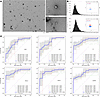 Figure 1
Characterization and validation of uEVs and candidate RNAs in the training cohort. (A) Representative TEM images of uEVs, with enlarged views on the right illustrating uEVs from patients with T2DN and patients with type 2 diabetes. Scale bar: 100 nm. (B) NanoFCM analysis of uEVs particle size distribution histograms and CD 9 fluorescence scatter plots for T2DN (top) and T2DM (type 2 diabetes, bottom) groups. (C) Five-fold cross-validation ROC curves for classification models constructed using BPNN, SVM, RF, XGBoost, CatBoost, and LightGBM, respectively.
Construction and cross-validation of the machine learning model in the training cohort. Five differentially expressed RNAs (MYO1C, SP100, hsa-miR-21-5p, hsa-miR-22-3p, and hsa-miR-378a-3p) identified by above results in the training cohort were used for further machine learning classification model building steps. Given the importance of avoiding redundancy in feature selection for machine learning, linear regression analysis was used to confirm the absence of significant multicollinearity among the 5 RNA features, thereby supporting their inclusion in the model (Supplemental Figure 1D). Six machine learning algorithms — Random Forest (RF), Support Vector Machine (SVM), Backpropagation Neural Network (BPNN), and 3 gradient boosting methods (XGBoost, LightGBM, and CatBoost) — were employed to develop classification models. The performance of all 6 models is summarized in Figure 1C, with the following AUC values: BPNN, 0.77 (95% CI, 0.68–0.80); SVM, 0.82 (95% CI, 0.73–0.90); RF, 0.85 (95% CI, 0.78–0.91); XGBoost, 0.87 (95% CI, 0.80–0.94); LightGBM, 0.82 (95% CI, 0.75–0.89); and CatBoost, 0.87 (95% CI, 0.80–0.94). Five-fold cross-validation was performed, and SHAP analysis was used to rank feature importance. Details on hyperparameter optimization and feature importance are provided in the Supplemental Figures 2–7. The summary of ROC curves and mean AUC values for all models is presented in Figure 2A and Supplemental Table 2.
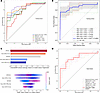 Figure 2
Model construction and feature analysis. (A) Summary plot comparing the best ROC curves and average AUC values across the 6 machine learning models in the training cohort. (B) ROC curve of the voting ensemble model based on 5-fold cross-validation in the training cohort. (C) SHAP analysis of feature importance in the voting ensemble model. The bar plot (top) ranks feature by their average effect on the model output, while the swarm plot (bottom) illustrates the contribution of individual feature values to model predictions. Color intensity (red/blue) indicates the magnitude of influence. (D) Summary plot comparing the best ROC curves and average AUC values across the 6 machine learning models in the test cohort.
To enhance diagnostic accuracy, models with higher AUCs and similar tree-based models (RF, XGBoost, and CatBoost) were integrated using a voting ensemble algorithm. In the training cohort, 5-fold cross-validation demonstrated that the final voting model achieved an AUC of 0.877 (95% CI, 0.794–0.955; Figure 2B), along with an accuracy of 0.741 (95% CI, 0.702-–0.779), precision of 0.784 (95% CI, 0.625–0.944), recall of 0.816 (95% CI, 0.678–0.954), and an F1 score of 0.766 (95% CI, 0.735–0.796; Supplemental Table 2). SHAP analysis identified MYO1C mRNA as the most influential feature in the final model (Figure 2C).
Independent validation and performance evaluation in the time-independent test cohort. The time-independent test cohort consisted of 17 patients with T2DN and 20 patients with type 2 diabetes. The baseline characteristics of this cohort are summarized in Supplemental Table 3. Notably, no significant differences were observed between the 2 groups in key clinical parameters, including age, sex, and notably, blood pressure. The expression levels of the 5 candidate RNAs in uEVs were quantified by qPCR (Supplemental Figure 8A) and then applied to the established models. As shown in Figure 2D, the voting model has highest AUC for 0.824 (95% CI, 0.673–0.952) among all models. The calibration and decision curve analyses for both cohorts, shown in Figure 3, A and B, suggest the model’s clinical applicability. The decision curves showed superior net benefit versus default strategies across most thresholds, while the calibration curves indicated well-aligned predictions after bias correction, particularly in the independent test cohort. Compared with the model performance in the training cohort shown in Figure 3C, the model’s performance was further evaluated using test cohort data, yielding an accuracy of 0.725 (95% CI, 0.568–0.865), along with precision, recall, and F1 score, as detailed in Figure 3D and Supplemental Table 4.
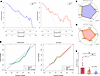 Figure 3
Model performance and analysis across cohorts. (A) Decision curve analysis (DCA) for the training cohort and test cohort. (B) Calibration curves for the training cohort and test cohort. (C) Radar map of model performance for the training cohort. The radar plot illustrates the mean performance metrics (blue line) and their corresponding 95% CI (shaded area in orange) for the accuracy, precision, recall, F1 score, and AUC. (D) Radar map model performance for the test cohort. The radar plot illustrates the performance metrics (red line) and their corresponding 95% CI (shaded area in orange) for the accuracy, precision, recall, F1 score, and AUC. (E) Bar graph showing MYO1C mRNA expression levels across different DN pathological grading groups, presented as mean ± SEM, n = 57. Group comparisons were analyzed using 1-way ANOVA with Tukey’s multiple-comparison test. *P < 0.05, **P < 0.01.
Having identified MYO1C mRNA as the most influential feature in the final model, we combined the cohorts to assess its relationship with disease severity. This analysis demonstrated that MYO1C mRNA was significantly upregulated in DN-IV compared with DN-III (P = 0.045) and DN-II (P < 0.001) stages (Figure 3E), with its expression correlating with UACR (r = 0.50, P < 0.001; Supplemental Figure 8B) and eGFR (r = –0.36, P < 0.001; Supplemental Figure 8C). These findings strongly implicate MYO1C in the pathological progression of DN, prompting further investigation into its specific molecular mechanisms.
Identification of MYO1C as a key candidate for diagnostic and functional validation. To investigate the role of MYO1C in podocyte injury, we developed a human podocyte (HPCs) model using high-glucose and high-lipid (HGHF) stimulation (Supplemental Figure 9A). CCK-8 assays (Figure 4A) revealed significant reductions in cell viability in HG+150 μM, HG+300 μM, and HG+600 μM groups compared with controls (P < 0.01). Due to excessive viability loss at 300 μM and 600 μM concentrations, the condition of 30 mM HG+150 μM for 48 hours was selected for subsequent experiments. TEM and NanoFCM analyses of HPCs-derived extracellular vesicles (hEVs) showed characteristic cup-shaped vesicles (60–90 nm) expressing known EV markers CD 9, Alix, and TSG 101, with low expression of the endoplasmic reticulum protein calnexin (Figure 4B).
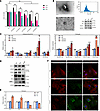 Figure 4
Comprehensive analysis of high glucose and high fat effects on podocyte viability, EVs RNA expression, and molecular expression patterns in HPCs. (A) CCK-8 assay evaluating the effect of high glucose and high fat (HGHF) on HPCs cell viability over time. HPCs were treated with BSA (28.8 mM mannitol, control group [CON]) or various concentrations of PA (30 mM glucose, HG+PA group) for different durations. Statistical comparisons: “#” indicates significance between specific groups; “*” indicates significance at 48 hours compared with the CON group. **P < 0.01, ##P < 0.01. Data are presented as mean ± SEM from 3 independent experiments. (B) Characterization of HPCs-derived EVs, including representative TEM images (scale bar: 100 nm), NanoFCM particle size distribution histograms, and immunoblots of EV marker and negative marker proteins. (C) qPCR analysis of 5 differential RNAs in HPCs-derived EVs (left) and the corresponding HPCs (right). Data are presented as mean ± SEM from 3 independent experiments. Statistical comparisons were performed using 1-way ANOVA with Tukey’s multiple-comparison test. *P < 0.05, **P < 0.01, ***P < 0.001. (D) Immunoblots of specified proteins in HPCs under different treatment conditions. (E) qPCR analysis of mRNA expression levels for MYO1C, SYNPO, NPHS2, and TNF-α in HPCs treated with HGHF. Data are from 4 independent experiments. (F) Representative confocal images showing SYNPO (red) and MYO1C (green) expression and their colocalization in HPCs under different treatment conditions. Scale bar: 20 μm.
qPCR analysis revealed that MYO1C mRNA expression in hEVs from the HGHF 48-hour group was significantly upregulated compared with the NG control, consistent with trends observed in uEVs (Figure 4C). Further validation in HPCs confirmed increased MYO1C mRNA expression in the HGHF 24-hour and 48-hour groups compared with controls (P = 0.0068, P = 0.0001; Figure 4C). Immunoblotting analysis demonstrated elevated MYO1C expression in the HGHF group, with concomitant downregulation of podocyte marker proteins NPHS2, SYNPO, and WT-1 and upregulation of inflammatory cytokine TNF-α and apoptosis-related protein cleaved caspase-3 (Figure 4D). qPCR confirmed these findings, showing increased MYO1C mRNA (P < 0.001), decreased SYNPO and NPHS2 expression, and elevated TNF-α expression in the HGHF group (Figure 4E). Immunofluorescence analysis corroborated these results, showing reduced SYNPO expression and increased MYO1C expression in the HGHF group compared with the NG group (Figure 4F). No significant differences in SYNPO or MYO1C expression were observed between NG and HM groups. These findings indicate that HGHF stimulation induces morphological changes and reduced expression of podocyte marker proteins, along with MYO1C overexpression, suggesting its potential role in podocyte injury.
Podocyte injury and increased MYO1C expression in high-fat fed db/db mice and patients with T2DN. To examine the expression of MYO1C in vivo, a T2DN mouse model was established using high-fat fed db/db (db/db+HFD) mice. Compared with db/m controls, db/db+HFD mice exhibited increased body weight at 10, 14, and 18 weeks (P < 0.01), along with elevated blood glucose and UACR levels (P < 0.05; Figure 5A). At 18 weeks, db/db+HFD mice demonstrated reduced kidney-to-body weight ratios (P < 0.05), increased serum BUN (P < 0.05), Scr (P < 0.001), TG, and CHO levels (P < 0.001; Figure 5B). ELISA results (Figure 5C) revealed elevated levels of inflammatory cytokines MCP-1 (P < 0.01), TNF-α (P < 0.001), and IL-1β (P < 0.05) in db/db+HFD renal homogenates, while IL-18 and IL-6 showed no significant changes. Macroscopically, there were significant gross morphological differences between db/db+HFD mice and control kidneys. The db/db+HFD mice exhibited glomerular hypertrophy, mesangial expansion, and mild sclerosis in (Figure 5D), and showed significantly larger glomerular tuft areas and increased PAS-positive matrix percentages compared with controls. Electron microscopy demonstrated severe podocyte foot process effacement, reduced podocyte density, and thickened glomerular basement membranes (GBM) in db/db+HFD mice (P < 0.001; Figure 5E). IHC and immunofluorescence analyses (Figure 5, F and G; and Figure 6A) confirmed elevated MYO1C expression in glomeruli, tubules, and interstitium of db/db+HFD mice compared with controls (P < 0.05). Immunoblot analysis (Figure 5, H and I) showed a progressive increase in MYO1C protein expression from 10 to 18 weeks, with significant overexpression at 18 weeks (P < 0.01). Enhanced p38 MAPK pathway activity was observed, with increased p-p38/p38 ratios (P < 0.05), alongside elevated Desmin (P < 0.05) and reduced WT-1 and NPHS2 expression (P < 0.05). qPCR further validated increased Myo1c and TNF-α expression (P < 0.001) and decreased Nphs2 expression (P < 0.01, Figure 5J).
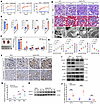 Figure 5
Characterization of renal and systemic changes in db/m and db/db+HFD mouse models of diabetic nephropathy. (A) Body weight, blood glucose levels, and urinary albumin-to-creatinine ratio (UACR) measured at 8, 10, 14, and 18 weeks in db/m and db/db+HFD mice. (B) Postmortem analysis at 18 weeks, including kidney-to-body weight ratio (KW/BW), serum blood urea nitrogen (BUN), serum creatinine, triglycerides, and total cholesterol levels. Data are presented as mean ± SEM, with intergroup comparisons performed using the Mann-Whitney U test. *P < 0.05, **P < 0.01, **P < 0.001. (C) Macroscopic comparison of kidney size in db/m and db/db+HFD mice at 18 weeks, along with ELISA measurements of inflammatory cytokines in renal tissue homogenates. Each group: n = 8. **P < 0.01, ***P < 0.001. (D) Kidney pathology in db/m and db/db+HFD mice. Representative images of PAS and Masson’s trichrome staining (scale bar: 20 μm), and TEM images (scale bar: 2 μm) of glomerular. (E) Quantitative analyses of kidney histology, including mean glomerular tuft area, percentage of PAS-positive area in glomerular tufts, average glomerular basement membrane (GBM) thickness, and number of foot processes per μm of GBM. Each group: n = 5–6. Statistical comparisons were performed using 1-way ANOVA with Dunnett’s multiple-comparison test. (F) IHC MYO1C staining in kidney tissues from db/m and db/db+HFD mice. Glomerular regions (scale bar: 10 μm) and tubular interstitial regions (scale bar: 20 μm) are shown. (G) Densitometric analysis of MYO1C+ staining areas. “*” indicates significant differences in glomerular staining between db/db+HFD and db/m groups, while “#” indicates differences in tubular interstitial staining. Statistical comparisons were performed using the Mann-Whitney U test. *P < 0.05, **P < 0.01, ##P < 0.01. (H) Immunoblots of MYO1C protein expression in kidney tissues of mice at different ages. (I) Immunoblots of specified protein expression in kidney tissues of db/m and db/db+HFD mice at 18 weeks. (J) Myo1c, TNF-α, and Nphs2 mRNA levels in kidney tissues of mice, measured by qPCR. Data are presented as mean ± SEM, with intergroup comparisons performed using the Mann-Whitney U test. **P < 0.01, ***P < 0.001. Each group: n = 6–8.
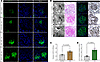 Figure 6
MYO1C expression in mouse and human kidney tissues. (A) Representative confocal images of immunofluorescence staining showing MYO1C expression (green) in mouse kidney tissues, with nuclei counterstained using DAPI (blue). Scale bar: 20 μm. (B) Kidney pathology in patients with T2DN. From left to right: TEM images illustrating podocyte ultrastructural changes (scale bar: 2 μm); PAS staining of kidney sections; immunofluorescence staining of MYO1C on frozen sections (green, Scale bar: 20 μm); and IHC staining of MYO1C on paraffin-embedded sections (scale bar: 20 μm). (C) Quantitative analysis of MYO1C IHC staining, presented as the ratio of integrated optical density (IOD) to staining area in kidney tissues. (D) MYO1C mRNA levels in kidney tissues from control and T2DN groups, measured by qPCR. Data are presented as mean ± SEM, with statistical comparisons performed using the Mann-Whitney U test (n = 6–8).
To validate MYO1C expression in human DN, renal tissues from 6 nondiabetic controls and 8 patients with T2DN were analyzed. PAS and IHC staining showed classical DN pathology in T2DN tissues, including glomerular hypertrophy, mesangial expansion, and basement membrane thickening (Figure 6B). Immunofluorescence and qPCR (Figure 6, C and D) confirmed significantly increased MYO1C protein (P = 0.013) and mRNA (P = 0.001) expression in patients with T2DN compared with controls. Together, these findings establish MYO1C as a key molecule associated with podocyte injury and DN pathology in both mouse models and patients.
MYO1C knockdown alleviates HGHF-induced HPCs injury. To investigate the pathogenic role of MYO1C in DN, we attempted to knock down MYO1C expression in HPCs using 3 different MYO1C-specific small interfering RNAs (siRNAs). MYO1C mRNA levels were significantly reduced in all 3 siRNA-transfected groups compared with the siControl group (P < 0.05), with siRNA-1 showing the greatest knockdown efficiency (Supplemental Figure 9, B and C). Consequently, MYO1C siRNA-1 was selected for further experiments in HPCs under HGHF stimulation. Immunoblot analysis (Figure 7, A and B) demonstrated that MYO1C expression was significantly reduced in NG+siRNA cells compared with NG+siControl cells (P < 0.05), without affecting podocyte marker proteins SYNPO, NPHS2, and WT-1 (all P > 0.01). In the HGHF+siControl group, MYO1C expression was elevated, while SYNPO, NPHS2, and WT-1 expression were reduced (all P < 0.05). Additionally, TNF-α and cleaved caspase-3 levels were significantly increased in the HGHF+siControl group (P < 0.05).
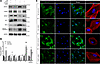 Figure 7
The protective effect of knockdown against HGHF-induced podocyte injury. (A) Immunoblots of specified proteins in HPCs following siRNA-mediated knockdown of MYO1C. (B) Densitometric analysis of protein expression, normalized to GAPDH from immunoblotting data, presented as mean ± SEM. Statistical comparisons: “*” indicates significance compared with NGs+siControl, and “#” indicates significance compared with HG+siControl. *P < 0.05, **P < 0.01, #P < 0.05, ##P < 0.01. (C) Representative confocal images of MYO1C immunofluorescence staining (green) in HPCs, with DAPI (blue) marking nuclei and F-actin (red) showing cytoskeletal structure. Scale bar: 20 μm. Data are from 3 independent experiments.
Following MYO1C siRNA transfection, the HGHF+siRNA group showed significantly reduced MYO1C expression (P < 0.05), increased SYNPO, NPHS2, and WT-1 levels (P < 0.05), and decreased TNF-α and cleaved caspase-3 expression (P < 0.05) compared with the HGHF+siControl group. These findings indicate that MYO1C knockdown protects against HGHF-induced podocyte injury. Immunofluorescence results (Figure 7C) confirmed reduced MYO1C expression in NG+siRNA and HGHF+siRNA groups compared with their respective siControl groups. In the HGHF+siRNA group, cytoskeletal integrity was better preserved compared with the HGHF+siControl group. These findings demonstrate that MYO1C knockdown alleviates HGHF-induced podocyte injury, highlighting its potential as a therapeutic target for DN.
Podocyte-specific AAV-mediated MYO1C knockdown alleviates renal podocyte injury in high-fat–fed db/db mice. To investigate the role of MYO1C in renal and podocyte injury in DN, we administered a single tail vein injection of AAV-Myo1c (serotype 2/9) under the podocyte-specific NPHS2 promoter or control AAV (AAV-Ctrl) to 10-week-old high-fat–fed db/db mice. After 8 weeks, we assessed metabolic parameters, proteinuria, and renal function (Figure 8A). No significant differences in body weight or blood glucose levels were observed between db/db, AAV-Ctrl, and AAV-Myo1c groups throughout the study (P > 0.05; Figure 8B). However, UACR levels in the AAV-Myo1c group were significantly reduced at 6 weeks and further decreased by 8 weeks compared with db/db and AAV-Ctrl groups (P < 0.05; Figure 8C). At the endpoint, BUN (P = 0.018) and Scr levels (P = 0.001) were significantly lower in the AAV-Myo1c group than in the db/db group, while kidney-to-body weight ratios remained unchanged (Figure 8D). These results indicate that podocyte-specific MYO1C knockdown mitigates proteinuria and renal dysfunction independently of glycemic or body weight changes.
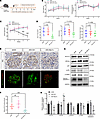 Figure 8
Podocyte-specific knockdown of Myo1c via AAV reduces renal injury in diabetic nephropathy mice. (A) Schematic representation of AAV-mediated podocyte-specific knockdown of Myo1c. Ten-week-old db/db mice were randomized and received a single i.v. injection of AAV containing a podocyte-specific promoter to knock down MYO1C (AAV-Myo1c) or an empty control vector (AAV-Control). (B) Changes in body weight and blood glucose levels at 0, 2, 4, 6, and 8 weeks post-AAV intervention. Data are presented as mean ± SEM (n = 10 per group). (C) Changes in UACR at 0, 2, 4, 6, and 8 weeks after AAV intervention. Data are presented as mean ± SEM (n = 10 per group).***P < 0.001. (D) At the 8-week endpoint, serum blood urea nitrogen (BUN), serum creatinine (Scr), and kidney-to-body weight ratio (KW/BW) were measured. Statistical comparisons were performed using 1-way ANOVA with Dunnett’s multiple-comparison test. (E) Representative IHC and immunofluorescence images of MYO1C staining in kidney tissues from each group. Scale bar: 20 μm. (F) Quantitative analysis of MYO1C IHC staining in glomerular regions. Asterisks indicate significant differences in staining intensity between the AAV-Myo1c group and the db/db group. Statistical comparisons were performed using 1-way ANOVA with Dunnett’s multiple-comparison test; ***P < 0.001. (G) Immunoblots of MYO1C and other key proteins in kidney tissues from each group. (H) Densitometric analysis of protein expression, presented as mean ± SEM (n = 6–10 per group). Statistical comparisons were performed using 1-way ANOVA with Dunnett’s multiple-comparison test. *P < 0.05, **P < 0.01.
Immunofluorescence further demonstrated decreased MYO1C (green) and increased SYNPO (red) expression in the AAV-Myo1c group compared with controls (Figure 8E). There was lower MYO1C expression in glomeruli of AAV-Myo1c mice compared with db/db and AAV-Ctrl groups (P < 0.001; Figure 8F). Immunoblot analysis corroborated these findings, showing significantly reduced MYO1C protein levels in AAV-Myo1c mice compared with db/db and AAV-Ctrl groups (P < 0.05; Figure 8, G and H). Additionally, the results indicate a significant decrease in the p-p38/p38 ratio (P < 0.01) in the AAV-Myo1c group, accompanied by reduced downstream p-CREB expression (P < 0.05), increased NPHS2 levels, and decreased cleaved caspase-3 levels (P < 0.05), compared with db/db and AAV-Ctrl groups. These findings demonstrate the efficacy of podocyte-specific MYO1C knockdown in alleviating renal podocyte injury and suggest that its protective effects may mediate through the suppression of the p38/CREB pathway and reduction of apoptosis.
MYO1C mediates podocyte injury via the p38/CREB signaling pathway. Inflammatory factors MCP-1, TNF-α, and IL-6 were significantly reduced in the AAV-Myo1c group compared with db/db and AAV-Ctrl groups (P = 0.035, P = 0.004, P = 0.018, respectively; Supplemental Figure 10). Pronounced glomerular hypertrophy and mesangial expansion in db/db and AAV-Ctrl groups, which were alleviated in AAV-Myo1c mice (Figure 9A). Glomerular tuft areas, PAS-positive matrix, and GBM thickness were significantly reduced in AAV-Myo1c mice (P < 0.001; Figure 9B). Electron microscopy further indicated improved podocyte foot process effacement and podocyte density (P < 0.001), supporting the role of MYO1C knockdown in mitigating podocyte injury and DN pathology. Additionally, protein docking using AlphaFold-predicted MYO1C and experimentally verified p38 structures suggested a high likelihood of interaction (docking score, –299.79; confidence score, 0.9524; Supplemental Figure 11). Hydrophobic interactions (MYO1C residues 633, 644 with p38 residue 182) and hydrogen bonds (MYO1C residue 636 with p38 residue 180) were identified, corroborated by LigPlot and PyMOL visualization (Supplemental Figure 12, A and B). Coimmunoprecipitation experiments validated MYO1C-p38 binding in vitro (Supplemental Figure 12C).
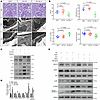 Figure 9
MYO1C mediates HGHF-induced podocyte injury via the p38/p-CREB pathway. (A) Representative kidney tissue images showing PAS staining (scale bar: 20 μm) and TEM (scale bar: 2 μm) in different mouse groups. (B) Quantitative analysis of kidney pathology, including mean glomerular tuft area, percentage of PAS+ area relative to glomerular tuft area, mean glomerular basement membrane (GBM) thickness, and number of foot processes per μm of GBM. Data are presented as mean ± SEM (n = 6–10 per group). Statistical comparisons were performed using 1-way ANOVA with Dunnett’s multiple-comparison test. (C) Immunoblots of specified proteins in HPCs treated with Ad-MYO1C and the p38 inhibitor SB203580. (D) Densitometric analysis of protein expression, normalized to GAPDH from immunoblotting data, presented as mean ± SEM. Statistical comparisons: “*” indicates significance compared with NGs+siControl, and “#” indicates significance compared with HG+siControl. *P < 0.05, **P < 0.01, #P < 0.05, ##P < 0.01. (E) Immunoblots of specified proteins in HPCs under HGHF conditions, following MYO1C knockdown via siRNA and treatment with the p38 agonist Dehydrocorydaline.
To investigate whether the p38 MAPK pathway mediates MYO1C-induced podocyte injury, the p38 inhibitor SB203580 was employed. SB203580 inhibits p38 autophosphorylation and substrate phosphorylation without affecting upstream kinase-induced phosphorylation. Immunoblot analysis (Figure 9, C and D) revealed that MYO1C overexpression in NG+Ad-MYO1C cells reduced the expression of podocyte markers NPHS2, SYNPO, and WT-1, while increasing cleaved caspase-3 levels, p-p38/p38 ratios, and p-CREB levels. These effects were partially reversed by SB203580, which reduced p-p38/p38, p-CREB, and TNF-α expression (P < 0.05) without altering MYO1C levels.
Building on previous experiments, which showed that MYO1C-siRNA alleviates HGHF-induced podocyte injury by reducing MYO1C expression, we further investigated the role of the p38 pathway using the p38 agonist Dehydrocorydaline. In siRNA-transfected podocytes, MYO1C knockdown mitigated HGHF-induced damage, reducing MYO1C expression and p-p38/p38 ratios, increasing SYNPO levels, and lowering cleaved caspase-3 expression (Supplemental Figure 11, D and E, and Figure 9E). However, treatment with Dehydrocorydaline reversed these protective effects, leading to increased p-p38/p38, p-CREB, and cleaved caspase-3 levels, while reducing SYNPO expression. These findings suggest that the p38/p-CREB signaling pathway plays a crucial role in MYO1C-mediated podocyte injury, with MYO1C knockdown alleviating damage through pathway suppression. Conversely, p38 activation partially negates these protective effects.


