
Clinical Research and Public HealthGeneticsNephrology
Open Access |  10.1172/jci.insight.192062
The risk of nephrotic range proteinuria and kidney failure in primary laminopathies is genotype specific
Sebastian Sewerin,1,2,3,4 Charlotte Aurnhammer,1,5 Mohamed Hamed,6 Gwladys Revêchon,7 Ria Schönauer,1,8 Christin Findeisen,1 Konstanze Miehle,9 Šárka Tesařo vá,10 Theodoros Georgomanolis,11 Carsten Bergmann,12 Constantin Wolff,8 Marek Kollár,13 Baris Akinci,14 David Araújo-Vilar,15 Giovanni Ceccarini,16 Éva Csajbók,17 Alessandra Gambineri,18 Martin Heni,19,20 Thomas Scherer,21 Iztok Štotl,22 Ekaterina Sorkina,23 Marie-Christine Vantyghem,24 Elena Vorona,25 Martin Wabitsch,26 Julia von Schnurbein,26 Camille Vatier,27,28,29 Joëlle Roume,30 Yves Reznik,31 Maria Eriksson,7 Wolfram Antonin,6 Corinne Vigouroux,27,28,29 and Jan Halbritter1,8,32
1Division of Nephrology, University of Leipzig Medical Center, Leipzig, Germany.
2Broad Institute of MIT and Harvard, Cambridge, Massachusetts, USA.
3III. Department of Medicine, University Medical Center Hamburg-Eppendorf, Hamburg, Germany.
4Hamburg Center for Kidney Health (HCKH), University Medical Center Hamburg-Eppendorf, Hamburg, Germany.
5Division of Hepatology, University of Leipzig Medical Center, Leipzig, Germany.
6Institute of Biochemistry and Molecular Cell Biology, Medical School, RWTH Aachen University, Aachen, Germany.
7Department of Medicine Huddinge, Karolinska Institute, Stockholm, Sweden.
8Department of Nephrology and Medical Intensive Care, Charité Universitätsmedizin Berlin, Berlin, Germany.
9Division of Endocrinology, Lipodystrophy Center Leipzig, University of Leipzig Medical Center, Leipzig, Germany.
103rd Department of Internal Medicine, 1st Faculty of Medicine, Charles University and General University Hospital, Prague, Czech Republic.
11Cologne Center for Genomics, University of Cologne, Cologne, Germany.
12Medizinische Genetik Mainz, Limbach Genetics, Mainz, Germany.
13Institute for Clinical and Experimental Medicine, Prague, Czech Republic.
14DEPARK, Dokuz Eylul University Health Campus and Izmir Biomedicine and Genome Center, Izmir, Turkey.
15Centre for Research in Molecular Medicine and Chronic Diseases (CiMUS), University of Santiago de Compostela, Santiago de Compostela, Spain.
16Obesity and Lipodystrophy Center, Department of Clinical and Experimental Medicine, Endocrinology Unit, University Hospital of Pisa, Pisa, Italy.
17University of Szeged, Faculty of Medicine, Szent-Györgyi Albert Clinical Center, 1st Department of Internal Medicine, Endocrinology Department, Szeged, Hungary.
18Department of Medical and Surgical Sciences, University of Bologna, Bologna, Italy.
19Division of Endocrinology and Diabetology, Department of Internal Medicine I, Ulm University Hospital, Ulm, Germany.
20Department for Diagnostic Laboratory Medicine, Institute for Clinical Chemistry and Pathobiochemistry, Eberhard Karls University Tübingen, Tübingen, Germany.
21Division of Endocrinology and Metabolism, Department of Medicine III, Medical University of Vienna, Vienna, Austria.
22Department of Endocrinology, Diabetes and Metabolic Diseases, University Medical Centre Ljubljana, Ljubljana, Slovenia.
23Endocrinology Research Centre, Moscow, Russia.
24Department of Endocrinology and Metabolism, Inserm U 1190, Lille University Hospital, Lille, France.
25Division of Endocrinology, Diabetology and Nutritional Medicine, Department of Medicine B: Gastroenterology, Hepatology, Endocrinology and Clinical Infectiology, University Hospital Münster, Münster, Germany.
26Center for Rare Endocrine Diseases, Division of Pediatric Endocrinology and Diabetes, Department of Pediatrics and Adolescent Medicine, Ulm University Hospital, Ulm, Germany.
27Assistance Publique-Hôpitaux de Paris, Saint-Antoine Hospital, Department of Endocrinology, Diabetology, and Reproductive Endocrinology, National Reference Center for Rare Diseases of Insulin Secretion and Insulin Sensitivity (PRISIS), Paris, France.
28Sorbonne University, Inserm UMR 938, Research Center Saint-Antoine, Paris, France.
29Foundation for Innovation in Cardiometabolism and Nutrition (IHU ICAN), Paris, France.
30Department of Genetics, Poissy-Saint-Germain-en-Laye Medical Center, Poissy and Saint-Germain-en-Laye, France.
31Department of Endocrinology and Diabetes, University of Caen Medical Center Côte de Nacre, and University of Caen Normandy, Caen, France.
32Renal Division, Department of Medicine, Faculty of Medicine and Medical Center - University of Freiburg, Freiburg, Germany.
Address correspondence to: Jan Halbritter, Department of Nephrology and Medical Intensive Care, Charité Universitätsmedizin Berlin, Hessische Str. 3-4, 10115 Berlin, Germany. Phone: 49.30.450.530.405; Email: jan.halbritter@charite.de.
Authorship note: SS and CA are co–first authors and contributed equally to this work.
Find articles by Sewerin, S. in: PubMed | Google Scholar
1Division of Nephrology, University of Leipzig Medical Center, Leipzig, Germany.
2Broad Institute of MIT and Harvard, Cambridge, Massachusetts, USA.
3III. Department of Medicine, University Medical Center Hamburg-Eppendorf, Hamburg, Germany.
4Hamburg Center for Kidney Health (HCKH), University Medical Center Hamburg-Eppendorf, Hamburg, Germany.
5Division of Hepatology, University of Leipzig Medical Center, Leipzig, Germany.
6Institute of Biochemistry and Molecular Cell Biology, Medical School, RWTH Aachen University, Aachen, Germany.
7Department of Medicine Huddinge, Karolinska Institute, Stockholm, Sweden.
8Department of Nephrology and Medical Intensive Care, Charité Universitätsmedizin Berlin, Berlin, Germany.
9Division of Endocrinology, Lipodystrophy Center Leipzig, University of Leipzig Medical Center, Leipzig, Germany.
103rd Department of Internal Medicine, 1st Faculty of Medicine, Charles University and General University Hospital, Prague, Czech Republic.
11Cologne Center for Genomics, University of Cologne, Cologne, Germany.
12Medizinische Genetik Mainz, Limbach Genetics, Mainz, Germany.
13Institute for Clinical and Experimental Medicine, Prague, Czech Republic.
14DEPARK, Dokuz Eylul University Health Campus and Izmir Biomedicine and Genome Center, Izmir, Turkey.
15Centre for Research in Molecular Medicine and Chronic Diseases (CiMUS), University of Santiago de Compostela, Santiago de Compostela, Spain.
16Obesity and Lipodystrophy Center, Department of Clinical and Experimental Medicine, Endocrinology Unit, University Hospital of Pisa, Pisa, Italy.
17University of Szeged, Faculty of Medicine, Szent-Györgyi Albert Clinical Center, 1st Department of Internal Medicine, Endocrinology Department, Szeged, Hungary.
18Department of Medical and Surgical Sciences, University of Bologna, Bologna, Italy.
19Division of Endocrinology and Diabetology, Department of Internal Medicine I, Ulm University Hospital, Ulm, Germany.
20Department for Diagnostic Laboratory Medicine, Institute for Clinical Chemistry and Pathobiochemistry, Eberhard Karls University Tübingen, Tübingen, Germany.
21Division of Endocrinology and Metabolism, Department of Medicine III, Medical University of Vienna, Vienna, Austria.
22Department of Endocrinology, Diabetes and Metabolic Diseases, University Medical Centre Ljubljana, Ljubljana, Slovenia.
23Endocrinology Research Centre, Moscow, Russia.
24Department of Endocrinology and Metabolism, Inserm U 1190, Lille University Hospital, Lille, France.
25Division of Endocrinology, Diabetology and Nutritional Medicine, Department of Medicine B: Gastroenterology, Hepatology, Endocrinology and Clinical Infectiology, University Hospital Münster, Münster, Germany.
26Center for Rare Endocrine Diseases, Division of Pediatric Endocrinology and Diabetes, Department of Pediatrics and Adolescent Medicine, Ulm University Hospital, Ulm, Germany.
27Assistance Publique-Hôpitaux de Paris, Saint-Antoine Hospital, Department of Endocrinology, Diabetology, and Reproductive Endocrinology, National Reference Center for Rare Diseases of Insulin Secretion and Insulin Sensitivity (PRISIS), Paris, France.
28Sorbonne University, Inserm UMR 938, Research Center Saint-Antoine, Paris, France.
29Foundation for Innovation in Cardiometabolism and Nutrition (IHU ICAN), Paris, France.
30Department of Genetics, Poissy-Saint-Germain-en-Laye Medical Center, Poissy and Saint-Germain-en-Laye, France.
31Department of Endocrinology and Diabetes, University of Caen Medical Center Côte de Nacre, and University of Caen Normandy, Caen, France.
32Renal Division, Department of Medicine, Faculty of Medicine and Medical Center - University of Freiburg, Freiburg, Germany.
Address correspondence to: Jan Halbritter, Department of Nephrology and Medical Intensive Care, Charité Universitätsmedizin Berlin, Hessische Str. 3-4, 10115 Berlin, Germany. Phone: 49.30.450.530.405; Email: jan.halbritter@charite.de.
Authorship note: SS and CA are co–first authors and contributed equally to this work.
Find articles by Aurnhammer, C. in: PubMed | Google Scholar
1Division of Nephrology, University of Leipzig Medical Center, Leipzig, Germany.
2Broad Institute of MIT and Harvard, Cambridge, Massachusetts, USA.
3III. Department of Medicine, University Medical Center Hamburg-Eppendorf, Hamburg, Germany.
4Hamburg Center for Kidney Health (HCKH), University Medical Center Hamburg-Eppendorf, Hamburg, Germany.
5Division of Hepatology, University of Leipzig Medical Center, Leipzig, Germany.
6Institute of Biochemistry and Molecular Cell Biology, Medical School, RWTH Aachen University, Aachen, Germany.
7Department of Medicine Huddinge, Karolinska Institute, Stockholm, Sweden.
8Department of Nephrology and Medical Intensive Care, Charité Universitätsmedizin Berlin, Berlin, Germany.
9Division of Endocrinology, Lipodystrophy Center Leipzig, University of Leipzig Medical Center, Leipzig, Germany.
103rd Department of Internal Medicine, 1st Faculty of Medicine, Charles University and General University Hospital, Prague, Czech Republic.
11Cologne Center for Genomics, University of Cologne, Cologne, Germany.
12Medizinische Genetik Mainz, Limbach Genetics, Mainz, Germany.
13Institute for Clinical and Experimental Medicine, Prague, Czech Republic.
14DEPARK, Dokuz Eylul University Health Campus and Izmir Biomedicine and Genome Center, Izmir, Turkey.
15Centre for Research in Molecular Medicine and Chronic Diseases (CiMUS), University of Santiago de Compostela, Santiago de Compostela, Spain.
16Obesity and Lipodystrophy Center, Department of Clinical and Experimental Medicine, Endocrinology Unit, University Hospital of Pisa, Pisa, Italy.
17University of Szeged, Faculty of Medicine, Szent-Györgyi Albert Clinical Center, 1st Department of Internal Medicine, Endocrinology Department, Szeged, Hungary.
18Department of Medical and Surgical Sciences, University of Bologna, Bologna, Italy.
19Division of Endocrinology and Diabetology, Department of Internal Medicine I, Ulm University Hospital, Ulm, Germany.
20Department for Diagnostic Laboratory Medicine, Institute for Clinical Chemistry and Pathobiochemistry, Eberhard Karls University Tübingen, Tübingen, Germany.
21Division of Endocrinology and Metabolism, Department of Medicine III, Medical University of Vienna, Vienna, Austria.
22Department of Endocrinology, Diabetes and Metabolic Diseases, University Medical Centre Ljubljana, Ljubljana, Slovenia.
23Endocrinology Research Centre, Moscow, Russia.
24Department of Endocrinology and Metabolism, Inserm U 1190, Lille University Hospital, Lille, France.
25Division of Endocrinology, Diabetology and Nutritional Medicine, Department of Medicine B: Gastroenterology, Hepatology, Endocrinology and Clinical Infectiology, University Hospital Münster, Münster, Germany.
26Center for Rare Endocrine Diseases, Division of Pediatric Endocrinology and Diabetes, Department of Pediatrics and Adolescent Medicine, Ulm University Hospital, Ulm, Germany.
27Assistance Publique-Hôpitaux de Paris, Saint-Antoine Hospital, Department of Endocrinology, Diabetology, and Reproductive Endocrinology, National Reference Center for Rare Diseases of Insulin Secretion and Insulin Sensitivity (PRISIS), Paris, France.
28Sorbonne University, Inserm UMR 938, Research Center Saint-Antoine, Paris, France.
29Foundation for Innovation in Cardiometabolism and Nutrition (IHU ICAN), Paris, France.
30Department of Genetics, Poissy-Saint-Germain-en-Laye Medical Center, Poissy and Saint-Germain-en-Laye, France.
31Department of Endocrinology and Diabetes, University of Caen Medical Center Côte de Nacre, and University of Caen Normandy, Caen, France.
32Renal Division, Department of Medicine, Faculty of Medicine and Medical Center - University of Freiburg, Freiburg, Germany.
Address correspondence to: Jan Halbritter, Department of Nephrology and Medical Intensive Care, Charité Universitätsmedizin Berlin, Hessische Str. 3-4, 10115 Berlin, Germany. Phone: 49.30.450.530.405; Email: jan.halbritter@charite.de.
Authorship note: SS and CA are co–first authors and contributed equally to this work.
Find articles by Hamed, M. in: PubMed | Google Scholar
1Division of Nephrology, University of Leipzig Medical Center, Leipzig, Germany.
2Broad Institute of MIT and Harvard, Cambridge, Massachusetts, USA.
3III. Department of Medicine, University Medical Center Hamburg-Eppendorf, Hamburg, Germany.
4Hamburg Center for Kidney Health (HCKH), University Medical Center Hamburg-Eppendorf, Hamburg, Germany.
5Division of Hepatology, University of Leipzig Medical Center, Leipzig, Germany.
6Institute of Biochemistry and Molecular Cell Biology, Medical School, RWTH Aachen University, Aachen, Germany.
7Department of Medicine Huddinge, Karolinska Institute, Stockholm, Sweden.
8Department of Nephrology and Medical Intensive Care, Charité Universitätsmedizin Berlin, Berlin, Germany.
9Division of Endocrinology, Lipodystrophy Center Leipzig, University of Leipzig Medical Center, Leipzig, Germany.
103rd Department of Internal Medicine, 1st Faculty of Medicine, Charles University and General University Hospital, Prague, Czech Republic.
11Cologne Center for Genomics, University of Cologne, Cologne, Germany.
12Medizinische Genetik Mainz, Limbach Genetics, Mainz, Germany.
13Institute for Clinical and Experimental Medicine, Prague, Czech Republic.
14DEPARK, Dokuz Eylul University Health Campus and Izmir Biomedicine and Genome Center, Izmir, Turkey.
15Centre for Research in Molecular Medicine and Chronic Diseases (CiMUS), University of Santiago de Compostela, Santiago de Compostela, Spain.
16Obesity and Lipodystrophy Center, Department of Clinical and Experimental Medicine, Endocrinology Unit, University Hospital of Pisa, Pisa, Italy.
17University of Szeged, Faculty of Medicine, Szent-Györgyi Albert Clinical Center, 1st Department of Internal Medicine, Endocrinology Department, Szeged, Hungary.
18Department of Medical and Surgical Sciences, University of Bologna, Bologna, Italy.
19Division of Endocrinology and Diabetology, Department of Internal Medicine I, Ulm University Hospital, Ulm, Germany.
20Department for Diagnostic Laboratory Medicine, Institute for Clinical Chemistry and Pathobiochemistry, Eberhard Karls University Tübingen, Tübingen, Germany.
21Division of Endocrinology and Metabolism, Department of Medicine III, Medical University of Vienna, Vienna, Austria.
22Department of Endocrinology, Diabetes and Metabolic Diseases, University Medical Centre Ljubljana, Ljubljana, Slovenia.
23Endocrinology Research Centre, Moscow, Russia.
24Department of Endocrinology and Metabolism, Inserm U 1190, Lille University Hospital, Lille, France.
25Division of Endocrinology, Diabetology and Nutritional Medicine, Department of Medicine B: Gastroenterology, Hepatology, Endocrinology and Clinical Infectiology, University Hospital Münster, Münster, Germany.
26Center for Rare Endocrine Diseases, Division of Pediatric Endocrinology and Diabetes, Department of Pediatrics and Adolescent Medicine, Ulm University Hospital, Ulm, Germany.
27Assistance Publique-Hôpitaux de Paris, Saint-Antoine Hospital, Department of Endocrinology, Diabetology, and Reproductive Endocrinology, National Reference Center for Rare Diseases of Insulin Secretion and Insulin Sensitivity (PRISIS), Paris, France.
28Sorbonne University, Inserm UMR 938, Research Center Saint-Antoine, Paris, France.
29Foundation for Innovation in Cardiometabolism and Nutrition (IHU ICAN), Paris, France.
30Department of Genetics, Poissy-Saint-Germain-en-Laye Medical Center, Poissy and Saint-Germain-en-Laye, France.
31Department of Endocrinology and Diabetes, University of Caen Medical Center Côte de Nacre, and University of Caen Normandy, Caen, France.
32Renal Division, Department of Medicine, Faculty of Medicine and Medical Center - University of Freiburg, Freiburg, Germany.
Address correspondence to: Jan Halbritter, Department of Nephrology and Medical Intensive Care, Charité Universitätsmedizin Berlin, Hessische Str. 3-4, 10115 Berlin, Germany. Phone: 49.30.450.530.405; Email: jan.halbritter@charite.de.
Authorship note: SS and CA are co–first authors and contributed equally to this work.
Find articles by Revêchon, G. in: PubMed | Google Scholar
1Division of Nephrology, University of Leipzig Medical Center, Leipzig, Germany.
2Broad Institute of MIT and Harvard, Cambridge, Massachusetts, USA.
3III. Department of Medicine, University Medical Center Hamburg-Eppendorf, Hamburg, Germany.
4Hamburg Center for Kidney Health (HCKH), University Medical Center Hamburg-Eppendorf, Hamburg, Germany.
5Division of Hepatology, University of Leipzig Medical Center, Leipzig, Germany.
6Institute of Biochemistry and Molecular Cell Biology, Medical School, RWTH Aachen University, Aachen, Germany.
7Department of Medicine Huddinge, Karolinska Institute, Stockholm, Sweden.
8Department of Nephrology and Medical Intensive Care, Charité Universitätsmedizin Berlin, Berlin, Germany.
9Division of Endocrinology, Lipodystrophy Center Leipzig, University of Leipzig Medical Center, Leipzig, Germany.
103rd Department of Internal Medicine, 1st Faculty of Medicine, Charles University and General University Hospital, Prague, Czech Republic.
11Cologne Center for Genomics, University of Cologne, Cologne, Germany.
12Medizinische Genetik Mainz, Limbach Genetics, Mainz, Germany.
13Institute for Clinical and Experimental Medicine, Prague, Czech Republic.
14DEPARK, Dokuz Eylul University Health Campus and Izmir Biomedicine and Genome Center, Izmir, Turkey.
15Centre for Research in Molecular Medicine and Chronic Diseases (CiMUS), University of Santiago de Compostela, Santiago de Compostela, Spain.
16Obesity and Lipodystrophy Center, Department of Clinical and Experimental Medicine, Endocrinology Unit, University Hospital of Pisa, Pisa, Italy.
17University of Szeged, Faculty of Medicine, Szent-Györgyi Albert Clinical Center, 1st Department of Internal Medicine, Endocrinology Department, Szeged, Hungary.
18Department of Medical and Surgical Sciences, University of Bologna, Bologna, Italy.
19Division of Endocrinology and Diabetology, Department of Internal Medicine I, Ulm University Hospital, Ulm, Germany.
20Department for Diagnostic Laboratory Medicine, Institute for Clinical Chemistry and Pathobiochemistry, Eberhard Karls University Tübingen, Tübingen, Germany.
21Division of Endocrinology and Metabolism, Department of Medicine III, Medical University of Vienna, Vienna, Austria.
22Department of Endocrinology, Diabetes and Metabolic Diseases, University Medical Centre Ljubljana, Ljubljana, Slovenia.
23Endocrinology Research Centre, Moscow, Russia.
24Department of Endocrinology and Metabolism, Inserm U 1190, Lille University Hospital, Lille, France.
25Division of Endocrinology, Diabetology and Nutritional Medicine, Department of Medicine B: Gastroenterology, Hepatology, Endocrinology and Clinical Infectiology, University Hospital Münster, Münster, Germany.
26Center for Rare Endocrine Diseases, Division of Pediatric Endocrinology and Diabetes, Department of Pediatrics and Adolescent Medicine, Ulm University Hospital, Ulm, Germany.
27Assistance Publique-Hôpitaux de Paris, Saint-Antoine Hospital, Department of Endocrinology, Diabetology, and Reproductive Endocrinology, National Reference Center for Rare Diseases of Insulin Secretion and Insulin Sensitivity (PRISIS), Paris, France.
28Sorbonne University, Inserm UMR 938, Research Center Saint-Antoine, Paris, France.
29Foundation for Innovation in Cardiometabolism and Nutrition (IHU ICAN), Paris, France.
30Department of Genetics, Poissy-Saint-Germain-en-Laye Medical Center, Poissy and Saint-Germain-en-Laye, France.
31Department of Endocrinology and Diabetes, University of Caen Medical Center Côte de Nacre, and University of Caen Normandy, Caen, France.
32Renal Division, Department of Medicine, Faculty of Medicine and Medical Center - University of Freiburg, Freiburg, Germany.
Address correspondence to: Jan Halbritter, Department of Nephrology and Medical Intensive Care, Charité Universitätsmedizin Berlin, Hessische Str. 3-4, 10115 Berlin, Germany. Phone: 49.30.450.530.405; Email: jan.halbritter@charite.de.
Authorship note: SS and CA are co–first authors and contributed equally to this work.
Find articles by Schönauer, R. in: PubMed | Google Scholar
1Division of Nephrology, University of Leipzig Medical Center, Leipzig, Germany.
2Broad Institute of MIT and Harvard, Cambridge, Massachusetts, USA.
3III. Department of Medicine, University Medical Center Hamburg-Eppendorf, Hamburg, Germany.
4Hamburg Center for Kidney Health (HCKH), University Medical Center Hamburg-Eppendorf, Hamburg, Germany.
5Division of Hepatology, University of Leipzig Medical Center, Leipzig, Germany.
6Institute of Biochemistry and Molecular Cell Biology, Medical School, RWTH Aachen University, Aachen, Germany.
7Department of Medicine Huddinge, Karolinska Institute, Stockholm, Sweden.
8Department of Nephrology and Medical Intensive Care, Charité Universitätsmedizin Berlin, Berlin, Germany.
9Division of Endocrinology, Lipodystrophy Center Leipzig, University of Leipzig Medical Center, Leipzig, Germany.
103rd Department of Internal Medicine, 1st Faculty of Medicine, Charles University and General University Hospital, Prague, Czech Republic.
11Cologne Center for Genomics, University of Cologne, Cologne, Germany.
12Medizinische Genetik Mainz, Limbach Genetics, Mainz, Germany.
13Institute for Clinical and Experimental Medicine, Prague, Czech Republic.
14DEPARK, Dokuz Eylul University Health Campus and Izmir Biomedicine and Genome Center, Izmir, Turkey.
15Centre for Research in Molecular Medicine and Chronic Diseases (CiMUS), University of Santiago de Compostela, Santiago de Compostela, Spain.
16Obesity and Lipodystrophy Center, Department of Clinical and Experimental Medicine, Endocrinology Unit, University Hospital of Pisa, Pisa, Italy.
17University of Szeged, Faculty of Medicine, Szent-Györgyi Albert Clinical Center, 1st Department of Internal Medicine, Endocrinology Department, Szeged, Hungary.
18Department of Medical and Surgical Sciences, University of Bologna, Bologna, Italy.
19Division of Endocrinology and Diabetology, Department of Internal Medicine I, Ulm University Hospital, Ulm, Germany.
20Department for Diagnostic Laboratory Medicine, Institute for Clinical Chemistry and Pathobiochemistry, Eberhard Karls University Tübingen, Tübingen, Germany.
21Division of Endocrinology and Metabolism, Department of Medicine III, Medical University of Vienna, Vienna, Austria.
22Department of Endocrinology, Diabetes and Metabolic Diseases, University Medical Centre Ljubljana, Ljubljana, Slovenia.
23Endocrinology Research Centre, Moscow, Russia.
24Department of Endocrinology and Metabolism, Inserm U 1190, Lille University Hospital, Lille, France.
25Division of Endocrinology, Diabetology and Nutritional Medicine, Department of Medicine B: Gastroenterology, Hepatology, Endocrinology and Clinical Infectiology, University Hospital Münster, Münster, Germany.
26Center for Rare Endocrine Diseases, Division of Pediatric Endocrinology and Diabetes, Department of Pediatrics and Adolescent Medicine, Ulm University Hospital, Ulm, Germany.
27Assistance Publique-Hôpitaux de Paris, Saint-Antoine Hospital, Department of Endocrinology, Diabetology, and Reproductive Endocrinology, National Reference Center for Rare Diseases of Insulin Secretion and Insulin Sensitivity (PRISIS), Paris, France.
28Sorbonne University, Inserm UMR 938, Research Center Saint-Antoine, Paris, France.
29Foundation for Innovation in Cardiometabolism and Nutrition (IHU ICAN), Paris, France.
30Department of Genetics, Poissy-Saint-Germain-en-Laye Medical Center, Poissy and Saint-Germain-en-Laye, France.
31Department of Endocrinology and Diabetes, University of Caen Medical Center Côte de Nacre, and University of Caen Normandy, Caen, France.
32Renal Division, Department of Medicine, Faculty of Medicine and Medical Center - University of Freiburg, Freiburg, Germany.
Address correspondence to: Jan Halbritter, Department of Nephrology and Medical Intensive Care, Charité Universitätsmedizin Berlin, Hessische Str. 3-4, 10115 Berlin, Germany. Phone: 49.30.450.530.405; Email: jan.halbritter@charite.de.
Authorship note: SS and CA are co–first authors and contributed equally to this work.
Find articles by Findeisen, C. in: PubMed | Google Scholar
1Division of Nephrology, University of Leipzig Medical Center, Leipzig, Germany.
2Broad Institute of MIT and Harvard, Cambridge, Massachusetts, USA.
3III. Department of Medicine, University Medical Center Hamburg-Eppendorf, Hamburg, Germany.
4Hamburg Center for Kidney Health (HCKH), University Medical Center Hamburg-Eppendorf, Hamburg, Germany.
5Division of Hepatology, University of Leipzig Medical Center, Leipzig, Germany.
6Institute of Biochemistry and Molecular Cell Biology, Medical School, RWTH Aachen University, Aachen, Germany.
7Department of Medicine Huddinge, Karolinska Institute, Stockholm, Sweden.
8Department of Nephrology and Medical Intensive Care, Charité Universitätsmedizin Berlin, Berlin, Germany.
9Division of Endocrinology, Lipodystrophy Center Leipzig, University of Leipzig Medical Center, Leipzig, Germany.
103rd Department of Internal Medicine, 1st Faculty of Medicine, Charles University and General University Hospital, Prague, Czech Republic.
11Cologne Center for Genomics, University of Cologne, Cologne, Germany.
12Medizinische Genetik Mainz, Limbach Genetics, Mainz, Germany.
13Institute for Clinical and Experimental Medicine, Prague, Czech Republic.
14DEPARK, Dokuz Eylul University Health Campus and Izmir Biomedicine and Genome Center, Izmir, Turkey.
15Centre for Research in Molecular Medicine and Chronic Diseases (CiMUS), University of Santiago de Compostela, Santiago de Compostela, Spain.
16Obesity and Lipodystrophy Center, Department of Clinical and Experimental Medicine, Endocrinology Unit, University Hospital of Pisa, Pisa, Italy.
17University of Szeged, Faculty of Medicine, Szent-Györgyi Albert Clinical Center, 1st Department of Internal Medicine, Endocrinology Department, Szeged, Hungary.
18Department of Medical and Surgical Sciences, University of Bologna, Bologna, Italy.
19Division of Endocrinology and Diabetology, Department of Internal Medicine I, Ulm University Hospital, Ulm, Germany.
20Department for Diagnostic Laboratory Medicine, Institute for Clinical Chemistry and Pathobiochemistry, Eberhard Karls University Tübingen, Tübingen, Germany.
21Division of Endocrinology and Metabolism, Department of Medicine III, Medical University of Vienna, Vienna, Austria.
22Department of Endocrinology, Diabetes and Metabolic Diseases, University Medical Centre Ljubljana, Ljubljana, Slovenia.
23Endocrinology Research Centre, Moscow, Russia.
24Department of Endocrinology and Metabolism, Inserm U 1190, Lille University Hospital, Lille, France.
25Division of Endocrinology, Diabetology and Nutritional Medicine, Department of Medicine B: Gastroenterology, Hepatology, Endocrinology and Clinical Infectiology, University Hospital Münster, Münster, Germany.
26Center for Rare Endocrine Diseases, Division of Pediatric Endocrinology and Diabetes, Department of Pediatrics and Adolescent Medicine, Ulm University Hospital, Ulm, Germany.
27Assistance Publique-Hôpitaux de Paris, Saint-Antoine Hospital, Department of Endocrinology, Diabetology, and Reproductive Endocrinology, National Reference Center for Rare Diseases of Insulin Secretion and Insulin Sensitivity (PRISIS), Paris, France.
28Sorbonne University, Inserm UMR 938, Research Center Saint-Antoine, Paris, France.
29Foundation for Innovation in Cardiometabolism and Nutrition (IHU ICAN), Paris, France.
30Department of Genetics, Poissy-Saint-Germain-en-Laye Medical Center, Poissy and Saint-Germain-en-Laye, France.
31Department of Endocrinology and Diabetes, University of Caen Medical Center Côte de Nacre, and University of Caen Normandy, Caen, France.
32Renal Division, Department of Medicine, Faculty of Medicine and Medical Center - University of Freiburg, Freiburg, Germany.
Address correspondence to: Jan Halbritter, Department of Nephrology and Medical Intensive Care, Charité Universitätsmedizin Berlin, Hessische Str. 3-4, 10115 Berlin, Germany. Phone: 49.30.450.530.405; Email: jan.halbritter@charite.de.
Authorship note: SS and CA are co–first authors and contributed equally to this work.
Find articles by Miehle, K. in: PubMed | Google Scholar
1Division of Nephrology, University of Leipzig Medical Center, Leipzig, Germany.
2Broad Institute of MIT and Harvard, Cambridge, Massachusetts, USA.
3III. Department of Medicine, University Medical Center Hamburg-Eppendorf, Hamburg, Germany.
4Hamburg Center for Kidney Health (HCKH), University Medical Center Hamburg-Eppendorf, Hamburg, Germany.
5Division of Hepatology, University of Leipzig Medical Center, Leipzig, Germany.
6Institute of Biochemistry and Molecular Cell Biology, Medical School, RWTH Aachen University, Aachen, Germany.
7Department of Medicine Huddinge, Karolinska Institute, Stockholm, Sweden.
8Department of Nephrology and Medical Intensive Care, Charité Universitätsmedizin Berlin, Berlin, Germany.
9Division of Endocrinology, Lipodystrophy Center Leipzig, University of Leipzig Medical Center, Leipzig, Germany.
103rd Department of Internal Medicine, 1st Faculty of Medicine, Charles University and General University Hospital, Prague, Czech Republic.
11Cologne Center for Genomics, University of Cologne, Cologne, Germany.
12Medizinische Genetik Mainz, Limbach Genetics, Mainz, Germany.
13Institute for Clinical and Experimental Medicine, Prague, Czech Republic.
14DEPARK, Dokuz Eylul University Health Campus and Izmir Biomedicine and Genome Center, Izmir, Turkey.
15Centre for Research in Molecular Medicine and Chronic Diseases (CiMUS), University of Santiago de Compostela, Santiago de Compostela, Spain.
16Obesity and Lipodystrophy Center, Department of Clinical and Experimental Medicine, Endocrinology Unit, University Hospital of Pisa, Pisa, Italy.
17University of Szeged, Faculty of Medicine, Szent-Györgyi Albert Clinical Center, 1st Department of Internal Medicine, Endocrinology Department, Szeged, Hungary.
18Department of Medical and Surgical Sciences, University of Bologna, Bologna, Italy.
19Division of Endocrinology and Diabetology, Department of Internal Medicine I, Ulm University Hospital, Ulm, Germany.
20Department for Diagnostic Laboratory Medicine, Institute for Clinical Chemistry and Pathobiochemistry, Eberhard Karls University Tübingen, Tübingen, Germany.
21Division of Endocrinology and Metabolism, Department of Medicine III, Medical University of Vienna, Vienna, Austria.
22Department of Endocrinology, Diabetes and Metabolic Diseases, University Medical Centre Ljubljana, Ljubljana, Slovenia.
23Endocrinology Research Centre, Moscow, Russia.
24Department of Endocrinology and Metabolism, Inserm U 1190, Lille University Hospital, Lille, France.
25Division of Endocrinology, Diabetology and Nutritional Medicine, Department of Medicine B: Gastroenterology, Hepatology, Endocrinology and Clinical Infectiology, University Hospital Münster, Münster, Germany.
26Center for Rare Endocrine Diseases, Division of Pediatric Endocrinology and Diabetes, Department of Pediatrics and Adolescent Medicine, Ulm University Hospital, Ulm, Germany.
27Assistance Publique-Hôpitaux de Paris, Saint-Antoine Hospital, Department of Endocrinology, Diabetology, and Reproductive Endocrinology, National Reference Center for Rare Diseases of Insulin Secretion and Insulin Sensitivity (PRISIS), Paris, France.
28Sorbonne University, Inserm UMR 938, Research Center Saint-Antoine, Paris, France.
29Foundation for Innovation in Cardiometabolism and Nutrition (IHU ICAN), Paris, France.
30Department of Genetics, Poissy-Saint-Germain-en-Laye Medical Center, Poissy and Saint-Germain-en-Laye, France.
31Department of Endocrinology and Diabetes, University of Caen Medical Center Côte de Nacre, and University of Caen Normandy, Caen, France.
32Renal Division, Department of Medicine, Faculty of Medicine and Medical Center - University of Freiburg, Freiburg, Germany.
Address correspondence to: Jan Halbritter, Department of Nephrology and Medical Intensive Care, Charité Universitätsmedizin Berlin, Hessische Str. 3-4, 10115 Berlin, Germany. Phone: 49.30.450.530.405; Email: jan.halbritter@charite.de.
Authorship note: SS and CA are co–first authors and contributed equally to this work.
Find articles by Tesařo vá, Š. in: PubMed | Google Scholar
1Division of Nephrology, University of Leipzig Medical Center, Leipzig, Germany.
2Broad Institute of MIT and Harvard, Cambridge, Massachusetts, USA.
3III. Department of Medicine, University Medical Center Hamburg-Eppendorf, Hamburg, Germany.
4Hamburg Center for Kidney Health (HCKH), University Medical Center Hamburg-Eppendorf, Hamburg, Germany.
5Division of Hepatology, University of Leipzig Medical Center, Leipzig, Germany.
6Institute of Biochemistry and Molecular Cell Biology, Medical School, RWTH Aachen University, Aachen, Germany.
7Department of Medicine Huddinge, Karolinska Institute, Stockholm, Sweden.
8Department of Nephrology and Medical Intensive Care, Charité Universitätsmedizin Berlin, Berlin, Germany.
9Division of Endocrinology, Lipodystrophy Center Leipzig, University of Leipzig Medical Center, Leipzig, Germany.
103rd Department of Internal Medicine, 1st Faculty of Medicine, Charles University and General University Hospital, Prague, Czech Republic.
11Cologne Center for Genomics, University of Cologne, Cologne, Germany.
12Medizinische Genetik Mainz, Limbach Genetics, Mainz, Germany.
13Institute for Clinical and Experimental Medicine, Prague, Czech Republic.
14DEPARK, Dokuz Eylul University Health Campus and Izmir Biomedicine and Genome Center, Izmir, Turkey.
15Centre for Research in Molecular Medicine and Chronic Diseases (CiMUS), University of Santiago de Compostela, Santiago de Compostela, Spain.
16Obesity and Lipodystrophy Center, Department of Clinical and Experimental Medicine, Endocrinology Unit, University Hospital of Pisa, Pisa, Italy.
17University of Szeged, Faculty of Medicine, Szent-Györgyi Albert Clinical Center, 1st Department of Internal Medicine, Endocrinology Department, Szeged, Hungary.
18Department of Medical and Surgical Sciences, University of Bologna, Bologna, Italy.
19Division of Endocrinology and Diabetology, Department of Internal Medicine I, Ulm University Hospital, Ulm, Germany.
20Department for Diagnostic Laboratory Medicine, Institute for Clinical Chemistry and Pathobiochemistry, Eberhard Karls University Tübingen, Tübingen, Germany.
21Division of Endocrinology and Metabolism, Department of Medicine III, Medical University of Vienna, Vienna, Austria.
22Department of Endocrinology, Diabetes and Metabolic Diseases, University Medical Centre Ljubljana, Ljubljana, Slovenia.
23Endocrinology Research Centre, Moscow, Russia.
24Department of Endocrinology and Metabolism, Inserm U 1190, Lille University Hospital, Lille, France.
25Division of Endocrinology, Diabetology and Nutritional Medicine, Department of Medicine B: Gastroenterology, Hepatology, Endocrinology and Clinical Infectiology, University Hospital Münster, Münster, Germany.
26Center for Rare Endocrine Diseases, Division of Pediatric Endocrinology and Diabetes, Department of Pediatrics and Adolescent Medicine, Ulm University Hospital, Ulm, Germany.
27Assistance Publique-Hôpitaux de Paris, Saint-Antoine Hospital, Department of Endocrinology, Diabetology, and Reproductive Endocrinology, National Reference Center for Rare Diseases of Insulin Secretion and Insulin Sensitivity (PRISIS), Paris, France.
28Sorbonne University, Inserm UMR 938, Research Center Saint-Antoine, Paris, France.
29Foundation for Innovation in Cardiometabolism and Nutrition (IHU ICAN), Paris, France.
30Department of Genetics, Poissy-Saint-Germain-en-Laye Medical Center, Poissy and Saint-Germain-en-Laye, France.
31Department of Endocrinology and Diabetes, University of Caen Medical Center Côte de Nacre, and University of Caen Normandy, Caen, France.
32Renal Division, Department of Medicine, Faculty of Medicine and Medical Center - University of Freiburg, Freiburg, Germany.
Address correspondence to: Jan Halbritter, Department of Nephrology and Medical Intensive Care, Charité Universitätsmedizin Berlin, Hessische Str. 3-4, 10115 Berlin, Germany. Phone: 49.30.450.530.405; Email: jan.halbritter@charite.de.
Authorship note: SS and CA are co–first authors and contributed equally to this work.
Find articles by Georgomanolis, T. in: PubMed | Google Scholar
1Division of Nephrology, University of Leipzig Medical Center, Leipzig, Germany.
2Broad Institute of MIT and Harvard, Cambridge, Massachusetts, USA.
3III. Department of Medicine, University Medical Center Hamburg-Eppendorf, Hamburg, Germany.
4Hamburg Center for Kidney Health (HCKH), University Medical Center Hamburg-Eppendorf, Hamburg, Germany.
5Division of Hepatology, University of Leipzig Medical Center, Leipzig, Germany.
6Institute of Biochemistry and Molecular Cell Biology, Medical School, RWTH Aachen University, Aachen, Germany.
7Department of Medicine Huddinge, Karolinska Institute, Stockholm, Sweden.
8Department of Nephrology and Medical Intensive Care, Charité Universitätsmedizin Berlin, Berlin, Germany.
9Division of Endocrinology, Lipodystrophy Center Leipzig, University of Leipzig Medical Center, Leipzig, Germany.
103rd Department of Internal Medicine, 1st Faculty of Medicine, Charles University and General University Hospital, Prague, Czech Republic.
11Cologne Center for Genomics, University of Cologne, Cologne, Germany.
12Medizinische Genetik Mainz, Limbach Genetics, Mainz, Germany.
13Institute for Clinical and Experimental Medicine, Prague, Czech Republic.
14DEPARK, Dokuz Eylul University Health Campus and Izmir Biomedicine and Genome Center, Izmir, Turkey.
15Centre for Research in Molecular Medicine and Chronic Diseases (CiMUS), University of Santiago de Compostela, Santiago de Compostela, Spain.
16Obesity and Lipodystrophy Center, Department of Clinical and Experimental Medicine, Endocrinology Unit, University Hospital of Pisa, Pisa, Italy.
17University of Szeged, Faculty of Medicine, Szent-Györgyi Albert Clinical Center, 1st Department of Internal Medicine, Endocrinology Department, Szeged, Hungary.
18Department of Medical and Surgical Sciences, University of Bologna, Bologna, Italy.
19Division of Endocrinology and Diabetology, Department of Internal Medicine I, Ulm University Hospital, Ulm, Germany.
20Department for Diagnostic Laboratory Medicine, Institute for Clinical Chemistry and Pathobiochemistry, Eberhard Karls University Tübingen, Tübingen, Germany.
21Division of Endocrinology and Metabolism, Department of Medicine III, Medical University of Vienna, Vienna, Austria.
22Department of Endocrinology, Diabetes and Metabolic Diseases, University Medical Centre Ljubljana, Ljubljana, Slovenia.
23Endocrinology Research Centre, Moscow, Russia.
24Department of Endocrinology and Metabolism, Inserm U 1190, Lille University Hospital, Lille, France.
25Division of Endocrinology, Diabetology and Nutritional Medicine, Department of Medicine B: Gastroenterology, Hepatology, Endocrinology and Clinical Infectiology, University Hospital Münster, Münster, Germany.
26Center for Rare Endocrine Diseases, Division of Pediatric Endocrinology and Diabetes, Department of Pediatrics and Adolescent Medicine, Ulm University Hospital, Ulm, Germany.
27Assistance Publique-Hôpitaux de Paris, Saint-Antoine Hospital, Department of Endocrinology, Diabetology, and Reproductive Endocrinology, National Reference Center for Rare Diseases of Insulin Secretion and Insulin Sensitivity (PRISIS), Paris, France.
28Sorbonne University, Inserm UMR 938, Research Center Saint-Antoine, Paris, France.
29Foundation for Innovation in Cardiometabolism and Nutrition (IHU ICAN), Paris, France.
30Department of Genetics, Poissy-Saint-Germain-en-Laye Medical Center, Poissy and Saint-Germain-en-Laye, France.
31Department of Endocrinology and Diabetes, University of Caen Medical Center Côte de Nacre, and University of Caen Normandy, Caen, France.
32Renal Division, Department of Medicine, Faculty of Medicine and Medical Center - University of Freiburg, Freiburg, Germany.
Address correspondence to: Jan Halbritter, Department of Nephrology and Medical Intensive Care, Charité Universitätsmedizin Berlin, Hessische Str. 3-4, 10115 Berlin, Germany. Phone: 49.30.450.530.405; Email: jan.halbritter@charite.de.
Authorship note: SS and CA are co–first authors and contributed equally to this work.
Find articles by Bergmann, C. in: PubMed | Google Scholar
1Division of Nephrology, University of Leipzig Medical Center, Leipzig, Germany.
2Broad Institute of MIT and Harvard, Cambridge, Massachusetts, USA.
3III. Department of Medicine, University Medical Center Hamburg-Eppendorf, Hamburg, Germany.
4Hamburg Center for Kidney Health (HCKH), University Medical Center Hamburg-Eppendorf, Hamburg, Germany.
5Division of Hepatology, University of Leipzig Medical Center, Leipzig, Germany.
6Institute of Biochemistry and Molecular Cell Biology, Medical School, RWTH Aachen University, Aachen, Germany.
7Department of Medicine Huddinge, Karolinska Institute, Stockholm, Sweden.
8Department of Nephrology and Medical Intensive Care, Charité Universitätsmedizin Berlin, Berlin, Germany.
9Division of Endocrinology, Lipodystrophy Center Leipzig, University of Leipzig Medical Center, Leipzig, Germany.
103rd Department of Internal Medicine, 1st Faculty of Medicine, Charles University and General University Hospital, Prague, Czech Republic.
11Cologne Center for Genomics, University of Cologne, Cologne, Germany.
12Medizinische Genetik Mainz, Limbach Genetics, Mainz, Germany.
13Institute for Clinical and Experimental Medicine, Prague, Czech Republic.
14DEPARK, Dokuz Eylul University Health Campus and Izmir Biomedicine and Genome Center, Izmir, Turkey.
15Centre for Research in Molecular Medicine and Chronic Diseases (CiMUS), University of Santiago de Compostela, Santiago de Compostela, Spain.
16Obesity and Lipodystrophy Center, Department of Clinical and Experimental Medicine, Endocrinology Unit, University Hospital of Pisa, Pisa, Italy.
17University of Szeged, Faculty of Medicine, Szent-Györgyi Albert Clinical Center, 1st Department of Internal Medicine, Endocrinology Department, Szeged, Hungary.
18Department of Medical and Surgical Sciences, University of Bologna, Bologna, Italy.
19Division of Endocrinology and Diabetology, Department of Internal Medicine I, Ulm University Hospital, Ulm, Germany.
20Department for Diagnostic Laboratory Medicine, Institute for Clinical Chemistry and Pathobiochemistry, Eberhard Karls University Tübingen, Tübingen, Germany.
21Division of Endocrinology and Metabolism, Department of Medicine III, Medical University of Vienna, Vienna, Austria.
22Department of Endocrinology, Diabetes and Metabolic Diseases, University Medical Centre Ljubljana, Ljubljana, Slovenia.
23Endocrinology Research Centre, Moscow, Russia.
24Department of Endocrinology and Metabolism, Inserm U 1190, Lille University Hospital, Lille, France.
25Division of Endocrinology, Diabetology and Nutritional Medicine, Department of Medicine B: Gastroenterology, Hepatology, Endocrinology and Clinical Infectiology, University Hospital Münster, Münster, Germany.
26Center for Rare Endocrine Diseases, Division of Pediatric Endocrinology and Diabetes, Department of Pediatrics and Adolescent Medicine, Ulm University Hospital, Ulm, Germany.
27Assistance Publique-Hôpitaux de Paris, Saint-Antoine Hospital, Department of Endocrinology, Diabetology, and Reproductive Endocrinology, National Reference Center for Rare Diseases of Insulin Secretion and Insulin Sensitivity (PRISIS), Paris, France.
28Sorbonne University, Inserm UMR 938, Research Center Saint-Antoine, Paris, France.
29Foundation for Innovation in Cardiometabolism and Nutrition (IHU ICAN), Paris, France.
30Department of Genetics, Poissy-Saint-Germain-en-Laye Medical Center, Poissy and Saint-Germain-en-Laye, France.
31Department of Endocrinology and Diabetes, University of Caen Medical Center Côte de Nacre, and University of Caen Normandy, Caen, France.
32Renal Division, Department of Medicine, Faculty of Medicine and Medical Center - University of Freiburg, Freiburg, Germany.
Address correspondence to: Jan Halbritter, Department of Nephrology and Medical Intensive Care, Charité Universitätsmedizin Berlin, Hessische Str. 3-4, 10115 Berlin, Germany. Phone: 49.30.450.530.405; Email: jan.halbritter@charite.de.
Authorship note: SS and CA are co–first authors and contributed equally to this work.
Find articles by Wolff, C. in: PubMed | Google Scholar
1Division of Nephrology, University of Leipzig Medical Center, Leipzig, Germany.
2Broad Institute of MIT and Harvard, Cambridge, Massachusetts, USA.
3III. Department of Medicine, University Medical Center Hamburg-Eppendorf, Hamburg, Germany.
4Hamburg Center for Kidney Health (HCKH), University Medical Center Hamburg-Eppendorf, Hamburg, Germany.
5Division of Hepatology, University of Leipzig Medical Center, Leipzig, Germany.
6Institute of Biochemistry and Molecular Cell Biology, Medical School, RWTH Aachen University, Aachen, Germany.
7Department of Medicine Huddinge, Karolinska Institute, Stockholm, Sweden.
8Department of Nephrology and Medical Intensive Care, Charité Universitätsmedizin Berlin, Berlin, Germany.
9Division of Endocrinology, Lipodystrophy Center Leipzig, University of Leipzig Medical Center, Leipzig, Germany.
103rd Department of Internal Medicine, 1st Faculty of Medicine, Charles University and General University Hospital, Prague, Czech Republic.
11Cologne Center for Genomics, University of Cologne, Cologne, Germany.
12Medizinische Genetik Mainz, Limbach Genetics, Mainz, Germany.
13Institute for Clinical and Experimental Medicine, Prague, Czech Republic.
14DEPARK, Dokuz Eylul University Health Campus and Izmir Biomedicine and Genome Center, Izmir, Turkey.
15Centre for Research in Molecular Medicine and Chronic Diseases (CiMUS), University of Santiago de Compostela, Santiago de Compostela, Spain.
16Obesity and Lipodystrophy Center, Department of Clinical and Experimental Medicine, Endocrinology Unit, University Hospital of Pisa, Pisa, Italy.
17University of Szeged, Faculty of Medicine, Szent-Györgyi Albert Clinical Center, 1st Department of Internal Medicine, Endocrinology Department, Szeged, Hungary.
18Department of Medical and Surgical Sciences, University of Bologna, Bologna, Italy.
19Division of Endocrinology and Diabetology, Department of Internal Medicine I, Ulm University Hospital, Ulm, Germany.
20Department for Diagnostic Laboratory Medicine, Institute for Clinical Chemistry and Pathobiochemistry, Eberhard Karls University Tübingen, Tübingen, Germany.
21Division of Endocrinology and Metabolism, Department of Medicine III, Medical University of Vienna, Vienna, Austria.
22Department of Endocrinology, Diabetes and Metabolic Diseases, University Medical Centre Ljubljana, Ljubljana, Slovenia.
23Endocrinology Research Centre, Moscow, Russia.
24Department of Endocrinology and Metabolism, Inserm U 1190, Lille University Hospital, Lille, France.
25Division of Endocrinology, Diabetology and Nutritional Medicine, Department of Medicine B: Gastroenterology, Hepatology, Endocrinology and Clinical Infectiology, University Hospital Münster, Münster, Germany.
26Center for Rare Endocrine Diseases, Division of Pediatric Endocrinology and Diabetes, Department of Pediatrics and Adolescent Medicine, Ulm University Hospital, Ulm, Germany.
27Assistance Publique-Hôpitaux de Paris, Saint-Antoine Hospital, Department of Endocrinology, Diabetology, and Reproductive Endocrinology, National Reference Center for Rare Diseases of Insulin Secretion and Insulin Sensitivity (PRISIS), Paris, France.
28Sorbonne University, Inserm UMR 938, Research Center Saint-Antoine, Paris, France.
29Foundation for Innovation in Cardiometabolism and Nutrition (IHU ICAN), Paris, France.
30Department of Genetics, Poissy-Saint-Germain-en-Laye Medical Center, Poissy and Saint-Germain-en-Laye, France.
31Department of Endocrinology and Diabetes, University of Caen Medical Center Côte de Nacre, and University of Caen Normandy, Caen, France.
32Renal Division, Department of Medicine, Faculty of Medicine and Medical Center - University of Freiburg, Freiburg, Germany.
Address correspondence to: Jan Halbritter, Department of Nephrology and Medical Intensive Care, Charité Universitätsmedizin Berlin, Hessische Str. 3-4, 10115 Berlin, Germany. Phone: 49.30.450.530.405; Email: jan.halbritter@charite.de.
Authorship note: SS and CA are co–first authors and contributed equally to this work.
Find articles by Kollár, M. in: PubMed | Google Scholar
1Division of Nephrology, University of Leipzig Medical Center, Leipzig, Germany.
2Broad Institute of MIT and Harvard, Cambridge, Massachusetts, USA.
3III. Department of Medicine, University Medical Center Hamburg-Eppendorf, Hamburg, Germany.
4Hamburg Center for Kidney Health (HCKH), University Medical Center Hamburg-Eppendorf, Hamburg, Germany.
5Division of Hepatology, University of Leipzig Medical Center, Leipzig, Germany.
6Institute of Biochemistry and Molecular Cell Biology, Medical School, RWTH Aachen University, Aachen, Germany.
7Department of Medicine Huddinge, Karolinska Institute, Stockholm, Sweden.
8Department of Nephrology and Medical Intensive Care, Charité Universitätsmedizin Berlin, Berlin, Germany.
9Division of Endocrinology, Lipodystrophy Center Leipzig, University of Leipzig Medical Center, Leipzig, Germany.
103rd Department of Internal Medicine, 1st Faculty of Medicine, Charles University and General University Hospital, Prague, Czech Republic.
11Cologne Center for Genomics, University of Cologne, Cologne, Germany.
12Medizinische Genetik Mainz, Limbach Genetics, Mainz, Germany.
13Institute for Clinical and Experimental Medicine, Prague, Czech Republic.
14DEPARK, Dokuz Eylul University Health Campus and Izmir Biomedicine and Genome Center, Izmir, Turkey.
15Centre for Research in Molecular Medicine and Chronic Diseases (CiMUS), University of Santiago de Compostela, Santiago de Compostela, Spain.
16Obesity and Lipodystrophy Center, Department of Clinical and Experimental Medicine, Endocrinology Unit, University Hospital of Pisa, Pisa, Italy.
17University of Szeged, Faculty of Medicine, Szent-Györgyi Albert Clinical Center, 1st Department of Internal Medicine, Endocrinology Department, Szeged, Hungary.
18Department of Medical and Surgical Sciences, University of Bologna, Bologna, Italy.
19Division of Endocrinology and Diabetology, Department of Internal Medicine I, Ulm University Hospital, Ulm, Germany.
20Department for Diagnostic Laboratory Medicine, Institute for Clinical Chemistry and Pathobiochemistry, Eberhard Karls University Tübingen, Tübingen, Germany.
21Division of Endocrinology and Metabolism, Department of Medicine III, Medical University of Vienna, Vienna, Austria.
22Department of Endocrinology, Diabetes and Metabolic Diseases, University Medical Centre Ljubljana, Ljubljana, Slovenia.
23Endocrinology Research Centre, Moscow, Russia.
24Department of Endocrinology and Metabolism, Inserm U 1190, Lille University Hospital, Lille, France.
25Division of Endocrinology, Diabetology and Nutritional Medicine, Department of Medicine B: Gastroenterology, Hepatology, Endocrinology and Clinical Infectiology, University Hospital Münster, Münster, Germany.
26Center for Rare Endocrine Diseases, Division of Pediatric Endocrinology and Diabetes, Department of Pediatrics and Adolescent Medicine, Ulm University Hospital, Ulm, Germany.
27Assistance Publique-Hôpitaux de Paris, Saint-Antoine Hospital, Department of Endocrinology, Diabetology, and Reproductive Endocrinology, National Reference Center for Rare Diseases of Insulin Secretion and Insulin Sensitivity (PRISIS), Paris, France.
28Sorbonne University, Inserm UMR 938, Research Center Saint-Antoine, Paris, France.
29Foundation for Innovation in Cardiometabolism and Nutrition (IHU ICAN), Paris, France.
30Department of Genetics, Poissy-Saint-Germain-en-Laye Medical Center, Poissy and Saint-Germain-en-Laye, France.
31Department of Endocrinology and Diabetes, University of Caen Medical Center Côte de Nacre, and University of Caen Normandy, Caen, France.
32Renal Division, Department of Medicine, Faculty of Medicine and Medical Center - University of Freiburg, Freiburg, Germany.
Address correspondence to: Jan Halbritter, Department of Nephrology and Medical Intensive Care, Charité Universitätsmedizin Berlin, Hessische Str. 3-4, 10115 Berlin, Germany. Phone: 49.30.450.530.405; Email: jan.halbritter@charite.de.
Authorship note: SS and CA are co–first authors and contributed equally to this work.
Find articles by Akinci, B. in: PubMed | Google Scholar
1Division of Nephrology, University of Leipzig Medical Center, Leipzig, Germany.
2Broad Institute of MIT and Harvard, Cambridge, Massachusetts, USA.
3III. Department of Medicine, University Medical Center Hamburg-Eppendorf, Hamburg, Germany.
4Hamburg Center for Kidney Health (HCKH), University Medical Center Hamburg-Eppendorf, Hamburg, Germany.
5Division of Hepatology, University of Leipzig Medical Center, Leipzig, Germany.
6Institute of Biochemistry and Molecular Cell Biology, Medical School, RWTH Aachen University, Aachen, Germany.
7Department of Medicine Huddinge, Karolinska Institute, Stockholm, Sweden.
8Department of Nephrology and Medical Intensive Care, Charité Universitätsmedizin Berlin, Berlin, Germany.
9Division of Endocrinology, Lipodystrophy Center Leipzig, University of Leipzig Medical Center, Leipzig, Germany.
103rd Department of Internal Medicine, 1st Faculty of Medicine, Charles University and General University Hospital, Prague, Czech Republic.
11Cologne Center for Genomics, University of Cologne, Cologne, Germany.
12Medizinische Genetik Mainz, Limbach Genetics, Mainz, Germany.
13Institute for Clinical and Experimental Medicine, Prague, Czech Republic.
14DEPARK, Dokuz Eylul University Health Campus and Izmir Biomedicine and Genome Center, Izmir, Turkey.
15Centre for Research in Molecular Medicine and Chronic Diseases (CiMUS), University of Santiago de Compostela, Santiago de Compostela, Spain.
16Obesity and Lipodystrophy Center, Department of Clinical and Experimental Medicine, Endocrinology Unit, University Hospital of Pisa, Pisa, Italy.
17University of Szeged, Faculty of Medicine, Szent-Györgyi Albert Clinical Center, 1st Department of Internal Medicine, Endocrinology Department, Szeged, Hungary.
18Department of Medical and Surgical Sciences, University of Bologna, Bologna, Italy.
19Division of Endocrinology and Diabetology, Department of Internal Medicine I, Ulm University Hospital, Ulm, Germany.
20Department for Diagnostic Laboratory Medicine, Institute for Clinical Chemistry and Pathobiochemistry, Eberhard Karls University Tübingen, Tübingen, Germany.
21Division of Endocrinology and Metabolism, Department of Medicine III, Medical University of Vienna, Vienna, Austria.
22Department of Endocrinology, Diabetes and Metabolic Diseases, University Medical Centre Ljubljana, Ljubljana, Slovenia.
23Endocrinology Research Centre, Moscow, Russia.
24Department of Endocrinology and Metabolism, Inserm U 1190, Lille University Hospital, Lille, France.
25Division of Endocrinology, Diabetology and Nutritional Medicine, Department of Medicine B: Gastroenterology, Hepatology, Endocrinology and Clinical Infectiology, University Hospital Münster, Münster, Germany.
26Center for Rare Endocrine Diseases, Division of Pediatric Endocrinology and Diabetes, Department of Pediatrics and Adolescent Medicine, Ulm University Hospital, Ulm, Germany.
27Assistance Publique-Hôpitaux de Paris, Saint-Antoine Hospital, Department of Endocrinology, Diabetology, and Reproductive Endocrinology, National Reference Center for Rare Diseases of Insulin Secretion and Insulin Sensitivity (PRISIS), Paris, France.
28Sorbonne University, Inserm UMR 938, Research Center Saint-Antoine, Paris, France.
29Foundation for Innovation in Cardiometabolism and Nutrition (IHU ICAN), Paris, France.
30Department of Genetics, Poissy-Saint-Germain-en-Laye Medical Center, Poissy and Saint-Germain-en-Laye, France.
31Department of Endocrinology and Diabetes, University of Caen Medical Center Côte de Nacre, and University of Caen Normandy, Caen, France.
32Renal Division, Department of Medicine, Faculty of Medicine and Medical Center - University of Freiburg, Freiburg, Germany.
Address correspondence to: Jan Halbritter, Department of Nephrology and Medical Intensive Care, Charité Universitätsmedizin Berlin, Hessische Str. 3-4, 10115 Berlin, Germany. Phone: 49.30.450.530.405; Email: jan.halbritter@charite.de.
Authorship note: SS and CA are co–first authors and contributed equally to this work.
Find articles by Araújo-Vilar, D. in: PubMed | Google Scholar
1Division of Nephrology, University of Leipzig Medical Center, Leipzig, Germany.
2Broad Institute of MIT and Harvard, Cambridge, Massachusetts, USA.
3III. Department of Medicine, University Medical Center Hamburg-Eppendorf, Hamburg, Germany.
4Hamburg Center for Kidney Health (HCKH), University Medical Center Hamburg-Eppendorf, Hamburg, Germany.
5Division of Hepatology, University of Leipzig Medical Center, Leipzig, Germany.
6Institute of Biochemistry and Molecular Cell Biology, Medical School, RWTH Aachen University, Aachen, Germany.
7Department of Medicine Huddinge, Karolinska Institute, Stockholm, Sweden.
8Department of Nephrology and Medical Intensive Care, Charité Universitätsmedizin Berlin, Berlin, Germany.
9Division of Endocrinology, Lipodystrophy Center Leipzig, University of Leipzig Medical Center, Leipzig, Germany.
103rd Department of Internal Medicine, 1st Faculty of Medicine, Charles University and General University Hospital, Prague, Czech Republic.
11Cologne Center for Genomics, University of Cologne, Cologne, Germany.
12Medizinische Genetik Mainz, Limbach Genetics, Mainz, Germany.
13Institute for Clinical and Experimental Medicine, Prague, Czech Republic.
14DEPARK, Dokuz Eylul University Health Campus and Izmir Biomedicine and Genome Center, Izmir, Turkey.
15Centre for Research in Molecular Medicine and Chronic Diseases (CiMUS), University of Santiago de Compostela, Santiago de Compostela, Spain.
16Obesity and Lipodystrophy Center, Department of Clinical and Experimental Medicine, Endocrinology Unit, University Hospital of Pisa, Pisa, Italy.
17University of Szeged, Faculty of Medicine, Szent-Györgyi Albert Clinical Center, 1st Department of Internal Medicine, Endocrinology Department, Szeged, Hungary.
18Department of Medical and Surgical Sciences, University of Bologna, Bologna, Italy.
19Division of Endocrinology and Diabetology, Department of Internal Medicine I, Ulm University Hospital, Ulm, Germany.
20Department for Diagnostic Laboratory Medicine, Institute for Clinical Chemistry and Pathobiochemistry, Eberhard Karls University Tübingen, Tübingen, Germany.
21Division of Endocrinology and Metabolism, Department of Medicine III, Medical University of Vienna, Vienna, Austria.
22Department of Endocrinology, Diabetes and Metabolic Diseases, University Medical Centre Ljubljana, Ljubljana, Slovenia.
23Endocrinology Research Centre, Moscow, Russia.
24Department of Endocrinology and Metabolism, Inserm U 1190, Lille University Hospital, Lille, France.
25Division of Endocrinology, Diabetology and Nutritional Medicine, Department of Medicine B: Gastroenterology, Hepatology, Endocrinology and Clinical Infectiology, University Hospital Münster, Münster, Germany.
26Center for Rare Endocrine Diseases, Division of Pediatric Endocrinology and Diabetes, Department of Pediatrics and Adolescent Medicine, Ulm University Hospital, Ulm, Germany.
27Assistance Publique-Hôpitaux de Paris, Saint-Antoine Hospital, Department of Endocrinology, Diabetology, and Reproductive Endocrinology, National Reference Center for Rare Diseases of Insulin Secretion and Insulin Sensitivity (PRISIS), Paris, France.
28Sorbonne University, Inserm UMR 938, Research Center Saint-Antoine, Paris, France.
29Foundation for Innovation in Cardiometabolism and Nutrition (IHU ICAN), Paris, France.
30Department of Genetics, Poissy-Saint-Germain-en-Laye Medical Center, Poissy and Saint-Germain-en-Laye, France.
31Department of Endocrinology and Diabetes, University of Caen Medical Center Côte de Nacre, and University of Caen Normandy, Caen, France.
32Renal Division, Department of Medicine, Faculty of Medicine and Medical Center - University of Freiburg, Freiburg, Germany.
Address correspondence to: Jan Halbritter, Department of Nephrology and Medical Intensive Care, Charité Universitätsmedizin Berlin, Hessische Str. 3-4, 10115 Berlin, Germany. Phone: 49.30.450.530.405; Email: jan.halbritter@charite.de.
Authorship note: SS and CA are co–first authors and contributed equally to this work.
Find articles by Ceccarini, G. in: PubMed | Google Scholar
1Division of Nephrology, University of Leipzig Medical Center, Leipzig, Germany.
2Broad Institute of MIT and Harvard, Cambridge, Massachusetts, USA.
3III. Department of Medicine, University Medical Center Hamburg-Eppendorf, Hamburg, Germany.
4Hamburg Center for Kidney Health (HCKH), University Medical Center Hamburg-Eppendorf, Hamburg, Germany.
5Division of Hepatology, University of Leipzig Medical Center, Leipzig, Germany.
6Institute of Biochemistry and Molecular Cell Biology, Medical School, RWTH Aachen University, Aachen, Germany.
7Department of Medicine Huddinge, Karolinska Institute, Stockholm, Sweden.
8Department of Nephrology and Medical Intensive Care, Charité Universitätsmedizin Berlin, Berlin, Germany.
9Division of Endocrinology, Lipodystrophy Center Leipzig, University of Leipzig Medical Center, Leipzig, Germany.
103rd Department of Internal Medicine, 1st Faculty of Medicine, Charles University and General University Hospital, Prague, Czech Republic.
11Cologne Center for Genomics, University of Cologne, Cologne, Germany.
12Medizinische Genetik Mainz, Limbach Genetics, Mainz, Germany.
13Institute for Clinical and Experimental Medicine, Prague, Czech Republic.
14DEPARK, Dokuz Eylul University Health Campus and Izmir Biomedicine and Genome Center, Izmir, Turkey.
15Centre for Research in Molecular Medicine and Chronic Diseases (CiMUS), University of Santiago de Compostela, Santiago de Compostela, Spain.
16Obesity and Lipodystrophy Center, Department of Clinical and Experimental Medicine, Endocrinology Unit, University Hospital of Pisa, Pisa, Italy.
17University of Szeged, Faculty of Medicine, Szent-Györgyi Albert Clinical Center, 1st Department of Internal Medicine, Endocrinology Department, Szeged, Hungary.
18Department of Medical and Surgical Sciences, University of Bologna, Bologna, Italy.
19Division of Endocrinology and Diabetology, Department of Internal Medicine I, Ulm University Hospital, Ulm, Germany.
20Department for Diagnostic Laboratory Medicine, Institute for Clinical Chemistry and Pathobiochemistry, Eberhard Karls University Tübingen, Tübingen, Germany.
21Division of Endocrinology and Metabolism, Department of Medicine III, Medical University of Vienna, Vienna, Austria.
22Department of Endocrinology, Diabetes and Metabolic Diseases, University Medical Centre Ljubljana, Ljubljana, Slovenia.
23Endocrinology Research Centre, Moscow, Russia.
24Department of Endocrinology and Metabolism, Inserm U 1190, Lille University Hospital, Lille, France.
25Division of Endocrinology, Diabetology and Nutritional Medicine, Department of Medicine B: Gastroenterology, Hepatology, Endocrinology and Clinical Infectiology, University Hospital Münster, Münster, Germany.
26Center for Rare Endocrine Diseases, Division of Pediatric Endocrinology and Diabetes, Department of Pediatrics and Adolescent Medicine, Ulm University Hospital, Ulm, Germany.
27Assistance Publique-Hôpitaux de Paris, Saint-Antoine Hospital, Department of Endocrinology, Diabetology, and Reproductive Endocrinology, National Reference Center for Rare Diseases of Insulin Secretion and Insulin Sensitivity (PRISIS), Paris, France.
28Sorbonne University, Inserm UMR 938, Research Center Saint-Antoine, Paris, France.
29Foundation for Innovation in Cardiometabolism and Nutrition (IHU ICAN), Paris, France.
30Department of Genetics, Poissy-Saint-Germain-en-Laye Medical Center, Poissy and Saint-Germain-en-Laye, France.
31Department of Endocrinology and Diabetes, University of Caen Medical Center Côte de Nacre, and University of Caen Normandy, Caen, France.
32Renal Division, Department of Medicine, Faculty of Medicine and Medical Center - University of Freiburg, Freiburg, Germany.
Address correspondence to: Jan Halbritter, Department of Nephrology and Medical Intensive Care, Charité Universitätsmedizin Berlin, Hessische Str. 3-4, 10115 Berlin, Germany. Phone: 49.30.450.530.405; Email: jan.halbritter@charite.de.
Authorship note: SS and CA are co–first authors and contributed equally to this work.
Find articles by Csajbók, É. in: PubMed | Google Scholar
1Division of Nephrology, University of Leipzig Medical Center, Leipzig, Germany.
2Broad Institute of MIT and Harvard, Cambridge, Massachusetts, USA.
3III. Department of Medicine, University Medical Center Hamburg-Eppendorf, Hamburg, Germany.
4Hamburg Center for Kidney Health (HCKH), University Medical Center Hamburg-Eppendorf, Hamburg, Germany.
5Division of Hepatology, University of Leipzig Medical Center, Leipzig, Germany.
6Institute of Biochemistry and Molecular Cell Biology, Medical School, RWTH Aachen University, Aachen, Germany.
7Department of Medicine Huddinge, Karolinska Institute, Stockholm, Sweden.
8Department of Nephrology and Medical Intensive Care, Charité Universitätsmedizin Berlin, Berlin, Germany.
9Division of Endocrinology, Lipodystrophy Center Leipzig, University of Leipzig Medical Center, Leipzig, Germany.
103rd Department of Internal Medicine, 1st Faculty of Medicine, Charles University and General University Hospital, Prague, Czech Republic.
11Cologne Center for Genomics, University of Cologne, Cologne, Germany.
12Medizinische Genetik Mainz, Limbach Genetics, Mainz, Germany.
13Institute for Clinical and Experimental Medicine, Prague, Czech Republic.
14DEPARK, Dokuz Eylul University Health Campus and Izmir Biomedicine and Genome Center, Izmir, Turkey.
15Centre for Research in Molecular Medicine and Chronic Diseases (CiMUS), University of Santiago de Compostela, Santiago de Compostela, Spain.
16Obesity and Lipodystrophy Center, Department of Clinical and Experimental Medicine, Endocrinology Unit, University Hospital of Pisa, Pisa, Italy.
17University of Szeged, Faculty of Medicine, Szent-Györgyi Albert Clinical Center, 1st Department of Internal Medicine, Endocrinology Department, Szeged, Hungary.
18Department of Medical and Surgical Sciences, University of Bologna, Bologna, Italy.
19Division of Endocrinology and Diabetology, Department of Internal Medicine I, Ulm University Hospital, Ulm, Germany.
20Department for Diagnostic Laboratory Medicine, Institute for Clinical Chemistry and Pathobiochemistry, Eberhard Karls University Tübingen, Tübingen, Germany.
21Division of Endocrinology and Metabolism, Department of Medicine III, Medical University of Vienna, Vienna, Austria.
22Department of Endocrinology, Diabetes and Metabolic Diseases, University Medical Centre Ljubljana, Ljubljana, Slovenia.
23Endocrinology Research Centre, Moscow, Russia.
24Department of Endocrinology and Metabolism, Inserm U 1190, Lille University Hospital, Lille, France.
25Division of Endocrinology, Diabetology and Nutritional Medicine, Department of Medicine B: Gastroenterology, Hepatology, Endocrinology and Clinical Infectiology, University Hospital Münster, Münster, Germany.
26Center for Rare Endocrine Diseases, Division of Pediatric Endocrinology and Diabetes, Department of Pediatrics and Adolescent Medicine, Ulm University Hospital, Ulm, Germany.
27Assistance Publique-Hôpitaux de Paris, Saint-Antoine Hospital, Department of Endocrinology, Diabetology, and Reproductive Endocrinology, National Reference Center for Rare Diseases of Insulin Secretion and Insulin Sensitivity (PRISIS), Paris, France.
28Sorbonne University, Inserm UMR 938, Research Center Saint-Antoine, Paris, France.
29Foundation for Innovation in Cardiometabolism and Nutrition (IHU ICAN), Paris, France.
30Department of Genetics, Poissy-Saint-Germain-en-Laye Medical Center, Poissy and Saint-Germain-en-Laye, France.
31Department of Endocrinology and Diabetes, University of Caen Medical Center Côte de Nacre, and University of Caen Normandy, Caen, France.
32Renal Division, Department of Medicine, Faculty of Medicine and Medical Center - University of Freiburg, Freiburg, Germany.
Address correspondence to: Jan Halbritter, Department of Nephrology and Medical Intensive Care, Charité Universitätsmedizin Berlin, Hessische Str. 3-4, 10115 Berlin, Germany. Phone: 49.30.450.530.405; Email: jan.halbritter@charite.de.
Authorship note: SS and CA are co–first authors and contributed equally to this work.
Find articles by Gambineri, A. in: PubMed | Google Scholar
1Division of Nephrology, University of Leipzig Medical Center, Leipzig, Germany.
2Broad Institute of MIT and Harvard, Cambridge, Massachusetts, USA.
3III. Department of Medicine, University Medical Center Hamburg-Eppendorf, Hamburg, Germany.
4Hamburg Center for Kidney Health (HCKH), University Medical Center Hamburg-Eppendorf, Hamburg, Germany.
5Division of Hepatology, University of Leipzig Medical Center, Leipzig, Germany.
6Institute of Biochemistry and Molecular Cell Biology, Medical School, RWTH Aachen University, Aachen, Germany.
7Department of Medicine Huddinge, Karolinska Institute, Stockholm, Sweden.
8Department of Nephrology and Medical Intensive Care, Charité Universitätsmedizin Berlin, Berlin, Germany.
9Division of Endocrinology, Lipodystrophy Center Leipzig, University of Leipzig Medical Center, Leipzig, Germany.
103rd Department of Internal Medicine, 1st Faculty of Medicine, Charles University and General University Hospital, Prague, Czech Republic.
11Cologne Center for Genomics, University of Cologne, Cologne, Germany.
12Medizinische Genetik Mainz, Limbach Genetics, Mainz, Germany.
13Institute for Clinical and Experimental Medicine, Prague, Czech Republic.
14DEPARK, Dokuz Eylul University Health Campus and Izmir Biomedicine and Genome Center, Izmir, Turkey.
15Centre for Research in Molecular Medicine and Chronic Diseases (CiMUS), University of Santiago de Compostela, Santiago de Compostela, Spain.
16Obesity and Lipodystrophy Center, Department of Clinical and Experimental Medicine, Endocrinology Unit, University Hospital of Pisa, Pisa, Italy.
17University of Szeged, Faculty of Medicine, Szent-Györgyi Albert Clinical Center, 1st Department of Internal Medicine, Endocrinology Department, Szeged, Hungary.
18Department of Medical and Surgical Sciences, University of Bologna, Bologna, Italy.
19Division of Endocrinology and Diabetology, Department of Internal Medicine I, Ulm University Hospital, Ulm, Germany.
20Department for Diagnostic Laboratory Medicine, Institute for Clinical Chemistry and Pathobiochemistry, Eberhard Karls University Tübingen, Tübingen, Germany.
21Division of Endocrinology and Metabolism, Department of Medicine III, Medical University of Vienna, Vienna, Austria.
22Department of Endocrinology, Diabetes and Metabolic Diseases, University Medical Centre Ljubljana, Ljubljana, Slovenia.
23Endocrinology Research Centre, Moscow, Russia.
24Department of Endocrinology and Metabolism, Inserm U 1190, Lille University Hospital, Lille, France.
25Division of Endocrinology, Diabetology and Nutritional Medicine, Department of Medicine B: Gastroenterology, Hepatology, Endocrinology and Clinical Infectiology, University Hospital Münster, Münster, Germany.
26Center for Rare Endocrine Diseases, Division of Pediatric Endocrinology and Diabetes, Department of Pediatrics and Adolescent Medicine, Ulm University Hospital, Ulm, Germany.
27Assistance Publique-Hôpitaux de Paris, Saint-Antoine Hospital, Department of Endocrinology, Diabetology, and Reproductive Endocrinology, National Reference Center for Rare Diseases of Insulin Secretion and Insulin Sensitivity (PRISIS), Paris, France.
28Sorbonne University, Inserm UMR 938, Research Center Saint-Antoine, Paris, France.
29Foundation for Innovation in Cardiometabolism and Nutrition (IHU ICAN), Paris, France.
30Department of Genetics, Poissy-Saint-Germain-en-Laye Medical Center, Poissy and Saint-Germain-en-Laye, France.
31Department of Endocrinology and Diabetes, University of Caen Medical Center Côte de Nacre, and University of Caen Normandy, Caen, France.
32Renal Division, Department of Medicine, Faculty of Medicine and Medical Center - University of Freiburg, Freiburg, Germany.
Address correspondence to: Jan Halbritter, Department of Nephrology and Medical Intensive Care, Charité Universitätsmedizin Berlin, Hessische Str. 3-4, 10115 Berlin, Germany. Phone: 49.30.450.530.405; Email: jan.halbritter@charite.de.
Authorship note: SS and CA are co–first authors and contributed equally to this work.
Find articles by Heni, M. in: PubMed | Google Scholar
1Division of Nephrology, University of Leipzig Medical Center, Leipzig, Germany.
2Broad Institute of MIT and Harvard, Cambridge, Massachusetts, USA.
3III. Department of Medicine, University Medical Center Hamburg-Eppendorf, Hamburg, Germany.
4Hamburg Center for Kidney Health (HCKH), University Medical Center Hamburg-Eppendorf, Hamburg, Germany.
5Division of Hepatology, University of Leipzig Medical Center, Leipzig, Germany.
6Institute of Biochemistry and Molecular Cell Biology, Medical School, RWTH Aachen University, Aachen, Germany.
7Department of Medicine Huddinge, Karolinska Institute, Stockholm, Sweden.
8Department of Nephrology and Medical Intensive Care, Charité Universitätsmedizin Berlin, Berlin, Germany.
9Division of Endocrinology, Lipodystrophy Center Leipzig, University of Leipzig Medical Center, Leipzig, Germany.
103rd Department of Internal Medicine, 1st Faculty of Medicine, Charles University and General University Hospital, Prague, Czech Republic.
11Cologne Center for Genomics, University of Cologne, Cologne, Germany.
12Medizinische Genetik Mainz, Limbach Genetics, Mainz, Germany.
13Institute for Clinical and Experimental Medicine, Prague, Czech Republic.
14DEPARK, Dokuz Eylul University Health Campus and Izmir Biomedicine and Genome Center, Izmir, Turkey.
15Centre for Research in Molecular Medicine and Chronic Diseases (CiMUS), University of Santiago de Compostela, Santiago de Compostela, Spain.
16Obesity and Lipodystrophy Center, Department of Clinical and Experimental Medicine, Endocrinology Unit, University Hospital of Pisa, Pisa, Italy.
17University of Szeged, Faculty of Medicine, Szent-Györgyi Albert Clinical Center, 1st Department of Internal Medicine, Endocrinology Department, Szeged, Hungary.
18Department of Medical and Surgical Sciences, University of Bologna, Bologna, Italy.
19Division of Endocrinology and Diabetology, Department of Internal Medicine I, Ulm University Hospital, Ulm, Germany.
20Department for Diagnostic Laboratory Medicine, Institute for Clinical Chemistry and Pathobiochemistry, Eberhard Karls University Tübingen, Tübingen, Germany.
21Division of Endocrinology and Metabolism, Department of Medicine III, Medical University of Vienna, Vienna, Austria.
22Department of Endocrinology, Diabetes and Metabolic Diseases, University Medical Centre Ljubljana, Ljubljana, Slovenia.
23Endocrinology Research Centre, Moscow, Russia.
24Department of Endocrinology and Metabolism, Inserm U 1190, Lille University Hospital, Lille, France.
25Division of Endocrinology, Diabetology and Nutritional Medicine, Department of Medicine B: Gastroenterology, Hepatology, Endocrinology and Clinical Infectiology, University Hospital Münster, Münster, Germany.
26Center for Rare Endocrine Diseases, Division of Pediatric Endocrinology and Diabetes, Department of Pediatrics and Adolescent Medicine, Ulm University Hospital, Ulm, Germany.
27Assistance Publique-Hôpitaux de Paris, Saint-Antoine Hospital, Department of Endocrinology, Diabetology, and Reproductive Endocrinology, National Reference Center for Rare Diseases of Insulin Secretion and Insulin Sensitivity (PRISIS), Paris, France.
28Sorbonne University, Inserm UMR 938, Research Center Saint-Antoine, Paris, France.
29Foundation for Innovation in Cardiometabolism and Nutrition (IHU ICAN), Paris, France.
30Department of Genetics, Poissy-Saint-Germain-en-Laye Medical Center, Poissy and Saint-Germain-en-Laye, France.
31Department of Endocrinology and Diabetes, University of Caen Medical Center Côte de Nacre, and University of Caen Normandy, Caen, France.
32Renal Division, Department of Medicine, Faculty of Medicine and Medical Center - University of Freiburg, Freiburg, Germany.
Address correspondence to: Jan Halbritter, Department of Nephrology and Medical Intensive Care, Charité Universitätsmedizin Berlin, Hessische Str. 3-4, 10115 Berlin, Germany. Phone: 49.30.450.530.405; Email: jan.halbritter@charite.de.
Authorship note: SS and CA are co–first authors and contributed equally to this work.
Find articles by Scherer, T. in: PubMed | Google Scholar
1Division of Nephrology, University of Leipzig Medical Center, Leipzig, Germany.
2Broad Institute of MIT and Harvard, Cambridge, Massachusetts, USA.
3III. Department of Medicine, University Medical Center Hamburg-Eppendorf, Hamburg, Germany.
4Hamburg Center for Kidney Health (HCKH), University Medical Center Hamburg-Eppendorf, Hamburg, Germany.
5Division of Hepatology, University of Leipzig Medical Center, Leipzig, Germany.
6Institute of Biochemistry and Molecular Cell Biology, Medical School, RWTH Aachen University, Aachen, Germany.
7Department of Medicine Huddinge, Karolinska Institute, Stockholm, Sweden.
8Department of Nephrology and Medical Intensive Care, Charité Universitätsmedizin Berlin, Berlin, Germany.
9Division of Endocrinology, Lipodystrophy Center Leipzig, University of Leipzig Medical Center, Leipzig, Germany.
103rd Department of Internal Medicine, 1st Faculty of Medicine, Charles University and General University Hospital, Prague, Czech Republic.
11Cologne Center for Genomics, University of Cologne, Cologne, Germany.
12Medizinische Genetik Mainz, Limbach Genetics, Mainz, Germany.
13Institute for Clinical and Experimental Medicine, Prague, Czech Republic.
14DEPARK, Dokuz Eylul University Health Campus and Izmir Biomedicine and Genome Center, Izmir, Turkey.
15Centre for Research in Molecular Medicine and Chronic Diseases (CiMUS), University of Santiago de Compostela, Santiago de Compostela, Spain.
16Obesity and Lipodystrophy Center, Department of Clinical and Experimental Medicine, Endocrinology Unit, University Hospital of Pisa, Pisa, Italy.
17University of Szeged, Faculty of Medicine, Szent-Györgyi Albert Clinical Center, 1st Department of Internal Medicine, Endocrinology Department, Szeged, Hungary.
18Department of Medical and Surgical Sciences, University of Bologna, Bologna, Italy.
19Division of Endocrinology and Diabetology, Department of Internal Medicine I, Ulm University Hospital, Ulm, Germany.
20Department for Diagnostic Laboratory Medicine, Institute for Clinical Chemistry and Pathobiochemistry, Eberhard Karls University Tübingen, Tübingen, Germany.
21Division of Endocrinology and Metabolism, Department of Medicine III, Medical University of Vienna, Vienna, Austria.
22Department of Endocrinology, Diabetes and Metabolic Diseases, University Medical Centre Ljubljana, Ljubljana, Slovenia.
23Endocrinology Research Centre, Moscow, Russia.
24Department of Endocrinology and Metabolism, Inserm U 1190, Lille University Hospital, Lille, France.
25Division of Endocrinology, Diabetology and Nutritional Medicine, Department of Medicine B: Gastroenterology, Hepatology, Endocrinology and Clinical Infectiology, University Hospital Münster, Münster, Germany.
26Center for Rare Endocrine Diseases, Division of Pediatric Endocrinology and Diabetes, Department of Pediatrics and Adolescent Medicine, Ulm University Hospital, Ulm, Germany.
27Assistance Publique-Hôpitaux de Paris, Saint-Antoine Hospital, Department of Endocrinology, Diabetology, and Reproductive Endocrinology, National Reference Center for Rare Diseases of Insulin Secretion and Insulin Sensitivity (PRISIS), Paris, France.
28Sorbonne University, Inserm UMR 938, Research Center Saint-Antoine, Paris, France.
29Foundation for Innovation in Cardiometabolism and Nutrition (IHU ICAN), Paris, France.
30Department of Genetics, Poissy-Saint-Germain-en-Laye Medical Center, Poissy and Saint-Germain-en-Laye, France.
31Department of Endocrinology and Diabetes, University of Caen Medical Center Côte de Nacre, and University of Caen Normandy, Caen, France.
32Renal Division, Department of Medicine, Faculty of Medicine and Medical Center - University of Freiburg, Freiburg, Germany.
Address correspondence to: Jan Halbritter, Department of Nephrology and Medical Intensive Care, Charité Universitätsmedizin Berlin, Hessische Str. 3-4, 10115 Berlin, Germany. Phone: 49.30.450.530.405; Email: jan.halbritter@charite.de.
Authorship note: SS and CA are co–first authors and contributed equally to this work.
Find articles by Štotl, I. in: PubMed | Google Scholar
1Division of Nephrology, University of Leipzig Medical Center, Leipzig, Germany.
2Broad Institute of MIT and Harvard, Cambridge, Massachusetts, USA.
3III. Department of Medicine, University Medical Center Hamburg-Eppendorf, Hamburg, Germany.
4Hamburg Center for Kidney Health (HCKH), University Medical Center Hamburg-Eppendorf, Hamburg, Germany.
5Division of Hepatology, University of Leipzig Medical Center, Leipzig, Germany.
6Institute of Biochemistry and Molecular Cell Biology, Medical School, RWTH Aachen University, Aachen, Germany.
7Department of Medicine Huddinge, Karolinska Institute, Stockholm, Sweden.
8Department of Nephrology and Medical Intensive Care, Charité Universitätsmedizin Berlin, Berlin, Germany.
9Division of Endocrinology, Lipodystrophy Center Leipzig, University of Leipzig Medical Center, Leipzig, Germany.
103rd Department of Internal Medicine, 1st Faculty of Medicine, Charles University and General University Hospital, Prague, Czech Republic.
11Cologne Center for Genomics, University of Cologne, Cologne, Germany.
12Medizinische Genetik Mainz, Limbach Genetics, Mainz, Germany.
13Institute for Clinical and Experimental Medicine, Prague, Czech Republic.
14DEPARK, Dokuz Eylul University Health Campus and Izmir Biomedicine and Genome Center, Izmir, Turkey.
15Centre for Research in Molecular Medicine and Chronic Diseases (CiMUS), University of Santiago de Compostela, Santiago de Compostela, Spain.
16Obesity and Lipodystrophy Center, Department of Clinical and Experimental Medicine, Endocrinology Unit, University Hospital of Pisa, Pisa, Italy.
17University of Szeged, Faculty of Medicine, Szent-Györgyi Albert Clinical Center, 1st Department of Internal Medicine, Endocrinology Department, Szeged, Hungary.
18Department of Medical and Surgical Sciences, University of Bologna, Bologna, Italy.
19Division of Endocrinology and Diabetology, Department of Internal Medicine I, Ulm University Hospital, Ulm, Germany.
20Department for Diagnostic Laboratory Medicine, Institute for Clinical Chemistry and Pathobiochemistry, Eberhard Karls University Tübingen, Tübingen, Germany.
21Division of Endocrinology and Metabolism, Department of Medicine III, Medical University of Vienna, Vienna, Austria.
22Department of Endocrinology, Diabetes and Metabolic Diseases, University Medical Centre Ljubljana, Ljubljana, Slovenia.
23Endocrinology Research Centre, Moscow, Russia.
24Department of Endocrinology and Metabolism, Inserm U 1190, Lille University Hospital, Lille, France.
25Division of Endocrinology, Diabetology and Nutritional Medicine, Department of Medicine B: Gastroenterology, Hepatology, Endocrinology and Clinical Infectiology, University Hospital Münster, Münster, Germany.
26Center for Rare Endocrine Diseases, Division of Pediatric Endocrinology and Diabetes, Department of Pediatrics and Adolescent Medicine, Ulm University Hospital, Ulm, Germany.
27Assistance Publique-Hôpitaux de Paris, Saint-Antoine Hospital, Department of Endocrinology, Diabetology, and Reproductive Endocrinology, National Reference Center for Rare Diseases of Insulin Secretion and Insulin Sensitivity (PRISIS), Paris, France.
28Sorbonne University, Inserm UMR 938, Research Center Saint-Antoine, Paris, France.
29Foundation for Innovation in Cardiometabolism and Nutrition (IHU ICAN), Paris, France.
30Department of Genetics, Poissy-Saint-Germain-en-Laye Medical Center, Poissy and Saint-Germain-en-Laye, France.
31Department of Endocrinology and Diabetes, University of Caen Medical Center Côte de Nacre, and University of Caen Normandy, Caen, France.
32Renal Division, Department of Medicine, Faculty of Medicine and Medical Center - University of Freiburg, Freiburg, Germany.
Address correspondence to: Jan Halbritter, Department of Nephrology and Medical Intensive Care, Charité Universitätsmedizin Berlin, Hessische Str. 3-4, 10115 Berlin, Germany. Phone: 49.30.450.530.405; Email: jan.halbritter@charite.de.
Authorship note: SS and CA are co–first authors and contributed equally to this work.
Find articles by Sorkina, E. in: PubMed | Google Scholar
1Division of Nephrology, University of Leipzig Medical Center, Leipzig, Germany.
2Broad Institute of MIT and Harvard, Cambridge, Massachusetts, USA.
3III. Department of Medicine, University Medical Center Hamburg-Eppendorf, Hamburg, Germany.
4Hamburg Center for Kidney Health (HCKH), University Medical Center Hamburg-Eppendorf, Hamburg, Germany.
5Division of Hepatology, University of Leipzig Medical Center, Leipzig, Germany.
6Institute of Biochemistry and Molecular Cell Biology, Medical School, RWTH Aachen University, Aachen, Germany.
7Department of Medicine Huddinge, Karolinska Institute, Stockholm, Sweden.
8Department of Nephrology and Medical Intensive Care, Charité Universitätsmedizin Berlin, Berlin, Germany.
9Division of Endocrinology, Lipodystrophy Center Leipzig, University of Leipzig Medical Center, Leipzig, Germany.
103rd Department of Internal Medicine, 1st Faculty of Medicine, Charles University and General University Hospital, Prague, Czech Republic.
11Cologne Center for Genomics, University of Cologne, Cologne, Germany.
12Medizinische Genetik Mainz, Limbach Genetics, Mainz, Germany.
13Institute for Clinical and Experimental Medicine, Prague, Czech Republic.
14DEPARK, Dokuz Eylul University Health Campus and Izmir Biomedicine and Genome Center, Izmir, Turkey.
15Centre for Research in Molecular Medicine and Chronic Diseases (CiMUS), University of Santiago de Compostela, Santiago de Compostela, Spain.
16Obesity and Lipodystrophy Center, Department of Clinical and Experimental Medicine, Endocrinology Unit, University Hospital of Pisa, Pisa, Italy.
17University of Szeged, Faculty of Medicine, Szent-Györgyi Albert Clinical Center, 1st Department of Internal Medicine, Endocrinology Department, Szeged, Hungary.
18Department of Medical and Surgical Sciences, University of Bologna, Bologna, Italy.
19Division of Endocrinology and Diabetology, Department of Internal Medicine I, Ulm University Hospital, Ulm, Germany.
20Department for Diagnostic Laboratory Medicine, Institute for Clinical Chemistry and Pathobiochemistry, Eberhard Karls University Tübingen, Tübingen, Germany.
21Division of Endocrinology and Metabolism, Department of Medicine III, Medical University of Vienna, Vienna, Austria.
22Department of Endocrinology, Diabetes and Metabolic Diseases, University Medical Centre Ljubljana, Ljubljana, Slovenia.
23Endocrinology Research Centre, Moscow, Russia.
24Department of Endocrinology and Metabolism, Inserm U 1190, Lille University Hospital, Lille, France.
25Division of Endocrinology, Diabetology and Nutritional Medicine, Department of Medicine B: Gastroenterology, Hepatology, Endocrinology and Clinical Infectiology, University Hospital Münster, Münster, Germany.
26Center for Rare Endocrine Diseases, Division of Pediatric Endocrinology and Diabetes, Department of Pediatrics and Adolescent Medicine, Ulm University Hospital, Ulm, Germany.
27Assistance Publique-Hôpitaux de Paris, Saint-Antoine Hospital, Department of Endocrinology, Diabetology, and Reproductive Endocrinology, National Reference Center for Rare Diseases of Insulin Secretion and Insulin Sensitivity (PRISIS), Paris, France.
28Sorbonne University, Inserm UMR 938, Research Center Saint-Antoine, Paris, France.
29Foundation for Innovation in Cardiometabolism and Nutrition (IHU ICAN), Paris, France.
30Department of Genetics, Poissy-Saint-Germain-en-Laye Medical Center, Poissy and Saint-Germain-en-Laye, France.
31Department of Endocrinology and Diabetes, University of Caen Medical Center Côte de Nacre, and University of Caen Normandy, Caen, France.
32Renal Division, Department of Medicine, Faculty of Medicine and Medical Center - University of Freiburg, Freiburg, Germany.
Address correspondence to: Jan Halbritter, Department of Nephrology and Medical Intensive Care, Charité Universitätsmedizin Berlin, Hessische Str. 3-4, 10115 Berlin, Germany. Phone: 49.30.450.530.405; Email: jan.halbritter@charite.de.
Authorship note: SS and CA are co–first authors and contributed equally to this work.
Find articles by Vantyghem, M. in: PubMed | Google Scholar
1Division of Nephrology, University of Leipzig Medical Center, Leipzig, Germany.
2Broad Institute of MIT and Harvard, Cambridge, Massachusetts, USA.
3III. Department of Medicine, University Medical Center Hamburg-Eppendorf, Hamburg, Germany.
4Hamburg Center for Kidney Health (HCKH), University Medical Center Hamburg-Eppendorf, Hamburg, Germany.
5Division of Hepatology, University of Leipzig Medical Center, Leipzig, Germany.
6Institute of Biochemistry and Molecular Cell Biology, Medical School, RWTH Aachen University, Aachen, Germany.
7Department of Medicine Huddinge, Karolinska Institute, Stockholm, Sweden.
8Department of Nephrology and Medical Intensive Care, Charité Universitätsmedizin Berlin, Berlin, Germany.
9Division of Endocrinology, Lipodystrophy Center Leipzig, University of Leipzig Medical Center, Leipzig, Germany.
103rd Department of Internal Medicine, 1st Faculty of Medicine, Charles University and General University Hospital, Prague, Czech Republic.
11Cologne Center for Genomics, University of Cologne, Cologne, Germany.
12Medizinische Genetik Mainz, Limbach Genetics, Mainz, Germany.
13Institute for Clinical and Experimental Medicine, Prague, Czech Republic.
14DEPARK, Dokuz Eylul University Health Campus and Izmir Biomedicine and Genome Center, Izmir, Turkey.
15Centre for Research in Molecular Medicine and Chronic Diseases (CiMUS), University of Santiago de Compostela, Santiago de Compostela, Spain.
16Obesity and Lipodystrophy Center, Department of Clinical and Experimental Medicine, Endocrinology Unit, University Hospital of Pisa, Pisa, Italy.
17University of Szeged, Faculty of Medicine, Szent-Györgyi Albert Clinical Center, 1st Department of Internal Medicine, Endocrinology Department, Szeged, Hungary.
18Department of Medical and Surgical Sciences, University of Bologna, Bologna, Italy.
19Division of Endocrinology and Diabetology, Department of Internal Medicine I, Ulm University Hospital, Ulm, Germany.
20Department for Diagnostic Laboratory Medicine, Institute for Clinical Chemistry and Pathobiochemistry, Eberhard Karls University Tübingen, Tübingen, Germany.
21Division of Endocrinology and Metabolism, Department of Medicine III, Medical University of Vienna, Vienna, Austria.
22Department of Endocrinology, Diabetes and Metabolic Diseases, University Medical Centre Ljubljana, Ljubljana, Slovenia.
23Endocrinology Research Centre, Moscow, Russia.
24Department of Endocrinology and Metabolism, Inserm U 1190, Lille University Hospital, Lille, France.
25Division of Endocrinology, Diabetology and Nutritional Medicine, Department of Medicine B: Gastroenterology, Hepatology, Endocrinology and Clinical Infectiology, University Hospital Münster, Münster, Germany.
26Center for Rare Endocrine Diseases, Division of Pediatric Endocrinology and Diabetes, Department of Pediatrics and Adolescent Medicine, Ulm University Hospital, Ulm, Germany.
27Assistance Publique-Hôpitaux de Paris, Saint-Antoine Hospital, Department of Endocrinology, Diabetology, and Reproductive Endocrinology, National Reference Center for Rare Diseases of Insulin Secretion and Insulin Sensitivity (PRISIS), Paris, France.
28Sorbonne University, Inserm UMR 938, Research Center Saint-Antoine, Paris, France.
29Foundation for Innovation in Cardiometabolism and Nutrition (IHU ICAN), Paris, France.
30Department of Genetics, Poissy-Saint-Germain-en-Laye Medical Center, Poissy and Saint-Germain-en-Laye, France.
31Department of Endocrinology and Diabetes, University of Caen Medical Center Côte de Nacre, and University of Caen Normandy, Caen, France.
32Renal Division, Department of Medicine, Faculty of Medicine and Medical Center - University of Freiburg, Freiburg, Germany.
Address correspondence to: Jan Halbritter, Department of Nephrology and Medical Intensive Care, Charité Universitätsmedizin Berlin, Hessische Str. 3-4, 10115 Berlin, Germany. Phone: 49.30.450.530.405; Email: jan.halbritter@charite.de.
Authorship note: SS and CA are co–first authors and contributed equally to this work.
Find articles by Vorona, E. in: PubMed | Google Scholar
1Division of Nephrology, University of Leipzig Medical Center, Leipzig, Germany.
2Broad Institute of MIT and Harvard, Cambridge, Massachusetts, USA.
3III. Department of Medicine, University Medical Center Hamburg-Eppendorf, Hamburg, Germany.
4Hamburg Center for Kidney Health (HCKH), University Medical Center Hamburg-Eppendorf, Hamburg, Germany.
5Division of Hepatology, University of Leipzig Medical Center, Leipzig, Germany.
6Institute of Biochemistry and Molecular Cell Biology, Medical School, RWTH Aachen University, Aachen, Germany.
7Department of Medicine Huddinge, Karolinska Institute, Stockholm, Sweden.
8Department of Nephrology and Medical Intensive Care, Charité Universitätsmedizin Berlin, Berlin, Germany.
9Division of Endocrinology, Lipodystrophy Center Leipzig, University of Leipzig Medical Center, Leipzig, Germany.
103rd Department of Internal Medicine, 1st Faculty of Medicine, Charles University and General University Hospital, Prague, Czech Republic.
11Cologne Center for Genomics, University of Cologne, Cologne, Germany.
12Medizinische Genetik Mainz, Limbach Genetics, Mainz, Germany.
13Institute for Clinical and Experimental Medicine, Prague, Czech Republic.
14DEPARK, Dokuz Eylul University Health Campus and Izmir Biomedicine and Genome Center, Izmir, Turkey.
15Centre for Research in Molecular Medicine and Chronic Diseases (CiMUS), University of Santiago de Compostela, Santiago de Compostela, Spain.
16Obesity and Lipodystrophy Center, Department of Clinical and Experimental Medicine, Endocrinology Unit, University Hospital of Pisa, Pisa, Italy.
17University of Szeged, Faculty of Medicine, Szent-Györgyi Albert Clinical Center, 1st Department of Internal Medicine, Endocrinology Department, Szeged, Hungary.
18Department of Medical and Surgical Sciences, University of Bologna, Bologna, Italy.
19Division of Endocrinology and Diabetology, Department of Internal Medicine I, Ulm University Hospital, Ulm, Germany.
20Department for Diagnostic Laboratory Medicine, Institute for Clinical Chemistry and Pathobiochemistry, Eberhard Karls University Tübingen, Tübingen, Germany.
21Division of Endocrinology and Metabolism, Department of Medicine III, Medical University of Vienna, Vienna, Austria.
22Department of Endocrinology, Diabetes and Metabolic Diseases, University Medical Centre Ljubljana, Ljubljana, Slovenia.
23Endocrinology Research Centre, Moscow, Russia.
24Department of Endocrinology and Metabolism, Inserm U 1190, Lille University Hospital, Lille, France.
25Division of Endocrinology, Diabetology and Nutritional Medicine, Department of Medicine B: Gastroenterology, Hepatology, Endocrinology and Clinical Infectiology, University Hospital Münster, Münster, Germany.
26Center for Rare Endocrine Diseases, Division of Pediatric Endocrinology and Diabetes, Department of Pediatrics and Adolescent Medicine, Ulm University Hospital, Ulm, Germany.
27Assistance Publique-Hôpitaux de Paris, Saint-Antoine Hospital, Department of Endocrinology, Diabetology, and Reproductive Endocrinology, National Reference Center for Rare Diseases of Insulin Secretion and Insulin Sensitivity (PRISIS), Paris, France.
28Sorbonne University, Inserm UMR 938, Research Center Saint-Antoine, Paris, France.
29Foundation for Innovation in Cardiometabolism and Nutrition (IHU ICAN), Paris, France.
30Department of Genetics, Poissy-Saint-Germain-en-Laye Medical Center, Poissy and Saint-Germain-en-Laye, France.
31Department of Endocrinology and Diabetes, University of Caen Medical Center Côte de Nacre, and University of Caen Normandy, Caen, France.
32Renal Division, Department of Medicine, Faculty of Medicine and Medical Center - University of Freiburg, Freiburg, Germany.
Address correspondence to: Jan Halbritter, Department of Nephrology and Medical Intensive Care, Charité Universitätsmedizin Berlin, Hessische Str. 3-4, 10115 Berlin, Germany. Phone: 49.30.450.530.405; Email: jan.halbritter@charite.de.
Authorship note: SS and CA are co–first authors and contributed equally to this work.
Find articles by Wabitsch, M. in: PubMed | Google Scholar
1Division of Nephrology, University of Leipzig Medical Center, Leipzig, Germany.
2Broad Institute of MIT and Harvard, Cambridge, Massachusetts, USA.
3III. Department of Medicine, University Medical Center Hamburg-Eppendorf, Hamburg, Germany.
4Hamburg Center for Kidney Health (HCKH), University Medical Center Hamburg-Eppendorf, Hamburg, Germany.
5Division of Hepatology, University of Leipzig Medical Center, Leipzig, Germany.
6Institute of Biochemistry and Molecular Cell Biology, Medical School, RWTH Aachen University, Aachen, Germany.
7Department of Medicine Huddinge, Karolinska Institute, Stockholm, Sweden.
8Department of Nephrology and Medical Intensive Care, Charité Universitätsmedizin Berlin, Berlin, Germany.
9Division of Endocrinology, Lipodystrophy Center Leipzig, University of Leipzig Medical Center, Leipzig, Germany.
103rd Department of Internal Medicine, 1st Faculty of Medicine, Charles University and General University Hospital, Prague, Czech Republic.
11Cologne Center for Genomics, University of Cologne, Cologne, Germany.
12Medizinische Genetik Mainz, Limbach Genetics, Mainz, Germany.
13Institute for Clinical and Experimental Medicine, Prague, Czech Republic.
14DEPARK, Dokuz Eylul University Health Campus and Izmir Biomedicine and Genome Center, Izmir, Turkey.
15Centre for Research in Molecular Medicine and Chronic Diseases (CiMUS), University of Santiago de Compostela, Santiago de Compostela, Spain.
16Obesity and Lipodystrophy Center, Department of Clinical and Experimental Medicine, Endocrinology Unit, University Hospital of Pisa, Pisa, Italy.
17University of Szeged, Faculty of Medicine, Szent-Györgyi Albert Clinical Center, 1st Department of Internal Medicine, Endocrinology Department, Szeged, Hungary.
18Department of Medical and Surgical Sciences, University of Bologna, Bologna, Italy.
19Division of Endocrinology and Diabetology, Department of Internal Medicine I, Ulm University Hospital, Ulm, Germany.
20Department for Diagnostic Laboratory Medicine, Institute for Clinical Chemistry and Pathobiochemistry, Eberhard Karls University Tübingen, Tübingen, Germany.
21Division of Endocrinology and Metabolism, Department of Medicine III, Medical University of Vienna, Vienna, Austria.
22Department of Endocrinology, Diabetes and Metabolic Diseases, University Medical Centre Ljubljana, Ljubljana, Slovenia.
23Endocrinology Research Centre, Moscow, Russia.
24Department of Endocrinology and Metabolism, Inserm U 1190, Lille University Hospital, Lille, France.
25Division of Endocrinology, Diabetology and Nutritional Medicine, Department of Medicine B: Gastroenterology, Hepatology, Endocrinology and Clinical Infectiology, University Hospital Münster, Münster, Germany.
26Center for Rare Endocrine Diseases, Division of Pediatric Endocrinology and Diabetes, Department of Pediatrics and Adolescent Medicine, Ulm University Hospital, Ulm, Germany.
27Assistance Publique-Hôpitaux de Paris, Saint-Antoine Hospital, Department of Endocrinology, Diabetology, and Reproductive Endocrinology, National Reference Center for Rare Diseases of Insulin Secretion and Insulin Sensitivity (PRISIS), Paris, France.
28Sorbonne University, Inserm UMR 938, Research Center Saint-Antoine, Paris, France.
29Foundation for Innovation in Cardiometabolism and Nutrition (IHU ICAN), Paris, France.
30Department of Genetics, Poissy-Saint-Germain-en-Laye Medical Center, Poissy and Saint-Germain-en-Laye, France.
31Department of Endocrinology and Diabetes, University of Caen Medical Center Côte de Nacre, and University of Caen Normandy, Caen, France.
32Renal Division, Department of Medicine, Faculty of Medicine and Medical Center - University of Freiburg, Freiburg, Germany.
Address correspondence to: Jan Halbritter, Department of Nephrology and Medical Intensive Care, Charité Universitätsmedizin Berlin, Hessische Str. 3-4, 10115 Berlin, Germany. Phone: 49.30.450.530.405; Email: jan.halbritter@charite.de.
Authorship note: SS and CA are co–first authors and contributed equally to this work.
Find articles by von Schnurbein, J. in: PubMed | Google Scholar
1Division of Nephrology, University of Leipzig Medical Center, Leipzig, Germany.
2Broad Institute of MIT and Harvard, Cambridge, Massachusetts, USA.
3III. Department of Medicine, University Medical Center Hamburg-Eppendorf, Hamburg, Germany.
4Hamburg Center for Kidney Health (HCKH), University Medical Center Hamburg-Eppendorf, Hamburg, Germany.
5Division of Hepatology, University of Leipzig Medical Center, Leipzig, Germany.
6Institute of Biochemistry and Molecular Cell Biology, Medical School, RWTH Aachen University, Aachen, Germany.
7Department of Medicine Huddinge, Karolinska Institute, Stockholm, Sweden.
8Department of Nephrology and Medical Intensive Care, Charité Universitätsmedizin Berlin, Berlin, Germany.
9Division of Endocrinology, Lipodystrophy Center Leipzig, University of Leipzig Medical Center, Leipzig, Germany.
103rd Department of Internal Medicine, 1st Faculty of Medicine, Charles University and General University Hospital, Prague, Czech Republic.
11Cologne Center for Genomics, University of Cologne, Cologne, Germany.
12Medizinische Genetik Mainz, Limbach Genetics, Mainz, Germany.
13Institute for Clinical and Experimental Medicine, Prague, Czech Republic.
14DEPARK, Dokuz Eylul University Health Campus and Izmir Biomedicine and Genome Center, Izmir, Turkey.
15Centre for Research in Molecular Medicine and Chronic Diseases (CiMUS), University of Santiago de Compostela, Santiago de Compostela, Spain.
16Obesity and Lipodystrophy Center, Department of Clinical and Experimental Medicine, Endocrinology Unit, University Hospital of Pisa, Pisa, Italy.
17University of Szeged, Faculty of Medicine, Szent-Györgyi Albert Clinical Center, 1st Department of Internal Medicine, Endocrinology Department, Szeged, Hungary.
18Department of Medical and Surgical Sciences, University of Bologna, Bologna, Italy.
19Division of Endocrinology and Diabetology, Department of Internal Medicine I, Ulm University Hospital, Ulm, Germany.
20Department for Diagnostic Laboratory Medicine, Institute for Clinical Chemistry and Pathobiochemistry, Eberhard Karls University Tübingen, Tübingen, Germany.
21Division of Endocrinology and Metabolism, Department of Medicine III, Medical University of Vienna, Vienna, Austria.
22Department of Endocrinology, Diabetes and Metabolic Diseases, University Medical Centre Ljubljana, Ljubljana, Slovenia.
23Endocrinology Research Centre, Moscow, Russia.
24Department of Endocrinology and Metabolism, Inserm U 1190, Lille University Hospital, Lille, France.
25Division of Endocrinology, Diabetology and Nutritional Medicine, Department of Medicine B: Gastroenterology, Hepatology, Endocrinology and Clinical Infectiology, University Hospital Münster, Münster, Germany.
26Center for Rare Endocrine Diseases, Division of Pediatric Endocrinology and Diabetes, Department of Pediatrics and Adolescent Medicine, Ulm University Hospital, Ulm, Germany.
27Assistance Publique-Hôpitaux de Paris, Saint-Antoine Hospital, Department of Endocrinology, Diabetology, and Reproductive Endocrinology, National Reference Center for Rare Diseases of Insulin Secretion and Insulin Sensitivity (PRISIS), Paris, France.
28Sorbonne University, Inserm UMR 938, Research Center Saint-Antoine, Paris, France.
29Foundation for Innovation in Cardiometabolism and Nutrition (IHU ICAN), Paris, France.
30Department of Genetics, Poissy-Saint-Germain-en-Laye Medical Center, Poissy and Saint-Germain-en-Laye, France.
31Department of Endocrinology and Diabetes, University of Caen Medical Center Côte de Nacre, and University of Caen Normandy, Caen, France.
32Renal Division, Department of Medicine, Faculty of Medicine and Medical Center - University of Freiburg, Freiburg, Germany.
Address correspondence to: Jan Halbritter, Department of Nephrology and Medical Intensive Care, Charité Universitätsmedizin Berlin, Hessische Str. 3-4, 10115 Berlin, Germany. Phone: 49.30.450.530.405; Email: jan.halbritter@charite.de.
Authorship note: SS and CA are co–first authors and contributed equally to this work.
Find articles by Vatier, C. in: PubMed | Google Scholar
1Division of Nephrology, University of Leipzig Medical Center, Leipzig, Germany.
2Broad Institute of MIT and Harvard, Cambridge, Massachusetts, USA.
3III. Department of Medicine, University Medical Center Hamburg-Eppendorf, Hamburg, Germany.
4Hamburg Center for Kidney Health (HCKH), University Medical Center Hamburg-Eppendorf, Hamburg, Germany.
5Division of Hepatology, University of Leipzig Medical Center, Leipzig, Germany.
6Institute of Biochemistry and Molecular Cell Biology, Medical School, RWTH Aachen University, Aachen, Germany.
7Department of Medicine Huddinge, Karolinska Institute, Stockholm, Sweden.
8Department of Nephrology and Medical Intensive Care, Charité Universitätsmedizin Berlin, Berlin, Germany.
9Division of Endocrinology, Lipodystrophy Center Leipzig, University of Leipzig Medical Center, Leipzig, Germany.
103rd Department of Internal Medicine, 1st Faculty of Medicine, Charles University and General University Hospital, Prague, Czech Republic.
11Cologne Center for Genomics, University of Cologne, Cologne, Germany.
12Medizinische Genetik Mainz, Limbach Genetics, Mainz, Germany.
13Institute for Clinical and Experimental Medicine, Prague, Czech Republic.
14DEPARK, Dokuz Eylul University Health Campus and Izmir Biomedicine and Genome Center, Izmir, Turkey.
15Centre for Research in Molecular Medicine and Chronic Diseases (CiMUS), University of Santiago de Compostela, Santiago de Compostela, Spain.
16Obesity and Lipodystrophy Center, Department of Clinical and Experimental Medicine, Endocrinology Unit, University Hospital of Pisa, Pisa, Italy.
17University of Szeged, Faculty of Medicine, Szent-Györgyi Albert Clinical Center, 1st Department of Internal Medicine, Endocrinology Department, Szeged, Hungary.
18Department of Medical and Surgical Sciences, University of Bologna, Bologna, Italy.
19Division of Endocrinology and Diabetology, Department of Internal Medicine I, Ulm University Hospital, Ulm, Germany.
20Department for Diagnostic Laboratory Medicine, Institute for Clinical Chemistry and Pathobiochemistry, Eberhard Karls University Tübingen, Tübingen, Germany.
21Division of Endocrinology and Metabolism, Department of Medicine III, Medical University of Vienna, Vienna, Austria.
22Department of Endocrinology, Diabetes and Metabolic Diseases, University Medical Centre Ljubljana, Ljubljana, Slovenia.
23Endocrinology Research Centre, Moscow, Russia.
24Department of Endocrinology and Metabolism, Inserm U 1190, Lille University Hospital, Lille, France.
25Division of Endocrinology, Diabetology and Nutritional Medicine, Department of Medicine B: Gastroenterology, Hepatology, Endocrinology and Clinical Infectiology, University Hospital Münster, Münster, Germany.
26Center for Rare Endocrine Diseases, Division of Pediatric Endocrinology and Diabetes, Department of Pediatrics and Adolescent Medicine, Ulm University Hospital, Ulm, Germany.
27Assistance Publique-Hôpitaux de Paris, Saint-Antoine Hospital, Department of Endocrinology, Diabetology, and Reproductive Endocrinology, National Reference Center for Rare Diseases of Insulin Secretion and Insulin Sensitivity (PRISIS), Paris, France.
28Sorbonne University, Inserm UMR 938, Research Center Saint-Antoine, Paris, France.
29Foundation for Innovation in Cardiometabolism and Nutrition (IHU ICAN), Paris, France.
30Department of Genetics, Poissy-Saint-Germain-en-Laye Medical Center, Poissy and Saint-Germain-en-Laye, France.
31Department of Endocrinology and Diabetes, University of Caen Medical Center Côte de Nacre, and University of Caen Normandy, Caen, France.
32Renal Division, Department of Medicine, Faculty of Medicine and Medical Center - University of Freiburg, Freiburg, Germany.
Address correspondence to: Jan Halbritter, Department of Nephrology and Medical Intensive Care, Charité Universitätsmedizin Berlin, Hessische Str. 3-4, 10115 Berlin, Germany. Phone: 49.30.450.530.405; Email: jan.halbritter@charite.de.
Authorship note: SS and CA are co–first authors and contributed equally to this work.
Find articles by Roume, J. in: PubMed | Google Scholar
1Division of Nephrology, University of Leipzig Medical Center, Leipzig, Germany.
2Broad Institute of MIT and Harvard, Cambridge, Massachusetts, USA.
3III. Department of Medicine, University Medical Center Hamburg-Eppendorf, Hamburg, Germany.
4Hamburg Center for Kidney Health (HCKH), University Medical Center Hamburg-Eppendorf, Hamburg, Germany.
5Division of Hepatology, University of Leipzig Medical Center, Leipzig, Germany.
6Institute of Biochemistry and Molecular Cell Biology, Medical School, RWTH Aachen University, Aachen, Germany.
7Department of Medicine Huddinge, Karolinska Institute, Stockholm, Sweden.
8Department of Nephrology and Medical Intensive Care, Charité Universitätsmedizin Berlin, Berlin, Germany.
9Division of Endocrinology, Lipodystrophy Center Leipzig, University of Leipzig Medical Center, Leipzig, Germany.
103rd Department of Internal Medicine, 1st Faculty of Medicine, Charles University and General University Hospital, Prague, Czech Republic.
11Cologne Center for Genomics, University of Cologne, Cologne, Germany.
12Medizinische Genetik Mainz, Limbach Genetics, Mainz, Germany.
13Institute for Clinical and Experimental Medicine, Prague, Czech Republic.
14DEPARK, Dokuz Eylul University Health Campus and Izmir Biomedicine and Genome Center, Izmir, Turkey.
15Centre for Research in Molecular Medicine and Chronic Diseases (CiMUS), University of Santiago de Compostela, Santiago de Compostela, Spain.
16Obesity and Lipodystrophy Center, Department of Clinical and Experimental Medicine, Endocrinology Unit, University Hospital of Pisa, Pisa, Italy.
17University of Szeged, Faculty of Medicine, Szent-Györgyi Albert Clinical Center, 1st Department of Internal Medicine, Endocrinology Department, Szeged, Hungary.
18Department of Medical and Surgical Sciences, University of Bologna, Bologna, Italy.
19Division of Endocrinology and Diabetology, Department of Internal Medicine I, Ulm University Hospital, Ulm, Germany.
20Department for Diagnostic Laboratory Medicine, Institute for Clinical Chemistry and Pathobiochemistry, Eberhard Karls University Tübingen, Tübingen, Germany.
21Division of Endocrinology and Metabolism, Department of Medicine III, Medical University of Vienna, Vienna, Austria.
22Department of Endocrinology, Diabetes and Metabolic Diseases, University Medical Centre Ljubljana, Ljubljana, Slovenia.
23Endocrinology Research Centre, Moscow, Russia.
24Department of Endocrinology and Metabolism, Inserm U 1190, Lille University Hospital, Lille, France.
25Division of Endocrinology, Diabetology and Nutritional Medicine, Department of Medicine B: Gastroenterology, Hepatology, Endocrinology and Clinical Infectiology, University Hospital Münster, Münster, Germany.
26Center for Rare Endocrine Diseases, Division of Pediatric Endocrinology and Diabetes, Department of Pediatrics and Adolescent Medicine, Ulm University Hospital, Ulm, Germany.
27Assistance Publique-Hôpitaux de Paris, Saint-Antoine Hospital, Department of Endocrinology, Diabetology, and Reproductive Endocrinology, National Reference Center for Rare Diseases of Insulin Secretion and Insulin Sensitivity (PRISIS), Paris, France.
28Sorbonne University, Inserm UMR 938, Research Center Saint-Antoine, Paris, France.
29Foundation for Innovation in Cardiometabolism and Nutrition (IHU ICAN), Paris, France.
30Department of Genetics, Poissy-Saint-Germain-en-Laye Medical Center, Poissy and Saint-Germain-en-Laye, France.
31Department of Endocrinology and Diabetes, University of Caen Medical Center Côte de Nacre, and University of Caen Normandy, Caen, France.
32Renal Division, Department of Medicine, Faculty of Medicine and Medical Center - University of Freiburg, Freiburg, Germany.
Address correspondence to: Jan Halbritter, Department of Nephrology and Medical Intensive Care, Charité Universitätsmedizin Berlin, Hessische Str. 3-4, 10115 Berlin, Germany. Phone: 49.30.450.530.405; Email: jan.halbritter@charite.de.
Authorship note: SS and CA are co–first authors and contributed equally to this work.
Find articles by Reznik, Y. in: PubMed | Google Scholar
1Division of Nephrology, University of Leipzig Medical Center, Leipzig, Germany.
2Broad Institute of MIT and Harvard, Cambridge, Massachusetts, USA.
3III. Department of Medicine, University Medical Center Hamburg-Eppendorf, Hamburg, Germany.
4Hamburg Center for Kidney Health (HCKH), University Medical Center Hamburg-Eppendorf, Hamburg, Germany.
5Division of Hepatology, University of Leipzig Medical Center, Leipzig, Germany.
6Institute of Biochemistry and Molecular Cell Biology, Medical School, RWTH Aachen University, Aachen, Germany.
7Department of Medicine Huddinge, Karolinska Institute, Stockholm, Sweden.
8Department of Nephrology and Medical Intensive Care, Charité Universitätsmedizin Berlin, Berlin, Germany.
9Division of Endocrinology, Lipodystrophy Center Leipzig, University of Leipzig Medical Center, Leipzig, Germany.
103rd Department of Internal Medicine, 1st Faculty of Medicine, Charles University and General University Hospital, Prague, Czech Republic.
11Cologne Center for Genomics, University of Cologne, Cologne, Germany.
12Medizinische Genetik Mainz, Limbach Genetics, Mainz, Germany.
13Institute for Clinical and Experimental Medicine, Prague, Czech Republic.
14DEPARK, Dokuz Eylul University Health Campus and Izmir Biomedicine and Genome Center, Izmir, Turkey.
15Centre for Research in Molecular Medicine and Chronic Diseases (CiMUS), University of Santiago de Compostela, Santiago de Compostela, Spain.
16Obesity and Lipodystrophy Center, Department of Clinical and Experimental Medicine, Endocrinology Unit, University Hospital of Pisa, Pisa, Italy.
17University of Szeged, Faculty of Medicine, Szent-Györgyi Albert Clinical Center, 1st Department of Internal Medicine, Endocrinology Department, Szeged, Hungary.
18Department of Medical and Surgical Sciences, University of Bologna, Bologna, Italy.
19Division of Endocrinology and Diabetology, Department of Internal Medicine I, Ulm University Hospital, Ulm, Germany.
20Department for Diagnostic Laboratory Medicine, Institute for Clinical Chemistry and Pathobiochemistry, Eberhard Karls University Tübingen, Tübingen, Germany.
21Division of Endocrinology and Metabolism, Department of Medicine III, Medical University of Vienna, Vienna, Austria.
22Department of Endocrinology, Diabetes and Metabolic Diseases, University Medical Centre Ljubljana, Ljubljana, Slovenia.
23Endocrinology Research Centre, Moscow, Russia.
24Department of Endocrinology and Metabolism, Inserm U 1190, Lille University Hospital, Lille, France.
25Division of Endocrinology, Diabetology and Nutritional Medicine, Department of Medicine B: Gastroenterology, Hepatology, Endocrinology and Clinical Infectiology, University Hospital Münster, Münster, Germany.
26Center for Rare Endocrine Diseases, Division of Pediatric Endocrinology and Diabetes, Department of Pediatrics and Adolescent Medicine, Ulm University Hospital, Ulm, Germany.
27Assistance Publique-Hôpitaux de Paris, Saint-Antoine Hospital, Department of Endocrinology, Diabetology, and Reproductive Endocrinology, National Reference Center for Rare Diseases of Insulin Secretion and Insulin Sensitivity (PRISIS), Paris, France.
28Sorbonne University, Inserm UMR 938, Research Center Saint-Antoine, Paris, France.
29Foundation for Innovation in Cardiometabolism and Nutrition (IHU ICAN), Paris, France.
30Department of Genetics, Poissy-Saint-Germain-en-Laye Medical Center, Poissy and Saint-Germain-en-Laye, France.
31Department of Endocrinology and Diabetes, University of Caen Medical Center Côte de Nacre, and University of Caen Normandy, Caen, France.
32Renal Division, Department of Medicine, Faculty of Medicine and Medical Center - University of Freiburg, Freiburg, Germany.
Address correspondence to: Jan Halbritter, Department of Nephrology and Medical Intensive Care, Charité Universitätsmedizin Berlin, Hessische Str. 3-4, 10115 Berlin, Germany. Phone: 49.30.450.530.405; Email: jan.halbritter@charite.de.
Authorship note: SS and CA are co–first authors and contributed equally to this work.
Find articles by Eriksson, M. in: PubMed | Google Scholar
1Division of Nephrology, University of Leipzig Medical Center, Leipzig, Germany.
2Broad Institute of MIT and Harvard, Cambridge, Massachusetts, USA.
3III. Department of Medicine, University Medical Center Hamburg-Eppendorf, Hamburg, Germany.
4Hamburg Center for Kidney Health (HCKH), University Medical Center Hamburg-Eppendorf, Hamburg, Germany.
5Division of Hepatology, University of Leipzig Medical Center, Leipzig, Germany.
6Institute of Biochemistry and Molecular Cell Biology, Medical School, RWTH Aachen University, Aachen, Germany.
7Department of Medicine Huddinge, Karolinska Institute, Stockholm, Sweden.
8Department of Nephrology and Medical Intensive Care, Charité Universitätsmedizin Berlin, Berlin, Germany.
9Division of Endocrinology, Lipodystrophy Center Leipzig, University of Leipzig Medical Center, Leipzig, Germany.
103rd Department of Internal Medicine, 1st Faculty of Medicine, Charles University and General University Hospital, Prague, Czech Republic.
11Cologne Center for Genomics, University of Cologne, Cologne, Germany.
12Medizinische Genetik Mainz, Limbach Genetics, Mainz, Germany.
13Institute for Clinical and Experimental Medicine, Prague, Czech Republic.
14DEPARK, Dokuz Eylul University Health Campus and Izmir Biomedicine and Genome Center, Izmir, Turkey.
15Centre for Research in Molecular Medicine and Chronic Diseases (CiMUS), University of Santiago de Compostela, Santiago de Compostela, Spain.
16Obesity and Lipodystrophy Center, Department of Clinical and Experimental Medicine, Endocrinology Unit, University Hospital of Pisa, Pisa, Italy.
17University of Szeged, Faculty of Medicine, Szent-Györgyi Albert Clinical Center, 1st Department of Internal Medicine, Endocrinology Department, Szeged, Hungary.
18Department of Medical and Surgical Sciences, University of Bologna, Bologna, Italy.
19Division of Endocrinology and Diabetology, Department of Internal Medicine I, Ulm University Hospital, Ulm, Germany.
20Department for Diagnostic Laboratory Medicine, Institute for Clinical Chemistry and Pathobiochemistry, Eberhard Karls University Tübingen, Tübingen, Germany.
21Division of Endocrinology and Metabolism, Department of Medicine III, Medical University of Vienna, Vienna, Austria.
22Department of Endocrinology, Diabetes and Metabolic Diseases, University Medical Centre Ljubljana, Ljubljana, Slovenia.
23Endocrinology Research Centre, Moscow, Russia.
24Department of Endocrinology and Metabolism, Inserm U 1190, Lille University Hospital, Lille, France.
25Division of Endocrinology, Diabetology and Nutritional Medicine, Department of Medicine B: Gastroenterology, Hepatology, Endocrinology and Clinical Infectiology, University Hospital Münster, Münster, Germany.
26Center for Rare Endocrine Diseases, Division of Pediatric Endocrinology and Diabetes, Department of Pediatrics and Adolescent Medicine, Ulm University Hospital, Ulm, Germany.
27Assistance Publique-Hôpitaux de Paris, Saint-Antoine Hospital, Department of Endocrinology, Diabetology, and Reproductive Endocrinology, National Reference Center for Rare Diseases of Insulin Secretion and Insulin Sensitivity (PRISIS), Paris, France.
28Sorbonne University, Inserm UMR 938, Research Center Saint-Antoine, Paris, France.
29Foundation for Innovation in Cardiometabolism and Nutrition (IHU ICAN), Paris, France.
30Department of Genetics, Poissy-Saint-Germain-en-Laye Medical Center, Poissy and Saint-Germain-en-Laye, France.
31Department of Endocrinology and Diabetes, University of Caen Medical Center Côte de Nacre, and University of Caen Normandy, Caen, France.
32Renal Division, Department of Medicine, Faculty of Medicine and Medical Center - University of Freiburg, Freiburg, Germany.
Address correspondence to: Jan Halbritter, Department of Nephrology and Medical Intensive Care, Charité Universitätsmedizin Berlin, Hessische Str. 3-4, 10115 Berlin, Germany. Phone: 49.30.450.530.405; Email: jan.halbritter@charite.de.
Authorship note: SS and CA are co–first authors and contributed equally to this work.
Find articles by
Antonin, W.
in:
PubMed
|
Google Scholar
|

1Division of Nephrology, University of Leipzig Medical Center, Leipzig, Germany.
2Broad Institute of MIT and Harvard, Cambridge, Massachusetts, USA.
3III. Department of Medicine, University Medical Center Hamburg-Eppendorf, Hamburg, Germany.
4Hamburg Center for Kidney Health (HCKH), University Medical Center Hamburg-Eppendorf, Hamburg, Germany.
5Division of Hepatology, University of Leipzig Medical Center, Leipzig, Germany.
6Institute of Biochemistry and Molecular Cell Biology, Medical School, RWTH Aachen University, Aachen, Germany.
7Department of Medicine Huddinge, Karolinska Institute, Stockholm, Sweden.
8Department of Nephrology and Medical Intensive Care, Charité Universitätsmedizin Berlin, Berlin, Germany.
9Division of Endocrinology, Lipodystrophy Center Leipzig, University of Leipzig Medical Center, Leipzig, Germany.
103rd Department of Internal Medicine, 1st Faculty of Medicine, Charles University and General University Hospital, Prague, Czech Republic.
11Cologne Center for Genomics, University of Cologne, Cologne, Germany.
12Medizinische Genetik Mainz, Limbach Genetics, Mainz, Germany.
13Institute for Clinical and Experimental Medicine, Prague, Czech Republic.
14DEPARK, Dokuz Eylul University Health Campus and Izmir Biomedicine and Genome Center, Izmir, Turkey.
15Centre for Research in Molecular Medicine and Chronic Diseases (CiMUS), University of Santiago de Compostela, Santiago de Compostela, Spain.
16Obesity and Lipodystrophy Center, Department of Clinical and Experimental Medicine, Endocrinology Unit, University Hospital of Pisa, Pisa, Italy.
17University of Szeged, Faculty of Medicine, Szent-Györgyi Albert Clinical Center, 1st Department of Internal Medicine, Endocrinology Department, Szeged, Hungary.
18Department of Medical and Surgical Sciences, University of Bologna, Bologna, Italy.
19Division of Endocrinology and Diabetology, Department of Internal Medicine I, Ulm University Hospital, Ulm, Germany.
20Department for Diagnostic Laboratory Medicine, Institute for Clinical Chemistry and Pathobiochemistry, Eberhard Karls University Tübingen, Tübingen, Germany.
21Division of Endocrinology and Metabolism, Department of Medicine III, Medical University of Vienna, Vienna, Austria.
22Department of Endocrinology, Diabetes and Metabolic Diseases, University Medical Centre Ljubljana, Ljubljana, Slovenia.
23Endocrinology Research Centre, Moscow, Russia.
24Department of Endocrinology and Metabolism, Inserm U 1190, Lille University Hospital, Lille, France.
25Division of Endocrinology, Diabetology and Nutritional Medicine, Department of Medicine B: Gastroenterology, Hepatology, Endocrinology and Clinical Infectiology, University Hospital Münster, Münster, Germany.
26Center for Rare Endocrine Diseases, Division of Pediatric Endocrinology and Diabetes, Department of Pediatrics and Adolescent Medicine, Ulm University Hospital, Ulm, Germany.
27Assistance Publique-Hôpitaux de Paris, Saint-Antoine Hospital, Department of Endocrinology, Diabetology, and Reproductive Endocrinology, National Reference Center for Rare Diseases of Insulin Secretion and Insulin Sensitivity (PRISIS), Paris, France.
28Sorbonne University, Inserm UMR 938, Research Center Saint-Antoine, Paris, France.
29Foundation for Innovation in Cardiometabolism and Nutrition (IHU ICAN), Paris, France.
30Department of Genetics, Poissy-Saint-Germain-en-Laye Medical Center, Poissy and Saint-Germain-en-Laye, France.
31Department of Endocrinology and Diabetes, University of Caen Medical Center Côte de Nacre, and University of Caen Normandy, Caen, France.
32Renal Division, Department of Medicine, Faculty of Medicine and Medical Center - University of Freiburg, Freiburg, Germany.
Address correspondence to: Jan Halbritter, Department of Nephrology and Medical Intensive Care, Charité Universitätsmedizin Berlin, Hessische Str. 3-4, 10115 Berlin, Germany. Phone: 49.30.450.530.405; Email: jan.halbritter@charite.de.
Authorship note: SS and CA are co–first authors and contributed equally to this work.
Find articles by Vigouroux, C. in: PubMed | Google Scholar
1Division of Nephrology, University of Leipzig Medical Center, Leipzig, Germany.
2Broad Institute of MIT and Harvard, Cambridge, Massachusetts, USA.
3III. Department of Medicine, University Medical Center Hamburg-Eppendorf, Hamburg, Germany.
4Hamburg Center for Kidney Health (HCKH), University Medical Center Hamburg-Eppendorf, Hamburg, Germany.
5Division of Hepatology, University of Leipzig Medical Center, Leipzig, Germany.
6Institute of Biochemistry and Molecular Cell Biology, Medical School, RWTH Aachen University, Aachen, Germany.
7Department of Medicine Huddinge, Karolinska Institute, Stockholm, Sweden.
8Department of Nephrology and Medical Intensive Care, Charité Universitätsmedizin Berlin, Berlin, Germany.
9Division of Endocrinology, Lipodystrophy Center Leipzig, University of Leipzig Medical Center, Leipzig, Germany.
103rd Department of Internal Medicine, 1st Faculty of Medicine, Charles University and General University Hospital, Prague, Czech Republic.
11Cologne Center for Genomics, University of Cologne, Cologne, Germany.
12Medizinische Genetik Mainz, Limbach Genetics, Mainz, Germany.
13Institute for Clinical and Experimental Medicine, Prague, Czech Republic.
14DEPARK, Dokuz Eylul University Health Campus and Izmir Biomedicine and Genome Center, Izmir, Turkey.
15Centre for Research in Molecular Medicine and Chronic Diseases (CiMUS), University of Santiago de Compostela, Santiago de Compostela, Spain.
16Obesity and Lipodystrophy Center, Department of Clinical and Experimental Medicine, Endocrinology Unit, University Hospital of Pisa, Pisa, Italy.
17University of Szeged, Faculty of Medicine, Szent-Györgyi Albert Clinical Center, 1st Department of Internal Medicine, Endocrinology Department, Szeged, Hungary.
18Department of Medical and Surgical Sciences, University of Bologna, Bologna, Italy.
19Division of Endocrinology and Diabetology, Department of Internal Medicine I, Ulm University Hospital, Ulm, Germany.
20Department for Diagnostic Laboratory Medicine, Institute for Clinical Chemistry and Pathobiochemistry, Eberhard Karls University Tübingen, Tübingen, Germany.
21Division of Endocrinology and Metabolism, Department of Medicine III, Medical University of Vienna, Vienna, Austria.
22Department of Endocrinology, Diabetes and Metabolic Diseases, University Medical Centre Ljubljana, Ljubljana, Slovenia.
23Endocrinology Research Centre, Moscow, Russia.
24Department of Endocrinology and Metabolism, Inserm U 1190, Lille University Hospital, Lille, France.
25Division of Endocrinology, Diabetology and Nutritional Medicine, Department of Medicine B: Gastroenterology, Hepatology, Endocrinology and Clinical Infectiology, University Hospital Münster, Münster, Germany.
26Center for Rare Endocrine Diseases, Division of Pediatric Endocrinology and Diabetes, Department of Pediatrics and Adolescent Medicine, Ulm University Hospital, Ulm, Germany.
27Assistance Publique-Hôpitaux de Paris, Saint-Antoine Hospital, Department of Endocrinology, Diabetology, and Reproductive Endocrinology, National Reference Center for Rare Diseases of Insulin Secretion and Insulin Sensitivity (PRISIS), Paris, France.
28Sorbonne University, Inserm UMR 938, Research Center Saint-Antoine, Paris, France.
29Foundation for Innovation in Cardiometabolism and Nutrition (IHU ICAN), Paris, France.
30Department of Genetics, Poissy-Saint-Germain-en-Laye Medical Center, Poissy and Saint-Germain-en-Laye, France.
31Department of Endocrinology and Diabetes, University of Caen Medical Center Côte de Nacre, and University of Caen Normandy, Caen, France.
32Renal Division, Department of Medicine, Faculty of Medicine and Medical Center - University of Freiburg, Freiburg, Germany.
Address correspondence to: Jan Halbritter, Department of Nephrology and Medical Intensive Care, Charité Universitätsmedizin Berlin, Hessische Str. 3-4, 10115 Berlin, Germany. Phone: 49.30.450.530.405; Email: jan.halbritter@charite.de.
Authorship note: SS and CA are co–first authors and contributed equally to this work.
Find articles by Halbritter, J. in: PubMed | Google Scholar
Published July 16, 2026 - More info
JCI Insight. 2026;11(18):e192062. https://doi.org/10.1172/jci.insight.192062.
© 2026 Sewerin et al. This work is licensed under the Creative Commons Attribution 4.0 International License. To view a copy of this license, visit http://creativecommons.org/licenses/by/4.0/.
Received: February 13, 2025; Accepted: July 9, 2026

-
Results
Patients with lamin A/C Arg349Trp present with progeria, proteinuric kidney disease, and FSGS. We identified the heterozygous LMNA variant c.1045C>T (NM_170707.4), p.(Arg349Trp), in 4 individuals from 3 independent families. All 4 individuals presented with atypical progeroid syndrome, including lipodystrophy, adult-onset progeria, and insulin resistance with diabetes mellitus in 2 of them (Figure 1, A–H, and Table 1). Additionally, 2 of the 4 individuals developed kidney failure of unknown etiology at age 39 and 40 years, respectively (Table 1). While the other 2 patients were still in their twenties, both developed progressive proteinuria; 1 of them underwent a kidney biopsy, showing glomerular lesions compatible with FSGS (Figure 1, I and J, and Table 1).
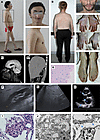 Figure 1
Patients harboring lamin A/C Arg349Trp present with atypical progeroid syndrome and kidney disease. (A) Full body picture (left) of an affected female (patient 3.3.1) displaying generalized lipodystrophy as well as progeroid features. Note the missing mammae development (bottom right, close-up of boxed region). (B) Full body picture (left) of an affected male (patient 3.10.2) with partial lipodystrophy and progeroid features. Note the paucity of s.c. adipose tissue in face, hands, and feet (right). (C–E) Clinical findings from the patient shown in A. (C) Sagittal section of cranial magnetic resonance tomography highlighting generalized cerebral atrophy. (D) Sagittal section of computed tomography showing hepatomegaly and a small involuted right kidney. (E) Liver biopsy specimen with Elastica van Gieson, Iron, and PAS staining revealing kupffercell siderosis. Scale bar: 100 μm. (F–J) Clinical findings from another affected female (patient 3.11.1). Ultrasonic images from the right kidney (F; dashed line, 113.2 mm) and the liver (G; dashed line, 155.8 mm) acquired when the patient was 26 years of age. Note hepatic steatosis and hepato(spleno)megaly. (H) Transthoracic echocardiographic image from the same patient at 27 years of age. Parasternal long axis view, highlighting left ventricular and atrial dilations as hallmarks of dilated cardiomyopathy. 1 – interventricular septal thickness, 9 mm (↔); 2 – left ventricular end diastolic diameter, 57 mm (↑); 3 – left ventricular wall thickness, 7 mm (↔). (I and J) Images from kidney biopsy compatible with FSGS. The biopsy was taken when the patient was 28 years old. (I) Glomerulus with segmental sclerosis (asterisk), H&E stain. (J) Electron micrograph, showcasing ≥ 80% podocyte foot process effacement (arrows) or podocyte loss.
With only 2 entries in the population database gnomad (v4.0.0: minor allele frequency 0.0003%), the c.1045C>T variant in LMNA is considered ultrarare. Conversely, it has been reported multiple times as a (likely) pathogenic variant in ClinVar (Variation ID: 66762). Given the uncertainty around LMNA as a gene associated with genuine kidney disease and the variant’s reported association with proteinuria, we aimed to systematically investigate whether kidney involvement constitutes an obligatory, variable, or no universal trait in this distinct laminopathy. Through systematic literature review (4, 5, 7–11, 19–21) supplemented by direct correspondence with the authors from Izmir, Turkey (20); Philadelphia, Pennsylvania, USA (21); and Pisa, Italy (8), we found 21 individuals with the c.1045C>T, p.(Arg349Trp) LMNA variant, of whom 17 had developed proteinuric kidney disease. Of these, 9 were reported to have undergone a kidney biopsy showing FSGS in 7 cases (4, 5, 7, 8, 11, 19).
To expand the scope of available patient data, we next queried the registry curated by the European Consortium of Lipodystrophies (ECLip) for reports of additional cases and their phenotypic characteristics (22). The registry query yielded 2 unpublished cases with lamin A/C Arg349Trp and proteinuric kidney disease (Table 1). Of these, 1 patient had developed kidney failure due to FSGS at age 43.
Lamin A/C Arg349Trp associates with high levels of proteinuria and kidney failure. To allow for comparative clinical endpoint analyses, we analyzed patient data from the ECLip registry for occurrence of pathogenic variants affecting the most prevalent mutational hotspot (Arg482; Figure 2A) associated with Dunnigan-type FPLD (FPLD2, MIM# 151660): Missense changes at the amino acid residue Arg482 accounted for more than 50% of all patients with LMNA-related lipodystrophies in the ECLip registry with 36.2% (n = 76/210) for Arg482Trp, 17.1% (n = 36/210) for Arg482Gln, and 3.3% (n = 7/210) for Arg482Leu (Figure 2B). We thus focused on patients with Arg482Trp or Arg482Gln as groups representative of FPLD2. Upon curation of 2 cohorts of patients with these mutations, we compared their renal phenotypes with those of the group of 27 patients harboring the Arg349Trp substitution who had either been previously reported (n = 21) or were identified in this study (n = 6) (Figure 2, C–F). For these curations, lamin A/C Arg482Trp patients (n = 77) were identified through the ECLip registry, the Lipodystrophy Center Leipzig, Dokuz Eylul University, or the Obesity and Lipodystrophy Center at the University Hospital of Pisa, and patients harboring lamin A/C Arg482Gln (n = 36) were identified through the ECLip registry. High-grade proteinuria was almost exclusively associated with lamin A/C Arg349Trp with values ranging about 10-fold above mean proteinuria levels reported for patients with FPLD2 (Figure 2C). The age-related eGFR decline was significantly more pronounced for the cohort of Arg349Trp carriers when compared with the cohort of patients harboring either lamin A/C Arg482Trp or Arg482Gln (Figure 2D). Most strikingly, kidney failure was essentially restricted to patients with lamin A/C Arg349Trp. While 31.6% (n = 6/19) of all Arg349Trp carriers exhibited kidney failure at a median age of 43 years, only a single patient (1.3%; n = 1/77) with the Arg482Trp substitution was affected by kidney failure and none of the Arg482Gln carriers (n = 0/17) (Figure 2E). Of note, the frequency of diabetes mellitus was lower in the cohort of patients with lamin A/C Arg349Trp than in the patient cohorts defined by the Arg482Trp or Arg482Gln substitutions (Figure 2F). From the covariates LMNA genotype, occurrence of diabetes mellitus, and sex, only the presence of lamin A/C Arg349Trp significantly associated with both nephrotic range proteinuria and kidney failure (Figure 2, G and H).
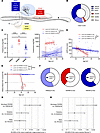 Figure 2
Lamin A/C Arg349Trp associates with high levels of proteinuria and kidney failure. (A) AlphaFold modeling of WT lamin A. (B) Proportions of patients harboring the indicated lamin A/C protein variants in the entire cohort of patients with primary laminopathies reported through the European Consortium of Lipodystrophies (ECLip) registry. (C) With a more than 10-fold difference, proteinuria (mg/24h) was significantly higher in lamin A/C Arg349Trp carriers (red; n = 23, mean 3186 mg/24h) as compared with patients harboring the Arg482Trp (dark blue; n = 63, mean 151.1 mg/24h) or the Arg482Gln (light blue; n = 9, mean 147.9 mg/24h) substitution (left; 1-way ANOVA with Bonferroni-corrected post hoc tests; mean + SD). Pearson correlation between proteinuria and age was not significant for any of the 3 patient cohorts (right). The y intercept, but not the slope, of the straight interpolation line for the lamin A/C Arg349Trp cohort differed significantly from that of the joint FPLD cohort (i.e., Arg482Trp or Arg482Gln carriers). The 95% CIs of interpolation lines are indicated by colored bands. For correlations and the interpolation comparison, P values were Bonferroni-corrected. Of note, for n = 26 individuals only “mg/g creatinine” was available. All groups were tested for the presence of outliers using Grubb’s test, yielding 1 data point in the Arg482Trp group that was excluded from analyses but displayed in the graphs. (D) In comparison with the joint cohort of patients harboring either lamin A/C Arg482Trp (dark blue) or Arg482Gln (light blue), the eGFR slope was significantly reduced for the cohort of lamin A/C Arg349Trp patients (red). (E) Kaplan-Meier analysis showing a significant reduction in kidney failure-free survival for patients harboring lamin A/C Arg349Trp (red; 31.6% kidney failure at a median age of 43) when compared with those with the Arg482Trp (dark blue; 1.3% kidney failure) or those with the Arg482Gln variant (light blue; 0.0% kidney failure). Log-rank tests with Bonferroni-correction. (F) Prevalence of diabetes in cohorts of patients harboring either lamin A/C Arg349Trp or Arg482Trp or Arg482Gln. (G and H) In comparing lamin A/C Arg349Trp harboring patients with those carrying the Arg482Trp or the Arg482Gln variant, multivariate Cox regression analyses showed that the LMNA genotype was a significant covariate for both nephrotic range proteinuria and kidney failure. Median with range. ns, not significant; **P < 0.01; ***P < 0.001; ****P < 0.0001.
Lamin A/C Arg349Trp associates with nuclear pore complex aggregation. In patients with progeroid syndromes caused by different heterozygous LMNA mutations, nuclear shape abnormalities have been found in dermal fibroblasts to an increased yet varying extent (7, 23–25). To compare nuclear morphology between cells expressing lamin A/C WT, Arg349Trp, Arg482Trp, and Gly608Gly, nuclear shapes were studied in standardized cell models following immunofluorescence labeling of lamin A/C. Note that the synonymous mutation c.1824C>T, which underlies Gly608Gly and causes HGPS, activates a cryptic donor splice site, resulting in an aberrant lamin A precursor protein, the so-called progerin, which is not processed as its WT counterpart is (23, 24).
Upon transient transfection of immortalized human podocytes (26) with WT and mutant LMNA constructs, exogenous proteins localized to the nuclear envelope (Supplemental Figure 1A; supplemental material available online with this article; https://doi.org/10.1172/jci.insight.192062DS1). There was no significant difference in the amount of abnormally shaped nuclei between genotypes (Supplemental Figure 1B). This held true for both double (i.e., WT plus individual mutants) and single transfections. Similar results were obtained from transiently transfected HEK293T cells (Supplemental Figure 1, C and D). In these assays, morphological data were acquired by 2 observers blinded to the experimental conditions and analyzed separately, yielding similar results. These findings are consistent with results from a previous report (7).
As lamins A and C appear to be key factors in the process of NPC distribution (27), we next used super-resolution (stimulated emission depletion, STED) microscopy to characterize NPC distribution patterns in primary fibroblasts derived from human skin biopsies. Whereas NPCs were homogenously and evenly scattered across the nuclear envelope in fibroblasts harboring lamin A/C WT, Arg482Trp, or Gly608Gly, cells expressing lamin A/C Arg349Trp consistently exhibited NPC aggregation (Figure 3, A and B, and Supplemental Figure 2). These findings suggest that the Arg349 residue of lamin A/C is critical for proper NPC spacing. We remark that NPC aggregation was described previously for nuclei from primary dermal fibroblasts harboring lamin A/C Gly608Gly but only for later cell passages (28). Of note, lamin A fluorescence intensity at the nuclear envelope was significantly lower in lamin A/C Arg349Trp harboring fibroblasts (Figure 3, C and D).
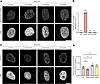 Figure 3
Lamin A/C Arg349Trp localizes to the nuclear envelope and associates with nuclear pore complex aggregation. (A) Stimulated emission depletion (STED) micrographs of nuclei from patient-derived dermal fibroblasts harboring WT or mutant lamin A/C as indicated. Nuclear pore complex aggregation was only evident in cells with lamin A/C Arg349Trp. 2 more nuclei per condition are shown in Supplemental Figure 2. Scale bar: 10 μm. (B) Quantification of nuclei with nuclear pore complex aggregation as exemplified in A. Aggregation score: 0 — no aggregation and 1 — aggregation of nuclear pore complexes. (C) STED micrographs as in A showing reduced lamin A staining at the nuclear envelope in cells harboring lamin A/C Arg349Trp. Scale bar: 10 μm. (D) Quantification of lamin A fluorescence intensity at the nuclear envelope of nuclei exemplified in C. Welch’s ANOVA with Dunnett’s T3 multiple comparisons test; mean ± SD. ns, not significant; *P < 0.05.
An increased number of DNA double-strand breaks and DNA damage response activation are commonly observed molecular features in patients with progeroid syndromes due to different LMNA mutations (29). Therefore, analysis of 53BP1 and γH2AX, 2 DNA damage response markers, was performed in control and patient dermal fibroblasts harboring lamin A/C Arg349Trp, Arg482Trp, or Gly608Gly (Supplemental Figure 3A). The frequency of cells with 53BP1 or γH2AX foci in lamin A/C Arg349Trp fibroblasts was comparable with that of lamin A/C Gly608Gly fibroblasts, showing a trend toward an increase in DNA damage response when compared with controls. However, it was less pronounced than in fibroblasts from individuals with the lamin A/C Arg482Trp substitution (Supplemental Figure 3, B and C).
Lamin A/C Arg349Trp impairs the protein’s structural interaction with nucleoporin 155. In light of the NPC aggregation observed in lamin A/C Arg349Trp expressing primary dermal fibroblasts (Figure 3A), we next studied potential defects in the structural interaction between lamin A/C Arg349Trp and NPCs. To this end, we probed the interaction between nucleoporins 50, 53, 93, 98, 107, 188, 133, 153, 155, 160, or 205 and lamin A/C Arg349Trp through glutathione S-transferase pulldown of nucleoporins in Xenopus laevis egg extracts. Consistent with previous reports (30–32), interactions with Nup155, Nup153, and lamin B could be detected in the lamin A/C WT pulldowns (Figure 4A). From all the nucleoporins tested, there was a uniquely defective interaction between lamin A/C Arg349Trp and Nup155 (Figure 4, A and B). This finding may indicate a critical role for the interaction between Nup155 and lamin A/C in the proper spacing of NPCs.
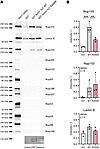 Figure 4
The Arg349Trp substitution in lamin A/C impairs the structural interaction between lamin A/C and Nup155. GST or GST fusion constructs of WT human lamin A/C or the Arg349Trp substitution were incubated with Xenopus laevis egg extracts. (A) Starting material, corresponding to 10% of the material employed in the pulldowns, as well as bound proteins were analyzed by immunoblotting as indicated. (B) Quantification of A, showing the average Nup155, lamin B, and Nup153 bead bound signal from 3 independent experiments, normalized to the signal from the starting material. 1-way ANOVAs with Bonferroni-corrected post hoc tests; mean ± SD. ns, not significant; **P < 0.01; ***P < 0.001.
Of note, Arg349 is located in a coiled-coiled region of the lamin A/C dimer. As the Arg349Trp substitution introduces a hydrophobic residue at this position, the mutation may be expected to interfere with protein homodimerization, as shown by the 3-dimensional illustration of the affected lamin A/C dimer region (Supplemental Figure 4) (33).
Lamin A/C Arg349Trp associates with alterations of TGF-β signaling. To probe alterations in signaling pathways associated with lamin A/C Arg349Trp, we obtained bulk RNA-seq data from primary fibroblast cultures derived from human skin biopsies from 2 patients with lamin A/C Arg349Trp, 3 patients with the Arg482Trp substitution, 2 patients with the Gly608Gly mutation, and 5 nonaffected controls. Hierarchical clustering analysis of the transcriptomic signatures recapitulated the grouping by LMNA genotypes (Figure 5A). Hierarchical clustering on genes significantly differentially expressed across all patient-derived fibroblast lines revealed that the differential gene expression signature of cells harboring the lamin A/C Arg349Trp variant diverged from those of all other cell lines (Figure 5B). In addition, this hierarchical clustering recapitulated the underlying LMNA genotypes, too.
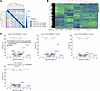 Figure 5
Transcriptomic profiling of patient-derived fibroblasts indicates alterations of TGF-β signaling in cells harboring lamin A/C Arg349Trp. (A) Hierarchical clustering analysis of transcriptomic signatures recapitulated the grouping by LMNA genotypes. Data derived from biological replicates of the same cell line are indicated by braces. (B) Heatmap of significantly differentially expressed genes across all patient-derived fibroblast lines according to the likelihood-ratio test. Hierarchical clustering recapitulated the underlying LMNA genotypes. The differential gene expression signature of cells harboring lamin A/C Arg349Trp was markedly different from the signatures of all other genotypes. Data derived from biological replicates of the same cell line are indicated by brackets. (C) Volcano plots showing differential gene expression between individual lamin A/C mutant and control cell lines, or between lamin A/C Arg349Trp harboring cells and all other genotypes. Highlighted are selected genes of the color-coded groups identified from the comparison of lamin A/C Arg349Trp harboring and control cell lines. Of note, the pattern of TGFB2/3 and BMP7 upregulation together with a reduction in TGFBR3 expression was only found in this comparison and was recapitulated by comparing all other cell lines with lamin A/C Arg349Trp positive cell lines, with the exception that the change in BMP7 expression was not significant. MT, mutant.
Among the gene ontology (GO) biological processes significantly enriched in genes that were significantly differentially upregulated in lamin A/C Arg349Trp positive versus control cell lines, the highest-ranking terms were extracellular matrix organization (GO:0030198) and extracellular structure organization (GO:0043062) (Supplemental Figure 5), consistent with the fibrotic processes observed in FSGS. Of note, these biological processes were not found to be ranking high in any other comparison between lamin A/C mutation positive and control cell lines.
In podocytopathies due to NUP93 mutations, the structural interaction between NUP93 and SMAD4 was shown to be abrogated and bone morphogenetic protein 7 (BMP7)-induced SMAD signaling was demonstrated to be disrupted (13). To assess whether similar alterations in pathways regulated by the TGF-β superfamily occur in lamin A/C Arg349Trp harboring versus control cell lines, we examined the genes from the significantly enriched biological process pathway-restricted SMAD protein phosphorylation (GO:0060389) as well as the expression of TGFBR1, TGFBR2, and TGFBR3, which encode the TGF-β receptors 1–3 (Figure 5C). The transcripts corresponding to TGF-β2, TGF-β3, and BMP7 were upregulated in lamin A/C Arg349Trp positive cell lines, together with a reduction in TGFBR3 expression. This configuration was not found in any other comparison between mutant lamin A/C positive and control cell lines and was recapitulated by comparing all other cell lines with lamin A/C Arg349Trp harboring lines, except for a nonsignificant change in BMP7 expression.
Lamin A/C Arg349Trp compromises TGF-β1–dependent SMAD signaling. Next, we aimed to determine whether these enhanced expressions of TGF-β ligands are in line with compensatory ligand upregulation due to disruption of downstream signaling or, rather, indicate pronounced activation of such signaling. To thus probe the integrity of TGF-β1–dependent signaling, we assessed the nuclear accumulation of SMAD4 upon TGF-β1 stimulation in immortalized human podocytes following transient transfection with WT or mutant LMNA constructs as well as in patient-derived dermal fibroblasts (Figure 6, A–D). In untransfected podocytes and in those expressing exogenous lamin A/C WT or Arg482Trp, SMAD4 accumulated in the nucleus upon TGF-β1 administration, an effect less pronounced in podocytes expressing lamin A/C Arg349Trp (Figure 6, A and C). These findings were corroborated in primary dermal fibroblasts. Whereas cells harboring lamin A/C WT or Arg482Trp exhibited consistent SMAD4 translocation from the cytosol to the nucleus, this effect was less marked in lamin A/C Arg349Trp fibroblasts (Figure 6, B and D). Thus, in both cell models, the responsiveness of the probed signaling route to TGF-β1 was consistently diminished.
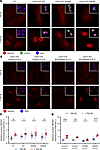 Figure 6
In podocytes and patient-derived fibroblasts, lamin A/C Arg349Trp impedes TGF-β1–induced SMAD4 translocation to the nucleus. Qualitative and quantitative assessments of nuclear SMAD4 accumulation upon TGF-β1 stimulation in immortalized human podocytes transiently transfected with EmGFP-tagged LMNA constructs as indicated and in patient-derived dermal fibroblasts. (A) Podocytes expressing lamin A/C Arg349Trp showed less pronounced and inconsistent SMAD4 nuclear import upon stimulation with TGF-β1. SMAD4 signal (red) was corrected for nonspecific staining. Nuclei were stained with DAPI (blue). Scale bars: 5 μm. (B) Similarly, fibroblasts with heterozygous lamin A/C Arg349Trp showed less pronounced and inconsistent SMAD4 translocation into the nucleus upon stimulation with TGF-β1. SMAD4 signal (red) was corrected for nonspecific staining. Nuclei were stained with DAPI (blue). Scale bars: 20 μm. (C) In podocytes expressing lamin A/C Arg349Trp, nuclear SMAD4 fluorescence intensity did not significantly change upon stimulation with TGF-β1. 2-way ANOVA with Bonferroni-corrected post hoc tests; data normalized to mean of unstimulated WT data; mean ± SD. (D) In fibroblasts harboring lamin A/C Arg349Trp, nuclear SMAD4 fluorescence intensity did not significantly change upon stimulation with TGF-β1. 2-way ANOVA with Bonferroni-corrected post hoc tests; data normalized to mean of unstimulated control data; mean ± SD. CTRL, control; (∙), (subject identifier); UT, untransfected control; ns, not significant; *P < 0.05; **P < 0.01; ***P < 0.001; ****P < 0.0001.
Our data thus indicate alterations of TGF-β ligands and type 3 receptor, which might be compensatory changes due to dysfunctional downstream SMAD-dependent signaling.


